

Sarah Thornton
Author of Seven Days in the Art World
About the Author
Sarah Thornton's Seven Days in the Art World was named one of the best art books of the year by the New York Times and is available in eighteen languages. She was the chief writer on contemporary art for the Economist.
Works by Sarah Thornton
Tits Up: What Sex Workers, Milk Bankers, Plastic Surgeons, Bra Designers, and Witches Tell Us about Breasts (2024) 89 copies, 2 reviews
Associated Works
Action Girl Comics #1-19 — Contributor — 1 copy
Tagged
Common Knowledge
- Gender
- female
- Education
- Concordia University
University of Strathclyde - Occupations
- professor
journalist - Organizations
- University of Sussex
The Economist - Nationality
- Canada
- Associated Place (for map)
- Canada
Members
Reviews

This is a look at the world of contemporary art by ethnographic researcher Sarah Thornton. Each "day" comprises a long article about an aspect of the art world. I found it to be fascinating and surprising. You'll laugh, but I hadn't thought of the world of contemporary art as being quite so pretentious or as preoccupied with money.
The book opens with an auction at Christie's, in which one's importance is indicated by where one is allowed to sit. I'd always thought it would be fun to attend show more an auction. I don't think that anymore. This was a good opening for the book, illustrating how much art is just another plaything of the very wealthy. In subsequent chapters, Thornton looks at a class at CalArts in which students present their work for peer critiques; Art Basel, a Swiss art fair in which galleries have booths and do much of their year's sales; the announcement of the Turner Prize, a British art award which is as much a sign of prestige for artists as the Booker prize is for writers; ArtForum magazine; Japanese artist Takashi Murakami's various studios, in which his work is carried out by other artists and where marketing opportunities are pursued and, finally, the Venice Biennale, an international event for contemporary art.
Even as art itself is a constantly changing thing, how art is created, marketed, sold and resold hasn't changed. The most successful artists are as concerned for securing patronage and in marketing their image as they were in Renaissance Italy. And people have always bought art and, with their choices, indicated both their taste and wealth. If you have an interest in the subject, this is an excellent look at a world hidden from people who visit an art museum or gallery. show less
The book opens with an auction at Christie's, in which one's importance is indicated by where one is allowed to sit. I'd always thought it would be fun to attend show more an auction. I don't think that anymore. This was a good opening for the book, illustrating how much art is just another plaything of the very wealthy. In subsequent chapters, Thornton looks at a class at CalArts in which students present their work for peer critiques; Art Basel, a Swiss art fair in which galleries have booths and do much of their year's sales; the announcement of the Turner Prize, a British art award which is as much a sign of prestige for artists as the Booker prize is for writers; ArtForum magazine; Japanese artist Takashi Murakami's various studios, in which his work is carried out by other artists and where marketing opportunities are pursued and, finally, the Venice Biennale, an international event for contemporary art.
Even as art itself is a constantly changing thing, how art is created, marketed, sold and resold hasn't changed. The most successful artists are as concerned for securing patronage and in marketing their image as they were in Renaissance Italy. And people have always bought art and, with their choices, indicated both their taste and wealth. If you have an interest in the subject, this is an excellent look at a world hidden from people who visit an art museum or gallery. show less
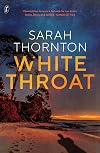
Sarah Thornton’s second crime novel featuring Clementine Jones, is as compulsive reading as her first, Lapse.
Having fled Katinga in the wake of her past being discovered, Clem is house sitting in the small coastal town of Piama, Queensland, while she considers her next move. As restless as ever, she involves herself in a local conservation effort to save the endangered White Throated Snapping Turtle at the urging of the leader, and old family friend, Helen Westley. When Helen’s body is show more discovered at the base of a cliff, Clem refuses to accept the police’s conclusion that her death was the result of suicide, and sets out to prove Helen was murdered because of her activities opposing the local Port development project.
In searching for whomever is responsible for Helen’s murder, Clem uses her legal skills to ferret out the most likely subjects, and then uses less than legal means to dig deeper. There is plenty of suspense and action as Clem confronts her potential suspects, and Thornton provides intriguing twists and turns as Clem uncovers a mess of deception, corruption, and betrayal.
Clementine is a complex character, irrevocably scarred from causing the death of a woman in a drink driving accident, she is intent on punishing herself and has a tendency to behave recklessly. In White Throat she is determined to avenge Helen’s murder, no matter the risk to herself, and refuses to acknowledge the concern of those who care for her, namely Torrens, and Rowan.
While Rowan attempts to stay in touch with Clem via the telephone, Torrens, one of the young footballers Clem coached while in Katinga, makes a physical appearance in White Throat. He needs a place to lay low after receiving an unorthodox inheritance, but trouble follows him, adding another layer of threat to the story. I really like the friendship between Clem and Torrens, though that’s at risk here when Clem finally admits she doesn’t plan to return to Katinga.
While White Throat could be read as a stand alone, I recommend you don’t miss out on the experience of also reading Lapse, as both are well crafted, exciting, and entertaining reads. I’m already looking forward to the next. show less
Having fled Katinga in the wake of her past being discovered, Clem is house sitting in the small coastal town of Piama, Queensland, while she considers her next move. As restless as ever, she involves herself in a local conservation effort to save the endangered White Throated Snapping Turtle at the urging of the leader, and old family friend, Helen Westley. When Helen’s body is show more discovered at the base of a cliff, Clem refuses to accept the police’s conclusion that her death was the result of suicide, and sets out to prove Helen was murdered because of her activities opposing the local Port development project.
In searching for whomever is responsible for Helen’s murder, Clem uses her legal skills to ferret out the most likely subjects, and then uses less than legal means to dig deeper. There is plenty of suspense and action as Clem confronts her potential suspects, and Thornton provides intriguing twists and turns as Clem uncovers a mess of deception, corruption, and betrayal.
Clementine is a complex character, irrevocably scarred from causing the death of a woman in a drink driving accident, she is intent on punishing herself and has a tendency to behave recklessly. In White Throat she is determined to avenge Helen’s murder, no matter the risk to herself, and refuses to acknowledge the concern of those who care for her, namely Torrens, and Rowan.
While Rowan attempts to stay in touch with Clem via the telephone, Torrens, one of the young footballers Clem coached while in Katinga, makes a physical appearance in White Throat. He needs a place to lay low after receiving an unorthodox inheritance, but trouble follows him, adding another layer of threat to the story. I really like the friendship between Clem and Torrens, though that’s at risk here when Clem finally admits she doesn’t plan to return to Katinga.
While White Throat could be read as a stand alone, I recommend you don’t miss out on the experience of also reading Lapse, as both are well crafted, exciting, and entertaining reads. I’m already looking forward to the next. show less
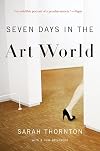
A fun, deceptively sophisticated jog through one very small aspect of "the art world." And that aspect is, overwhelmingly, the economic. This is a book about how rich people have nothing to do with their enormous amounts of money, so they spend it on objects that may or may not be of any aesthetic value. But they are great status markers. I mean, would you even go to someone's party if they didn't have a Jeff Koons? No way, right?
The first few chapters--one at a contemporary art auction, show more when at an MFA seminar, and one at an art fair--are really good. After that, it gets a little tedious, and nauseating, which is how people with so much money that they don't know what to do with it always make me feel, as well as people who structure their entire lives around giving said very wealthy people things to do with their money that aren't, e.g., paying taxes.
Thornton makes no bones about the topic of this book; it is an ethnography, it is not at all interested in making aesthetic distinctions, and you'll have to decide for yourself if Takashi Murakami is interesting and if his work is worthwhile. I have a hard time believing that anyone could finish reading the book, however, without making a pretty strong aesthetic judgment on the people Thornton's writing about. show less
The first few chapters--one at a contemporary art auction, show more when at an MFA seminar, and one at an art fair--are really good. After that, it gets a little tedious, and nauseating, which is how people with so much money that they don't know what to do with it always make me feel, as well as people who structure their entire lives around giving said very wealthy people things to do with their money that aren't, e.g., paying taxes.
Thornton makes no bones about the topic of this book; it is an ethnography, it is not at all interested in making aesthetic distinctions, and you'll have to decide for yourself if Takashi Murakami is interesting and if his work is worthwhile. I have a hard time believing that anyone could finish reading the book, however, without making a pretty strong aesthetic judgment on the people Thornton's writing about. show less
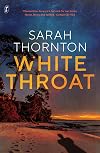
Clem has fled north after the people of the Victorian town of Katinga have become aware of her past, after she brought its footy team to a premiership. She has ended up house/dog sitting in the coastal Queensland village of Piama.
There she meets up with a close family friend Helen who is working to save the white-throated turtle from extinction and its habitat from being destroyed by a mining company. Helen asks Clem to give legal advice to the conservation society and would like her to be show more more active and front-line.
Then Helen’s body is found at the base of a fifteen-metre cliff in the local quarry; the police rule suicide, but Clem is certain that Helen has been murdered and tries to work out who has been interested in getting rid of Helen. There are several candidates including some people who have been contributing financially to the cause.
Clem is also under pressure to say she will return to Katinga for the footy season, but she has other irons in the fire.
I didn't enjoy this novel as much as the first in the series, but Clem Jones is certainly a strong and interesting character. show less
There she meets up with a close family friend Helen who is working to save the white-throated turtle from extinction and its habitat from being destroyed by a mining company. Helen asks Clem to give legal advice to the conservation society and would like her to be show more more active and front-line.
Then Helen’s body is found at the base of a fifteen-metre cliff in the local quarry; the police rule suicide, but Clem is certain that Helen has been murdered and tries to work out who has been interested in getting rid of Helen. There are several candidates including some people who have been contributing financially to the cause.
Clem is also under pressure to say she will return to Katinga for the footy season, but she has other irons in the fire.
I didn't enjoy this novel as much as the first in the series, but Clem Jones is certainly a strong and interesting character. show less
Lists
culture (1)
Awards


You May Also Like


Associated Authors
Statistics
- Works
- 10
- Also by
- 1
- Members
- 1,322
- Popularity
- #19,442
- Rating
- 3.6
- Reviews
- 34
- ISBNs
- 63
- Languages
- 7