
David Williamson (2) (1942–)
Author of The Removalists
For other authors named David Williamson, see the disambiguation page.
About the Author
The author of 15 plays, as well as numerous screen and television scripts, David Williamson is certainly Australia's most prolific playwright. He is also the country's most popular dramatist and the one best known abroad. Finally, most critics and general theatergoers would agree that he is the show more best playwright Australia has produced so far. Although his screenplays move into areas outside Australia, the plays remain fixed in his native land. Always well received in Australia, they have also been successful in Europe and the United States. Williamson's greatest achievement, then, lies in the way he makes universal that experience peculiar to Australians. Born in a small town near Melbourne, Williamson did not appear destined for a theatrical career. While majoring in engineering in college, he began writing for campus productions, and soon turned to a career as a playwright. Not particularly experimental, each play is marked by firm structure, exact sense of place, vivid language, satire, and comedy. These elements cohere to reveal believable characters facing often ordinary conflicts. Their responses are sometimes mundane and muddled, and rarely does a resolution take place. Among his works of the 1970s, The Removalists (1971) uses techniques of theater of cruelty. The plot revolves around police violence against individuals as a metaphor for gratuitous violence in society. Don's Party (1971) reveals the public and personal frustrations of a group of professional men and women at an election day party. In The Coming of Stork, a group of educated, urban young men and women seek their places in the social structure. The adverse role the Vietnam War played in Australian society is depicted in Jugglers Three, while What If You Died Tomorrow dramatizes the effect of fame on marriage and family relationships. Later plays include Travelling North (1980), The Perfectionist (1982), Sons of Cain (1985), Emerald City (1987), and Top Silk (1990). Williamson has addressed a number of themes, many relevant to Australian society and to cultures in other parts of the world. Yet his plays are never didactic; they entertain first, and then challenge the viewer. Insisting that his work is naturalistic, Williamson does indeed create a very real picture of life. Always, though, the reality is tempered by comedy and by a sympathetic attitude toward the characters inhabiting the imaginary world of the stage---a world in which viewers at times see themselves and their own foibles exposed. (Bowker Author Biography) show less
Works by David Williamson
Phar Lap 1 copy
The Club [1980 film] — Screenwriter — 1 copy
Associated Works
Facing Writers : Australia's Leading Writers Talk with Dagmar Strauss (1990) — Contributor — 6 copies
Tagged
Common Knowledge
- Legal name
- Williamson, David Keith
- Birthdate
- 1942-02-24
- Gender
- male
- Education
- University of Melbourne
Monash University - Occupations
- design engineer
teacher
playwright
screenwriter - Organizations
- Swinburne University of Technology
- Awards and honors
- Australian Living Treasure
Order of Australia (1983) - Nationality
- Australia
- Birthplace
- Melbourne, Victoria, Australia
- Places of residence
- Bairnsdale, Victoria, Australia
- Associated Place (for map)
- Victoria, Australia
Members
Reviews

Love it or hate it, Brilliant Lies is a thought provoking look at political correctness, men, women and the balance of power in the workplace, the home and society at large. Published in 1993, it was groundbreaking at the time, controversial in both topic and the opinions suggested.
Brilliant Lies is at it's simplest, about a complaint of sexual harassment in the workplace. A young woman, Susy Connor, accuses her manager, Gary Fitzgerald of several months of sexual harassment which escalated show more to sexual assault before she was fired. Marion Lee, a conciliator for the Anti-Discrimination Board tries to find the truth as each party to the claim tries to tell their side of the story.
I loved this play. The hypocrisy. The truth. The lies. It was freaking hysterical.
I loved this when I first read it for my Year 9 Literature class. And rereading it, I still loved it a good seventeen years later. (Which jeez talk about feeling old). But as much as I've aged, it's sad that a play written in 1993 is still as relevant today as it ever was.
Williams doesn't hold back in his critique - identifying and confronting issues of gender norms and societal perceptions and calling out the double standards that exist - that still exist. The reversal of Roe vs. Wade is an obvious example of the way in which women are marginalised - rights long fought for just being dismissed. No one would dream of legislating what a man can do with his body.
That said, when it comes to intimacy, sex and relationships between men and women, the lines are blurry. Truth, lies - it's all about perceptions - our own biases, societal ones, he said, she said, society said - there's no real clear cut answer to most of the questions being asked. Ask five different people what happened at a party and you'll get five different answers - even if the basic gist is the same. When is a man being sleazy? Is it when he flirts? When he's not 100% professional? When you're not into it? When you like him? Or don't like him? When it's more obscene than flattering? When he's awkward and trying to be friendly but has no idea how to interact with a woman? When you feel threatened? And who's answering? A jealous boyfriend/friend? A family member? Someone timid? Someone outgoing? Someone who enjoys sex? Someone who doesn't? All of these things colour our perceptions. So how do we decide what's the line? Where's the line?
Unfortunately there is no real solution to the problem. I'd love for it to be a simple answer but it just isn't. Humans are not perfect - and the flaws that come out when faced with injustice are not always pretty.
In Brilliant Lies, this takes the form of Susy who is feminine, sexual and flirty. Her dress and behaviour is liked, accepted - right up until it isn't convenient and then these things become the reasons for judgement, for disparagement.
Susy is brash, belligerent, beautiful and willing to embrace everything she has to get ahead. And sometimes that works and other times it doesn't. Is she lying about the sexual harassment? Yes. Does that mean it didn't happen? No. If she didn't lie would they have believed her? Probably not. So how do you get justice? How many women have left because of Gary? More than a few. Does Susy lying make Gary less guilty? No. There's so many layers to this text. So many layers of injustice.
I think younger female readers will be appalled and outraged at the blatant injustice but for those of us that have lived the time before #MeToo and the following social revolution, Brilliant Lies is a realistic representation of the time.
I love this play. I love what it says, what it represents, the thoughts it provokes and the issues it confronts. It's outrageous and funny and fearless, a must read. 4 stars. show less
Brilliant Lies is at it's simplest, about a complaint of sexual harassment in the workplace. A young woman, Susy Connor, accuses her manager, Gary Fitzgerald of several months of sexual harassment which escalated show more to sexual assault before she was fired. Marion Lee, a conciliator for the Anti-Discrimination Board tries to find the truth as each party to the claim tries to tell their side of the story.
I loved this play. The hypocrisy. The truth. The lies. It was freaking hysterical.
I loved this when I first read it for my Year 9 Literature class. And rereading it, I still loved it a good seventeen years later. (Which jeez talk about feeling old). But as much as I've aged, it's sad that a play written in 1993 is still as relevant today as it ever was.
Williams doesn't hold back in his critique - identifying and confronting issues of gender norms and societal perceptions and calling out the double standards that exist - that still exist. The reversal of Roe vs. Wade is an obvious example of the way in which women are marginalised - rights long fought for just being dismissed. No one would dream of legislating what a man can do with his body.
That said, when it comes to intimacy, sex and relationships between men and women, the lines are blurry. Truth, lies - it's all about perceptions - our own biases, societal ones, he said, she said, society said - there's no real clear cut answer to most of the questions being asked. Ask five different people what happened at a party and you'll get five different answers - even if the basic gist is the same. When is a man being sleazy? Is it when he flirts? When he's not 100% professional? When you're not into it? When you like him? Or don't like him? When it's more obscene than flattering? When he's awkward and trying to be friendly but has no idea how to interact with a woman? When you feel threatened? And who's answering? A jealous boyfriend/friend? A family member? Someone timid? Someone outgoing? Someone who enjoys sex? Someone who doesn't? All of these things colour our perceptions. So how do we decide what's the line? Where's the line?
Unfortunately there is no real solution to the problem. I'd love for it to be a simple answer but it just isn't. Humans are not perfect - and the flaws that come out when faced with injustice are not always pretty.
In Brilliant Lies, this takes the form of Susy who is feminine, sexual and flirty. Her dress and behaviour is liked, accepted - right up until it isn't convenient and then these things become the reasons for judgement, for disparagement.
VINCE: You want to know the truth about that girl. She came in with [Searching for words] - everything showing -
GARY: Boobs popping right out of her dress.
VINCE: Dress right up to here. [Demonstrating a point right up his thigh.] Blatant.
GARY: Trying to get herself a job.
MARION: She did get the job.
[The men look at each other, embarrassed.]
VINCE: I wouldn't have given it to her.
MARION: Gary convinced you?
GARY: I thought she had potential.
[MARION looks at GARY.]
MARION: Potential.
GARY: Work potential.
MARION: Right.
Williamson, David. (1993) Brilliant Lies (p. 6). Currency Press.
Susy is brash, belligerent, beautiful and willing to embrace everything she has to get ahead. And sometimes that works and other times it doesn't. Is she lying about the sexual harassment? Yes. Does that mean it didn't happen? No. If she didn't lie would they have believed her? Probably not. So how do you get justice? How many women have left because of Gary? More than a few. Does Susy lying make Gary less guilty? No. There's so many layers to this text. So many layers of injustice.
I think younger female readers will be appalled and outraged at the blatant injustice but for those of us that have lived the time before #MeToo and the following social revolution, Brilliant Lies is a realistic representation of the time.
I love this play. I love what it says, what it represents, the thoughts it provokes and the issues it confronts. It's outrageous and funny and fearless, a must read. 4 stars. show less
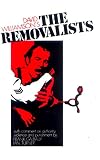
It's been a while since I read a few plays but I've just read the removalists by David Williamson and I'm really impressed by his craftsmanship. Incredible dialogue ....great characterisation and some rather deep and layered social commentary underpinning it. A very Australian play with an underlying theme of police corruption and inefficiency. The almost inevitable corruption of the young, enthusiastic cop just fresh out of the training school. Casual domestic violence. Deliberate police show more violence and intimidation. A straightforward abuse of power in a situation where nobody (except the young cop, Ross) seems to be "clean". The introductions were equally interesting ....especially the one by Frank Galbally (a Lawyer)........well known for defending criminals. though, as he points out. Frequently the police were guilty of crimes and abuse that never was redressed. I think a major change came about from the Fitzgerald report on corruption in the Queensland police....going right to the Minister and maybe, even, to the Premier. My impression was that this started something of a reform of the police forces...not just in Qld but elsewhere in Australia. NSW police were notoriously corrupt and there were very strong links with the Premier at that time. There are also the sexual tensions underlying most of the action saying something about lax moral standards at all levels among the cast.....the implication being that these reflected the morals of the society at large (which I think is probably not true).
As a piece of theatre, I think it works really well. Williamson's dialogue captures the vernacular perfectly. His characters are well defined and very believable. Though the ending is a bit too shocking and sudden. Seems to me that wrapping it up was a bit of a problem and so Ross goes crazy and kills Kenny....end of story. I found that vaguely unsatisfactory ....thought it was going to be hard to wrap up anyway. Still five stars from me. I liked it. show less
As a piece of theatre, I think it works really well. Williamson's dialogue captures the vernacular perfectly. His characters are well defined and very believable. Though the ending is a bit too shocking and sudden. Seems to me that wrapping it up was a bit of a problem and so Ross goes crazy and kills Kenny....end of story. I found that vaguely unsatisfactory ....thought it was going to be hard to wrap up anyway. Still five stars from me. I liked it. show less

I was introduced to this play and David Williamson's work, by a production at Toronto Free Theatre in the early 90s (roughly). I read the play after the author made an appearance at the International Festival of Authors.
It revolves around the film industry and the compromises people make to live in that world. It's funny and biting and while there's references out of the time it was written in the late 80s, the world and its characters still resonate today.
It revolves around the film industry and the compromises people make to live in that world. It's funny and biting and while there's references out of the time it was written in the late 80s, the world and its characters still resonate today.

One of the first, if not the first, play about Australian rules football, although I'm sure it can and has been translated into other sports. We have all the backroom kerfuffles, the big recruit from Tasmania and the coach and players trying their best amongst it all.
Williamson is still probably the premier Australian playwright and while The Club feels very dated at times, it is an important piece of Australian culture.
Williamson is still probably the premier Australian playwright and while The Club feels very dated at times, it is an important piece of Australian culture.
You May Also Like


Associated Authors
Statistics
- Works
- 35
- Also by
- 2
- Members
- 383
- Popularity
- #63,100
- Rating
- 3.8
- Reviews
- 9
- ISBNs
- 152
- Languages
- 2
- Favorited
- 1