
Louis Nowra
Author of Into That Forest
About the Author
Louis Nowra was born on December 12, 1950 in Melbourne. He is best known as one of Australia's leading playwrights. His works have been performed by all of Australia's major theatre companies. His most significant plays are Così, Radiance, Byzantine Flowers, Summer of the Aliens and The Golden show more Age. In 2006 he completed The Boyce Trilogy for Griffin Theatre Company, consisting of The Woman with Dog's Eyes, The Marvellous Boy and The Emperor of Sydney. His 2009 novel Ice was shortlisted for the Miles Franklin Award. His script for 1996 movie Cosi, which revolves around a group of mentally ill patients who put on a play, won the Australian Film Institute Award that year for Best Adapted Screenplay. Nowra's work as a scriptwriter also includes a credit on the comedy The Matchmaker and the Vincent Ward romance Map of the Human Heart, which was invited to the Cannes Film Festival. His title, Prince of Afghanistan, made the Indie Awards 2016 shortlist in the Young Adult category. (Bowker Author Biography) show less
Works by Louis Nowra
Associated Works
Tagged
Common Knowledge
- Canonical name
- Nowra, Louis
- Other names
- Doyle, Mark (birth name)
- Birthdate
- 1950-12-12
- Gender
- male
- Education
- La Trobe University
- Occupations
- writer
playwright
librettist
screenwriter
radio scriptwriter - Awards and honors
- Honorary Doctorate (Griffith University)
Patrick White Award (2013) - Agent
- HLA Management Australia
- Relationships
- Sayer, Mandy (wife)
- Nationality
- Australia
- Birthplace
- Melbourne, Victoria, Australia
- Places of residence
- Sydney, New South Wales, Australia
- Associated Place (for map)
- Australia
Members
Reviews
Ice by Louis Nowra

A very wild retelling of a part of Australian history I knew nothing about. (Don't you love books that also educate you?) The fiction (towing an iceberg to Sydney, amongst other tales) is mixed in liberally with the facts (the life of Malcolm McEacharn, an early mover and shaker in Australian business and politics). If McEacharn was still alive, he'd be suing the pants off of Louis Nowra round about now.
But he's not, meaning that we can enjoy this wonderful toboggan ride through Australian show more history.
The book opens with young McEacharn and his business partner, Andrew McIlwraith, towing an iceberg into Sydney Harbour one hot summer. While this doesn't make their fortune (their backers get the lion's share of the profits), it does make their name in colonial Australia, and as the book progresses, their fortunes rise as they become the first people to successfully ship frozen meat from Australia to England, and then move into immigration, shipping English people out to the Australia to make their own fortune. But as the story progresses, we find out Malcolm's full story and his obsession with his first wife. And this tale is paralleled by the story of the narrator who slowly emerges from the usual role of a disinterested party as we discover his own reasons for writing this story.
The pressure builds as both McEacharn and the narrator's obsessions are fully revealed, leaving me emotionally bereft at the end from the narrator's story, and rather gobsmacked at the extent of McEacharn's obsession.
And I likes me a tale of obsession, I does.
This is not a book for everyone: those of you who prefer their history untweaked should keep well away, but I thought this was a marvellous story. show less
But he's not, meaning that we can enjoy this wonderful toboggan ride through Australian show more history.
The book opens with young McEacharn and his business partner, Andrew McIlwraith, towing an iceberg into Sydney Harbour one hot summer. While this doesn't make their fortune (their backers get the lion's share of the profits), it does make their name in colonial Australia, and as the book progresses, their fortunes rise as they become the first people to successfully ship frozen meat from Australia to England, and then move into immigration, shipping English people out to the Australia to make their own fortune. But as the story progresses, we find out Malcolm's full story and his obsession with his first wife. And this tale is paralleled by the story of the narrator who slowly emerges from the usual role of a disinterested party as we discover his own reasons for writing this story.
The pressure builds as both McEacharn and the narrator's obsessions are fully revealed, leaving me emotionally bereft at the end from the narrator's story, and rather gobsmacked at the extent of McEacharn's obsession.
And I likes me a tale of obsession, I does.
This is not a book for everyone: those of you who prefer their history untweaked should keep well away, but I thought this was a marvellous story. show less
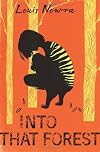
Into That Forest by Louis Nowra is an original and vivid story of two little girls who are lost in the Tasmanian bush in the 1800s after a boating accident claimed the lives of the adults in the party. They are saved and raised by two Tasmanian tigers, learning to survive under the harshest of conditions, slowly losing their language and civilized ways as they become feral.
The story unfolds in broken English as told by one of the girls, Hannah. She relates how she and Becky learn over time show more to live like the tigers, sleeping during the day and hunting through the night. They eat only raw meat, walk on all fours, and learn to communicate with growls and snuffles. Meanwhile Becky’s father has never given up the hunt for his daughter and eventually finds the girls, having to capture them and force them to leave the wilderness. It soon becomes very clear that the father wants to separate the girls as he believes his daughter will never be totally civilized while the two are together.
I became totally immersed in this well plotted and interesting book and felt a great sympathy for the girls and the tigers, who are today, extinct. The author obviously did a fair amount of research into both survival techniques and these rare animals but what stood out to me was the girls will to live and the unbreakable bond between them. show less
The story unfolds in broken English as told by one of the girls, Hannah. She relates how she and Becky learn over time show more to live like the tigers, sleeping during the day and hunting through the night. They eat only raw meat, walk on all fours, and learn to communicate with growls and snuffles. Meanwhile Becky’s father has never given up the hunt for his daughter and eventually finds the girls, having to capture them and force them to leave the wilderness. It soon becomes very clear that the father wants to separate the girls as he believes his daughter will never be totally civilized while the two are together.
I became totally immersed in this well plotted and interesting book and felt a great sympathy for the girls and the tigers, who are today, extinct. The author obviously did a fair amount of research into both survival techniques and these rare animals but what stood out to me was the girls will to live and the unbreakable bond between them. show less

Set in Afghanistan at the height of the war between the allies and the Taliban, this tells the story of Mark, his best mate Casey and army dog called Prince. When a routine hostage extraction goes horribly wrong, Casey is killed and Mark and Prince must try and get back into "safe" territory. In a foreign land where they do not know friend from foe, it is a survival story in a desert with the added suspense of someone could have a gun trained on you at any moment. This is not a kid's book show more a-la Michael Morpurgo as there is realistic violence in the form of war injuries and torture, a foray into the world of the illicit drug trade and its horrific effects on peoples' sanity, as well as the main characters' inner musings about friendship, life, death and the immorality of war. Gripping from start to finish, this is one for older readers 8-10. show less
Ice by Louis Nowra
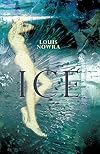
Occasionally, during the reading of Ice you’ll need to pause and run a cool piece of ice across your brow, as this is a fever of a novel. There are two storylines which bisect neatly, running across the timeless trajectory of lost love. The one which opens the book takes place in the 1880s, and follows the development of Malcolm McEacharn, a real life explorer/businessman who, in collaboration with his friend Andrew McIlwraith brings an iceberg to Sydney. At this point in the novel the show more only hint that we have of a second story is the odd interjection of the narrator to someone named Beatrice, referring to the dinner party we’re immersed in as something from the past. Later, the second story becomes clear. Set in modern day (21st Century) Sydney, the narrator is Rowan Doyle, and his wife Beatrice, a biographer, lies in a coma. It is Beatrice’s biography of Malcolm McEacharn that Rowan is finishing, and his story and Malcom’s develop an odd parallel as Rowan begins to read his work to his comatose wife, willing her to wake up and correct him.The narrative structure is relatively complex, with an extraordinary number of links between the two stories, and indeed between the reader and the characters, giving it a strong post-modern quality. At the same time, both stories are linear and simple, so that it’s easy to read this book as both an historical fiction, and a modern day realist tragedy. That Nowra manages this balance in a way that is seamless to the reader, without impacting on the fictive truths of either story, is credit to his great skill as a novelist. The historical context of Malcolm’s story is fascinating, and very well researched. The reader becomes engrossed in the present tense of his Malcom's affair, the intensity of his loss, and the odd co-mingling of his growing hunger for what he’s lost, and his hunger for success and power. Despite the magical realism that underlies Malcolm’s story, there is enough verisimilitude to encourage the reader to do his or her own research. Malcolm traverses very real settings, from the evocative Yorkshire town of Goathland (used as the setting for Harry Potter films, and the Heartbeat TV series), to Glasgow, the streets of London, Queensland, Japan, Sydney, Melbourne, and Antarctica, all of which are described poetically, with original metaphor enriching the beauty of the scenery: "In the mornings a delicate lacework of ice had settled firmly on the decks and masts, and when the dawn broke it was as if the ship had been constructed of diamonds during the night. In wild weather spray rose from the sides of the vessel into tall columns of white mist that fell onto the deck, covering it with a silvery veil. (100)"Malcolm does more than bring ice to Sydney. He also brings refrigerated meat from Australia to London, electricity to Melbourne, and order to the Tokyo electric tram system. He's a man of science and technology, able to make a locomotive go, and so interested in biology that he amasses the biggest collection of foetuses and embryos in Australia. But he's also haunted and obsessed by his first wife's death, so much so that he temporarily gives himself up to the occult and slowly slides towards a kind of fevered madness that also begins to affect the narrator as both stories progress. As we learn more about why the modern day Beatrice is in a coma the stories begin to parallel one another. One of the key links is the ice which pervades the story, not only in the form of the iceberg that opens the novel, but also Ice the drug, ice as refrigeration and a symbol for modernity, and the more theoretical notion of being frozen; arrested; put on hold:"Not a day goes past when there aren't newspaper articles about global warming, melting ice caps, hundreds of icebergs moving relentlessly towards New Zealand and about bodies that have lain in ice for decades, even centuries, but are now emerging from their graves and which confirm what is in this book...(320)"The real ice and metaphorical ice begin to blur, just as the real history and the fictive history; the real Ann and the progression of fictive Anns; begin to blur. This is where the story becomes something more than simply a good historical tale. It's a story of love and loss, and the ephemeral nature of happiness. The story traverses a wide terrain, taking in, among other things, the seamy underbelly of a timelessly drug riddled Sydney, a fancy dinner with Queen Victoria, or the outrageous excesses of an icy battlefield training dome in Imperial Japan. The minor characters are also well drawn, from the flamboyant inventor dandy Eugene Nicolle, the wild lovestruck psychic Elise, or the well endowed drunkard (mostly on the alcohol used to preserve specimens) Ford. There's a Dickensian grandeur to Ice which is made all the more powerful by the way in which Nowra twists time's arrow. Those reading this solely as an historical fiction may be made uncomfortable by the way in which the reader is drawn into the story, placed in the role of the unconscious Beatrice; as silent confident. For those of us who like our fiction as rich, complex, and painful as possible, Ice is a tremendous story, and one which begs to be read more than once. show less
Lists
Awards


You May Also Like


Associated Authors
Statistics
- Works
- 45
- Also by
- 6
- Members
- 655
- Popularity
- #38,516
- Rating
- 3.6
- Reviews
- 24
- ISBNs
- 91
- Languages
- 1
- Favorited
- 2
