
George W. Hilton (1925–2014)
Author of American Narrow Gauge Railroads
About the Author
George W. Hilton is a professor emeritus of economics at the University of California, Los Angeles.
Image credit: George W. Hilton
Works by George W. Hilton
The Staten Island Ferry 4 copies
Tagged
Common Knowledge
- Legal name
- Hilton, George Woodward
- Birthdate
- 1925-01-18
- Date of death
- 2014-08-04
- Gender
- male
- Occupations
- historian
- Nationality
- USA
- Associated Place (for map)
- USA
Members
Reviews
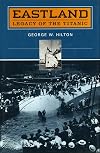
A thoroughly researched treatise on the Eastland disaster. Hilton's premise is that the Eastland tragedy was caused by the laws enacted in reaction to the Titanic, which required greater numbers of lifeboats than ever before (of course, ironically, the way the Eastland capsized, lifeboats were of no use to saving lives). The book is written with that in mind but still presents a complete history of the event: the ship; the historical context of the laws, shipping and other boat trade at the show more time, and applicable ship physics; how the ship capsized and why; why people at the *time* thought the ship capsized; disaster relief; further history of the ship; the cases both criminal and civil; and other similar tragedies. It is really a most thorough book. There are parts that are incredibly technical but are also explained in ways that a layperson can get the gist of it.
A great addition to a Chicago historian's library! show less
A great addition to a Chicago historian's library! show less
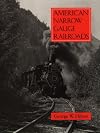
The definitive work on the narrow-gauge common carrier railroads of the United States. It does not cover the use of narrow-gauge railroads for industrial purposes, although roads that offered even a minimal degree of common carriage are included.
Hilton is an economist by profession, and his hard-headed analysis of the narrow-gauge phenomenon is a cutting one, demonstrating how poor an economic prospect most narrow-gauge lines were even when they were constructed. This is not a book to show more indulge one's nostalgia!
The book is divided into two major parts. The first covers the narrow-gauge movement in general terms, from its genesis and philosophy, its overall history, and its technology and equipment. The second goes state-by-state gazetteer-style, covering every common-carrier narrow-gauge railroad with at least a small writeup, while the more important railroads get perhaps a few pages of coverage. Of railroads that were only common-carrier roads for a short time, most of the coverage is for that period.
This is an excellent overall, overview work on narrow-gauge roads; it will not give enough information on individual roads to satisfy the enthusiast of those roads, but that's not it's intended purpose. show less
Hilton is an economist by profession, and his hard-headed analysis of the narrow-gauge phenomenon is a cutting one, demonstrating how poor an economic prospect most narrow-gauge lines were even when they were constructed. This is not a book to show more indulge one's nostalgia!
The book is divided into two major parts. The first covers the narrow-gauge movement in general terms, from its genesis and philosophy, its overall history, and its technology and equipment. The second goes state-by-state gazetteer-style, covering every common-carrier narrow-gauge railroad with at least a small writeup, while the more important railroads get perhaps a few pages of coverage. Of railroads that were only common-carrier roads for a short time, most of the coverage is for that period.
This is an excellent overall, overview work on narrow-gauge roads; it will not give enough information on individual roads to satisfy the enthusiast of those roads, but that's not it's intended purpose. show less
2780 Eastland: Legacy of the Titanic, by George W. Hilton (read 21 Aug 1995) The Eastland was a cruise ship which capsized on July 24, 1915, in the Chicago River. It had just been loaded with 2501 people. Over 800 died. The book is highly technical in its discussion of the cause of the disaster. Appropriately, an appendix lists all the dead people. The Eastland eventually became the Wilmette and served as a Navy ship till 1947. Much of the book was too technical for me, but I surely admire show more the thoroughness with which the author, professor emeritus of Economics at UCLA, did the research. show less
Awards


You May Also Like


Associated Authors
Statistics
- Works
- 22
- Members
- 480
- Popularity
- #51,407
- Rating
- 4.2
- Reviews
- 3
- ISBNs
- 31