
Shirley Hughes (1927–2022)
Author of Dogger
About the Author
Author and illustrator Shirley Hughes was born near Liverpool, U. K. on July 16, 1927. She studied drawing and costume design at Liverpool School of Art and the Ruskin School of Drawing in Oxford. At first she was an illustrator of other author's works, but in 1960 she published Lucy and Tom's Day, show more which was the first book she wrote and illustrated. Since then she has written and illustrated over 50 books. She won the Kate Greenaway Medal for Dogger in 1977, the Eleanor Farjeon Award for distinguished services to children's literature in 1984, and the OBE for services to children's literature in 1998. She currently lives in London with her husband. (Bowker Author Biography) show less
Image credit: Photo by Transangst
Series
Works by Shirley Hughes
The Faber Book of Nursery Stories (Faber Children's Classics) (1966) — Illustrator; Illustrator — 24 copies
123 - The Nursery Collection 20 copies
ABC - The Nursery Collection (2016) 13 copies
Winter- The nursery collection 5 copies
Charlie the Tramp 1 copy
Big Dog 1 copy
Alfie Stories (Alfie Gets in First / An Evening at Alfie's/ Alfie's Feet/ Alfie Gives a Hand) (1999) 1 copy
David and dog 1 copy
Andrés pasa una mala noche 1 copy
Alfi jalad 1 copy
Associated Works
Hans Andersen's Fairy Tales - Retold by E. Jean Roberton from the Original English Version by Caroline Peachey (1977) — Illustrator — 14 copies
The New Tenants — Illustrator — 7 copies
Cricket Magazine, Vol. 3, No. 4, December 1975 — Illustrator — 5 copies
Cricket Magazine, Vol. 8, No. 4, December 1980 — Illustrator — 2 copies
Cricket Magazine, Vol. 4, No. 11, July 1977 — Illustrator — 2 copies
Cricket Magazine, Vol. 4, No. 10, June 1977 — Illustrator — 1 copy
Illustration, Autumn 2006, issue 9 : The hunt for Lewis Carroll's snark (2006) — Contributor — 1 copy
Tagged
Common Knowledge
- Birthdate
- 1927-07-16
- Date of death
- 2022-02-25
- Gender
- female
- Education
- West Kirby High School
Liverpool School of Art
Ruskin School of Drawing and Fine Art, Oxford - Occupations
- writer
illustrator
children's book author - Organizations
- Society of Authors
Public Lending Right
Library and Information Services Council - Awards and honors
- Eleanor Farjeon Award (1984)
Liverpool John Moores University (honorary fellow)
Order of the British Empire (Officer ∙ 1999)
Action for Children's Arts (J. M. Barrie Award|2010)
BookTrust Lifetime Achievement Award (2015) - Relationships
- Vulliamy, John (husband|1952|his death|2007)
Vulliamy, Ed (son)
Vulliamy, Clara (daughter)
Vulliamy, C. E. (father-in-law) - Nationality
- UK
- Birthplace
- West Kirby, Wirral, Merseyside, England, UK
- Places of residence
- London, Middlesex, England, UK
- Map Location
- England, UK
Members
Reviews
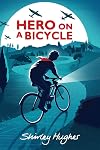
I'm fairly clued up about the Resistance in France in WWII, but far less so about the situation of the partisans in Italy, so I seized upon this story by Shirley Hughes - her first for older children. Its main characters are two teenage children in Florence left with their English mother as their partisan father is - who knows here? - involved in the anti-Fascist struggle. There's also 13 year old Paolo's dog, and even more crucially, his bicycle. Hughes paints a convincing picture of a life show more of privation and fear under occupation, and makes clear that it's far too simple to think of war as being Goodies versus Baddies. It's a story of love and fear that should provoke thought as well as excite the imagination of its target readership. It would make a cracking film, too. show less

The classic fairy-tale of Cinderella gets the Jazz-Age treatment in this Kate Greenaway Medal-winning picture book from celebrated English children's author and artist Shirley Hughes. The daughter of a successful dressmaker, Ella becomes a talented seamstress and dressmaker herself, living a happy life with her widowed father and her good friend Buttons, the shop boy in her father's establishment. But when her father remarries, and her new stepmother, Madame Renée, takes over, everything show more changes. Now Ella must wait on her vain and lazy stepsisters, Ruby and Pearl, and is reduced to a life of drudgery making all of the shop's clothing, but living in the basement. When the Duchess of Arc invites the family to a ball she is throwing for her son, Ella is not permitted to attend, until her umbrella-toting godmother shows up and provides her with the transport and clothing needed. Not surprisingly, Ella enchants the duke, who seeks her out when she flees at midnight, leaving behind her glass slipper. But is Ella in love with the duke? Or does she have someone else in mind...?
Awarded the 2003 Kate Greenaway Medal, the UK's most prestigious illustrator's award, Ella's Big Chance: A Jazz-Age Cinderella is an absolute delight, from an aesthetic perspective. I loved Hughes' artwork here, with the wonderful Jazz-Age clothing and settings, the delightfully expressive characters, and the overall composition on each page. Some of the artwork is in full color, but there are also charming little black and white illustrations throughout, in the vertical boxes containing the text on each page. I appreciated the fact that Ella's stepsisters are depicted as rail thin, whereas the more attractive and appealing Ella is more full-figured. Not plump, but not excessively slim either. The story itself was engaging, and felt like a real retelling, in another place and time, with details that were true to that time. I would consider this a fractured fairy-tale, as well as a transplanted one, because the ending has been changed, but even there I found myself pleased, despite not usually liking retellings that meddle too much with the story in question. Here I strongly felt from the beginning that Ellabelonged with Buttons, who had been a faithful friend to her , so I was happy to see that ending come to be. All in all, a wonderful fractured/transplanted retelling of this tale type! The only similar retelling I can think of, that equals it in my estimation, is Nancy Willard and Barry Moser's Hudson Valley version of Beauty and the Beast. Recommended to young fairy-tale fans, particularly those who appreciate unconventional retellings, as well as to those who appreciate stories in which fashion, and the art of making clothing, is an important element. show less
Awarded the 2003 Kate Greenaway Medal, the UK's most prestigious illustrator's award, Ella's Big Chance: A Jazz-Age Cinderella is an absolute delight, from an aesthetic perspective. I loved Hughes' artwork here, with the wonderful Jazz-Age clothing and settings, the delightfully expressive characters, and the overall composition on each page. Some of the artwork is in full color, but there are also charming little black and white illustrations throughout, in the vertical boxes containing the text on each page. I appreciated the fact that Ella's stepsisters are depicted as rail thin, whereas the more attractive and appealing Ella is more full-figured. Not plump, but not excessively slim either. The story itself was engaging, and felt like a real retelling, in another place and time, with details that were true to that time. I would consider this a fractured fairy-tale, as well as a transplanted one, because the ending has been changed, but even there I found myself pleased, despite not usually liking retellings that meddle too much with the story in question. Here I strongly felt from the beginning that Ella
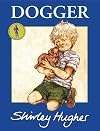
Some books touch me more than others, this is one that is special. A little boy has a favorite stuffed animal he calls Dogger, and he took him every place he went. Making believe he was a real dog, he pulled Dogger along with a leash made of string. Dogger had a little blanket and slept in bed with little David. When Dogger was dirty from overuse, David's mother showed him how to wash Dogger. Dogger was hung by one ear on the clothesline.
David's older sister, Bella, had seven favorite show more stuffed animals she slept with every night. Only Dogger was the animal for David. One day when walking David to school with Dogger, his mother noted a school fair. David pushed Dogger against the fence to show him to school fair. Unfortunately, Dogger became lost.
At night, David cried when he learned that Dogger was missing. The next day the family went to the school fair and found a table where stuffed animals were sold. There David and his sister Bella found Dogger on sale for .50 cents. Bella won a large yellow teddy bear as a prize for winning a raffle.
The young girl who was selling Dogger would not accept the .10 cents that Davey had. And, in a true act of love, Bella gave her newly won yellow bear to the girl in exchange for Dogger.
This is a lovely tale of sharing and caring, loss and found. show less
David's older sister, Bella, had seven favorite show more stuffed animals she slept with every night. Only Dogger was the animal for David. One day when walking David to school with Dogger, his mother noted a school fair. David pushed Dogger against the fence to show him to school fair. Unfortunately, Dogger became lost.
At night, David cried when he learned that Dogger was missing. The next day the family went to the school fair and found a table where stuffed animals were sold. There David and his sister Bella found Dogger on sale for .50 cents. Bella won a large yellow teddy bear as a prize for winning a raffle.
The young girl who was selling Dogger would not accept the .10 cents that Davey had. And, in a true act of love, Bella gave her newly won yellow bear to the girl in exchange for Dogger.
This is a lovely tale of sharing and caring, loss and found. show less

A young boy named Alfie enjoys his family's Christmas celebrations in this lovely picture-book from celebrated English author and artist, Shirley Hughes. As he counts down the days until Christmas itself, Alfie helps make cookies (or biscuits, as this is the UK!) and decorate the tree. He writes to Father Christmas, and gets his presents ready, making some at Nursery School and buying others with the help of his Dad. Finally, on the day itself, Alfie enjoys his time with his family, show more including his grandmother and Great Uncle Bill, visiting from Australia...
Apparently the character of Alfie, along with his little sister Annie Rose, was first introduced in 1981, in Alfie Gets in First. Although long aware of the character, and of Shirley Hughes' status in the world of British children's literature, I had never happened to pick up any of her books devoted to this character, before Alfie's Christmas. I'm glad I changed that, as I found this a lovely tale - gentle and heartwarming, it depicts an ordinary but loving English family, going about their holiday preparations - and hope to track down more. Recommended to anyone looking for engaging "slice of life" Christmas stories for younger children. show less
Apparently the character of Alfie, along with his little sister Annie Rose, was first introduced in 1981, in Alfie Gets in First. Although long aware of the character, and of Shirley Hughes' status in the world of British children's literature, I had never happened to pick up any of her books devoted to this character, before Alfie's Christmas. I'm glad I changed that, as I found this a lovely tale - gentle and heartwarming, it depicts an ordinary but loving English family, going about their holiday preparations - and hope to track down more. Recommended to anyone looking for engaging "slice of life" Christmas stories for younger children. show less
Lists
Folio Society (1)
Awards


You May Also Like


Associated Authors
Statistics
- Works
- 164
- Also by
- 58
- Members
- 10,505
- Popularity
- #2,267
- Rating
- 4.0
- Reviews
- 887
- ISBNs
- 669
- Languages
- 15
- Favorited
- 6
