
Lenore Appelhans
Author of Level 2
About the Author
Series
Works by Lenore Appelhans
Associated Works
Tagged
Common Knowledge
- Canonical name
- Appelhans, Lenore
- Legal name
- Appelhans, Lenore V.
- Other names
- Jennewein, Lenore
- Birthdate
- 05-31
- Gender
- female
- Agent
- Stephen Barbara (Foundry Literary Media)
- Nationality
- USA
- Birthplace
- Minot, North Dakota, USA
- Places of residence
- Frankfurt, Germany
- Associated Place (for map)
- USA
Members
Reviews

When Felicia is killed in a terrible accident, her bright future is cut short. But death isn’t the end for Felicia, as she has woken up inside a hive of blinding and pristine whiteness. There are others inside the hive, and as they stumble about numbed and forgetful, it seems the only thing that keeps them going is plugging into their separate memory chambers to relive bits and pieces of their lives over and over again. Though Felicia can’t remember much outside of her chamber, she forms show more a bond with two girls inside her hive and tries to understand what has happened to her. One day, after groggily exiting her chamber with her companions, a stranger with a familiar face seems to penetrate the very walls that are keeping the hive together. It’s Julian, a boy Felicia never expected or wanted to see again. When Julian tells Felicia that she must escape, she’s taken on the most dangerous of journeys, hunted by the beings who are prospering from her and her friend’s memories. As Felicia and Julian get further and further away, the danger becomes more and more apparent, for the sheer unstoppable forces that the enemy are using to hold her will do anything to keep her. But as Felicia and Julian advance, memories of her life come more clearly into focus, and in a place where she can trust only one person, can it be that Julian cannot be trusted at all? In Level 2, Lenore Appelhans gives us a frightening look into the world between here and heaven, and takes us to the brink of uncertainty through the use of magic, myth and religion in a potent and terrifying thriller that guarantees you will never think of heaven in quite the same way again.
In a white and sterile world, there is life. This is where the story begins, and through flashbacks the author sets up a vast and foreboding set of circumstances that will gradually reveal how Felicia died and where she ended up. As the energy from her memories is being siphoned off, it’s almost like a puzzle to decipher why someone would want to do something like this and why the people around her can’t remember even the basics about themselves or how they got to where they are.
In Applehans’ world, there is a deep symbiotic relationship between the darkness and the light, the powerful and the powerless, and the agents of evil and peace. As Felicia becomes more and more aware of what’s happening around her, she suffers terrible losses and must learn to cooperate with the devil she knows versus the one she doesn’t. This is a complex tangle of science, mysticism and spirituality that seems to defy any box that you can put it into. It’s textured and layered storytelling of the best kind, the type of tale that both compels you to delve deeper into chasm it’s created and to pull away from the darkness that is engulfing everything that Felicia knows and loves.
Even as Julian is saving Felicia, one wonders what his true motives are and what he’s hiding. He seems amiable and sincere, but there’s something hiding underneath, and the group that he has allied with aren’t the nicest sort. As I read, I wondered if there was more to Julian’s saving Felicia than he had asserted, and surely it seemed as though the more I learned about him, the easier it was to distrust him. But the author has a few aces up her sleeve when it comes to the true motives of this character, and the circumstances get even more surreal by the end of the novel.
In Felicia’s heart, there’s only room for one: the one whom she left behind. But the closer she comes to the terrible beings that are holding her and innumerable others prisoner, the closer she comes to the truth about the love she left behind and her life before Level 2. In the perfectly pitched and highly tense narrative, Felicia will find out more than she ever wanted to know, and she’ll have to make a choice that will affect not only her own soul, but that of those around her who are still slumbering in their hives, dreaming of the lives that they will never be a part of again.
I enjoyed this book to the fullest and found myself speculating on character motives, wondering what was coming next, and actively engaging with the cast of very three-dimensional characters that Appelhans created. I was sucked into this white world that suddenly turned vivid and uncannily haunting, and was just as ensnared with the careful and compelling rendition of the plot. I’m eagerly looking forward to seeing what the author brings me next in her second installment, Level 3. A top notch YA novel. Highly Recommended. show less
In a white and sterile world, there is life. This is where the story begins, and through flashbacks the author sets up a vast and foreboding set of circumstances that will gradually reveal how Felicia died and where she ended up. As the energy from her memories is being siphoned off, it’s almost like a puzzle to decipher why someone would want to do something like this and why the people around her can’t remember even the basics about themselves or how they got to where they are.
In Applehans’ world, there is a deep symbiotic relationship between the darkness and the light, the powerful and the powerless, and the agents of evil and peace. As Felicia becomes more and more aware of what’s happening around her, she suffers terrible losses and must learn to cooperate with the devil she knows versus the one she doesn’t. This is a complex tangle of science, mysticism and spirituality that seems to defy any box that you can put it into. It’s textured and layered storytelling of the best kind, the type of tale that both compels you to delve deeper into chasm it’s created and to pull away from the darkness that is engulfing everything that Felicia knows and loves.
Even as Julian is saving Felicia, one wonders what his true motives are and what he’s hiding. He seems amiable and sincere, but there’s something hiding underneath, and the group that he has allied with aren’t the nicest sort. As I read, I wondered if there was more to Julian’s saving Felicia than he had asserted, and surely it seemed as though the more I learned about him, the easier it was to distrust him. But the author has a few aces up her sleeve when it comes to the true motives of this character, and the circumstances get even more surreal by the end of the novel.
In Felicia’s heart, there’s only room for one: the one whom she left behind. But the closer she comes to the terrible beings that are holding her and innumerable others prisoner, the closer she comes to the truth about the love she left behind and her life before Level 2. In the perfectly pitched and highly tense narrative, Felicia will find out more than she ever wanted to know, and she’ll have to make a choice that will affect not only her own soul, but that of those around her who are still slumbering in their hives, dreaming of the lives that they will never be a part of again.
I enjoyed this book to the fullest and found myself speculating on character motives, wondering what was coming next, and actively engaging with the cast of very three-dimensional characters that Appelhans created. I was sucked into this white world that suddenly turned vivid and uncannily haunting, and was just as ensnared with the careful and compelling rendition of the plot. I’m eagerly looking forward to seeing what the author brings me next in her second installment, Level 3. A top notch YA novel. Highly Recommended. show less
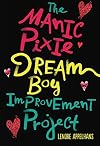
Riley lives in TropeTown, the place where all the stock characters hang out when they're not currently being used by authors to create stories. He's a Manic Pixie Dream Boy, an exceedingly rare variation on the Manic Pixie Dream Girl trope. (In fact, he's the only one there at the moment.) And he's just been ordered into therapy for talking back to an author for trying to write him into a stupid situation. From there, he develops a crush on a fellow Pixie, is frequently interrupted by being show more written into a (fairly terrible, if you ask me) YA novel, and discovers that the Manic Pixie trope is in danger of being retired entirely.
This is one of those books I feel like I enjoyed more than I quite ought to, somehow. When I started it, I was hoping for some weird and wacky meta-ness, and maybe a bit of sharp satire on the whole Manic Pixie Dream Girl concept. As it turns out, the meta-ness is mildly clever and amusing, but not quite the wildly and brilliantly inventive thing I might have wished for, and the commentary on the trope is mostly fairly shallow, with a brief descent or two into over-earnestness. The plot ultimately turns out to be pretty thin, too, and, perhaps unsurprisingly, the whole thing does get a bit too silly, making it not nearly as satisfying in the end as it should have been.
And yet. And yet, it was also warm and fun and cute, and apparently very much the sort of thing my slightly stressed-out brain was in the mood for just now, and I think I was smiling at least a little bit through a lot of it. Yeah, yeah, embarrassing as it is, I suppose you could maybe say that despite myself it won me over with its quirky, quirky ways and its vivacious lust for life, or something. Not completely, in the end. But maybe just enough. show less
This is one of those books I feel like I enjoyed more than I quite ought to, somehow. When I started it, I was hoping for some weird and wacky meta-ness, and maybe a bit of sharp satire on the whole Manic Pixie Dream Girl concept. As it turns out, the meta-ness is mildly clever and amusing, but not quite the wildly and brilliantly inventive thing I might have wished for, and the commentary on the trope is mostly fairly shallow, with a brief descent or two into over-earnestness. The plot ultimately turns out to be pretty thin, too, and, perhaps unsurprisingly, the whole thing does get a bit too silly, making it not nearly as satisfying in the end as it should have been.
And yet. And yet, it was also warm and fun and cute, and apparently very much the sort of thing my slightly stressed-out brain was in the mood for just now, and I think I was smiling at least a little bit through a lot of it. Yeah, yeah, embarrassing as it is, I suppose you could maybe say that despite myself it won me over with its quirky, quirky ways and its vivacious lust for life, or something. Not completely, in the end. But maybe just enough. show less
The basics: Level 2 is the story of Felicia who died when she was seventeen and is stuck in Level 2, which is a sort of limbo between life and afterlife. In Level 2, drones can access their memories, but they also serve as a type of currency: if others watch your memories, it generates credits for you to watch more memories. When Felicia recognizes Julian, someone she knew in her life, and he tries to break her free from Level 2, she begins to learn more about what exactly Level 2 is.
My show more thoughts: From the first pages, I was fascinated by the world of Level 2 and by Felicia's story. She's a young woman who lived in and traveled to many cities and countries. She's articulate and loyal. Appelhans smartly tells Felicia's story in concurrent narratives: the reader is plunged into the world of Level 2, which Appelhans adds detailed observation into as the novel continues. The emphasis is on plot and character building rather than dystopian world building, yet the details of Level 2 are fleshed out a slow and satisfactory pace.
The reader gets to know Felicia and her past as she accesses her memories. I was struck by the haunting details of each memory. Appelhans includes metadata in the form of user tags (and metadata makes this librarian swoon.) Also included are the video owner's rating and viewer ratings. It's at times heartbreaking to see the difference between those two ratings.
The verdict: Level 2 is an inventive dystopian novel and a fascinating glimpse into memories and their meanings. It balances the puzzles of Level 2 with strongly developed characters who would not be out of place in any world. I thoroughly enjoyed sharing Felicia's journey with her, and I look forward to the next installment of The Memory Chronicles. show less
My show more thoughts: From the first pages, I was fascinated by the world of Level 2 and by Felicia's story. She's a young woman who lived in and traveled to many cities and countries. She's articulate and loyal. Appelhans smartly tells Felicia's story in concurrent narratives: the reader is plunged into the world of Level 2, which Appelhans adds detailed observation into as the novel continues. The emphasis is on plot and character building rather than dystopian world building, yet the details of Level 2 are fleshed out a slow and satisfactory pace.
The reader gets to know Felicia and her past as she accesses her memories. I was struck by the haunting details of each memory. Appelhans includes metadata in the form of user tags (and metadata makes this librarian swoon.) Also included are the video owner's rating and viewer ratings. It's at times heartbreaking to see the difference between those two ratings.
The verdict: Level 2 is an inventive dystopian novel and a fascinating glimpse into memories and their meanings. It balances the puzzles of Level 2 with strongly developed characters who would not be out of place in any world. I thoroughly enjoyed sharing Felicia's journey with her, and I look forward to the next installment of The Memory Chronicles. show less
https://iwriteinbooks.wordpress.com/2019/01/10/the-manic-pixie-dream-boy-improve...
So, I have a confession.
When I was younger, I loved the Manic Pixie Dream Girl (or Boy when they were present) trope. I resonated with the spunky, energetic, quirkiness so much. I’ve always been a little bit MPDG, probably.
But as I got older, I started looking at the trope a little bit differently. While I was a free spirit and hyperactive, I still had my own goals and dreams. I won’t turn this into a show more dissertation on gender role expectations but needless to say, I fell out of love with the role type, at least in the more obvious incarnations (I’m looking at you, Garden State and Elizabethtown.)
Flashforward to the present and I find myself longing for the days when I had fewer grounded responsibilities. I think that’s why The Manic Pixie Dream Boy Improvement Project resonated with me so deeply. Most of the appeal of the trope is that we all gravitate toward the spark we’ve either lot along the way, or never had to begin with. The shining, sparkly, fun, abandon calls to even the grumpiest among us.
Without giving too much of the story away, the book follows Riley, a Trope Town Manic Pixie Dream Boy, through what is sure to be a world-ending, disaster of an identity crisis, as his entire existence is called into question by the authority he and the rest of the town’s stock characters answer to. Through self-questioning, group therapy, and yes, manic pixie hijinx, a much deeper, softer, undercurrent of discovery runs through the story.
The bok turned out to be far deeper and more complex than I anticipated but then again, that’s the thing with Manic Pixie Dream folks; they just look sparkly when we’re down in the dumps and they come to rescue us. Off the page, they tend to be full, whole people with their own identities. And so are we. show less
So, I have a confession.
When I was younger, I loved the Manic Pixie Dream Girl (or Boy when they were present) trope. I resonated with the spunky, energetic, quirkiness so much. I’ve always been a little bit MPDG, probably.
But as I got older, I started looking at the trope a little bit differently. While I was a free spirit and hyperactive, I still had my own goals and dreams. I won’t turn this into a show more dissertation on gender role expectations but needless to say, I fell out of love with the role type, at least in the more obvious incarnations (I’m looking at you, Garden State and Elizabethtown.)
Flashforward to the present and I find myself longing for the days when I had fewer grounded responsibilities. I think that’s why The Manic Pixie Dream Boy Improvement Project resonated with me so deeply. Most of the appeal of the trope is that we all gravitate toward the spark we’ve either lot along the way, or never had to begin with. The shining, sparkly, fun, abandon calls to even the grumpiest among us.
Without giving too much of the story away, the book follows Riley, a Trope Town Manic Pixie Dream Boy, through what is sure to be a world-ending, disaster of an identity crisis, as his entire existence is called into question by the authority he and the rest of the town’s stock characters answer to. Through self-questioning, group therapy, and yes, manic pixie hijinx, a much deeper, softer, undercurrent of discovery runs through the story.
The bok turned out to be far deeper and more complex than I anticipated but then again, that’s the thing with Manic Pixie Dream folks; they just look sparkly when we’re down in the dumps and they come to rescue us. Off the page, they tend to be full, whole people with their own identities. And so are we. show less
Lists
You May Also Like


Associated Authors
Statistics
- Works
- 5
- Also by
- 1
- Members
- 395
- Popularity
- #61,386
- Rating
- 3.3
- Reviews
- 35
- ISBNs
- 38
- Languages
- 2
