
David Goodis (1917–1967)
Author of Shoot the Piano Player
About the Author
Works by David Goodis
David Goodis, tome 2 : Obsession, La lune dans le caniveau, La blonde au coin de la rue, Descente aux enfers, Beauté bleue (1994) 5 copies
The Plunge [short story] 4 copies
Caravan To Tarim 2 copies
HLo Iscassinatore 1 copy
Black Lizard 1 copy
A lua nasce sarjeta 1 copy
ROMANZI 1 copy
Skuggor över Manhattan 1 copy
David Goodis: Retour à la vie; La garce; La police est accusée; Cassidy's girl; Épaves (1993) 1 copy
℗La ℗fuga: romanzo 1 copy
Goodis David 1 copy
Associated Works
Tagged
Common Knowledge
- Legal name
- Goodis, David Loeb
- Birthdate
- 1917-03-02
- Date of death
- 1967-01-07
- Gender
- male
- Education
- Temple University
- Occupations
- author
screenwriter - Cause of death
- stroke ("cerebral vascular accident" on death certificate)
- Nationality
- USA
- Birthplace
- Philadelphia, Pennsylvania, USA
- Place of death
- Philadelphia, Pennsylvania, USA
- Burial location
- Roosevelt Memorial Park, Trevose, Bucks County, Pennsylvania, USA
- Associated Place (for map)
- Pennsylvania, USA
Members
Reviews
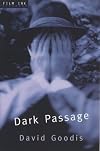
Hardboiled Fun, But Flawed
Vincent Parry, convicted of murdering his wife, escapes from San Quintin, and goes on the run. He adamantly claims he didn’t do it, but a star witness, Madge, a friend of his wife he had an affair with, testified that Parry’s wife, Gert, with her last dying breath said Parry killed her. You wonder if he did kill her, because during his escape, he engages in several acts of violence; including two murders, and suffers a few mental lapses. Luckily for him, a young show more woman, Irene, picks him up on a highway heading into San Francisco. She provides him with shelter at her apartment, buys him new clothes, and gives him money, reasons for which are revealed slowly. He also, by happenstance, hooks up with a cabbie who knows a guy who performs plastic surgery in a shabby office and can give him a new face. With the money Irene gave him, he’s able to afford the back alley surgery and has a place in which he can spend five days recovering. Turns out that Irene knows Madge, because her ex-husband and she are friends, though the ex wishes it were more. With time to think, Parry begins to piece together the murder of his wife, and also that of his best friend, and learns who the real killer is. He confronts the killer, who eventually admits to the murder, but in a fit of rage, he struggles with the killer who ends dying by defenestration. Now unable to prove his innocence, he decides he has to flee the country to the small town of Pativilca (Patavilca in the novel), Peru. It ends with him leaving and Irene planning to join him in a couple of months when the heat over Madge’s death dies down.
Dark Passage is a psychological thriller told from Parry’s perspective. Readers are always in Parry’s head as he broods over his plight, as he bounces from one situation to the next, always weighting whether he will have to resort to violence to stay free. He’s a man alone in the world living by his wits. Then Irene takes him in and he faces a new set of challenges as he finds himself drawn to her. The attraction strengthens as she nurses him back to health after his surgery. He has bitter memories of Gert, who humiliated and rejected him constantly no matter how he placated her. At first wary of Irene, his affection for her increases and he struggles with either protecting her from prosecution for harboring a fugitive and living with her in Peru.
At its heart, for all the psychological aspects, it is hardboiled pulp fiction. But what makes it a standout in this genre is Goodis’ economical style. It has a staccato feel to it that really makes it a pleasure to read. Readers, though, will have to suspense their disbelief regarding a bunch of improbabilities, such as the whole core bit revolving around the back ally face reconstruction, and that Parry can run around San Francisco though the police must be conducting a pretty intensive search for an escaped murderer, not to mention the longwinded exchanges with a blackmailer and the killer (which, actually, are kind of fun to read). Do that and you’ll enjoy this bit of noir from the ‘50s.
David Goodis died at the age of 49, but during his short lifespan, he produced millions of words, first in advertising, then as a pulp fiction magazine writer, a novelist, and a Hollywood scriptwriter. Dark Passage, published in 1946, proved to be his breakout novel, a bestseller turned into a noir film of the same name in 1947, starring Humphrey Bogart, Lauren Bacall, and Agnes Moorehead. show less
Vincent Parry, convicted of murdering his wife, escapes from San Quintin, and goes on the run. He adamantly claims he didn’t do it, but a star witness, Madge, a friend of his wife he had an affair with, testified that Parry’s wife, Gert, with her last dying breath said Parry killed her. You wonder if he did kill her, because during his escape, he engages in several acts of violence; including two murders, and suffers a few mental lapses. Luckily for him, a young show more woman, Irene, picks him up on a highway heading into San Francisco. She provides him with shelter at her apartment, buys him new clothes, and gives him money, reasons for which are revealed slowly. He also, by happenstance, hooks up with a cabbie who knows a guy who performs plastic surgery in a shabby office and can give him a new face. With the money Irene gave him, he’s able to afford the back alley surgery and has a place in which he can spend five days recovering. Turns out that Irene knows Madge, because her ex-husband and she are friends, though the ex wishes it were more. With time to think, Parry begins to piece together the murder of his wife, and also that of his best friend, and learns who the real killer is. He confronts the killer, who eventually admits to the murder, but in a fit of rage, he struggles with the killer who ends dying by defenestration. Now unable to prove his innocence, he decides he has to flee the country to the small town of Pativilca (Patavilca in the novel), Peru. It ends with him leaving and Irene planning to join him in a couple of months when the heat over Madge’s death dies down.
Dark Passage is a psychological thriller told from Parry’s perspective. Readers are always in Parry’s head as he broods over his plight, as he bounces from one situation to the next, always weighting whether he will have to resort to violence to stay free. He’s a man alone in the world living by his wits. Then Irene takes him in and he faces a new set of challenges as he finds himself drawn to her. The attraction strengthens as she nurses him back to health after his surgery. He has bitter memories of Gert, who humiliated and rejected him constantly no matter how he placated her. At first wary of Irene, his affection for her increases and he struggles with either protecting her from prosecution for harboring a fugitive and living with her in Peru.
At its heart, for all the psychological aspects, it is hardboiled pulp fiction. But what makes it a standout in this genre is Goodis’ economical style. It has a staccato feel to it that really makes it a pleasure to read. Readers, though, will have to suspense their disbelief regarding a bunch of improbabilities, such as the whole core bit revolving around the back ally face reconstruction, and that Parry can run around San Francisco though the police must be conducting a pretty intensive search for an escaped murderer, not to mention the longwinded exchanges with a blackmailer and the killer (which, actually, are kind of fun to read). Do that and you’ll enjoy this bit of noir from the ‘50s.
David Goodis died at the age of 49, but during his short lifespan, he produced millions of words, first in advertising, then as a pulp fiction magazine writer, a novelist, and a Hollywood scriptwriter. Dark Passage, published in 1946, proved to be his breakout novel, a bestseller turned into a noir film of the same name in 1947, starring Humphrey Bogart, Lauren Bacall, and Agnes Moorehead. show less

A man on the run gets involved with a gang near Philadelphia and has to use his wits to survive. This is a very bleak story, like most of what Goodis wrote, but it rings true on every page. Unlike Charles Willeford, whose bleak stories always had a bit of an ironic tone and devil-may-care attitude to them that signaled it all wasn't quite real, Goodis doesn't let any light shine into this dark tale at all. There isn't a lot of action, the crux of the story are the interactions between the show more four men and two women holed up in Germantown, PA. Each of them may start with a stereotype, but Goodis breathes life into them, and even the least sympathetic character (it would really be hard to pick ONE) has a human side that disarms our preconceptions. The more I read of Goodis, the less the darkness of his work bothers me. I am beginning to enjoy it for its truth. show less
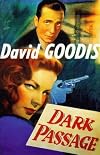
Goodis was one of the greats of mid-century noir paperbacks. His novels generally took the reader on a dizzying march into the deepest wells of despair. A typical Goodis character is the so-called innocent man with half the city's police force after him. The character is soon penniless and fleeing through dark alleys and swampy muck, descending into depths of hell. Drugs, alcohol, women all proving to be his downfall. Dark Passage takes place in San Francisco, not Goodis' usual location of show more Philadelphia. It is a story of a man tried and convicted for his wife's murder and who then escapes a maximum security prison. It is a psycho-social study of his troubled and distrustful mind. When you are on the run, it pays to be paranoid. Is he a psychopathic killer or the patsy he claims to be? Can you trust his narration? Does he attract nuts like moths to a flame? Is the trial groupie cuckoo or just smitten? Is there a man in a studebaker pursuing him? From the frenetic pace of the prison escape to his crazy running back and forth without a plan, the story is relentless. Amidst the backdrop of 1950's soda fountains, you have murder and promiscuity and obsession and craziness. show less

David Goodis’s Dark Passage is most famous today because of the WB film starring Humphrey Bogart and Lauren Bacall. Goodis sold the rights to film it for $25,000 and secured for himself immortality by doing so. To those who read, however, and especially those who enjoy a good crime noir, Goodis’s name would be known and bandied about during discussions of the genre, regardless.
Anyone familiar with the very good film based on the book knows that for the first forty minutes or so of the show more movie, we are in Parry’s (Bogart’s) shoes during the prison break and the ensuing escape. We never see Parry’s face during this portion of the film. Goodis’s entire novel is the equivalent of that portion of the film, the reader placed into Parry’s head, “hearing” him panic, reason out things, fight his fear and paranoia, and finally, figure out who killed his unfaithful wife and framed him for the murder.
Tightly constructed and narratively claustrophobic, Dark Passage is a unique narrative that won’t appeal to everyone. It is more likely to appeal to fans of the genre, and fans of the greatest writer of suspense, Cornell Woolrich. Goodis here seems to be influenced by Woolrich’s work. Parry even has an entire conversation in his head with his only friend, who has just been murdered, which is very Woolrichian.
One can almost picture Agnes Morehead as the shrill and annoying Madge Rapf, and Bacall as the lovely and lonely Irene, whose motives for helping Parry hide out at the outset, and later so that his face can heal when he has it altered, are at first unclear. Those motives will be seem more ambiguous for anyone who hasn’t seen the 40s film, but that’s not many.
There is loneliness here, and not just Parry’s, and there is that feeling of the little guy fighting against fate which permeated Woolrich’s work during this period. While Goodis doesn’t quite reach the level of Woolrich noir, this is very good, and there are moments when he comes close. A tricky and ultimately dooming confrontation with a guy referred to as Studebaker for much of the book, and the color of a car, set in motion an exciting conclusion. It is here, at the end, when Goodis throws the reader a Deadline at Dawn type of lifeline that makes this a memorable read.
While the narrative style of nearly every thought in Parry’s head can become too overblown at times, at other times it’s marvelous, both cerebrally claustrophobic and entertainingly mesmerizing. This seminal noir novel will have you looking up Patavilca, Peru on your globe, and wondering…
Because Goodis seemed to be channeling Woolrich, but didn’t quite reach that lofty plateau, this is 4.5 stars for me. But it is such a terrific read, I’m rounding up. A unique novel (unless you’ve read Woolrich), and like Woolrich, not for everyone. Fans of 1940s and '50s noir/suspense, however, must have a go at it to sample the full spectrum of what the genre has to offer. show less
Anyone familiar with the very good film based on the book knows that for the first forty minutes or so of the show more movie, we are in Parry’s (Bogart’s) shoes during the prison break and the ensuing escape. We never see Parry’s face during this portion of the film. Goodis’s entire novel is the equivalent of that portion of the film, the reader placed into Parry’s head, “hearing” him panic, reason out things, fight his fear and paranoia, and finally, figure out who killed his unfaithful wife and framed him for the murder.
Tightly constructed and narratively claustrophobic, Dark Passage is a unique narrative that won’t appeal to everyone. It is more likely to appeal to fans of the genre, and fans of the greatest writer of suspense, Cornell Woolrich. Goodis here seems to be influenced by Woolrich’s work. Parry even has an entire conversation in his head with his only friend, who has just been murdered, which is very Woolrichian.
One can almost picture Agnes Morehead as the shrill and annoying Madge Rapf, and Bacall as the lovely and lonely Irene, whose motives for helping Parry hide out at the outset, and later so that his face can heal when he has it altered, are at first unclear. Those motives will be seem more ambiguous for anyone who hasn’t seen the 40s film, but that’s not many.
There is loneliness here, and not just Parry’s, and there is that feeling of the little guy fighting against fate which permeated Woolrich’s work during this period. While Goodis doesn’t quite reach the level of Woolrich noir, this is very good, and there are moments when he comes close. A tricky and ultimately dooming confrontation with a guy referred to as Studebaker for much of the book, and the color of a car, set in motion an exciting conclusion. It is here, at the end, when Goodis throws the reader a Deadline at Dawn type of lifeline that makes this a memorable read.
While the narrative style of nearly every thought in Parry’s head can become too overblown at times, at other times it’s marvelous, both cerebrally claustrophobic and entertainingly mesmerizing. This seminal noir novel will have you looking up Patavilca, Peru on your globe, and wondering…
Because Goodis seemed to be channeling Woolrich, but didn’t quite reach that lofty plateau, this is 4.5 stars for me. But it is such a terrific read, I’m rounding up. A unique novel (unless you’ve read Woolrich), and like Woolrich, not for everyone. Fans of 1940s and '50s noir/suspense, however, must have a go at it to sample the full spectrum of what the genre has to offer. show less
Lists
Awards


You May Also Like


Associated Authors
Statistics
- Works
- 65
- Also by
- 16
- Members
- 3,363
- Popularity
- #7,584
- Rating
- 3.8
- Reviews
- 97
- ISBNs
- 177
- Languages
- 8
- Favorited
- 14
