
Flora Tristán (1803–1844)
Author of Peregrinations of a Pariah
About the Author
Works by Flora Tristán
Ensayos escogidos 3 copies
Associated Works
Tagged
Common Knowledge
- Canonical name
- Tristán, Flora
- Legal name
- Tristán y Moscoso Lesnais, Flora Célestine Thérèse Henriette
- Other names
- Tristan-Moscoso, Flore-Celestine-Therèse-Henriette
- Birthdate
- 1803-04-07
- Date of death
- 1844-11-14
- Gender
- female
- Occupations
- novelist
political activist
feminist
Travel Writer
socialist
suffragist (show all 7)
essayist - Relationships
- Gauguin, Paul (grandson)
- Short biography
- Flore-Celestine-Therèse-Henriette Tristan-Moscoso -- known as Flora Tristan -- was born in Paris to a French mother and a Peruvian father who was an officer of the Spanish Navy in Peru. Her father died when she was four years old, and the family fell into poverty. In 1821, at age 17, she married her employer, Andre-Francois Chazal, a lithographer, with whom she had three children. Her husband was violent and Flora left him while pregnant with her third child. She began a fight for a divorce, and it was only after an incident in which her husband shot and wounded her that she was granted a legal separation. In 1833-1834, she traveled to Peru in an failed attempt to claim her paternal inheritance. On her return, she wrote a book that was part travelogue and part personal diary of her marriage, published as Pérégrinations d’une paria (Pilgrimage of a Pariah) in 1838. She began to write for the Gazette des Femmes, and after a visit to London she published her observation of working-class conditions there in an influential essay called L’Union Ouvriere (The Worker’s Union). She was a political activist and pioneering feminist who was involved with socialist and utopian movements that flourished in France prior to the Revolution of 1848. She died suddenly at age 41 in 1844.
- Nationality
- France
- Birthplace
- Paris, Île-de-France, France
- Places of residence
- Paris, France
Arequipa, Peru
Bordeaux, Gironde, Nouvelle-Aquitaine, France - Place of death
- Bordeaux, Gironde, Nouvelle-Aquitaine, France
- Map Location
- France
Members
Reviews
The London Journal of Flora Tristan 1842: The Aristocracy and the Working Class of England by Flora Tristán

Flora Tristan was quite a woman, and as her life was not typical of her time (or any time for that matter), so this travel book is not typical of travel books in general. She visited London three times to gather support for her conviction that the English aristocracy cared for nothing but material wealth and abused the rest of the populace in order to acquire it. She hoped to warn the rest of Europe away from English practice. Here you will find no descriptions of historical monuments or show more visits in stately homes. Instead, Flora used every wile in her arsenal to get into the prisons, infant schools, and poor neighborhoods of what she called "The Monster City." She even disguised herself as a Turkish man to get into both houses of Parliament.
I find it sad that many of her commenaries could have been written yesterday as easily as 160 years ago. In a typical passage Flora writes,"---hunger is not the only reason for attacks on property. Since in our society money can satisfy every passion and surmount every obstacle, since money is a substitute for talent, honour and probity, since money opens every door, then man will stop at nothing to acquire it. Nobody is content with his position in life, everybody seeks to rise in the world; and the crimes committed in the name of this universal ambition are incalculable." That gives a feeling for her prose. She becomes shrill in her denunciation of the English as a nation. She is a vocal socialist and feminist, and her work rewards a history student. The casual reader hoping for a balanced look at London in the 1830's will be disappointed. show less
I find it sad that many of her commenaries could have been written yesterday as easily as 160 years ago. In a typical passage Flora writes,"---hunger is not the only reason for attacks on property. Since in our society money can satisfy every passion and surmount every obstacle, since money is a substitute for talent, honour and probity, since money opens every door, then man will stop at nothing to acquire it. Nobody is content with his position in life, everybody seeks to rise in the world; and the crimes committed in the name of this universal ambition are incalculable." That gives a feeling for her prose. She becomes shrill in her denunciation of the English as a nation. She is a vocal socialist and feminist, and her work rewards a history student. The casual reader hoping for a balanced look at London in the 1830's will be disappointed. show less

Una lectura curiosa, aunque como obra póstuma... no me ha parecido muy interesante. Eso sí, Tristan carga contra todo y contra todos (en especial, contra las instituciones eclesiásticas).

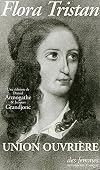
Un libro esencial en la historia del feminismo y la lucha obrera. Tristan plantea ideas revolucionarias sobre los derechos de las mujeres y los trabajadores, adelantándose a su tiempo.
Mar 10, 2025Spanish
Lists
You May Also Like


Associated Authors
Statistics
- Works
- 27
- Also by
- 4
- Members
- 302
- Popularity
- #77,841
- Rating
- 3.8
- Reviews
- 4
- ISBNs
- 58
- Languages
- 7
- Favorited
- 1
