
Isabella Lucy Bird (1831–1904)
Author of A Lady's Life in the Rocky Mountains
About the Author
Series
Works by Isabella Lucy Bird
The Hawaiian Archipelago: Six Months Among the Palm Groves, Coral Reefs, and Volcanoes of the Sandwich Islands (1875) 202 copies, 5 reviews
Korea and Her Neighbours: A Narrative of Travel, with an Account of the Recent Vicissitudes and Present Position of the Country (1970) 42 copies
Isabella Lucy Bird's "a Lady's Life in the Rocky Mountains": An Annotated Text (1999) 15 copies, 1 review
An Englishwoman in America 1 copy
Associated Works
A Curious Life for a Lady: The Story of Isabella Bird, a Remarkable Victorian Traveller (1970) — some editions — 57 copies, 2 reviews
Tagged
Common Knowledge
- Other names
- Bishop, Isabella Bird
- Birthdate
- 1831-10-15
- Date of death
- 1904-10-07
- Gender
- female
- Education
- at home
- Occupations
- writer
traveller
natural historian - Organizations
- Royal Geographical Society
- Awards and honors
- First woman fellow of the Royal Geographical Society
- Short biography
- Isabella Lucy Bird was a peripatetic Victorian Englishwoman who travelled around the globe and wrote popular books and magazine articles about her adventures. In 1880, she married Edinburgh physician John Bishop and in 1892, she became the first woman inducted into the Royal Geographical Society.
- Nationality
- UK
- Birthplace
- Boroughbridge, England, UK
- Places of residence
- Boroughbridge, England, UK
Edinburgh, Scotland, UK
Tattenhall, Cheshire, England, UK
Maidenhead, Berkshire, England, UK
Birmingham, Warwickshire, England, UK
Eastbourne, Sussex, England, UK (show all 7)
Wyton, Huntingdonshire, England, UK - Place of death
- Edinburgh, Scotland, UK
- Associated Place (for map)
- England, UK
Members
Discussions
Folio Archives 330: A Lady’s Life in the Rocky Mountains by Isabella Bird 1988 in Folio Society Devotees (July 2023)
Reviews

Isabella Bird was born in England in 1831. She was unwell most of her life so her doctor essentially gave her a prescription to travel. Travel she did, becoming the first woman to be elected a fellow of the Royal Geographic Society.
In 1878, she visited Japan. She hired a young Japanese man, Ito, to interpret for her and assist with arrangements. The pair set out for the interior of the country, which hadn’t been explored very well by Europeans at that point. After completing that part of show more her journey, she visited the indigenous Aino (now, Ainu) people of Japan.
I read one of Ms. Bird’s earlier books, Adventures in the Rocky Mountains, during my blogging break and quite enjoyed it. I could only admire a woman who, in Victorian times, not only traveled alone, but managed to summit Longs Peak in a dress. When I needed a travel book as part of the 20201 Nonfiction Challenge, Ms. Bird came to mind and this was the book that was available at my library.
What I forgot in my admiration for Ms. Bird’s accomplishments as a woman is her matter-of-fact racism. This is so disturbing! She’s a product of her time but it’s so jarring to read today! Her attitude does improve as she travels more extensively throughout Japan and grows accustomed to the culture. She really doesn’t like Japanese people at all at first. As she travels and learns the culture, she appreciates their unquestioning kindness toward guests. After a week or two of traveling, she even mentions that a young Japanese lady is the most beautiful woman she’s ever seen, bar none! But this tends to be the exception more than the rule. The interior of Japan was apparently very poor at this point in history and she continually complains about how filthy everything is, including her rooms, the adults, and especially the children.
When she visits the Ainu people, she really likes them and struggles to work out her feelings in her letters. Her father was a clergyman so she’s coming from a very conservative Christian background. I did finally take some notes in this section.
Surely these simple savages are children, as children to be judged; may we not hope as children to be saved through Him who came not to judge the world, but to save the world ?
She’s still degrading them but if she’s worried about their souls, at least she sees them as humans who have souls and feelings. Then she has a longer theosophical argument with herself.
The glamour which at first disguises the inherent barrenness of savage life has had time to pass away, and I see it in all its nakedness as a life not much raised above the necessities of animal existence, timid, monotonous, barren of good, dark, dull, without hope, and without God in the world; though at its lowest and worst considerably higher and better than that of many other aboriginal races, and– must I say it?–considerably higher and better than that of thousands of the lapsed masses of our own great cities who are baptized into Christ’s name, and are laid at last in holy ground, inasmuch as the Ainos are truthful, and, on the whole, chaste, hospitable, honest, reverent, and kind to the aged.
She’s still calling them savages but she’s finally admitting that they’re more moral than a lot of Christians. I don’t think we can call her “woke” by modern standards, but for the time, she’s practically a paragon of acceptance, I guess.
That aside, the bulk of the book is monotonous. I don’t know if she visited in an exceptionally rainy summer or if the interior is a temperate rainforest, but most of the book can be summed up with, “It rained; I slept in a disgusting hovel; I rode an obstreperous, ill-treated horse; it rained even more; I crossed a flooded river; I slept in a disgusting hovel; repeat.”
There were a few notable exceptions to the monotony and I wish Ms. Bird had written more consistently like this. The Shrine of Nikko (I think we call it the Toshugo Shrine now) astounds her and she describes it extensively. She writes beautifully about seeing a young bride preparing for her wedding. The rest is rain and mud until she visits the Aino, where her writing really shines. It doesn’t rain as much while she’s visiting them, so she thoroughly describes their appearance (in unconsciously derogatory terms), their religion, their customs, some of their mythology, and their culture, all of which is fascinating.
I preferred Adventures in the Rocky Mountains overall (although I do remember now that Ms. Bird always refers to Native Americans as savages too), because there’s more going on than just rain and mud. I’d recommend that book over this one but if you’re looking for more of this author’s works, certainly give Unbeaten Tracks in Japan a try. show less
In 1878, she visited Japan. She hired a young Japanese man, Ito, to interpret for her and assist with arrangements. The pair set out for the interior of the country, which hadn’t been explored very well by Europeans at that point. After completing that part of show more her journey, she visited the indigenous Aino (now, Ainu) people of Japan.
I read one of Ms. Bird’s earlier books, Adventures in the Rocky Mountains, during my blogging break and quite enjoyed it. I could only admire a woman who, in Victorian times, not only traveled alone, but managed to summit Longs Peak in a dress. When I needed a travel book as part of the 20201 Nonfiction Challenge, Ms. Bird came to mind and this was the book that was available at my library.
What I forgot in my admiration for Ms. Bird’s accomplishments as a woman is her matter-of-fact racism. This is so disturbing! She’s a product of her time but it’s so jarring to read today! Her attitude does improve as she travels more extensively throughout Japan and grows accustomed to the culture. She really doesn’t like Japanese people at all at first. As she travels and learns the culture, she appreciates their unquestioning kindness toward guests. After a week or two of traveling, she even mentions that a young Japanese lady is the most beautiful woman she’s ever seen, bar none! But this tends to be the exception more than the rule. The interior of Japan was apparently very poor at this point in history and she continually complains about how filthy everything is, including her rooms, the adults, and especially the children.
When she visits the Ainu people, she really likes them and struggles to work out her feelings in her letters. Her father was a clergyman so she’s coming from a very conservative Christian background. I did finally take some notes in this section.
Surely these simple savages are children, as children to be judged; may we not hope as children to be saved through Him who came not to judge the world, but to save the world ?
She’s still degrading them but if she’s worried about their souls, at least she sees them as humans who have souls and feelings. Then she has a longer theosophical argument with herself.
The glamour which at first disguises the inherent barrenness of savage life has had time to pass away, and I see it in all its nakedness as a life not much raised above the necessities of animal existence, timid, monotonous, barren of good, dark, dull, without hope, and without God in the world; though at its lowest and worst considerably higher and better than that of many other aboriginal races, and– must I say it?–considerably higher and better than that of thousands of the lapsed masses of our own great cities who are baptized into Christ’s name, and are laid at last in holy ground, inasmuch as the Ainos are truthful, and, on the whole, chaste, hospitable, honest, reverent, and kind to the aged.
She’s still calling them savages but she’s finally admitting that they’re more moral than a lot of Christians. I don’t think we can call her “woke” by modern standards, but for the time, she’s practically a paragon of acceptance, I guess.
That aside, the bulk of the book is monotonous. I don’t know if she visited in an exceptionally rainy summer or if the interior is a temperate rainforest, but most of the book can be summed up with, “It rained; I slept in a disgusting hovel; I rode an obstreperous, ill-treated horse; it rained even more; I crossed a flooded river; I slept in a disgusting hovel; repeat.”
There were a few notable exceptions to the monotony and I wish Ms. Bird had written more consistently like this. The Shrine of Nikko (I think we call it the Toshugo Shrine now) astounds her and she describes it extensively. She writes beautifully about seeing a young bride preparing for her wedding. The rest is rain and mud until she visits the Aino, where her writing really shines. It doesn’t rain as much while she’s visiting them, so she thoroughly describes their appearance (in unconsciously derogatory terms), their religion, their customs, some of their mythology, and their culture, all of which is fascinating.
I preferred Adventures in the Rocky Mountains overall (although I do remember now that Ms. Bird always refers to Native Americans as savages too), because there’s more going on than just rain and mud. I’d recommend that book over this one but if you’re looking for more of this author’s works, certainly give Unbeaten Tracks in Japan a try. show less
A Lady's Life in the Rocky Mountains (Volume 14) (The Western Frontier Library Series) by Isabella L. Bird
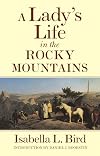
Written as letters to her sister back in England, the epistolary memoir of horse-riding and cabin dwelling in the late 19th Century American west is a fascinating time capsule. Here, widely separated, rugged individuals exist as islands of self-reliance with an unexpectedly active intellectual life. Recitations and attempts at scholarly papers happen around the fire as much as tales of brigands and lost cattle. Bird also finds herself a minor player in the opening act of the tragedy of noble show more and flawed "Mountain Jim". Also, it seems her hours or solo riding through frozen landscapes seems to border on masochism. However, it seems fitting to her as complaints about others seem to be directly proportional to the number of people she is amidst. show less
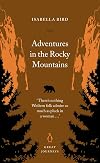
A rich and involving travelogue written in the early 1870s, Isabella Bird's extracts in Adventures in the Rocky Mountains were composed as long letters to her sister, and have that immediacy of being written on location. She was writing at a time when much of the landscape of the American West remained unsettled – "there no lumberer's axe has ever rung" (pg. 57) – and her book would be fascinating even if only for this reason. The fact that Bird also has the language at her command – show more the descriptions of colours and shapes of landscape are vivid but never taper off into verbosity – only heightens the grandeur of this slight book. Nature is "rioting in her grandest mood" (pg. 63) and some of the sights Bird describes satisfy the soul and make you wonder at how stunning the virgin country must have been at that time. "There is health in every breath of air" (pg. 42), and the author brings it to you, providing an awe-inspiring and quietly restorative read. show less
Isabella Bird was a middle-aged Victorian-era Englishwoman who apparently hadn’t read the middle-aged Victorian-era Englishwoman manual and thus traveled all over the world alone. And rode astride (except when somebody might be watching). Her book narrates her adventures in the Colorado Rockies in 1872-73. Interestingly, she doesn’t give a particular reason why she stopped over in Colorado (she was on her way back from a trip to Hawaii, and she doesn’t volunteer why she was there, show more either). At any rate, she did quite well for herself while here; rounded up cattle for an Estes Park rancher, engaged in a very discrete flirtation with the one-eyed desperado Rocky Mountain Jim (“desperado” is her word; about half the male population of Colorado is “desperados”, which, given the year was 1872, probably wasn’t far wrong), and became the first woman to ascend Long’s Peak (in October, at that). Sometimes you wonder if Isabella was totally clueless, incredibly lucky, or just gifted with the sublime self-confidence of a Proper Englishwoman. I favor the last. Her writing is almost modern seeming – she gives credit to the scenery but eschews the paroxysms of overblown language that flow from the quills of other Victorian travel writers, and has just enough of a sense of humor to provoke a grin now and then. For Coloradans, the best parts are probably her descriptions of the towns she passes through – Fort Collins is “altogether revolting” and has “less bugs but more flies” than Greeley; Longmont (“Longmount” to Ms. Bird) is “as uninviting as Fort Collins” and Boulder is “hideous”. (Denver, at least, has “good shops and fair hotels” and is sufficiently tamed that “shootings are as rare as in Liverpool”). To be fair to Ms. Bird, Coloradans seemed to be rather prejudiced against Englishwomen, but generally came around when Ms. Bird demonstrated her willingness to pitch in and wash dishes, cook, and herd livestock. I think I’d like to hear more of Ms. Bird; she continued her travels to Japan, Malaya, the Punjab, Kurdistan, Persia, China, and Canada. A pleasant and quick read. show less
Lists
Awards


You May Also Like


Associated Authors
Statistics
- Works
- 42
- Also by
- 6
- Members
- 2,393
- Popularity
- #10,724
- Rating
- 3.9
- Reviews
- 47
- ISBNs
- 330
- Languages
- 6
- Favorited
- 5
