
Tao Lin
Author of Eeeee Eee Eeee
Works by Tao Lin
this emotion was a little e-book 11 copies
A Message of Unknown Purpose 2 copies
alternate-universe nightmare 2 copies
Serious Adverse Events: An Uncesored History of AIDS, by Celia Farber (in The Lifted Brow 2 - SCOTT) 1 copy
Beijing hua yin dang =: Beijinghua yindang (Xian dai Han yu fang yan yin ku) (Mandarin Chinese Edition) (1998) 1 copy
The Brandon Book Crisis 1 copy
Associated Works
Tagged
Common Knowledge
- Birthdate
- 1983
- Gender
- male
- Education
- New York University (BA|Journalism)
- Occupations
- poet
novelist
short story writer - Organizations
- 3:AM Magazine (co-editor of poetry)
Ass Hi Books (co-editor) - Nationality
- USA
- Places of residence
- Brooklyn, New York, USA
- Associated Place (for map)
- New York, USA
Members
Reviews
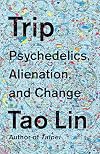
"When you get the message, hang up the phone."
— Ram Dass, Be Here Now
Guilty Thoughts
Tao Lin's fictions are guilty pleasures. We sense that, behind the scenes, the author is suffering a whipping in order to produce them. Nothing prior to the invention of Myspace compares to the crucible of (self-inflicted) pain his characters inhabit. (And yes, this includes those notorious Events of the 20th century, which are only less painful because we know, at least, that the victims dissent.) I had show more once described the reflexively-alienating social structures of these fictions (from the perspective of which one cannot even know what it would look like not to be alienated; these unpleasant reading experiences) as surpassing the works of Kafka, whose characters, not without humor, continue to address each other in earnest, and I maintain that designation.
These days, the Mandalas Tao Lin constructs for his blog, under the edifying influence of psychedelics, appear to (unintentionally) reprise the alienated structures of his earlier fictions. Such drawings, which are pressed full with colorful forms (excluding extraneous movement), become totalizing geometric structures not unlike the "triangular" orgies in de Sade: "she who shitted, whips; she who whipped, sucks; she who sucked, shits," (Marquis de Sade, 120 Days). Those Sadean women, bound to play their roles on penalty of death-by-libertinage seem to have three qualities in common with our harrowed author: First, in being newly consecrated to disburse punishments-by-the-whip; second, as demonstration that the trajectory that begins with whipping must, before long, end up sucking; third, for a reason I will reveal later.
The crux of this text (if we are generous enough to omit the reference to Joe Rogan on the first page) appears to be Tao Lin's perspective on a recording of a 1992 discussion between Ram Dass and Terence McKenna. In this excerpt we are reading Ram Dass as arrogant for his declaration that, "My life is my message," in contrast with McKenna's claim to still be figuring things out, "Please don't look at my life because I'm a fallible human being and I'm constantly fucking up," (21). The consequence of this divergence may be less-than-obvious. Ram Dass, whose ‘Gandhian’ declaration is really the request to be held accountable, seems to take the 'transcendence' of psychedelics for what it is yet is also able to set it aside, "When you get the message, hang up the phone," (Ram Dass, Be Here Now). Meanwhile what goes unnoticed in McKenna’s modesty is that his search for certainty is always already constructing what Deleuze (sorry) might call a Paranoiac Machine i.e. mechanistic thought processes converging toward a 'molar' obsession.
Even when the Paranoiac is 'right' his obsessions make him dubious. McKenna's un-presupposing interest in 'good, clean living' is not so easily satisfied, and this is where all those supplemental theories about Cannabinoids and Purity come. (Of course, what goes unstated here is that, if psychedelics were as good as McKenna says they are, a supplement would not be needed . . .) Psychedelics, we read, are the crux of natural euphoric feeling (which we have lost), non-hierarchical societies (which we have lost), and the evolution of hominid brains (which we are losing), all threatened by the anti-Psychedelic. Pesticides and Toxins become antagonists in the Manichaean struggle. One sees how this trajectory transforms our paranoiac's interest in psychedelic transcendence into a concern with the minutiae of things like wisdom tooth removal in what one might call a paranoiac poisoning delusion (even though, on a factual level, it may be true). It seems that what's important in this structure is that our initiate, at last, has a whip to brandish for the sake of his molar dentition.
We find paranoiac thought-mandalas make easy work of fault-finding in the ailments of others, yet are not self-critical in the way one might have hoped. In Leave Society (2021), Tao Lin attributes his headache and malaise to poisoning from toxins in his tooth fillings and has these removed. Toxin-laden diets and mercuric fillings explain his friends' depression and mother's prediabetes. The progression of the chief character's ankylosing spondylitis therefore suggests a conundrum. One wonders how Tao Lin will resolve the dialectical superimposition in which he is simultaneously obeying the conduct of a less-poisoned lifestyle yet is always-already-more-poisoned than others. Actually, we find the notion of being 'always-already-more-poisoned' helps the work of whip-wielding, since it allows the paranoiac to operate without the guilt-complex of being insufficiently self-critical. In Trip we find the apotheosis of this complex with the presentation of McKenna's malignant brain tumor, which, given his notion that all pathogenesis derives from exogenous impurities, would seem to call at least fifty hours of youtube videos into question. As we might have expected, the paranoiac simply takes this development as an opportunity to whip ‘impure’ conduct toward even stricter standards; in short — it sucks.
And yet, it would seem that the third thing Tao Lin shares with the Sadean women is the potential to go from 'sucking' to 'shitting' (in the good sense). By the time Tao Lin had finished the despairing Taipei (2013), it would appear that Sheila Heti had already noted the key to that text: "[you] should to put a lot of shit in the play," (How Should a Person Be?, 2010). One should read this as a rule for personal conduct, which particularly applies to artistic production: [to make anything] you have to make the choice to shit it up. Perhaps this is what Gertrude Stein means when she says that the most important quality of an artist is "being able to empty yourself completely," (Picasso, 1938). We think that, at some point, we were certain Tao Lin had abilities. Even though it seems like he sucks now, we hope he stops sucking and starts taking 'shitting' seriously (if this text isn’t already an example of him having done so). That would be a good place to start, so long as what he produces doesn't lead to more grasping at the whip. He's written his first nonfiction book, let's see what comes next. show less
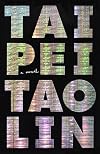
Reading TAIPAI is like driving past an accident – damage may be serious, you’re torn between letting them be, in their desperate situation, turning away (closing the screen), but sneaking a passing look back, anything here?, shadenfreude exemplified, thank god it’s not me, still coming back for more, yearning for closure, or at least semi-understanding of these demi-persons, so drugged and yet so stoned. You recall your own hallucinogenic hazy daze, trying, and failing, to recapture show more the inherent nihilism, yet succeeding only in remembering the 67 joy and fun, and presently the relief that we hadn’t needed to stack dosages as high, his multilayered, multileveled chemicals wending through channels, creating eruptions, disruptions, and random inchoate thoughts (instant, forgotten), perhaps a hint of feeling, though, at this point, really, more pity, in case this is like life for the Tao Lin crowd. But then you remember Holden Caulfield and Bolivian marching powder and turn away forever, relieved, because novels never represent the whole of a generation, no matter how many iProducts they ingest/use.
{Pre-publication review copy via Nook download} show less
{Pre-publication review copy via Nook download} show less
tao lin's characters hate
and they hate that they hate
and they hate that nobody cares that they hate
and you will hate them
and you will hate that you hate them because they are so pitiful
and you will find yourself hating everything they hate
actually, nobody hates anybody, as that would require far too much effort and what's the point, really, when everyone else can do the hating for you and it won't accomplish anything when they do and thus you adding in your own hatred won't make anything any show more different and you'll all end up in the same place anyways, lonely and, eventually, dead.
tao lin captures in writing what, for somewhat obvious reasons, other authors have pointedly ignored all throughout the history of the novel. he writes apathy, the state when actions are taken only in fits or starts, always on a whim and never followed through with, and in every direction at once so that the net motion is null.
about halfway through this book, the copy i bought suddenly starts over again; apparently the first half of the book was glued in twice.
can honestly say it's probably better this way. show less
and they hate that they hate
and they hate that nobody cares that they hate
and you will hate them
and you will hate that you hate them because they are so pitiful
and you will find yourself hating everything they hate
actually, nobody hates anybody, as that would require far too much effort and what's the point, really, when everyone else can do the hating for you and it won't accomplish anything when they do and thus you adding in your own hatred won't make anything any show more different and you'll all end up in the same place anyways, lonely and, eventually, dead.
tao lin captures in writing what, for somewhat obvious reasons, other authors have pointedly ignored all throughout the history of the novel. he writes apathy, the state when actions are taken only in fits or starts, always on a whim and never followed through with, and in every direction at once so that the net motion is null.
about halfway through this book, the copy i bought suddenly starts over again; apparently the first half of the book was glued in twice.
can honestly say it's probably better this way. show less
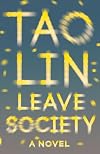
This is the first book I’ve read by someone who I’ve come to realize is a very polarizing writer. I’ve always been a fan of so-called “auto-fiction” for its ability to draw attention to and build consciousness of the minutia of daily life that most people wouldn’t think worthy of including in a work of art. The fact is that these minutia constitute the vast majority most of our lives, and reading this kind of book can build a facility for attention and focus, causing us to see show more something we might otherwise consider as mundane as a fleeting moment of a life that we will never get back.
Lin’s style doesn’t seem to be aiming towards this. In interviews he has said he views his work as a kind of therapy, which fits in well with his avatar’s obsession with “recovery” from his various neurosises, health problems, and addictions. As such, this book is mostly free of the pretensions to literary style that other autofictionists like Knausgaard, Teju Cole, or Sebald might include. Instead we are given actual transcriptions of secret recordings made by the narrator Li of the people around him, full of the small idiosyncrasies, misspeaking, and awkwardness swirling around us in the conversations we have everyday. The fact that we are reading them in a book highlights all these feelings, often pushing Lin’s writing into a kind of cringey uncanny.
I’ve seen some other reviewers react viscerally to Li as a character, grafting their hatred for him and his annoying preoccupations onto how they feel about the book. Li is most certainly annoying. I spent most of the book wondering how ironically it was all meant to be taken. Was I supposed to take all the New Age mumbo jumbo at face value? Or was I supposed to see I no thru it? Only after finishing the book and listening to an interview with Lin did I figure out that no, he’s actually serious, and that later claims that Lin has made about curing his autism with holistic medicine and liking Trump for his anti vaxx stance was totally real. I don’t particularly object to these beliefs- I like my artists eccentric and don’t mind if they don’t conform to what I might say about a given topic. But some of the stuff Li blathers on about in this book are really silly, and it seems like Lin actually wasn’t in on the joke like I was initially inclined to think he was.
Speaking of autism, I sort of started to feel like that was an unspoken theme of the book halfway thru, and was vindicated when in the latter parts it becomes a major preoccupation for Li. For those who feel like hating on this book, think about the fact that this is probably the first “openly” autistic artist with wide reach the world has ever seen, and I dig the fact that Lin is repping his neurodivergent tendencies.
This book goes into a category of art that I really love: interesting works that I’m not sure if I actually like or not. Reading it I was reminded of another Taiwan related artist, the director Tsai Ming Liang, whose difficult, excruciatingly slow movies are hard to “enjoy” in the way one typically does with a good film. However, I often find myself ruminating upon his movies much longer than other films that I “like” more - sometimes even months after the fact. Like Tsai, Lin’s work doesn’t play into what is “entertaining” or particularly palatable - but he does deserve plaudits for using art in maybe its most interesting way: a tool for intellectual experimentation and alchemy. Seen in this way, even his failures are worth it. show less
Lin’s style doesn’t seem to be aiming towards this. In interviews he has said he views his work as a kind of therapy, which fits in well with his avatar’s obsession with “recovery” from his various neurosises, health problems, and addictions. As such, this book is mostly free of the pretensions to literary style that other autofictionists like Knausgaard, Teju Cole, or Sebald might include. Instead we are given actual transcriptions of secret recordings made by the narrator Li of the people around him, full of the small idiosyncrasies, misspeaking, and awkwardness swirling around us in the conversations we have everyday. The fact that we are reading them in a book highlights all these feelings, often pushing Lin’s writing into a kind of cringey uncanny.
I’ve seen some other reviewers react viscerally to Li as a character, grafting their hatred for him and his annoying preoccupations onto how they feel about the book. Li is most certainly annoying. I spent most of the book wondering how ironically it was all meant to be taken. Was I supposed to take all the New Age mumbo jumbo at face value? Or was I supposed to see I no thru it? Only after finishing the book and listening to an interview with Lin did I figure out that no, he’s actually serious, and that later claims that Lin has made about curing his autism with holistic medicine and liking Trump for his anti vaxx stance was totally real. I don’t particularly object to these beliefs- I like my artists eccentric and don’t mind if they don’t conform to what I might say about a given topic. But some of the stuff Li blathers on about in this book are really silly, and it seems like Lin actually wasn’t in on the joke like I was initially inclined to think he was.
Speaking of autism, I sort of started to feel like that was an unspoken theme of the book halfway thru, and was vindicated when in the latter parts it becomes a major preoccupation for Li. For those who feel like hating on this book, think about the fact that this is probably the first “openly” autistic artist with wide reach the world has ever seen, and I dig the fact that Lin is repping his neurodivergent tendencies.
This book goes into a category of art that I really love: interesting works that I’m not sure if I actually like or not. Reading it I was reminded of another Taiwan related artist, the director Tsai Ming Liang, whose difficult, excruciatingly slow movies are hard to “enjoy” in the way one typically does with a good film. However, I often find myself ruminating upon his movies much longer than other films that I “like” more - sometimes even months after the fact. Like Tsai, Lin’s work doesn’t play into what is “entertaining” or particularly palatable - but he does deserve plaudits for using art in maybe its most interesting way: a tool for intellectual experimentation and alchemy. Seen in this way, even his failures are worth it. show less
Lists
Awards


You May Also Like


Associated Authors
Statistics
- Works
- 29
- Also by
- 4
- Members
- 2,123
- Popularity
- #12,120
- Rating
- 3.2
- Reviews
- 84
- ISBNs
- 52
- Languages
- 8
- Favorited
- 7
