
Lucas K. Law
Author of Where the Stars Rise: Asian Science Fiction and Fantasy
Series
Works by Lucas K. Law
Life Beyond Us: An Original Anthology of SF Stories and Science Essays (2023) — Editor — 36 copies, 1 review
Associated Works
Tagged
Common Knowledge
- Short biography
- Lucas K. Law is a Malaysian-born freelance editor, published author, engineering consultant, and business coach who divides his time and heart between Calgary and Qualicum Beach. He co-edits two anthologies, Strangers Among Us: Tales of the Underdogs and Outcasts and The Sum of Us: Tales of the Bonded and Bound, with Susan Forest for Laksa Media Groups Inc. With Derwin Mak, he co-edits the anthology, Where The Stars Rise: Asian Science Fiction and Fantasy. He had been a jury member for a number of fiction competitions including Nebula, RITA and Golden Heart awards.
When Lucas is not editing, writing or reading, he is a consultant, specializing in mergers and acquisition (M&A) activities, asset evaluations, business planning, and corporate development.
Members
Reviews

The European Astrobiology Institute and the editors had a great idea for this book. Pair science fiction stories about extraterrestrial life with scientific perspectives on the themes embedded in the stories.
There are endless themes to explore — detection and recognition of life, recognition of intelligence, life as we know it, life as we don’t know it, ethical issues, communication with alien life, . . .
You’d think such a book would bias towards “hard science fiction” — stories show more that stick close to scientifically grounded facts and speculations, but there are more “fantastic” stories here as well. Eugen Bacon’s story, “Human Beans”, explores a “Super Earth” (not the astronomical use of the term) where humans and other life from Earth, some of it extinct, are transported away from the natural and human-created problems of our own planet.
Other stories stretch us into scientifically grounded, but severely stretched-out possibilities. Bogi Tokacs’ “Cyclic Amplification, Meaning Family”, suggests communication with an alien species via an exchange of prions, and is followed by a more general speculative discussion about the obstacles and possibilities of communication with aliens, by linguist Shari Wells-Jensen.
The stories that touched strongly on the theme of communication were especially provocative — how would we learn to communicate with an alien species, is it even possible?
Sharing a language is a complex matter — language is embedded in a world of things, meanings, actions, practices, and concerns. You can’t just exchange names for common objects and take off from there (if the alien species we’re trying to communicate with even has a language with names for objects).
I think one of the strengths of the collection is that it provokes us to question the kinds of assumptions we’ve grown into with popular depictions of humanoid aliens exchanging messages, maybe even serving together on Star Fleet starships.
Will we recognize life when we see it? Might it take completely unfamiliar forms, like highly structured clouds of magnetically charged particles? Might its metabolism move at such a slow pace that we don’t notice it? How, strictly speaking, do we draw the line between complex chemical reactions and biology?
Attempts have been made to define life, but as biologists here attest, there is no common agreed definition, at least not one without blurry edges and counterexamples.
And, if anything, “intelligence” is an even harder case. Would we know intelligence when we saw it? We have been painfully slow to recognize it in other Earth-based species.
Even if we restrict the kind of intelligence we are interested in to technological intelligence, we’re not on sure footing. Is a beehive technology? Is a bird’s nest, or a beaver’s dam? If we discovered such things on an alien planet, what would we think?
The commentary articles are not all by physical scientists. Obvously, the issues and themes range across all sorts of fields. And the articles include not just physicists, astronomers, and biologists, but also linguists, philosophers (from various branches of philosophy), anthropologists, and others.
So, this is going to make you think, and it’s going to make you think beyond the standard treatments of exoplanets, astrobiology, and cultural studies.
I’m going to give the book five stars just for that. I can’t say these are among the “best” or most riveting science fiction stories I’ve ever read, or even that the commentaries are consistently as insightful and thoughtful as I would have liked.
But this is a unique approach. I’d say it was a unique book altogether, but it turns out the European Astrobiology Institute has published another book with the same format, Strangest of All (unlike this one, that book is not available in print format). show less
There are endless themes to explore — detection and recognition of life, recognition of intelligence, life as we know it, life as we don’t know it, ethical issues, communication with alien life, . . .
You’d think such a book would bias towards “hard science fiction” — stories show more that stick close to scientifically grounded facts and speculations, but there are more “fantastic” stories here as well. Eugen Bacon’s story, “Human Beans”, explores a “Super Earth” (not the astronomical use of the term) where humans and other life from Earth, some of it extinct, are transported away from the natural and human-created problems of our own planet.
Other stories stretch us into scientifically grounded, but severely stretched-out possibilities. Bogi Tokacs’ “Cyclic Amplification, Meaning Family”, suggests communication with an alien species via an exchange of prions, and is followed by a more general speculative discussion about the obstacles and possibilities of communication with aliens, by linguist Shari Wells-Jensen.
The stories that touched strongly on the theme of communication were especially provocative — how would we learn to communicate with an alien species, is it even possible?
Sharing a language is a complex matter — language is embedded in a world of things, meanings, actions, practices, and concerns. You can’t just exchange names for common objects and take off from there (if the alien species we’re trying to communicate with even has a language with names for objects).
I think one of the strengths of the collection is that it provokes us to question the kinds of assumptions we’ve grown into with popular depictions of humanoid aliens exchanging messages, maybe even serving together on Star Fleet starships.
Will we recognize life when we see it? Might it take completely unfamiliar forms, like highly structured clouds of magnetically charged particles? Might its metabolism move at such a slow pace that we don’t notice it? How, strictly speaking, do we draw the line between complex chemical reactions and biology?
Attempts have been made to define life, but as biologists here attest, there is no common agreed definition, at least not one without blurry edges and counterexamples.
And, if anything, “intelligence” is an even harder case. Would we know intelligence when we saw it? We have been painfully slow to recognize it in other Earth-based species.
Even if we restrict the kind of intelligence we are interested in to technological intelligence, we’re not on sure footing. Is a beehive technology? Is a bird’s nest, or a beaver’s dam? If we discovered such things on an alien planet, what would we think?
The commentary articles are not all by physical scientists. Obvously, the issues and themes range across all sorts of fields. And the articles include not just physicists, astronomers, and biologists, but also linguists, philosophers (from various branches of philosophy), anthropologists, and others.
So, this is going to make you think, and it’s going to make you think beyond the standard treatments of exoplanets, astrobiology, and cultural studies.
I’m going to give the book five stars just for that. I can’t say these are among the “best” or most riveting science fiction stories I’ve ever read, or even that the commentaries are consistently as insightful and thoughtful as I would have liked.
But this is a unique approach. I’d say it was a unique book altogether, but it turns out the European Astrobiology Institute has published another book with the same format, Strangest of All (unlike this one, that book is not available in print format). show less
Where the Stars Rise: Asian Science Fiction and Fantasy (Laksa Anthology Series: Speculative Fiction) by Lucas K. Law
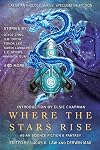
Where the Stars Rise is a short story anthology that didn’t quite meet my high expectations.
Where the Stars Rise collects twenty-three short stories from authors living in Asia or who are part of the Asian diaspora. I was already familiar with a few of the authors in the table of contents, but most were new to me.
Going in, I was probably most excited about the stories by Karin Lowachee (author of the phenomenal Warchild) and Fonda Lee (whose new release Jade City I adored). Sure enough, show more both authors ended up having some of my favorite stories in the collection. Lowachee’s was actually set in the same universe as Warchild, following the younger brother of Captain Azarcon. Like other Warchild stories, it’s about a young boy who falls through the cracks during times of conflict. The protagonist’s birth family is destroyed, and he’s adopted by a small trading family. But they soon find him to be too “damaged” and end up sending him to become functionally a child solider. Karin Lowachee’s not known for uplifting stories.
Fonda Lee’s story, “Old Souls,” was my favorite of the collection. The heroine is a young woman who can remember all her previous lives, and in every single one she dies young. She knows that her death is imminent, and she desperately wants a way to change her pattern. When she meets an immortal woman, a solution may be in sight. It’s a great concept that sort of reminded me of some of Claire North’s work. I’d love to read more about it, but I think it works very well for the short story format.
I’d read S.B. Divya’s novella (Runtime), but I actually prefer her short story here, “Looking Up.” The heroine wins a spot on a colonizing trip to Mars, meaning she’ll leave Earth forever. With her departure imminent, she has to make peace with her past and the relatives who won’t speak to her.
I also enjoyed some stories by new to me authors. Amanda Sun’s “Weaving Silk” is the tale of a post-apocalyptic Tokyo and two sisters who’s parents died in the earthquakes. The older cares for the youngest, and the two make a living by selling food the scavenge and prepare themselves. I loved the relationship between the sisters and how the country as a whole tried to find some semblance of normalcy in the midst of disaster.
One of my other favorites was “The Observer Effect” by E.C. Myers. It’s a superhero story, where the heroine is determined to find her favorite superhero. In addition to being a lot of fun, the story also tackles whitewashing and the need for Asian American representation.
“Rose’s Arm” by Calvin D. Jim was a pretty solid steampunk story about a one armed girl who’s desperate to help her father after her mother dies. To do so, she aims to get a mechanical limb, but what will it cost her? The ending packs a strong emotional punch.
I was ambivalent about the majority of stories in the collection. In “Memoriam” by Priya Sridhar, a robot might not just be a robot. “A Star Is Born” by Miki Dare deals with Japanese internment camps through the medium of time travel. “Spirit of Wine” by Tony Pi is a light-hearted story about two scholars who get possessed by a drunken spirit the night before their exam. “Vanilla Rice” by Angela Yuriko Smith addresses internalized racism and white beauty standards. In “DNR” by Gabriela Lee, a Filipina mortician remembers her life on Earth. “Back to Myan” by Regina Kanyu Wang has alien mermaids and remembering where you came from. “Wintry Hearts of Those Who Rise” by Minsoo Kang is a historic story set in ancient China. “Joseon Fringe” by Pamela Q. Fernandes is another historic story, this time about a Korean emperor being given ideas by a time traveler. “Decision” by Joyce Chng has a pregnant spider-jinn reflecting on her life. “Moon Halves” by Anne Carly Abad is a folkloric tale where the monsters might not be entirely monstrous. In “A Visitation for the Spirit Festival” by Diana Xin, Mrs. Liu inherits a ghost and travels back to China. “The Orphans of Nilaveli” by Naru Dames Sundar is a sci-fi tale dealing with conflict between the Tamil and Sinhalese.
Other stories feel on the negative side of ambivalent. The worst was probably “The Bridge of Dangerous Longings” by Rati Mehrotra, which I absolutely hated. It had what felt like a completely unnecessary sexual assault scene, and the story has a whole felt so vague and pointless. I’ve been planning on reading Rati Mehrotra’s new novel, and this story made me look forward to it less.
“The dataSultan of Streets and Stars” by Jeremy Szal had some interesting ideas but felt needlessly violent. I also wasn’t so fond of the characters. “My Left Hand” by Ruhan Zhao was just plain boring. I can hardly remember what happened in “Udātta Śloka” by Deepak Bharathan. “Crash” by Melissa Yuan-Innes had potential, but it ended much too soon, just where I felt like the story was about to really start.
Like all short story collections, Where the Stars Rise is a mixed bag. There were some highlights and stories I’d recommend, but there were too many stories I was “meh” on for me to really recommend this collection as a whole.
Originally posted on The Illustrated Page.
I received an ARC in exchange for a free and honest review. show less
Where the Stars Rise collects twenty-three short stories from authors living in Asia or who are part of the Asian diaspora. I was already familiar with a few of the authors in the table of contents, but most were new to me.
Going in, I was probably most excited about the stories by Karin Lowachee (author of the phenomenal Warchild) and Fonda Lee (whose new release Jade City I adored). Sure enough, show more both authors ended up having some of my favorite stories in the collection. Lowachee’s was actually set in the same universe as Warchild, following the younger brother of Captain Azarcon. Like other Warchild stories, it’s about a young boy who falls through the cracks during times of conflict. The protagonist’s birth family is destroyed, and he’s adopted by a small trading family. But they soon find him to be too “damaged” and end up sending him to become functionally a child solider. Karin Lowachee’s not known for uplifting stories.
Fonda Lee’s story, “Old Souls,” was my favorite of the collection. The heroine is a young woman who can remember all her previous lives, and in every single one she dies young. She knows that her death is imminent, and she desperately wants a way to change her pattern. When she meets an immortal woman, a solution may be in sight. It’s a great concept that sort of reminded me of some of Claire North’s work. I’d love to read more about it, but I think it works very well for the short story format.
I’d read S.B. Divya’s novella (Runtime), but I actually prefer her short story here, “Looking Up.” The heroine wins a spot on a colonizing trip to Mars, meaning she’ll leave Earth forever. With her departure imminent, she has to make peace with her past and the relatives who won’t speak to her.
I also enjoyed some stories by new to me authors. Amanda Sun’s “Weaving Silk” is the tale of a post-apocalyptic Tokyo and two sisters who’s parents died in the earthquakes. The older cares for the youngest, and the two make a living by selling food the scavenge and prepare themselves. I loved the relationship between the sisters and how the country as a whole tried to find some semblance of normalcy in the midst of disaster.
One of my other favorites was “The Observer Effect” by E.C. Myers. It’s a superhero story, where the heroine is determined to find her favorite superhero. In addition to being a lot of fun, the story also tackles whitewashing and the need for Asian American representation.
“Rose’s Arm” by Calvin D. Jim was a pretty solid steampunk story about a one armed girl who’s desperate to help her father after her mother dies. To do so, she aims to get a mechanical limb, but what will it cost her? The ending packs a strong emotional punch.
I was ambivalent about the majority of stories in the collection. In “Memoriam” by Priya Sridhar, a robot might not just be a robot. “A Star Is Born” by Miki Dare deals with Japanese internment camps through the medium of time travel. “Spirit of Wine” by Tony Pi is a light-hearted story about two scholars who get possessed by a drunken spirit the night before their exam. “Vanilla Rice” by Angela Yuriko Smith addresses internalized racism and white beauty standards. In “DNR” by Gabriela Lee, a Filipina mortician remembers her life on Earth. “Back to Myan” by Regina Kanyu Wang has alien mermaids and remembering where you came from. “Wintry Hearts of Those Who Rise” by Minsoo Kang is a historic story set in ancient China. “Joseon Fringe” by Pamela Q. Fernandes is another historic story, this time about a Korean emperor being given ideas by a time traveler. “Decision” by Joyce Chng has a pregnant spider-jinn reflecting on her life. “Moon Halves” by Anne Carly Abad is a folkloric tale where the monsters might not be entirely monstrous. In “A Visitation for the Spirit Festival” by Diana Xin, Mrs. Liu inherits a ghost and travels back to China. “The Orphans of Nilaveli” by Naru Dames Sundar is a sci-fi tale dealing with conflict between the Tamil and Sinhalese.
Other stories feel on the negative side of ambivalent. The worst was probably “The Bridge of Dangerous Longings” by Rati Mehrotra, which I absolutely hated. It had what felt like a completely unnecessary sexual assault scene, and the story has a whole felt so vague and pointless. I’ve been planning on reading Rati Mehrotra’s new novel, and this story made me look forward to it less.
“The dataSultan of Streets and Stars” by Jeremy Szal had some interesting ideas but felt needlessly violent. I also wasn’t so fond of the characters. “My Left Hand” by Ruhan Zhao was just plain boring. I can hardly remember what happened in “Udātta Śloka” by Deepak Bharathan. “Crash” by Melissa Yuan-Innes had potential, but it ended much too soon, just where I felt like the story was about to really start.
Like all short story collections, Where the Stars Rise is a mixed bag. There were some highlights and stories I’d recommend, but there were too many stories I was “meh” on for me to really recommend this collection as a whole.
Originally posted on The Illustrated Page.
I received an ARC in exchange for a free and honest review. show less
Where the Stars Rise: Asian Science Fiction and Fantasy (Laksa Anthology Series: Speculative Fiction) by Lucas K. Law
This anthology has truly achieved diversity in more than one way. It contains stories that take place in all kinds of places, not limited to earth, under all kinds of circumstances and time frames. Even if they are all sci-fi and fantasy stories, they are incredibly different from each other in subject, style and mood. Some are light while others will leave you filled with emotions. The characters can be human or not, alive or death, from little kids to elderly, with superpowers, show more enhancements or handicapped. All these wonderful stories are presented with very unique and intriguing plots developed over Asian backgrounds (Chinese, Turkish, Indian, Japanese, Philippine, Korean, Indonesian, etc.)
Most of the stories carry deep teachings, sometimes boldly presented as the main theme while other times it can be subtly left there for the reader to analyze. Loss, struggle, hope and the continuous search for ourselves and a place to belong to, were themes I felt constantly reappearing in these lovely stories. This book took me longer than usual to finish, partly because a couple of stories were most definitely not of my liking. I found them confusing and had to slow down to keep a good level of comprehension. That can ruin the mood for the next story, so I took more breaks than usual while reading this anthology.
When I finished reading I realized I loved some stories, others remained in a gray area and couple of them I disliked. Yet, I could sympathize with all of them, which was great, because that's what happens when you are presented with diversity, with options that are truly different from each other. Quite probably you wont love them all, but you can get a real taste of diverse short stories that you will enjoy if you like science fiction and fantasy. My top 3 favorite stories were: Memoriam by Priya Sridhar, Old Souls by Fonda Lee and Rose's Arm by Calvin D.Jim
I got my eArc from Laksa Media Groups show less
Most of the stories carry deep teachings, sometimes boldly presented as the main theme while other times it can be subtly left there for the reader to analyze. Loss, struggle, hope and the continuous search for ourselves and a place to belong to, were themes I felt constantly reappearing in these lovely stories. This book took me longer than usual to finish, partly because a couple of stories were most definitely not of my liking. I found them confusing and had to slow down to keep a good level of comprehension. That can ruin the mood for the next story, so I took more breaks than usual while reading this anthology.
When I finished reading I realized I loved some stories, others remained in a gray area and couple of them I disliked. Yet, I could sympathize with all of them, which was great, because that's what happens when you are presented with diversity, with options that are truly different from each other. Quite probably you wont love them all, but you can get a real taste of diverse short stories that you will enjoy if you like science fiction and fantasy. My top 3 favorite stories were: Memoriam by Priya Sridhar, Old Souls by Fonda Lee and Rose's Arm by Calvin D.Jim
I got my eArc from Laksa Media Groups show less
The Sum of Us: Tales of the Bonded and Bound (Laksa Anthology Series: Speculative Fiction) by Susan Forest
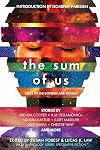
Loved: "The Dunschemin Retirement Home for Repentant Supervillians" (Ian Creasey); "Things That Creep And Bind" (Christie Yant); "The Gatekeeper" (Juliet Marillier); "The Gardener" (Amanda Sun);
Awards


You May Also Like


Associated Authors
Statistics
- Works
- 6
- Also by
- 2
- Members
- 204
- Popularity
- #108,206
- Rating
- 3.9
- Reviews
- 4
- ISBNs
- 26