
櫻庭一樹
Author of Red Girls: The Legend of the Akakuchibas
About the Author
Series
Works by 櫻庭一樹
GOSICK [Light Novel] VIII Part II — Author — 4 copies
赤朽葉家の伝説 2 copies
GOSICK ? 1 copy
GOSICK ???? 1 copy
赤×ピンク = AKA×PINK 1 copy
GOSICKs [Light Novel] IV — Author — 1 copy
Associated Works
リテラリーゴシック・イン・ジャパン 文学的ゴシック作品選 — Contributor — 1 copy
Tagged
Common Knowledge
- Canonical name
- 櫻庭一樹
- Other names
- 桜庭一樹
山田桜丸 - Birthdate
- 1971-07-26
- Gender
- female
- Relationships
- 英俊, 友野 (husband)
- Nationality
- Japan
- Birthplace
- Shimane, Japan
- Places of residence
- Yonago, Tottori, Japan
Shinjuku, Tokyo, Japan - Associated Place (for map)
- Japan
Members
Reviews
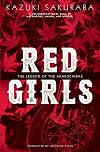
Kazuki Sakuraba is probably most well-known as the creator of Gosick, a series of light novels which would later be adapted as a manga series, an audio drama, and an anime series. Two of those novels were released in English by Tokyopop. After her success with Gosick, Sakuraba would go on to write and publish mainstream novels and essays as well, several of which would earn her awards and nominations for her work. Red Girls: The Legend of the Akakuchibas is one of those novels. Originally show more published in Japan in 2006, Red Girls won the Mystery Writers of Japan Award in 2007. That fact caught my attention as I have thoroughly enjoyed other novels that have won that particular award, as did the striking cover design of the English-language edition of Red Girls. The novel was released in English in 2015 by Viz Media's speculative fiction imprint Haikasoru with a translation by Jocelyne Allen. Although Red Girls is the third novel by Sakuraba to have been translated, it was actually the first one that I read and was my introduction to her work as a whole.
For a time, the village of Benimidori, found in the western reaches of Japan's Tottori Prefecture, was largely controlled by two rival families: the Akakuchibas, known as "red above" and who operated a steelworks factory, and the Kurobishis, known as "black below" and who were prosperous shipbuilders. While the Kurobishis were nouveau riche, the Akakuchibas were an old, upstanding family, and so quite a stir was caused when a young mountain girl who had been abandoned in the village was selected to marry the family's heir. That was Manyo, a clairvoyant whose ability to see the future would help guide the family through a number of crises, including the tragic death of her firstborn son. The responsibility to carry on the Akakuchiba name then fell to her daughter Kemari, a wild young woman who would also die young, leaving behind a daughter of her own. By all appearances, Toko, unlike her mother or grandmother, seems to be an ordinary girl, but she is the only person to whom Manyo confessed a closely kept secret—she once killed someone.
Red Girls is divided into three parts, each one respectively devoted to the retelling of the lives and legends of Manyo, Kemari, and Toko. Eventually it is revealed that Toko is the novel's narrator, recording the stories that she has been told by and about her mother and grandmother in an attempt to identify the person whose death Manyo claims to be responsible for. People associated with the Akakuchibas have a tendency to die in unexpected or peculiar ways, and so Toko knows of several individuals who could have been potential victims. As with any family story passed on from one generation to the next, there is a certain amount of fiction and embellishment that is added to the retelling of events. As she investigates the unusual circumstances involved in the various deaths, Toko must also closely reevaluate everything that she has been told about her family, teasing apart the stories in order to determine what exactly is the truth, what has been exaggerated, and what details continue to remain hidden and unsaid.
In addition to providing an intriguing mystery that Toko feels compelled to unravel, the narrative found in Red Girls serves another, very important purpose. It is a way for Toko to come to terms with the history of the Akakuchiba family and her position within it, allowing her to take her place in a line of powerful matriarchs. It's not something that she is initially prepared to do, feeling inadequate when compared to her grandmother and mother and their various accomplishments. Red Girls also situates the legend of the Akakuchibas—and a legend it is, full of peculiar and fantastical elements—within the greater context of Japan's economic and social histories. As Japan changes over time, so must the Akakuchiba family and its members, and so must the way they think about themselves, their relationships, and their stories. Red Girls is a tremendous multi-generational epic, sometimes strange and sometimes mysterious, but always engaging and oddly compelling. I enjoyed the novel immensely.
Experiments in Manga show less
For a time, the village of Benimidori, found in the western reaches of Japan's Tottori Prefecture, was largely controlled by two rival families: the Akakuchibas, known as "red above" and who operated a steelworks factory, and the Kurobishis, known as "black below" and who were prosperous shipbuilders. While the Kurobishis were nouveau riche, the Akakuchibas were an old, upstanding family, and so quite a stir was caused when a young mountain girl who had been abandoned in the village was selected to marry the family's heir. That was Manyo, a clairvoyant whose ability to see the future would help guide the family through a number of crises, including the tragic death of her firstborn son. The responsibility to carry on the Akakuchiba name then fell to her daughter Kemari, a wild young woman who would also die young, leaving behind a daughter of her own. By all appearances, Toko, unlike her mother or grandmother, seems to be an ordinary girl, but she is the only person to whom Manyo confessed a closely kept secret—she once killed someone.
Red Girls is divided into three parts, each one respectively devoted to the retelling of the lives and legends of Manyo, Kemari, and Toko. Eventually it is revealed that Toko is the novel's narrator, recording the stories that she has been told by and about her mother and grandmother in an attempt to identify the person whose death Manyo claims to be responsible for. People associated with the Akakuchibas have a tendency to die in unexpected or peculiar ways, and so Toko knows of several individuals who could have been potential victims. As with any family story passed on from one generation to the next, there is a certain amount of fiction and embellishment that is added to the retelling of events. As she investigates the unusual circumstances involved in the various deaths, Toko must also closely reevaluate everything that she has been told about her family, teasing apart the stories in order to determine what exactly is the truth, what has been exaggerated, and what details continue to remain hidden and unsaid.
In addition to providing an intriguing mystery that Toko feels compelled to unravel, the narrative found in Red Girls serves another, very important purpose. It is a way for Toko to come to terms with the history of the Akakuchiba family and her position within it, allowing her to take her place in a line of powerful matriarchs. It's not something that she is initially prepared to do, feeling inadequate when compared to her grandmother and mother and their various accomplishments. Red Girls also situates the legend of the Akakuchibas—and a legend it is, full of peculiar and fantastical elements—within the greater context of Japan's economic and social histories. As Japan changes over time, so must the Akakuchiba family and its members, and so must the way they think about themselves, their relationships, and their stories. Red Girls is a tremendous multi-generational epic, sometimes strange and sometimes mysterious, but always engaging and oddly compelling. I enjoyed the novel immensely.
Experiments in Manga show less
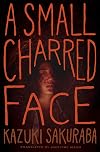
Kazuki Sakuraba is a fairly prolific author in Japan, having written numerous short stories, essays, and novels; sadly, only a small handful of those have been translated into English thus far. Although Sakuraba is probably best known as the creator of Gosick (which, I'll admit, I still need to actually read), my introduction to her work was through Red Girls: The Legend of the Akakuhchibas, an award-winning, multi-generational epic which I thoroughly enjoyed. When Haikasoru, Viz Media's show more speculative fiction imprint, announced that it would be releasing Sakuraba's A Small Charred Face with a translation by Jocelyne Allen in 2017, I immediately took note. I was previously unaware of A Small Charred Face, originally published in Japan in 2014, and I'm not especially interested in vampire fiction, but with Sakuraba as the author, Haikasoru as the publisher and Allen as the translator–a winning combination with Red Girls–it instantly became something that I wanted to read.
The Japanese town in which Kyo lives is bathed in blood, a hotbed of organized crime, murder, and vice. With a population willing to avoid looking too closely at the surrounding bloodshed, resulting in a plentiful and readily accessible supply of food, it's the perfect place for the Bamboo, vampiric creatures originating from the deep mountains of China, to secretly coexist with humans. Carnivorous grass monsters but human-like in appearance, the Bamboo are extremely powerful and resilient but vulnerable to sunlight, never age but are still mortal. Up until the point he meets one, Kyo was never quite sure if the stories he heard about the monstrous Bamboo were true or if they were just told to frighten children. Confronted with the immediacy of his own impending death while only ten years old, his mother and sister having already been killed by a group of hitmen, Kyo is unexpectedly rescued by a Bamboo. Mustah, impulsively acting in blatant disregard for the rules of his own kind by taking him in, saves Kyos' life and in the process changes it forever. But even while Kyo, Mustah, and Mustah's partner Bamboo Yoji form a peculiar, tightly-knit family, it will never be entirely safe from the dangers presented by humans or the Bamboo alike.
At its very core, A Small Charred Face is about the curious, complex, exhilarating, and often fraught relationships that evolve between Bamboo and humans. The novel is divided into three distinct parts–three tangentially related stories which can all be connected to Kyo and his personal experiences with the Bamboo. In some ways the stories are able to stand alone, but the references they contain make them more powerful when taken together as a whole. The first and longest section, "A Small Charred Face," focuses on Kyo's life with Mustah and Yoji. The two men are fascinated and enthralled by his humanity, at times treating him as something akin to a pet but also raising him as family while protecting him through his adolescence. To Kyo, Mustah and Yoji are his saviors, parents, and something even more which is difficult to define. The second part "I Came to Show You Real Flowers" serves as an epilogue of sorts to the first, following another Bamboo who becomes incredibly important to Kyo as well as a young woman who plays a crucial role late in his life. Finally there is "You Will Go to the Land of the Future," a story which delves into the history of the Japanese Bamboo. Linking back to the Chinese Cultural Revolution, it traces the tragic origins of the Bamboo's strained relations with humans and the strict, harshly-enforced rules implemented to guard their society and existence.
A Small Charred Face opens with the brutal aftermath of the rape and murder of those close to Kyo with him facing a similar fate. It is a horrific, gut-wrenching scene, but the story that follows becomes surprisingly beautiful. Though still punctuated by moments of extraordinary violence and devastating heartbreak, A Small Charred Face is a relatively quiet and at times even contemplative work. The relationships shown are intensely intimate, with love, desire, and devotion taking on multiple, varied forms. The characters struggle and frequently fail to completely understand one another–the worldviews, life experiences, and fundamental natures of humans and Bamboo occasionally at odds–but the strength of the connections that they form regardless of and in some cases because of their differences is tremendously compelling and affecting. There's also an inherent queerness to the stories that I loved. It's perhaps most obvious through Yoji and Mustah's partnership and the fact that Kyo spends a significant portion of his life presenting himself as a girl for his own safety, but many of the novel's essential underlying themes explore found family, the need for acceptance, and what it is like in one way or another to be a hidden outsider within society. While A Small Charred Face resides firmly within the tradition of vampire fiction, Sakuraba's contemporary take on the genre is still somewhat unusual and unexpected; I enjoyed the work immensely.
Experiments in Manga show less
The Japanese town in which Kyo lives is bathed in blood, a hotbed of organized crime, murder, and vice. With a population willing to avoid looking too closely at the surrounding bloodshed, resulting in a plentiful and readily accessible supply of food, it's the perfect place for the Bamboo, vampiric creatures originating from the deep mountains of China, to secretly coexist with humans. Carnivorous grass monsters but human-like in appearance, the Bamboo are extremely powerful and resilient but vulnerable to sunlight, never age but are still mortal. Up until the point he meets one, Kyo was never quite sure if the stories he heard about the monstrous Bamboo were true or if they were just told to frighten children. Confronted with the immediacy of his own impending death while only ten years old, his mother and sister having already been killed by a group of hitmen, Kyo is unexpectedly rescued by a Bamboo. Mustah, impulsively acting in blatant disregard for the rules of his own kind by taking him in, saves Kyos' life and in the process changes it forever. But even while Kyo, Mustah, and Mustah's partner Bamboo Yoji form a peculiar, tightly-knit family, it will never be entirely safe from the dangers presented by humans or the Bamboo alike.
At its very core, A Small Charred Face is about the curious, complex, exhilarating, and often fraught relationships that evolve between Bamboo and humans. The novel is divided into three distinct parts–three tangentially related stories which can all be connected to Kyo and his personal experiences with the Bamboo. In some ways the stories are able to stand alone, but the references they contain make them more powerful when taken together as a whole. The first and longest section, "A Small Charred Face," focuses on Kyo's life with Mustah and Yoji. The two men are fascinated and enthralled by his humanity, at times treating him as something akin to a pet but also raising him as family while protecting him through his adolescence. To Kyo, Mustah and Yoji are his saviors, parents, and something even more which is difficult to define. The second part "I Came to Show You Real Flowers" serves as an epilogue of sorts to the first, following another Bamboo who becomes incredibly important to Kyo as well as a young woman who plays a crucial role late in his life. Finally there is "You Will Go to the Land of the Future," a story which delves into the history of the Japanese Bamboo. Linking back to the Chinese Cultural Revolution, it traces the tragic origins of the Bamboo's strained relations with humans and the strict, harshly-enforced rules implemented to guard their society and existence.
A Small Charred Face opens with the brutal aftermath of the rape and murder of those close to Kyo with him facing a similar fate. It is a horrific, gut-wrenching scene, but the story that follows becomes surprisingly beautiful. Though still punctuated by moments of extraordinary violence and devastating heartbreak, A Small Charred Face is a relatively quiet and at times even contemplative work. The relationships shown are intensely intimate, with love, desire, and devotion taking on multiple, varied forms. The characters struggle and frequently fail to completely understand one another–the worldviews, life experiences, and fundamental natures of humans and Bamboo occasionally at odds–but the strength of the connections that they form regardless of and in some cases because of their differences is tremendously compelling and affecting. There's also an inherent queerness to the stories that I loved. It's perhaps most obvious through Yoji and Mustah's partnership and the fact that Kyo spends a significant portion of his life presenting himself as a girl for his own safety, but many of the novel's essential underlying themes explore found family, the need for acceptance, and what it is like in one way or another to be a hidden outsider within society. While A Small Charred Face resides firmly within the tradition of vampire fiction, Sakuraba's contemporary take on the genre is still somewhat unusual and unexpected; I enjoyed the work immensely.
Experiments in Manga show less

I saw an article/cartoon a while back that outlined the way Japanese narrative structures differ from the Western conflict-centered approach. I don't know how accurate or universal it was, but this book certainly reminded me of it. Not that the book lacked conflict, but it didn't drive the story. That was shaped by the parallels and variations between the three sections: brothers and sisters, the loss of family, and the Bamboo. These are essentially vampires from China whose society we see show more from these three different, increasingly intimate, angles. From the first ones we meet who are fascinated by the human "flame", or short but vibrant life, we then see their own vulnerability and mortality. show less
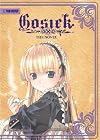
I have read very few light novels that I'd recommend to someone who hadn't already seen the anime adaptations or who wasn't interested in anime/manga. Sadly, I can't add Gosick to my short list.
The book's biggest problem is that the writing is kind of clunky. I have no way of telling if this is because the original writing was bad or because the translation was bad. Tokyopop had a less-than-stellar reputation for its translations, so I'd be willing to believe the latter explanation.
Despite show more having thoroughly enjoyed the anime version of Gosick, this book was a slog for me. I know some of that was due to the writing. Some of the word choices were awful, and some sentences were a bit awkward. I'd have to include a longer passage to really illustrate what I'm talking about, but this sentence in particular stuck with me. Victorique is taunting Kujo, who must use the library's many stairs while she gets to use the elevator: “'You have to trot on down the stairs, suffering and leaving your thighs quivering and exhausted.'” I noticed at least one instance where a word was misused: “She was a dignified, hollowed [sic] creature who never should have been brought to this filthy, sinking ship” (170). “Hallowed” should probably have been used instead.
Although I do think the writing/translation was a big part of the reason why this book took me so long to finish, the fact that I already knew how the book would end probably didn't help. The first three episodes of the Gosick anime are an adaptation of this novel. I did note a few minor changes here and there, though.
There were a couple things that I think must have been edited out for the anime adaptation to reduce the possibility that there might be complaints. For instance, although Victorique was allowed to keep her pipe in the anime, she never once actually smoked it. In the light novel, she smokes it and even occasionally blows smoke in Kujo's face. So, I guess now I know why Victorique always kept that silly pipe around in the anime. Another scene I think was changed was the bit where Kujo and Victorique had just gotten on the cruise ship and Victorique was eating dinner. There wasn't another dinner available for Kujo, and I think I remember Victorique giving Kujo some of her bread. In the novel, one of the other passengers, Ned, tells Kujo he can sit on his lap (which Kujo does after Victorique orders him to) and then proceeds to feed him. Ned is a grown man, and I think Kujo is maybe 15 or 16 years old. The scene made me a tad uncomfortable.
One other difference between the novel and the anime: I don't think Book Victorique had the pendant that Anime Victorique had. However, near the end of the novel, the character who orchestrated everything on the cruise ship mentions having seen someone who looked a lot like Victorique at a sanatorium, so I'm guessing that the light novel series does still include the ongoing storyline about Victorique's mother.
In my opinion, some of the best parts of the novel came near the end, when Kujo began evaluating his feelings about himself and his friendship with Victorique. I loved the moment when he decided to make it clear that he was saving Victorique because he wanted to, not because he was the third son of a soldier – he went from being someone with a duty and a need to prove his worthiness to being an individual who needed to do the best he could in that particular moment in order to save himself and his friend. For most of the novel, Victorique was a cool, distant, somewhat grouchy, and dismissively intelligent beauty. Near the end of the novel, however, her facade cracked a little, showing her vulnerable side.
I also enjoyed the flashbacks showing the children who had been imprisoned on the ship 10 years ago and tricked into killing each other. Although I knew what was going on and why, it was still interesting and chilling to read about the children trying to survive, forming alliances or deciding to distrust one another. Part of me wished that more pages had been devoted to these flashbacks, as well as to the passages that further developed Kujo and Victorique and added depth to their relationship.
The relationship between Kujo and Victorique, as well as the hint of mystery about Victorique's mother, could make reading later volumes in this series worth it, despite the bad writing/translation, particularly if the light novel series storyline differs greatly from the anime storyline. It looks like Tokyopop only ever got around to publishing two volumes, though.
If you decide you'd like to read this, I highly recommend getting a copy from your local library – I'm not sure I would have recommended buying it back when it was still in print, and I definitely don't recommend buying it for $47 . Really, though, since only the first two volumes are available in English and I imagine the writing/translation isn't any better in the second volume, my recommendation would be to watch the anime instead: you can do so on Crunchyroll. It's much, much better, and, I promise, it does have a proper ending.
My grade for this book: C-. The overall story is decent but dragged down by clunky, awkward writing/translation.
Extras:
Like every other light novel I've read, there are black-and-white illustrations. Again, I prefer the anime over the book. One of the illustrations, supposedly of a scene not long after Kujo was badly beaten, showed Kujo looking perfectly fine. The anime, at least, took into account what Kujo had gone through – his face was swollen and I think he was a little bandaged.
(Original review, with read-alikes and watch-alikes, posted on A Library Girl's Familiar Diversions.) show less
The book's biggest problem is that the writing is kind of clunky. I have no way of telling if this is because the original writing was bad or because the translation was bad. Tokyopop had a less-than-stellar reputation for its translations, so I'd be willing to believe the latter explanation.
Despite show more having thoroughly enjoyed the anime version of Gosick, this book was a slog for me. I know some of that was due to the writing. Some of the word choices were awful, and some sentences were a bit awkward. I'd have to include a longer passage to really illustrate what I'm talking about, but this sentence in particular stuck with me. Victorique is taunting Kujo, who must use the library's many stairs while she gets to use the elevator: “'You have to trot on down the stairs, suffering and leaving your thighs quivering and exhausted.'” I noticed at least one instance where a word was misused: “She was a dignified, hollowed [sic] creature who never should have been brought to this filthy, sinking ship” (170). “Hallowed” should probably have been used instead.
Although I do think the writing/translation was a big part of the reason why this book took me so long to finish, the fact that I already knew how the book would end probably didn't help. The first three episodes of the Gosick anime are an adaptation of this novel. I did note a few minor changes here and there, though.
There were a couple things that I think must have been edited out for the anime adaptation to reduce the possibility that there might be complaints. For instance, although Victorique was allowed to keep her pipe in the anime, she never once actually smoked it. In the light novel, she smokes it and even occasionally blows smoke in Kujo's face. So, I guess now I know why Victorique always kept that silly pipe around in the anime. Another scene I think was changed was the bit where Kujo and Victorique had just gotten on the cruise ship and Victorique was eating dinner. There wasn't another dinner available for Kujo, and I think I remember Victorique giving Kujo some of her bread. In the novel, one of the other passengers, Ned, tells Kujo he can sit on his lap (which Kujo does after Victorique orders him to) and then proceeds to feed him. Ned is a grown man, and I think Kujo is maybe 15 or 16 years old. The scene made me a tad uncomfortable.
One other difference between the novel and the anime: I don't think Book Victorique had the pendant that Anime Victorique had. However, near the end of the novel, the character who orchestrated everything on the cruise ship mentions having seen someone who looked a lot like Victorique at a sanatorium, so I'm guessing that the light novel series does still include the ongoing storyline about Victorique's mother.
In my opinion, some of the best parts of the novel came near the end, when Kujo began evaluating his feelings about himself and his friendship with Victorique. I loved the moment when he decided to make it clear that he was saving Victorique because he wanted to, not because he was the third son of a soldier – he went from being someone with a duty and a need to prove his worthiness to being an individual who needed to do the best he could in that particular moment in order to save himself and his friend. For most of the novel, Victorique was a cool, distant, somewhat grouchy, and dismissively intelligent beauty. Near the end of the novel, however, her facade cracked a little, showing her vulnerable side.
I also enjoyed the flashbacks showing the children who had been imprisoned on the ship 10 years ago and tricked into killing each other. Although I knew what was going on and why, it was still interesting and chilling to read about the children trying to survive, forming alliances or deciding to distrust one another. Part of me wished that more pages had been devoted to these flashbacks, as well as to the passages that further developed Kujo and Victorique and added depth to their relationship.
The relationship between Kujo and Victorique, as well as the hint of mystery about Victorique's mother, could make reading later volumes in this series worth it, despite the bad writing/translation, particularly if the light novel series storyline differs greatly from the anime storyline. It looks like Tokyopop only ever got around to publishing two volumes, though.
If you decide you'd like to read this, I highly recommend getting a copy from your local library – I'm not sure I would have recommended buying it back when it was still in print, and I definitely don't recommend buying it for $47 . Really, though, since only the first two volumes are available in English and I imagine the writing/translation isn't any better in the second volume, my recommendation would be to watch the anime instead: you can do so on Crunchyroll. It's much, much better, and, I promise, it does have a proper ending.
My grade for this book: C-. The overall story is decent but dragged down by clunky, awkward writing/translation.
Extras:
Like every other light novel I've read, there are black-and-white illustrations. Again, I prefer the anime over the book. One of the illustrations, supposedly of a scene not long after Kujo was badly beaten, showed Kujo looking perfectly fine. The anime, at least, took into account what Kujo had gone through – his face was swollen and I think he was a little bandaged.
(Original review, with read-alikes and watch-alikes, posted on A Library Girl's Familiar Diversions.) show less
Awards


You May Also Like


Associated Authors
Statistics
- Works
- 41
- Also by
- 7
- Members
- 363
- Popularity
- #66,172
- Rating
- 4.0
- Reviews
- 11
- ISBNs
- 63
- Languages
- 7