
Claude Ponti
Author of Chick and Chickie in Play All Day!
About the Author
Series
Works by Claude Ponti
Monsieur Monsieur et Mademoiselle Moiselle : Les chaussures neuves ; Les montres molles ; Bizarre... bizarre (2008) 6 copies
Se dormo con gli occhiali, vedo meglio i sogni? I grandi quesiti dei bambini. Ediz. a colori (2025) 2 copies
Sul ramo 1 copy
livro a nuvem 1 copy
LE NUAGE 1 copy
Cahier de coloriage 1 copy
Olie-Boulie : La promenade 1 copy
La finestra 1 copy
Associated Works
Tagged
Common Knowledge
- Legal name
- Ponticelli, Claude
- Birthdate
- 1948-11-22
- Gender
- male
- Nationality
- France
- Birthplace
- Lunéville, Lorraine, France
- Associated Place (for map)
- Lorraine, France
Members
Reviews

A young Twims child, Poochie-Blue, introduces the reader to his beautiful valley home in this magnificently inventive picture-book fantasy. From his own family's home in The House Tree to the spooky but somehow cute Forest of Lost Children, from the story of The Children Who Fell from the Sky to the tale of The Very Sad Giant, the wonderful world of the Twims is chronicled in great textual and visual detail. The passing of the seasons, the beauties of the natural world, the gentle and loving show more society of the little Twims, all are set out by Poochie-Blue.
Originally published in France as Ma vallée, and just recently translated into English by Alyson Waters, My Valley is one of the debut titles from Elsewhere Editions, the new children's imprint of the Brooklyn-based Archipelago Books, intended to bring "visionary picture-books from around the world" to the American market. How glad I am that I have discovered Elsewhere Editions, and the work of Claude Ponti! I found this book utterly charming, and think that I would have adored its little-world-in-miniature as a girl. The artwork is beautiful, and the story endlessly inventive. There are many news names - of both characters and places - to contend with in this book, but fortunately there is a map that will allow the reader to situate each new mini-chapter of the story. I'd love to know if Ponti wrote more about the Twims, or if this was a one-off. Either way, it was a pleasure to peruse. Recommended to anyone looking for entertaining works of fantasy for the older picture-book set, or for those interested in children's books in translation. For my part, I will be looking for more book from Elsewhere Editions... show less
Originally published in France as Ma vallée, and just recently translated into English by Alyson Waters, My Valley is one of the debut titles from Elsewhere Editions, the new children's imprint of the Brooklyn-based Archipelago Books, intended to bring "visionary picture-books from around the world" to the American market. How glad I am that I have discovered Elsewhere Editions, and the work of Claude Ponti! I found this book utterly charming, and think that I would have adored its little-world-in-miniature as a girl. The artwork is beautiful, and the story endlessly inventive. There are many news names - of both characters and places - to contend with in this book, but fortunately there is a map that will allow the reader to situate each new mini-chapter of the story. I'd love to know if Ponti wrote more about the Twims, or if this was a one-off. Either way, it was a pleasure to peruse. Recommended to anyone looking for entertaining works of fantasy for the older picture-book set, or for those interested in children's books in translation. For my part, I will be looking for more book from Elsewhere Editions... show less

When the eponymous hero of this rather odd original fairy-tale is born, his parents and siblings all declare that "he's no beauty," repeating the phrase so often that he eventually becomes known as "Hiznobyuti." Retreating from his unsympathetic family, he first builds a hideout under the kitchen sink, befriending the broken-down alarm clock he finds there, and then he runs away altogether. Embarking on a quest to find the planet where he is needed (according to a strange voice he has show more heard), Hiznobyuti passes through many strange adventures, living life as a tree, defeating monsters on rope bridges, and eventually saving the aforementioned planet, by waking up their slumbering sun. Returning home, he finds his family homeless and destitute, and sets that to rights as well, before setting out to find a princess and marry her. If she'll have him...
If this all sounds a little random... a little strange, that's because it is. Originally published in France as Okilélé, this odd picture-book is the second I have read from celebrated French author/artist Charles Ponti, following upon his marvelous My Valley. After adoring that other title, I had high hopes for Hiznobyuti, but found in the end that my reaction was decidedly mixed. The story itself is inventive, having a sort of 'ugly duckling finds his way in life and eventually triumphs' sensibility to it, but it also sometimes felt a little too bizarre for my suspension of disbelief to hold. It didn't quite hold together as a cohesive whole for me, despite some of the constituent story elements being quite interesting. That said, the artwork did have great appeal for me, with a cute but surreal quality that tickled my funny bone at times. Although not destined to be a particular of mine, I'm glad I read this one, and that Brooklyn-based Elsewhere Editions has translated it into English! show less
If this all sounds a little random... a little strange, that's because it is. Originally published in France as Okilélé, this odd picture-book is the second I have read from celebrated French author/artist Charles Ponti, following upon his marvelous My Valley. After adoring that other title, I had high hopes for Hiznobyuti, but found in the end that my reaction was decidedly mixed. The story itself is inventive, having a sort of 'ugly duckling finds his way in life and eventually triumphs' sensibility to it, but it also sometimes felt a little too bizarre for my suspension of disbelief to hold. It didn't quite hold together as a cohesive whole for me, despite some of the constituent story elements being quite interesting. That said, the artwork did have great appeal for me, with a cute but surreal quality that tickled my funny bone at times. Although not destined to be a particular of mine, I'm glad I read this one, and that Brooklyn-based Elsewhere Editions has translated it into English! show less
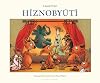
Hīznobyūtī is an 'ugly duckling’ reweaving by French children's author Claude Ponti. When he is hatched, Hīznobyūtī didn't look like his family at all. He had a tiny trunk instead of a snout. They said 'he’s no beauty’ enough times that Hīznobyūtī thought it was his name. As he grew older, he realised he didn't look like the others in his family. He tried different things to blend in. He created masks to hide his face, but it didn't work. He always felt underfoot, or in the show more way, even when going out of his way to be alone and quiet. Hīznobyūtī finally decided to live under the sink, away from everyone, and they forgot about him. He was alone, save for Martin Clock. Eventually, he created a cozy home for himself underground. After a time, he and Martin leave to go explore, meeting all manner of folk, and helping those in need. His travels led him back to the beginning, where he found finally found acceptance. Most importantly, Hīznobyūtī learned that he was good enough in himself, and he needed no one else's approval to be happy.
This is translated from French, and recalled to my mind The Little Prince. There's definitely a great deal of cultural influence that cannot be directly translated. There's a harshness in how Hīznobyūtī’s family treated him, acting as if he weren't even part of the family. Yet, despite that, he persevered and learned that his own approval was all he needed. There are themes of resilience and going with the flow. In the end, all worked out for Hīznobyūtī! It is a marvelous glimpse into how a different culture perceives things as well, and this can be a great talking point with children if you are working with cultural awareness. I find that a great skill to pass on from a young age. My cubs loved this book, and the lessons offered. Great addition to any bookshelf!
***Many thanks to Netgalley and Archipelago for providing an egalley in exchange for a fair and honest review. show less
This is translated from French, and recalled to my mind The Little Prince. There's definitely a great deal of cultural influence that cannot be directly translated. There's a harshness in how Hīznobyūtī’s family treated him, acting as if he weren't even part of the family. Yet, despite that, he persevered and learned that his own approval was all he needed. There are themes of resilience and going with the flow. In the end, all worked out for Hīznobyūtī! It is a marvelous glimpse into how a different culture perceives things as well, and this can be a great talking point with children if you are working with cultural awareness. I find that a great skill to pass on from a young age. My cubs loved this book, and the lessons offered. Great addition to any bookshelf!
***Many thanks to Netgalley and Archipelago for providing an egalley in exchange for a fair and honest review. show less
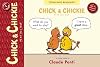
I think this book is a fun little book that can actually get kids into reading. It has a very low reading level, but the two characters, chick and chickie, would keep kids entertained and invested into what would happen next. The book even gives you tips and tricks to reading at different levels. I could definitely see myself recommending this book to a child who is learning to read, but nothing really besides that.
Awards


You May Also Like


Associated Authors
Statistics
- Works
- 107
- Also by
- 4
- Members
- 1,113
- Popularity
- #23,079
- Rating
- 3.9
- Reviews
- 19
- ISBNs
- 206
- Languages
- 8
- Favorited
- 2