

John Hick (1922–2012)
Author of Four Views on Salvation in a Pluralistic World
About the Author
Born in Scarborough, England, Hick received his D. Phil. from Oxford University. For several years he served as a Presbyterian minister in Northumberland, England, but soon moved to the United States, where he took a position teaching philosophy at Cornell University. He served as Stuart Professor show more of Christian Philosophy at Princeton Theological Seminary from 1959 to 1964. Since then he has held a variety of teaching positions in the United States and England. Throughout Hick's career, his main focus has remained on problems in the philosophy of religion. His numerous books, particularly those concerned with the epistemology of religious belief, are marked with a consistently clear and easily accessible style. For this reason, his writings have always been popular among professional philosophers and theologians, as well as among those who are more casually interested in the nature of religious belief or the place of religion in contemporary culture. In more recent years, Hick became more single-minded in his concern with the problem of religious pluralism. Convinced that Western philosophical and religious thought have been too narrowly shaped by preoccupation with the Judeo-Christian tradition, he argues for a broader, more ecumenical spirit. (Bowker Author Biography) show less
Works by John Hick
The Myth of Christian Uniqueness: Toward a Pluralistic Theology of Religions (1987) — Editor — 116 copies
The many-faced argument; recent studies on the ontological argument for the existence of God (1967) 41 copies
The New Frontier of Religion and Science: Religious Experience, Neuroscience and the Transcendent (2006) 27 copies
Truth and Dialogue: Relationship Between World Religions (Studies in philosophy and religion) (1974) 4 copies
God, Truth and Reality: Essays in Honour of John Hick (Essays in the Philosophy of Religion) (1992) 2 copies
Theology's central problem 2 copies
Associated Works
Ethics, Religion, and the Good Society: New Directions in a Pluralistic World (1992) — Contributor — 22 copies
Philosophy and Theological Discourse (Claremont Studies in the Philosophy of Religion) (1997) — Contributor — 8 copies
Tagged
Common Knowledge
- Canonical name
- Hick, John
- Legal name
- Hick, John Harwood
- Birthdate
- 1922-01-20
- Date of death
- 2012-02-09
- Gender
- male
- Education
- University of Edinburgh (MA|1948|D.Litt|1975)
Oriel College, University of Oxford (D.Phil|1950)
Westminister College, University of Cambridge
University of Hull - Occupations
- theologian
philosopher of religion
professor
Presbyterian minister - Organizations
- Claremont Graduate University
Cornell University
Princeton Theological Seminary
University of Birmingham
Gonville and Caius College, University of Cambridge
British Society for the Philosophy of Religion (show all 8)
Belford Presbyterian Church
Friends Ambulance Unit (WWII) - Awards and honors
- Grawemeyer Award (1991)
- Relationships
- Hirst, Edward (uncle)
- Nationality
- UK
- Birthplace
- Scarborough, Yorkshire, England, UK
- Places of residence
- Birmingham, Warwickshire, England, UK
- Place of death
- Birmingham, Warwickshire, England, UK
- Map Location
- England, UK
Members
Reviews

Much of this could be categorized as "The Philosophy of Certitude," and or, "How to Prove a Premise By Excluding All But the Premise So as to Arrive at the Predictable Conclusion: The Premise". Or even: "The Philosophy of Pretending that Reason is the Same as Talking in Closed Self-Justifying Circles".
Some, even of those, though, can be respected for the rigor and apparent "reasonableness" and logicality of the arguments. And then there's Kierkegaard's "The Absolute Paradox," in which he show more notes that those who set out to prove "God" exists begin with the presupposition that "He" does -- therefore are bound to arrive at the conclusion they want, and which presuppose. The real danger, as he also notes, and which is avoided, is to begin with no conclusion, with no exclusive presupposition, and then honestly pursue the question.
Altogether a valuable book, and of substantial interest, so long as one doesn't take it as the ultimate proof of that "infinite perfection" which cannot be apprehended or proven with finite imperfect tools. In other words: Fun, so long as one is careful not to lose his faculties in the rush to trip over his own feet. show less
Some, even of those, though, can be respected for the rigor and apparent "reasonableness" and logicality of the arguments. And then there's Kierkegaard's "The Absolute Paradox," in which he show more notes that those who set out to prove "God" exists begin with the presupposition that "He" does -- therefore are bound to arrive at the conclusion they want, and which presuppose. The real danger, as he also notes, and which is avoided, is to begin with no conclusion, with no exclusive presupposition, and then honestly pursue the question.
Altogether a valuable book, and of substantial interest, so long as one doesn't take it as the ultimate proof of that "infinite perfection" which cannot be apprehended or proven with finite imperfect tools. In other words: Fun, so long as one is careful not to lose his faculties in the rush to trip over his own feet. show less
I am intimidated by writers who can express so much so succinctly. Hick is such a man, so was John A.T. Robinson, so was Paul Tillich (when he wanted to be).
Hick has been called, "a man who knows how to poke a bear with a stick." This is quite right, his ideas are provocative. One cannot simply read them, nod, and move on. Virtually every paragraph of this book incites a vast array of thoughts in a vast number of directions. This is not the sort of book one cannot gallop through in an show more afternoon, despite its length. This is one of those pondering, ponderous reads. This was the first piece of Hick's that I ever read and he quickly jumped to the top of my short list of thinkers. Many people would no doubt find this book threatening, beyond this possibility I have no criticisms of the text except a general evaluation of Hick's point of view.
Religious pluralism (Hick's position) has a tendency to assume Christian-type values and motives of religious groups who may have no such commonality with Christianity. Pluralists are fond of saying, "many paths to the mountaintop." While this statement might be insightful within the Abrahamic tradition, it tends to force everyone onto the same mountain, whether they want to be or not. While this position of Hick's does not really come up in this book, it is enough in the background of Hick's thought that readers should be aware of this feature. show less
Hick has been called, "a man who knows how to poke a bear with a stick." This is quite right, his ideas are provocative. One cannot simply read them, nod, and move on. Virtually every paragraph of this book incites a vast array of thoughts in a vast number of directions. This is not the sort of book one cannot gallop through in an show more afternoon, despite its length. This is one of those pondering, ponderous reads. This was the first piece of Hick's that I ever read and he quickly jumped to the top of my short list of thinkers. Many people would no doubt find this book threatening, beyond this possibility I have no criticisms of the text except a general evaluation of Hick's point of view.
Religious pluralism (Hick's position) has a tendency to assume Christian-type values and motives of religious groups who may have no such commonality with Christianity. Pluralists are fond of saying, "many paths to the mountaintop." While this statement might be insightful within the Abrahamic tradition, it tends to force everyone onto the same mountain, whether they want to be or not. While this position of Hick's does not really come up in this book, it is enough in the background of Hick's thought that readers should be aware of this feature. show less
One of the most useful aspects of this book, which began as the 1994 Auburn lectures at Union Theological Seminary in New York, is Hick's discussion of the etiquette of controversy. It is not surprising that a pluralist should be particularly concerned with the proper construction of controversy, but Hick's formulation is an invaluable contribution at a time when controversy (theological, philosophical, and other) is often anything but constructive. The lectures, conceived as a response to show more philosophical and theological criticisms of Hick's formulation of religious pluralism, is a demonstration of the etiquette of controversy. It begins with a careful restatement of his pluralistic hypothesis, which, starting at the ground level of practice within particular religious traditions, notes that the fruits of those practices (by which he suggests we are to know them), though diverse, are equally valuable. It continues with four dialogues-two with a character named Phil who articulates a series of philosophical criticisms and two with a character named Grace who articulates a series of theological criticisms. As readers familiar with Hick's voluminous writings will expect, the philosophical criticisms concentrate on conflicting truth claims and the "Real," while the theological criticisms concentrate on incarnation, uniqueness, and mission. The book ends with a lyrical account of "a Christianity that sees itself as one true religion among others" and an excellent bibliography. This is an entertaining book, accessible to a wide variety of readers. It is suitable as an introduction to Hick's thought and the criticisms it has generated, but it is also a fine synthesis that will prove valuable to readers already familiar with his work. show less
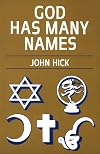
The author persuasively argues for a trivial religious pluralism, respectful of the non Christian traditions that have persisted over time Hinduism, Buddhism, Judaism, and Islam.
Lists
Awards

You May Also Like


Associated Authors
Statistics
- Works
- 44
- Also by
- 8
- Members
- 3,829
- Popularity
- #6,622
- Rating
- 3.7
- Reviews
- 25
- ISBNs
- 171
- Languages
- 10