

Patrick Johnstone
Author of Operation World
About the Author
Image credit: Patrick Johnstone
Works by Patrick Johnstone
The Church Is Bigger Than You Think: The Unfinished Work of World Evangelism (1998) 262 copies, 1 review
Pray for the World: A New Prayer Resource from Operation World (Operation World Resources) (2015) 219 copies
Serving God in a Migrant Crisis: Ministry to People on the Move (Operation World Resources) (2016) 43 copies, 1 review
Serving God in Today's Cities: Facing the Challenges of Urbanization (Operation World Resources) (2015) 20 copies
Pueblos No Alcanzados Orando Por la Ventana Libro III / Unreached People (Spanish Edition) (2004) 3 copies
Operation World Prayer 1 copy
Associated Works
Out of the Black Shadows: The Amazing Transformation of Stephen Lungu (2001) — Foreword, some editions — 165 copies
Tagged
Common Knowledge
- Legal name
- Johnstone, Patrick J. St. G.
- Birthdate
- 1938-09-11
- Gender
- male
- Nationality
- UK
- Associated Place (for map)
- UK
Members
Reviews
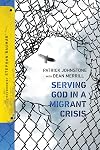
Summary: Concisely sets forth the scope of our present-day global refugee crisis, how as Christians we might think about all this, and several levels of action steps we may take.
We are facing an unprecedented refugee crisis. Corrupt regimes. Violent gangs. Climate change driven migration. Religious persecution. Ethnic cleansing. All these causes and more are leading people to do something no one wants or easily chooses to do--leave home, sometimes paying large sums to shady figures, with no show more certainty of finding refuge on the other end.
Patrick Johnstone is well known to many as the author of successive editions of Operation World, a guide that has helped many of us pray, or even be led to go to parts of the world and people groups who have not heard the Christian message. His study of these people groups made him keenly aware of these unprecedented movements of people, and the possibility that the very people we hope to reach with the Christian message may be on our doorstep. The question is not, how will we reach them, but will we welcome them?
Johnstone begins by inviting us to connect with our own immigrant histories and by drawing our attention to the one who we follow, who was himself a refugee as a child. In the first part, he explores the unprecedented human tide of immigrants, one out of every 122 on the planet. He turns to fears real and imagined and separates fact from fiction. Then he looks at the factors driving the refugee and migrant crisis, arguing that there is no end in sight and that more developed nations will be dealing with this for some time to come.
In the second part of the book, he focuses on what we need to know. First of all, he helps us understand why people leave their homes, often taking great financial and safety risks to do so. He reminds us that the biblical story is an immigrant story. God even causes some immigration. Our savior was an immigrant. Immigrants are not the "other," but rather are people who are "one of us." Johnstone asks whether our immigration discussions ought to begin with policies and legalities, or with a concern of the humanity of the immigrant. Whatever we, and our nations do, it will have some kind of profound effect on the lives of real people, many of them among the most defenseless in the world. On the other hand, we often do not consider is that these people may turn out not as a problem to be solved, but a blessing. They provide needed workers in low-birthrate countries, some are fellow believers who rejuvenate the faith of complacent Christians, and some of our most respected scientists, political leaders, and business people have been immigrants.
So, what should we do? That is the concern of the final chapters in the third part of the book. He begins by suggesting five starting points:
1. Appreciate the strategic opportunity. God is bringing the world to us!
2. Recognize and admit our past mistakes.
3. Become more sensitive to other cultures.
4. Believe that God truly cares about migrants.
5. Start praying.
This last point literally struck home. The author quotes a Ghanaian theologian who participated in African immigrant revivals, praying for the awakening of the West in Amsterdam, Hamburg, Columbus, Ohio, and Chicago. I live in Columbus and my church hosts a Ghanaian congregation. It made me wonder if some of those worshiping in our church building were among those the theologian was praying with. It makes me wonder if we are the ones being blessed by their presence and what they might teach us about prayer and spiritual warfare in the post-Christian West.
He then concludes with four action levels: the individual, the church, what Christian agencies can do and what the global body of Christ can do. This lasts challenges us both in speaking to ourselves about the need at hand, and speaking to our governments.
What was so refreshing about this book is that it stepped aside from media circus and the political fray and centered the discussion on the reality of the human crisis behind the policy debates and the biblical convictions and dispositions of the heart of people who follow Jesus the refugee. While not ignoring the important role Christians can have in challenging the government, it also focused on the critical role Christians can play in their home church communities by hosting refugees, welcoming immigrants into our homes, networking them into work opportunities, and sharing our faith with them.
This last phrase will be a problem for some. Certainly, we should do all that we can for the immigrant whether they believe or not. But Johnstone makes a telling observation that comes out of his years of work among many people groups: "Immigrants will think it odd if you don't introduce your faith. They will wonder if you are ashamed of your beliefs for some reason." This reminds me that the greatest tragedy of yielding to the fears and insecurities that feed political bases and media ratings; is that in so doing we miss the opportunity to love the alien and the stranger, see them become friends, and perhaps witness their turning to new life in Christ. What others see as a crisis and a problem, Johnstone recognizes as a great opportunity. Will we?
____________________________
Disclosure of Material Connection: I received a complimentary review copy of this book from the publisher in exchange for an honest review. The opinions I have expressed are my own. show less
We are facing an unprecedented refugee crisis. Corrupt regimes. Violent gangs. Climate change driven migration. Religious persecution. Ethnic cleansing. All these causes and more are leading people to do something no one wants or easily chooses to do--leave home, sometimes paying large sums to shady figures, with no show more certainty of finding refuge on the other end.
Patrick Johnstone is well known to many as the author of successive editions of Operation World, a guide that has helped many of us pray, or even be led to go to parts of the world and people groups who have not heard the Christian message. His study of these people groups made him keenly aware of these unprecedented movements of people, and the possibility that the very people we hope to reach with the Christian message may be on our doorstep. The question is not, how will we reach them, but will we welcome them?
Johnstone begins by inviting us to connect with our own immigrant histories and by drawing our attention to the one who we follow, who was himself a refugee as a child. In the first part, he explores the unprecedented human tide of immigrants, one out of every 122 on the planet. He turns to fears real and imagined and separates fact from fiction. Then he looks at the factors driving the refugee and migrant crisis, arguing that there is no end in sight and that more developed nations will be dealing with this for some time to come.
In the second part of the book, he focuses on what we need to know. First of all, he helps us understand why people leave their homes, often taking great financial and safety risks to do so. He reminds us that the biblical story is an immigrant story. God even causes some immigration. Our savior was an immigrant. Immigrants are not the "other," but rather are people who are "one of us." Johnstone asks whether our immigration discussions ought to begin with policies and legalities, or with a concern of the humanity of the immigrant. Whatever we, and our nations do, it will have some kind of profound effect on the lives of real people, many of them among the most defenseless in the world. On the other hand, we often do not consider is that these people may turn out not as a problem to be solved, but a blessing. They provide needed workers in low-birthrate countries, some are fellow believers who rejuvenate the faith of complacent Christians, and some of our most respected scientists, political leaders, and business people have been immigrants.
So, what should we do? That is the concern of the final chapters in the third part of the book. He begins by suggesting five starting points:
1. Appreciate the strategic opportunity. God is bringing the world to us!
2. Recognize and admit our past mistakes.
3. Become more sensitive to other cultures.
4. Believe that God truly cares about migrants.
5. Start praying.
This last point literally struck home. The author quotes a Ghanaian theologian who participated in African immigrant revivals, praying for the awakening of the West in Amsterdam, Hamburg, Columbus, Ohio, and Chicago. I live in Columbus and my church hosts a Ghanaian congregation. It made me wonder if some of those worshiping in our church building were among those the theologian was praying with. It makes me wonder if we are the ones being blessed by their presence and what they might teach us about prayer and spiritual warfare in the post-Christian West.
He then concludes with four action levels: the individual, the church, what Christian agencies can do and what the global body of Christ can do. This lasts challenges us both in speaking to ourselves about the need at hand, and speaking to our governments.
What was so refreshing about this book is that it stepped aside from media circus and the political fray and centered the discussion on the reality of the human crisis behind the policy debates and the biblical convictions and dispositions of the heart of people who follow Jesus the refugee. While not ignoring the important role Christians can have in challenging the government, it also focused on the critical role Christians can play in their home church communities by hosting refugees, welcoming immigrants into our homes, networking them into work opportunities, and sharing our faith with them.
This last phrase will be a problem for some. Certainly, we should do all that we can for the immigrant whether they believe or not. But Johnstone makes a telling observation that comes out of his years of work among many people groups: "Immigrants will think it odd if you don't introduce your faith. They will wonder if you are ashamed of your beliefs for some reason." This reminds me that the greatest tragedy of yielding to the fears and insecurities that feed political bases and media ratings; is that in so doing we miss the opportunity to love the alien and the stranger, see them become friends, and perhaps witness their turning to new life in Christ. What others see as a crisis and a problem, Johnstone recognizes as a great opportunity. Will we?
____________________________
Disclosure of Material Connection: I received a complimentary review copy of this book from the publisher in exchange for an honest review. The opinions I have expressed are my own. show less
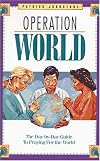
Operation World is the definitive prayer handbook and reference guide. Packed with informative and inspiring fuel for prayer about every country of the world, it is essential for anybody who wants to make a difference. It was the winner of the 2002 Gold Medallion Book Award and has been quoted in numerous journals and articles. It contains information for all the continents and every country in the world
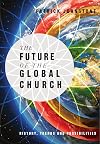
This is more of a reference book, not one that I would read all the way through. It is full of facts and figures shown graphically as well as related in succinct text, about the Christian church globally. It first takes a broad view at global demography, then moves on to Christian history.Major world religions follow, then Christian megablocs, evangelicalism, and the unevangelized. Great maps and other graphics with lots of detail, along with questions to consider.
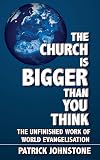
this is fantastic. everyone in an american church should read this. it's so encouraging to see what God is doing globally.
Lists
Awards


You May Also Like


Associated Authors
Statistics
- Works
- 22
- Also by
- 1
- Members
- 2,910
- Popularity
- #8,799
- Rating
- 4.1
- Reviews
- 14
- ISBNs
- 47
- Languages
- 6