

Sam Keen (1931–2025)
Author of Fire in the Belly: On Being a Man
About the Author
Sam Keen, author of twelve books, including Fire in the Belly, served as consulting editor at Psychology Today for many years. He is a graduate of the Harvard Divinity School and lives in Sonoma, California. (Bowker Author Biography) Author and educator Sam Keen was educated at the Harvard Divinity show more School and Princeton University. Keen is a former editor of Psychology Today magazine and has held positions at the Louisville Presbyterian Seminary, Prescott College and the Humanistic Philosophy Institute. Keen's books include Voices and Vision, Your Mythic Journey and Hymns to an Unknown God. He also co-produced the PBS documentary, Faces of the Enemy, which was a 1998 Emmy nominee. (Bowker Author Biography) show less
Image credit: from web site: www.greatthoughtstreasury.com
Works by Sam Keen
Your Mythic Journey: Finding Meaning in Your Life Through Writing and Storytelling (1989) 287 copies, 2 reviews
The SACRED JOURNEY YOUR QUEST FOR LIFE'S HIGHER MEANING : Your Quest for Life's Higher Meaning (1996) 3 copies
Why Americans Love to Lie 2 copies
The Denial of Death 1 copy
Clean Architecture with Python: Implement scalable and maintainable applications using proven architectural principles (2025) 1 copy
SAM KEEN 1 copy
Associated Works
Sacred Stories: A Celebration of the Power of Story to Transform and Heal (1993) — Contributor — 113 copies, 1 review
Graceful Passages: A Companion for Living and Dying (Wisdom of the World) (2000) — Foreword — 54 copies, 1 review
New Theology No. 5: New Talk of the Future, Hope, and Eschatology (1968) — Contributor — 52 copies, 1 review
Tagged
Common Knowledge
- Birthdate
- 1931-11-23
- Date of death
- 2025-03-19
- Gender
- male
- Education
- Ursinus College (BA)
Harvard University (PhD|Theology)
Princeton University (PhD|Philosophy of Religion) - Occupations
- professor
journalist - Organizations
- Psychology Today
Spirituality & Health
Esalen Institute
Omega Institute - Nationality
- USA
- Birthplace
- Scranton, Pennsylvania, USA
- Places of residence
- Sonoma, California, USA
- Place of death
- Oahu, Hawaii, USA
- Associated Place (for map)
- USA
Members
Reviews
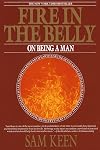
I am torn in assessing that one. First published in 1992, on the one hand I consider it a must read and an absolute classic when it comes to the so-called 'Men's Rights Movement'; a sharp opus containing brilliant analyses and thoughts about what it means (or should mean) to be a man these days (not least because it also points to still more than needed challenging of various toxic philosophies -a certain toxic masculinity for sure, but, also, a certain toxic feminism those misandry seems to show more have taken hold of debate around genders, and which needs to be confronted too...). Yet, on the other hand, being as much a personal journey as an intellectual debate it also is, at times, very subjective, needlessly wordy, and annoyingly mystifying to the point of being unclear (there's a lot of psychotherapeutic babbling and other Jungian psychoanalytical theories which, quite frankly, went way beyond my head -hence my severe rating of an otherwise very good book...).
It starts with the patriarchal model, which had shaped society for so long.
Now, there's a lot to say about the patriarchy, but, think what you want, one thing was clear-cut with such a system: individualities might have been stifled, but gender roles were then clearly defined. When it comes to manhood, this meant not only a set of behaviours and attitudes to be expected (emotional self-denial so as to feed toughness, aggression, violence, willpower, and competition) but, also, when and how a man could be truly called a man (after all, every society had/has rites of passages clearly demarking the transition from boy to man, and it's not so long ago the time when young men were drafted into a national military service...). Now that the patriarchy has been on its way out (again, the book was published in 1992) what's left, then, of such clear-cut gender roles? What's left of past ideals of manhood?
Well, as Sam Keen brilliantly demonstrates, not much apart from the damages such model has caused. Delving into such damages, in fact, is where this book proves truly insightful, if not prophetic in regards to some of the gender debates still plaguing society nowadays. Here, he indeed does two things that needs to be acknowledged, especially since, more than thirty years on, his message still isn't politically correct, when not completely overlooked within certain parts of society.
First, he obviously agrees that the patriarchy disserved women, who were kept in a submissive role which was terribly unfair and exploitive. He doesn't deny that, and, unless you're a sexist jerk, nor should you as a reader. But, he refuses to solely blame men for such a past system, for women not only fuelled it (raising sons and daughters to be as the system expected them to be) but also benefited from it. It's all very well indeed to denounce, as feminists have been doing, the so-called 'male psyche' supposedly inseparable from violence and a blunting of feelings, but that's missing the mark -men were not violent and emotionally blunt because of their innate nature, but because they were part of a system which assigned them the roles of providers and protectors, tasks women gained from, and, again, raised even their own sons to embody.
'There can be no question but that the historical humiliation of women, the demeaning, the cruelty reported by feminists is a fact. But men's suffering from gender roles is also a fact.'
'short of an utopian world from which greed, scarcity, madness and ill will have vanished, someone must be prepared to take up arms and do battle with evil. We miss the mark if we do not see that manhood has traditionally required selfless generosity even to the point of sacrifice.'
And indeed, the patriarchy surely was toxic to women, but it's not women's lives which were deemed expendables, as it was not, for example, women who were forcibly drafted to serve as canon fodders when wars broke out, or, expected to die so as to save lives (we heard 'women and children first', I have yet to hear 'men first' when boats were sinking -literally and metaphorically speaking...). The patriarchy was evil, but women had indeed as much responsibility in its survival as a system as men. Was it any good, though?
Here's where his second point comes to the fore: the patriarchy was toxic to men too, for it encouraged the toxic view of masculinity we all are familiar with by now, and which has been as destructive to men as it has been to women as collateral damages.
Now, one has to be careful with the word 'toxic'. Willpower, selfless ambition, aggression, ego driven ethos to climb a pecking order, competition, denial of emotion and feelings... It all sounds very negative, yet these are also the traits which contributed to push societies and civilizations forward. We ought to be careful in not completely demonising them. The point, though, is that when taken to an extreme they not only damage individuals (for, again, men do suffer from such toxicity) but the society they give birth to. Sam Keen's argument takes here a further dimension, as he claims that the capitalistic system we live in not only encourages, but also rewards such toxic behaviours, at the expense even of our environment. His point is remarkable, not least because there are still influential feminists out there who still remain completely clueless as to what it clearly demonstrates. Let me explain.
Men were not at the top because they were biologically superior to women, but because of the expectations put on them and the destructive and self-destructive values and mindset instilled in them so as to meet these expectations. When women wanted to be emancipated, they had no choice but to play the exact same game so as to reach the top too, that is, they had to embody the same mindset to succeed, and so embrace traits which would have been labelled 'masculine', 'manly', in the past (ambition, ego, toughness, aggression...). The system is indeed so that, to succeed (be it in business, politics, or else) women had to become as toxic as the men in charge. Here's the point, and bear in mind that this was written about thirty years ago (!):
Some feminists, who harbour a secret belief in the innate moral superiority of women, believe that women will change the rules of business and bring the balm of communication and human kindness into the boardroom. To date this has been in vain hope. Women executives have proven themselves the equal of men in every way -including callousness.'
This is a crucial point to make, because it shows that such toxic traits are not innate, let alone innate to men only. Such toxic traits, in fact, have nothing to do with gender -they are the products of a toxic culture. If we want to get rid of them, then, it's not men as men that we should attack (the stance still taken by some feminists wrapped up in misandry, and for whom every societal problem stem from a patriarchy where men are supposedly the only guilty party because of their biology or innate 'male psyche') but, the culture itself. How to do so?
Here Sam Keen shows himself tentative, if not naïve, although I personally agree with his vision. What we need, is indeed to tame such traits, to detoxify them, and, instead, channel them for good.
'men require a revolution in identity in which we measure success by our capacity for compassion rather than by accumulation of power, and virility by the capacity to nurture, husband, and mentor.'
Is such a model of manhood compatible with free market liberalism, which encourage a selfish warrior mentality (both in men and women) over nurturing and compassion? I, like the author, highly doubt it; and this is where the bucket stops in here.
This is a remarkable book. It's full of insights and prescience, and, a classic when it comes to challenging the patriarchal model, not only for its negative impact on women, but, also, on men too. As it turns out, there is no gender war: we're all complicit caught in a system we inherited, and it will take a lot of healing, let alone redefining of our values, to fully recover and move on. It will, obviously, take time; especially since acknowledging men as victim too still is not politically correct. But we are getting there. As a Millennial reading this thirty years after it was published, I can see men and women of my generation and younger agreeing with its main tenets, which gives me hope.
A classic, even if psychoanalytical meanderings burden it too much at times for my full liking (again, my rating is severe but I can't ignore such boring and, to me, incomprehensible babblings). show less
It starts with the patriarchal model, which had shaped society for so long.
Now, there's a lot to say about the patriarchy, but, think what you want, one thing was clear-cut with such a system: individualities might have been stifled, but gender roles were then clearly defined. When it comes to manhood, this meant not only a set of behaviours and attitudes to be expected (emotional self-denial so as to feed toughness, aggression, violence, willpower, and competition) but, also, when and how a man could be truly called a man (after all, every society had/has rites of passages clearly demarking the transition from boy to man, and it's not so long ago the time when young men were drafted into a national military service...). Now that the patriarchy has been on its way out (again, the book was published in 1992) what's left, then, of such clear-cut gender roles? What's left of past ideals of manhood?
Well, as Sam Keen brilliantly demonstrates, not much apart from the damages such model has caused. Delving into such damages, in fact, is where this book proves truly insightful, if not prophetic in regards to some of the gender debates still plaguing society nowadays. Here, he indeed does two things that needs to be acknowledged, especially since, more than thirty years on, his message still isn't politically correct, when not completely overlooked within certain parts of society.
First, he obviously agrees that the patriarchy disserved women, who were kept in a submissive role which was terribly unfair and exploitive. He doesn't deny that, and, unless you're a sexist jerk, nor should you as a reader. But, he refuses to solely blame men for such a past system, for women not only fuelled it (raising sons and daughters to be as the system expected them to be) but also benefited from it. It's all very well indeed to denounce, as feminists have been doing, the so-called 'male psyche' supposedly inseparable from violence and a blunting of feelings, but that's missing the mark -men were not violent and emotionally blunt because of their innate nature, but because they were part of a system which assigned them the roles of providers and protectors, tasks women gained from, and, again, raised even their own sons to embody.
'There can be no question but that the historical humiliation of women, the demeaning, the cruelty reported by feminists is a fact. But men's suffering from gender roles is also a fact.'
'short of an utopian world from which greed, scarcity, madness and ill will have vanished, someone must be prepared to take up arms and do battle with evil. We miss the mark if we do not see that manhood has traditionally required selfless generosity even to the point of sacrifice.'
And indeed, the patriarchy surely was toxic to women, but it's not women's lives which were deemed expendables, as it was not, for example, women who were forcibly drafted to serve as canon fodders when wars broke out, or, expected to die so as to save lives (we heard 'women and children first', I have yet to hear 'men first' when boats were sinking -literally and metaphorically speaking...). The patriarchy was evil, but women had indeed as much responsibility in its survival as a system as men. Was it any good, though?
Here's where his second point comes to the fore: the patriarchy was toxic to men too, for it encouraged the toxic view of masculinity we all are familiar with by now, and which has been as destructive to men as it has been to women as collateral damages.
Now, one has to be careful with the word 'toxic'. Willpower, selfless ambition, aggression, ego driven ethos to climb a pecking order, competition, denial of emotion and feelings... It all sounds very negative, yet these are also the traits which contributed to push societies and civilizations forward. We ought to be careful in not completely demonising them. The point, though, is that when taken to an extreme they not only damage individuals (for, again, men do suffer from such toxicity) but the society they give birth to. Sam Keen's argument takes here a further dimension, as he claims that the capitalistic system we live in not only encourages, but also rewards such toxic behaviours, at the expense even of our environment. His point is remarkable, not least because there are still influential feminists out there who still remain completely clueless as to what it clearly demonstrates. Let me explain.
Men were not at the top because they were biologically superior to women, but because of the expectations put on them and the destructive and self-destructive values and mindset instilled in them so as to meet these expectations. When women wanted to be emancipated, they had no choice but to play the exact same game so as to reach the top too, that is, they had to embody the same mindset to succeed, and so embrace traits which would have been labelled 'masculine', 'manly', in the past (ambition, ego, toughness, aggression...). The system is indeed so that, to succeed (be it in business, politics, or else) women had to become as toxic as the men in charge. Here's the point, and bear in mind that this was written about thirty years ago (!):
Some feminists, who harbour a secret belief in the innate moral superiority of women, believe that women will change the rules of business and bring the balm of communication and human kindness into the boardroom. To date this has been in vain hope. Women executives have proven themselves the equal of men in every way -including callousness.'
This is a crucial point to make, because it shows that such toxic traits are not innate, let alone innate to men only. Such toxic traits, in fact, have nothing to do with gender -they are the products of a toxic culture. If we want to get rid of them, then, it's not men as men that we should attack (the stance still taken by some feminists wrapped up in misandry, and for whom every societal problem stem from a patriarchy where men are supposedly the only guilty party because of their biology or innate 'male psyche') but, the culture itself. How to do so?
Here Sam Keen shows himself tentative, if not naïve, although I personally agree with his vision. What we need, is indeed to tame such traits, to detoxify them, and, instead, channel them for good.
'men require a revolution in identity in which we measure success by our capacity for compassion rather than by accumulation of power, and virility by the capacity to nurture, husband, and mentor.'
Is such a model of manhood compatible with free market liberalism, which encourage a selfish warrior mentality (both in men and women) over nurturing and compassion? I, like the author, highly doubt it; and this is where the bucket stops in here.
This is a remarkable book. It's full of insights and prescience, and, a classic when it comes to challenging the patriarchal model, not only for its negative impact on women, but, also, on men too. As it turns out, there is no gender war: we're all complicit caught in a system we inherited, and it will take a lot of healing, let alone redefining of our values, to fully recover and move on. It will, obviously, take time; especially since acknowledging men as victim too still is not politically correct. But we are getting there. As a Millennial reading this thirty years after it was published, I can see men and women of my generation and younger agreeing with its main tenets, which gives me hope.
A classic, even if psychoanalytical meanderings burden it too much at times for my full liking (again, my rating is severe but I can't ignore such boring and, to me, incomprehensible babblings). show less
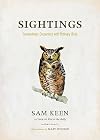
As an object, this is a beautiful book. Sized to fit comfortably in the hand, it has an elegant dust jacket; it’s printed on thick, serious stock, meant to last; and best of all, it’s illustrated throughout with lush watercolors by Mary Woodin.
Unfortunately, and contrary to what the cover led me to expect, this is not a book about birds. It’s a book about how one man took his self - his anxious masculinity, his spiritual confusion, his fear of death, his absurdly overinflated sense of show more purpose - into the field and offloaded all those feelings on to some birds he saw....
More... show less
Unfortunately, and contrary to what the cover led me to expect, this is not a book about birds. It’s a book about how one man took his self - his anxious masculinity, his spiritual confusion, his fear of death, his absurdly overinflated sense of show more purpose - into the field and offloaded all those feelings on to some birds he saw....
More... show less
Wow what a read. Im actually going through it for the second time.
Must read for all MEN no matter at which level you are at. it is an amazing compilation of ideas and fundamental masculinity - to the deepest core of your psyche stuff you won't find anywhere else.
Sam did a great job portraying the history of evolution of manhood, analyzing tribal initiation and other psychological aspects of Man - woman relationship. As well as what happens when Men fail to achieve virility and remain mommas show more boys.
for many reasons I have not gone through my initiation into manhood, this book is helping me as we speak now to expand my horizons and look down into my own psyche to extract some answers. and I did. The best thing(so far) I got out of it is realization of importance of separation from the mother.
I have not seen my mother in 10 years, but I only now have realized, I was still connected to her and it is stopping me from becoming a man that I wish to be. to quote sam keen - when a man can say a sincere no to a woman, only then he can say a sincere yes. a man must separate from women and be comfortable without them first, before he can be truly transparent and fully engaged in a relationship with her and not the other way around.
Also another thing I learned. is for any man to be fullfilled in life he must first decide where he is going and then decide who he is going with.
most of the time it is the other way around what these guys do. and its never good for any relationship.
if you havent read this book. you're missing out on a lot. show less
Must read for all MEN no matter at which level you are at. it is an amazing compilation of ideas and fundamental masculinity - to the deepest core of your psyche stuff you won't find anywhere else.
Sam did a great job portraying the history of evolution of manhood, analyzing tribal initiation and other psychological aspects of Man - woman relationship. As well as what happens when Men fail to achieve virility and remain mommas show more boys.
for many reasons I have not gone through my initiation into manhood, this book is helping me as we speak now to expand my horizons and look down into my own psyche to extract some answers. and I did. The best thing(so far) I got out of it is realization of importance of separation from the mother.
I have not seen my mother in 10 years, but I only now have realized, I was still connected to her and it is stopping me from becoming a man that I wish to be. to quote sam keen - when a man can say a sincere no to a woman, only then he can say a sincere yes. a man must separate from women and be comfortable without them first, before he can be truly transparent and fully engaged in a relationship with her and not the other way around.
Also another thing I learned. is for any man to be fullfilled in life he must first decide where he is going and then decide who he is going with.
most of the time it is the other way around what these guys do. and its never good for any relationship.
if you havent read this book. you're missing out on a lot. show less
this is the first book i've read on masculinity. i was surprised by how much of it i really identified with, not only with how i feel but how i grew up. not sure what that's about exactly. but i really appreciated his approach to masculinity and his thinking on creating a masculinity for a new era. some of this stuff felt a bit dated (it was released in '91) and i kept wondering what he would say now. but overall i really enjoyed this book. i think there were some comments in it that were a show more bit flippant and offensive, but when read in context didn't seem that bad. i just wished he would have chosen his words more carefully sometimes. again, though, i enjoyed the book. show less
Lists
Awards

You May Also Like


Associated Authors
Statistics
- Works
- 30
- Also by
- 7
- Members
- 2,299
- Popularity
- #11,173
- Rating
- 3.8
- Reviews
- 18
- ISBNs
- 90
- Languages
- 8
- Favorited
- 3