
H. A. Guerber (1859–1929)
Author of Tales Of Norse Mythology
About the Author
Works by H. A. Guerber
The Story of Modern France: The Kings, the French Revolution, the Napoleonic Wars and the Establishment of Democracy and Liberty (2010) 20 copies
Norse Gods, Goddesses, Giants, Dwarves, Elves & More - A Complete Guide [Illustrated] (2011) 2 copies
Ortacag Efsaneleri 2 copies
Stories of Greece and Rome 1 copy
Myths Of The Norseman 1 copy
La historia de los griegos (Histori(et)as del mundo antiguo para jóvenes lectores) (Spanish Edition) 1 copy
Greece and Rome 1 copy
Classical Mythology 1 copy
THE MYTHS OF GREECE & ROME 1 copy
Story of the Great Republic 1 copy
CONTES ET LEGENDES: PART 1 1 copy
Tales of Norse Mythology 1 copy
Associated Works
Saga Six Pack 8 - The Bondman, Book of Michael Sunlocks, Red Jason, The Waif Woman, Grettir the Outlaw, Greek and Northern Mythologies (Illustrated) (2017) — Contributor, some editions — 9 copies
Tagged
Common Knowledge
- Canonical name
- Guerber, H. A.
- Legal name
- Guerber, Hélène Adeline
- Birthdate
- 1859-03-09
- Date of death
- 1929-05-26
- Gender
- female
- Occupations
- historian
writer
teacher - Nationality
- USA
- Birthplace
- Mt. Clemens, Michigan, USA
- Places of residence
- Upper Montclair, New Jersey, USA
- Place of death
- Upper Montclair, New Jersey, USA
- Burial location
- Greenwood Cemetery, Hamilton Township, Mercer County, New Jersey, USA
- Associated Place (for map)
- New Jersey, USA
Members
Reviews
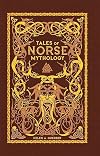
This book is very informative though you can tell that it is written by a Christian who seems to deem any sort of old, polytheistic religion as a bit barbaric and stupid. Most of the time this did not get in the way of the book, but occasionally what seems to be her personal opinions on this type of religion/belief system make their way into her writing.
I'm not a scholar of Norse Mythology but I loved this book. A lot of the information is the same as what I've gotten from the Prose and Poetic Eddas, with a few exceptions. It's important to remember that the original printing of this book was for 1909 and some things have probably been proven untrue or dismissed in that time, but I found 95% of it to be an accurate and well written account (so far as my own knowledge goes).
Aside from the text, the book is GORGEOUS. It's faux leather hard show more cover with gold embossing, a ribbon bookmark, gold edged pages and is full of black and white art. It's the most beautiful book I own.
5/5 would buy again. show less
Aside from the text, the book is GORGEOUS. It's faux leather hard show more cover with gold embossing, a ribbon bookmark, gold edged pages and is full of black and white art. It's the most beautiful book I own.
5/5 would buy again. show less
I'm not a scholar of Norse Mythology but I loved this book. A lot of the information is the same as what I've gotten from the Prose and Poetic Eddas, with a few exceptions. It's important to remember that the original printing of this book was for 1909 and some things have probably been proven untrue or dismissed in that time, but I found 95% of it to be an accurate and well written account (so far as my own knowledge goes).
Aside from the text, the book is GORGEOUS. It's faux leather hard show more cover with gold embossing, a ribbon bookmark, gold edged pages and is full of black and white art. It's the most beautiful book I own.
5/5 would buy again. show less
Aside from the text, the book is GORGEOUS. It's faux leather hard show more cover with gold embossing, a ribbon bookmark, gold edged pages and is full of black and white art. It's the most beautiful book I own.
5/5 would buy again. show less
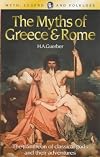
The late W M S Russell, Professor Emeritus of Sociology at the University of Reading, was a modern-day polymath: classicist, sociologist, biologist (he helped formulate the principle of the three Rs of humane animal experimentation: Reduction, Replacement and Refinement), folklorist (former President and Secretary of the Folklore Society), radio quiz panellist (a sometime stalwart of Round Britain Quiz), raconteur, singer, novelist... Well, you get the picture. I was privileged to be a show more longtime correspondent of his, and while I never had the opportunity to meet up with him in person I knew him from phone conversations to be knowledgeable, personable and friendly. His premature death was a great sadness to me personally and a loss to his many friends and acquaintances generally.
Bill Russell provided a new introduction to this re-issue, one of a series entitled Myth, Legend and Folklore, the result of a collaboration between Wordsworth Editions and The Folklore Society which it is intended will make the archive of the Society more generally accessible than at any time since its beginnings in 1879. This classic narrative of classical mythology, first published in 1908 and written by British academic Hélène Adeline Guerber, was apparently highly regarded in its day. Though not as famous as The Age of Fable, which I remember from my childhood as the first part of Bullfinch’s Mythology, Guerber’s retelling comments on their origins and significance from a later and more scientific viewpoint, as its opening sentence proclaims:
Mythology is the science which treats of the early traditions, or myths, relating to the religion of the ancients, and includes, besides a full account of the origin of their gods, their theory concerning the beginning of all things.
My review copy from 2000 is actually full of Bill’s handwriting, correcting the handful of typographical errors that had slipped through the editing process to appear in the published version, so I am particularly fond of it. Unlike modern academic tomes, there is no extensive bibliography – indeed, none at all, as Guerber's contemporary references are now all well out of date. However, there remains the nineteenth-century penchant for quoting classical and contemporary poetry at appropriate points in the text. For all that the text reads easily enough, with sub-headings to chop up the text in bite-size chunks and a useful index to locate names (though the numerous but bald page references for Heaven, Earth, Love etc are a bit daunting – a bit of cross-referencing would have been more useful).
Every so often someone will lament the passing of an age when to be educated meant being as familiar with the ancient Greek and Roman myths as with your own neighbourhood. For better or worse that is no longer the case but, as with the practice of straitjacketing the English language with the rules of Latin grammar, this knowledge could often constrict the creative imagination. Maybe the passing of time may lead to public re-acquaintance with this ancient matter, resulting in a kind of mini-renaissance.
Or maybe not. Professor Russell’s introduction reminds us nevertheless that classical myths and folk-tales have inspired modern writers in unexpected ways, especially science-fictioneers such as Asimov, Arthur C Clarke, Sprague de Camp and Brian Stableford; one tale-type even provided the name of pioneering rock band The Grateful Dead. And as you yourself read through these various stories, and immerse yourself in tales of boar hunts, and wild hags decapitated by heroes, and kings with animal ears betrayed by barbers, and ships returning with black sails (all classical motifs recurring in, for example, Arthurian legends), you may well begin to wonder if there is anything new under the sun except a change of name and a new context.
http://wp.me/s2oNj1-myth show less
Bill Russell provided a new introduction to this re-issue, one of a series entitled Myth, Legend and Folklore, the result of a collaboration between Wordsworth Editions and The Folklore Society which it is intended will make the archive of the Society more generally accessible than at any time since its beginnings in 1879. This classic narrative of classical mythology, first published in 1908 and written by British academic Hélène Adeline Guerber, was apparently highly regarded in its day. Though not as famous as The Age of Fable, which I remember from my childhood as the first part of Bullfinch’s Mythology, Guerber’s retelling comments on their origins and significance from a later and more scientific viewpoint, as its opening sentence proclaims:
Mythology is the science which treats of the early traditions, or myths, relating to the religion of the ancients, and includes, besides a full account of the origin of their gods, their theory concerning the beginning of all things.
My review copy from 2000 is actually full of Bill’s handwriting, correcting the handful of typographical errors that had slipped through the editing process to appear in the published version, so I am particularly fond of it. Unlike modern academic tomes, there is no extensive bibliography – indeed, none at all, as Guerber's contemporary references are now all well out of date. However, there remains the nineteenth-century penchant for quoting classical and contemporary poetry at appropriate points in the text. For all that the text reads easily enough, with sub-headings to chop up the text in bite-size chunks and a useful index to locate names (though the numerous but bald page references for Heaven, Earth, Love etc are a bit daunting – a bit of cross-referencing would have been more useful).
Every so often someone will lament the passing of an age when to be educated meant being as familiar with the ancient Greek and Roman myths as with your own neighbourhood. For better or worse that is no longer the case but, as with the practice of straitjacketing the English language with the rules of Latin grammar, this knowledge could often constrict the creative imagination. Maybe the passing of time may lead to public re-acquaintance with this ancient matter, resulting in a kind of mini-renaissance.
Or maybe not. Professor Russell’s introduction reminds us nevertheless that classical myths and folk-tales have inspired modern writers in unexpected ways, especially science-fictioneers such as Asimov, Arthur C Clarke, Sprague de Camp and Brian Stableford; one tale-type even provided the name of pioneering rock band The Grateful Dead. And as you yourself read through these various stories, and immerse yourself in tales of boar hunts, and wild hags decapitated by heroes, and kings with animal ears betrayed by barbers, and ships returning with black sails (all classical motifs recurring in, for example, Arthurian legends), you may well begin to wonder if there is anything new under the sun except a change of name and a new context.
http://wp.me/s2oNj1-myth show less
Lists
You May Also Like


Associated Authors
Statistics
- Works
- 88
- Also by
- 5
- Members
- 5,884
- Popularity
- #4,192
- Rating
- 3.8
- Reviews
- 27
- ISBNs
- 312
- Languages
- 6
- Favorited
- 2