
Matthew Levering
Author of Ezra & Nehemiah (Brazos Theological Commentary on the Bible)
About the Author
Matthew Levering (PhD, Boston College) is the James N. Perry Jr. and Mary D. Perry Chair of Theology at Mundelein Seminary. He has written numerous books, including Engaging the Doctrine of Revelation and Engaging the Doctrine of Creation.
Image credit: Used by permission of Baker Publishing Group, copyright © 2008. All rights to this material are reserved. Materials are not to be distributed to other web locations for retrieval, published(see © info.)
Works by Matthew Levering
Participatory Biblical Exegesis: A Theology of Biblical Interpretation (ND Reading the Scriptures) (2008) 77 copies
Engaging the Doctrine of Revelation: The Mediation of the Gospel through Church and Scripture (2014) 68 copies
Engaging the Doctrine of Creation: Cosmos, Creatures, and the Wise and Good Creator (2017) 67 copies, 1 review
Engaging the Doctrine of the Holy Spirit: Love and Gift in the Trinity and the Church (2016) 64 copies
Jesus and the Demise of Death: Resurrection, Afterlife, and the Fate of the Christian (2012) 55 copies, 2 reviews
Reading John with St. Thomas Aquinas: Theological Exegesis and Speculative Theology (2005) — Editor — 23 copies
Christ and the Catholic Priesthood: Ecclesial Hierarchy and the Pattern of the Trinity (2010) 20 copies
Ressourcement Thomism: Sacred Doctrine, the Sacraments, and the Moral Life (2010) — Editor — 18 copies
Engaging the Doctrine of Marriage: Human Marriage as the Image and Sacrament of the Marriage of God and Creation (Engaging Doctrine Series) (2020) 11 copies
The Achievement of Hans Urs von Balthasar: An Introduction to His Trilogy (Studies In Early Christianity) (2019) 8 copies
Jewish-Christian Dialogue and the Life of Wisdom: Engagements with the Theology of David Novak (Continuum Religious Studies) (2010) 8 copies
Engaging the Doctrine of Israel: A Christian Israelology in Dialogue with Ongoing Judaism (Engaging Doctrine) (2021) 7 copies
Engaging the Doctrine of Jesus (and Mary): A Traditional, Historical-Critical, and Mariological Christology (Engaging Doctrine) (2025) 2 copies
Why I am Roman Catholic. 1 copy
The reception of Vatican II. 1 copy
Associated Works
Five Views on the Extent of the Atonement (Counterpoints: Bible and Theology) (2019) — Contributor — 81 copies, 1 review
The Ten Commandments: The Reciprocity of Faithfulness (Library of Theological Ethics) (2004) — Contributor — 56 copies
Tagged
Common Knowledge
- Gender
- male
- Education
- University of North Carolina (BA)
Duke University (M.T.S)
Boston College (PhD) - Occupations
- professor of theology
- Organizations
- Roman Catholic Church
Nova et Vetera
Assembly: A Journal of Liturgical Theology
Academy of Catholic Theology
Evangelicals and Catholics Together
Society of Biblical Literature - Short biography
- Matthew Levering is a Roman Catholic theologian and Professor of Theology at the University of Dayton. He previously taught for nine years at Ave Maria University in Naples, FL. Levering earned a B.A. from the University of North Carolina, an M.T.S. from Duke Divinity School, and a Ph.D. from Boston College. He is an expert on the theology of Thomas Aquinas.
Members
Reviews
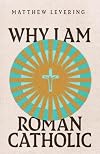
Summary: A Catholic theologian explains why he is Christian and Catholic and what it means to embrace this tradition.
At a time when many people are fleeing any organized religious tradition, theologian Matthew Levering unabashedly asserts “I love being Catholic”. In this book Levering explains how he came to faith and why he entered the Catholic Church. He describes the book as “an unfinished meditation on my Catholic life.” Throughout he weaves in his reading of Catholic saints and show more theologians with his own experience.
He begins by explaining how he came to Christian faith. For him, it was his sense of his own frailty and the reality of death that prompted his search. He was drawn by the cross of Christ, aware that he desperately needed it. Third, he was drawn by the awesomeness of the Triune God, a theme running through the book. Fourthly, the coherence and harmony of the two testaments was convincing.
He read himself into the Catholic Church, devouring works of John Paul II, von Balthasar, and Ratzinger. The unifying authority of the Petrine office drew him, Mary as Mother of the Lord Incarnate who intercedes, the beauty of the Eucharist, and Catholic teaching on marriage. The Church’s teaching on marriage is also one of the things he considers most beneficial as a context to nurture love and teach us the self-giving of Christ. In addition, he finds the Church’s teaching on humility and the providence of God beneficial.
However, being Catholic is not without its difficulties, which Levering admits with candor. He would be on the side of those troubled by accommodations to the secular world post-Vatican II. Yet he is even harder on himself, and the temptations to worldliness with which he struggles. Likewise, he finds the scandals of clerical sexual abuse disheartening. He forthrightly advocate support for victims, transparency, and believes turning to Christ’s saving power can bring real holiness out of the ruins.
While Levering warmly embraces Catholicism, he also speaks warmly of his ecumenical relationships. He acknowledges the polemics of the past. Likewise, he remains firm in his conviction that the Catholic Church is the one church founded by Christ. Thus, he opposes any ecumenism seeking to restore a lost unity. Rather, he sees ecumenism as an exchange of gifts, a means to foster warm relationships, and as a way to anticipate the unity of the church in the eschaton.
Finally, he concludes the book by offering an example of Catholic theological exegesis. He focuses on Genesis 1:1-3, weaving in all of scripture and drawing on theologians from Athanasius to his contemporaries. He concludes personally, speaking about how it is this God who has shown his light into Levering’s heart.
I spent one of the most remarkable hours of my life several years ago in an interview with Matthew Levering. I have rarely met someone who combined such theological learning with such passionate love for the Triune God. As he spoke of his faith, I was in awe and wonder, not of Levering, but of the Triune God of whom he spoke. And this is what I encountered afresh in this book. He did not persuade me to become Roman Catholic. But he clearly bore witness to how the Catholic Church is the place where he has encountered the living God, enriching all of his life.
_____________
Disclosure of Material Connection: I received a complimentary copy of this book from the publisher for review. show less
At a time when many people are fleeing any organized religious tradition, theologian Matthew Levering unabashedly asserts “I love being Catholic”. In this book Levering explains how he came to faith and why he entered the Catholic Church. He describes the book as “an unfinished meditation on my Catholic life.” Throughout he weaves in his reading of Catholic saints and show more theologians with his own experience.
He begins by explaining how he came to Christian faith. For him, it was his sense of his own frailty and the reality of death that prompted his search. He was drawn by the cross of Christ, aware that he desperately needed it. Third, he was drawn by the awesomeness of the Triune God, a theme running through the book. Fourthly, the coherence and harmony of the two testaments was convincing.
He read himself into the Catholic Church, devouring works of John Paul II, von Balthasar, and Ratzinger. The unifying authority of the Petrine office drew him, Mary as Mother of the Lord Incarnate who intercedes, the beauty of the Eucharist, and Catholic teaching on marriage. The Church’s teaching on marriage is also one of the things he considers most beneficial as a context to nurture love and teach us the self-giving of Christ. In addition, he finds the Church’s teaching on humility and the providence of God beneficial.
However, being Catholic is not without its difficulties, which Levering admits with candor. He would be on the side of those troubled by accommodations to the secular world post-Vatican II. Yet he is even harder on himself, and the temptations to worldliness with which he struggles. Likewise, he finds the scandals of clerical sexual abuse disheartening. He forthrightly advocate support for victims, transparency, and believes turning to Christ’s saving power can bring real holiness out of the ruins.
While Levering warmly embraces Catholicism, he also speaks warmly of his ecumenical relationships. He acknowledges the polemics of the past. Likewise, he remains firm in his conviction that the Catholic Church is the one church founded by Christ. Thus, he opposes any ecumenism seeking to restore a lost unity. Rather, he sees ecumenism as an exchange of gifts, a means to foster warm relationships, and as a way to anticipate the unity of the church in the eschaton.
Finally, he concludes the book by offering an example of Catholic theological exegesis. He focuses on Genesis 1:1-3, weaving in all of scripture and drawing on theologians from Athanasius to his contemporaries. He concludes personally, speaking about how it is this God who has shown his light into Levering’s heart.
I spent one of the most remarkable hours of my life several years ago in an interview with Matthew Levering. I have rarely met someone who combined such theological learning with such passionate love for the Triune God. As he spoke of his faith, I was in awe and wonder, not of Levering, but of the Triune God of whom he spoke. And this is what I encountered afresh in this book. He did not persuade me to become Roman Catholic. But he clearly bore witness to how the Catholic Church is the place where he has encountered the living God, enriching all of his life.
_____________
Disclosure of Material Connection: I received a complimentary copy of this book from the publisher for review. show less
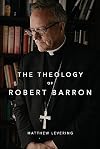
In The Theology of Robert Barron, Matthew Levering explores the key themes and sources of Bishop Robert Barron’s theological vision, tracing the development of his thought from his years as a student in the 1970s and 80s to the present. Levering surveys Barron’s theology by studying his critical engagements with a cast of thinkers from his formative period, including Andrew Greeley, Michel Corbin, Raymond Brown, Edward Schillebeeckx, John P. Meier, George Lindbeck, Alasdair MacIntyre, show more Stanley Hauerwas, and Richard Rohr. Levering shows how Barron appropriated, elaborated, and critiqued the thought of these interlocutors to develop a powerful and nuanced theology of his own. At the center of Barron’s theological vision is the non-competitive Creator God, who radically transcends the order of finite beings while sustaining all things by his power and presence. Because God does not “compete” ontologically with his creatures, he is able to come so near as to become one of us without ceasing to be himself. We encounter Christ as the central character of the drama that unfolds in Sacred Scripture. Barron emphasizes that Christianity is an embodied, communal way of being. To become a Christian is to enter into a distinctive cultural milieu, venerate its saints, adopt its sensibility, and embrace its practices. Levering shows how Barron integrates these speculative, moral, and spiritual dimensions into a theological picture that, although deeply and distinctly Catholic, is also oriented to the world outside the Church and to evangelism. show less
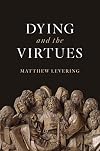
Summary: An exploration of scripture, theological resources, and contemporary writing that considers the virtues that help the Christian believer to both live and die well.
Death is something we don't like to talk about and much of our culture lives in a conscious effort to deny that all of us have a terminal condition. Sooner or later, we will die. From exercise to diets to medical breakthroughs to transhumanism, we are trying to extend our lives. Sometimes, we just keep ourselves too busy show more to think about it. Yet the refusal to face our deaths leaves us and our families unprepared when the time comes. More than this, it leads us to neglect important virtues important for both how we live and when we die.
This last is the focus of Matthew Levering's book. Levering, a Catholic theologian, explores nine virtues through multiple lenses of scripture, theological writing, and contemporary sources: love, hope, faith, penitence, gratitude, solidarity, humility, surrender, and courage. I found time and again that his explorations brought fresh insights to familiar passages, and new perspectives I had not previously considered.
Levering begins with Job and the fundamental fear and objection Job raises--that God would annihilate the existence of one who loves him. In God's answer, really, God's questions, Job understands that a God who can so create and order and sustain the world may be trusted, against the horror of death, to lovingly sustain him, inviting to live lives of love. He goes on in chapter two to consider sources from Susan Sontag and David Rieff to Josef Pieper and Robert Bellarmine and how they address the existential questions death poses of meaning in our lives, where we find the will to live, and how we might live in hope, believing and meditating on the unseen realities both of the souls we possess and the promises of our future state. Chapter three, then, focuses on faith through exploring what it is that dying people want through the work of a doctor and a hospice worker who describe the longing for closure, for reconciliation with oneself, with people, and for some, with God. Jesus, whose life and death make reconciliation and communion possible, calls us to meet him, and find in him these deep longings through faith.
I had never thought of Stephen's sermon in Acts 7 as a speech of penitence but rather one of indictment. He invites us in chapter four to see instead Stephen speaking prophetically in deep penitence for Israel's sins as well as in gratitude for the grace that is greater than our sins. He then turns (chapter five) to the dying gratitude of Macrina, sister of Gregory of Nyssa. He writes:
"Gregory and Macrina complicate this notion of 'dignity' and of 'hope.' Macrina shows that 'who has lived in dignity, dies in dignity.' But dignity does not reside in our achievements and merely human relationships. Macrina's 'dignity' consists primarily in her participation in the church's liturgical life, through which the people of God offer themselves in Christ as a sacrifice of thanksgiving, and which extends itself in works of mercy. Prayerful praise and thanksgiving stand at the core of Macrina's conception of human dignity" (p. 98).
Her participation in this rich liturgical worship both enables her to live with thankfulness in life but with gratitude that she shares in the resurrection to come. Our identification with Christ and his people in both penitence and gratitude leads us into solidarity (chapter six), the experience of finding comfort in our own suffering in our solidarity with the sufferings of Christ, and compassion for the sufferings of others through our communing with Christ's sufferings.
But why does death so often involve suffering, sometimes severe? While many of us long for a peaceful passing, this is often not granted. In chapter seven, he looks at Mark 10:45 and the idea of ransom as a kind of tribulation by which Jesus delivers Israel out of the exile that was a consequence of her prideful rejection of God. Levering explores Aquinas and how suffering, both the humbling of Christ, and the stripping us of the things by which we find honor, call us into a "new exodus" of humility that is the way of salvation. Humbling leads to surrender (chapter eight), the readiness to offer up our lives to God, a surrender we often fiercely fight. The sacrament of the anointing of the sick helps us in this in reminding us of the healing work of Christ in us, to which we surrender ourselves in death that we may be raised up in Christ. Finally, in chapter nine, Levering considers the courage involved in bidding goodbye to life as we know it. He considers the work of Richard Middleton and Paul Griffiths, one emphasizing the continuities of our future state with this life, the other the discontinuities. Courage is to face this fear of this unknown future and to "boldly go" in the promise of Christ.
Levering's argument throughout this book is that we do not merely need these virtues in our dying hours, but that these are the virtues Christians are meant to live by. Throughout, he articulates a vision of these found in union in Christ and nourished by the liturgical and sacramental life of the church, as we live into the story of scripture, finding our own story in its pages.
While some aspects of Levering's treatment are distinctively Catholic, as would be expected of a Catholic theologian, the existential questions he explores through secular as well as Christian writers remind us of the stark realities with which all of us must deal. His focus is one all who name Christ can affirm, our union with Christ, our fundamental belief in a God who is love, and the virtues that follow. Levering opens up a conversation we desperately need to have in the church: what does it mean to die well in Christ? It is needed not only to aid us in our final days, but also because we cannot truly understand what it is to live well in Christ, until we have understood what it is to die well in Him. The conversation has been going on for centuries, even millenia. In the pages of Levering's book, we join those from Job to Aquinas to Mother Theresa who have wrestled with these realities and lived virtuously in the face of death through their faith in God and union with Christ.
____________________________
Disclosure of Material Connection: I received a complimentary review copy of this book from the publisher in exchange for an honest review. The opinions I have expressed are my own. show less
Death is something we don't like to talk about and much of our culture lives in a conscious effort to deny that all of us have a terminal condition. Sooner or later, we will die. From exercise to diets to medical breakthroughs to transhumanism, we are trying to extend our lives. Sometimes, we just keep ourselves too busy show more to think about it. Yet the refusal to face our deaths leaves us and our families unprepared when the time comes. More than this, it leads us to neglect important virtues important for both how we live and when we die.
This last is the focus of Matthew Levering's book. Levering, a Catholic theologian, explores nine virtues through multiple lenses of scripture, theological writing, and contemporary sources: love, hope, faith, penitence, gratitude, solidarity, humility, surrender, and courage. I found time and again that his explorations brought fresh insights to familiar passages, and new perspectives I had not previously considered.
Levering begins with Job and the fundamental fear and objection Job raises--that God would annihilate the existence of one who loves him. In God's answer, really, God's questions, Job understands that a God who can so create and order and sustain the world may be trusted, against the horror of death, to lovingly sustain him, inviting to live lives of love. He goes on in chapter two to consider sources from Susan Sontag and David Rieff to Josef Pieper and Robert Bellarmine and how they address the existential questions death poses of meaning in our lives, where we find the will to live, and how we might live in hope, believing and meditating on the unseen realities both of the souls we possess and the promises of our future state. Chapter three, then, focuses on faith through exploring what it is that dying people want through the work of a doctor and a hospice worker who describe the longing for closure, for reconciliation with oneself, with people, and for some, with God. Jesus, whose life and death make reconciliation and communion possible, calls us to meet him, and find in him these deep longings through faith.
I had never thought of Stephen's sermon in Acts 7 as a speech of penitence but rather one of indictment. He invites us in chapter four to see instead Stephen speaking prophetically in deep penitence for Israel's sins as well as in gratitude for the grace that is greater than our sins. He then turns (chapter five) to the dying gratitude of Macrina, sister of Gregory of Nyssa. He writes:
"Gregory and Macrina complicate this notion of 'dignity' and of 'hope.' Macrina shows that 'who has lived in dignity, dies in dignity.' But dignity does not reside in our achievements and merely human relationships. Macrina's 'dignity' consists primarily in her participation in the church's liturgical life, through which the people of God offer themselves in Christ as a sacrifice of thanksgiving, and which extends itself in works of mercy. Prayerful praise and thanksgiving stand at the core of Macrina's conception of human dignity" (p. 98).
Her participation in this rich liturgical worship both enables her to live with thankfulness in life but with gratitude that she shares in the resurrection to come. Our identification with Christ and his people in both penitence and gratitude leads us into solidarity (chapter six), the experience of finding comfort in our own suffering in our solidarity with the sufferings of Christ, and compassion for the sufferings of others through our communing with Christ's sufferings.
But why does death so often involve suffering, sometimes severe? While many of us long for a peaceful passing, this is often not granted. In chapter seven, he looks at Mark 10:45 and the idea of ransom as a kind of tribulation by which Jesus delivers Israel out of the exile that was a consequence of her prideful rejection of God. Levering explores Aquinas and how suffering, both the humbling of Christ, and the stripping us of the things by which we find honor, call us into a "new exodus" of humility that is the way of salvation. Humbling leads to surrender (chapter eight), the readiness to offer up our lives to God, a surrender we often fiercely fight. The sacrament of the anointing of the sick helps us in this in reminding us of the healing work of Christ in us, to which we surrender ourselves in death that we may be raised up in Christ. Finally, in chapter nine, Levering considers the courage involved in bidding goodbye to life as we know it. He considers the work of Richard Middleton and Paul Griffiths, one emphasizing the continuities of our future state with this life, the other the discontinuities. Courage is to face this fear of this unknown future and to "boldly go" in the promise of Christ.
Levering's argument throughout this book is that we do not merely need these virtues in our dying hours, but that these are the virtues Christians are meant to live by. Throughout, he articulates a vision of these found in union in Christ and nourished by the liturgical and sacramental life of the church, as we live into the story of scripture, finding our own story in its pages.
While some aspects of Levering's treatment are distinctively Catholic, as would be expected of a Catholic theologian, the existential questions he explores through secular as well as Christian writers remind us of the stark realities with which all of us must deal. His focus is one all who name Christ can affirm, our union with Christ, our fundamental belief in a God who is love, and the virtues that follow. Levering opens up a conversation we desperately need to have in the church: what does it mean to die well in Christ? It is needed not only to aid us in our final days, but also because we cannot truly understand what it is to live well in Christ, until we have understood what it is to die well in Him. The conversation has been going on for centuries, even millenia. In the pages of Levering's book, we join those from Job to Aquinas to Mother Theresa who have wrestled with these realities and lived virtuously in the face of death through their faith in God and union with Christ.
____________________________
Disclosure of Material Connection: I received a complimentary review copy of this book from the publisher in exchange for an honest review. The opinions I have expressed are my own. show less
Engaging the Doctrine of Creation: Cosmos, Creatures, and the Wise and Good Creator by Matthew Levering
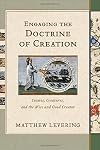
Summary: A systematic theology of the doctrine of creation beginning with the nature of the Creator, the significance of creatures, the meaning of the image of God, the mandate to be fruitful and multiply, original sin, and atonement that engages with scripture, contemporary sources, and most significantly, the theology of Thomas Aquinas.
In the last century, the discussions of the doctrine of creation often quickly have degenerated into creation-evolution debates. Classically, the doctrine show more of creation has been foundational to our understanding of God, our place in the cosmos, the purpose of our existence, the tragedy of our fallen condition and our hope of redemption. In this magisterial volume, the third in a series on doctrines of the Church (the first two on Revelation and the Holy Spirit), Matthew Levering seeks to recover this classical focus, and particularly one which draws not only upon scripture but the work of Thomas Aquinas.
This is no where more in evidence than in his first two chapters on “divine ideas” and “divine simplicity” in which he draws upon Aquinas to answer more contemporary theologians such as Victor Lossky in defending the idea that all creation has its origin and existence in God’s eternally present thought with no resort to something external to God’s self and that God is identical with his attributes and without parts spatially and temporally. Thus, God as wise and good is utterly distinct from his creation, and yet its source. These chapters involved close theological reasoning worthy of careful attention.
The next chapters focus on God’s created beings. The third chapter focuses on creation and particularly, accepting the geological records, the profusions of creatures that have lived and died on the earth, dealing with the difficulties of death and destruction that are part of this succession. He contends that nevertheless, these offer a kind of “cosmic theophany” that proclaim through “a superabundance of finite ways” something of the infinite and yet personal God. He then turns particularly to humans in the image of God and explores in what this consists, which he contends involves our rationality employed in our royal and priestly mission as wise and good stewards of the creation. In chapter 5, Levering engages the contention that as creatures, we have fulfilled the mandate to be fruitful and multiply and should limit procreation, made by Christian environmentalist Bill McKibben, and others. Upholding Catholic teaching, Levering would not have us “constrict the circle of interpersonal communion for which God created the whole cosmos.”
The last two chapters explore the doctrines of original sin and atonement. In chapter six, he takes on contemporary theologians like Peter Enns, who argue against the idea of a historical Adam and thus, never an original goodness. Levering argues that this undermines the idea of a wise and good Creator in making God the author of sin, and that if we believe in a wise and good Creator, then it follows that there was originally a human who was free of sin, sustained by God in that goodness, until willfully rebelling against God.
The chapter on atonement would seem out of place in this volume until one understands the concern Levering seeks to address and the integral importance of creation to responding to that concern. Levering engages the contention of philosopher Nicholas Wolterstorff that since Christianity commends freely forgiving our debtors, it is inconsistent to insist upon a penal character to the atoning work of Christ. Levering’s response, again drawing upon Aquinas points to the original relational justice of the good Creator that was broken or breached by human rebellion that must be restored through the relational act the death of God’s Son. Thus, the doctrines of creation and atonement are closely linked.
Levering writes as a Catholic theologian and yet engages thoughtfully with Protestant, Orthodox and secular writers. I would consider this a sterling example of excellent theological writing. Levering is not content to engage the writers of the last ten or fifty years, but roots his work in biblical teaching, the work of the church fathers, as well as major teachers of the church like Thomas Aquinas. One may not concur with all of his contentions, but to read Levering is to read someone, who like Aquinas, gives first the reasons of other positions, then his own carefully thought-through conclusions leaving it to the reader to conclude which are the better arguments. For those desirous of rooting their faith in rigorous thought and not simply devotional passion, Levering’s work is worth the careful attention it requires.
[My review of Engaging the Doctrine of Revelation appears at https://bobonbooks.com/2015/02/19/review-engaging-the-doctrine-of-revelation-the...
_____________________________
Disclosure of Material Connection: I received this book free in e-book format from the publisher through Netgalley. I was not required to write a positive review. The opinions I have expressed are my own. show less
In the last century, the discussions of the doctrine of creation often quickly have degenerated into creation-evolution debates. Classically, the doctrine show more of creation has been foundational to our understanding of God, our place in the cosmos, the purpose of our existence, the tragedy of our fallen condition and our hope of redemption. In this magisterial volume, the third in a series on doctrines of the Church (the first two on Revelation and the Holy Spirit), Matthew Levering seeks to recover this classical focus, and particularly one which draws not only upon scripture but the work of Thomas Aquinas.
This is no where more in evidence than in his first two chapters on “divine ideas” and “divine simplicity” in which he draws upon Aquinas to answer more contemporary theologians such as Victor Lossky in defending the idea that all creation has its origin and existence in God’s eternally present thought with no resort to something external to God’s self and that God is identical with his attributes and without parts spatially and temporally. Thus, God as wise and good is utterly distinct from his creation, and yet its source. These chapters involved close theological reasoning worthy of careful attention.
The next chapters focus on God’s created beings. The third chapter focuses on creation and particularly, accepting the geological records, the profusions of creatures that have lived and died on the earth, dealing with the difficulties of death and destruction that are part of this succession. He contends that nevertheless, these offer a kind of “cosmic theophany” that proclaim through “a superabundance of finite ways” something of the infinite and yet personal God. He then turns particularly to humans in the image of God and explores in what this consists, which he contends involves our rationality employed in our royal and priestly mission as wise and good stewards of the creation. In chapter 5, Levering engages the contention that as creatures, we have fulfilled the mandate to be fruitful and multiply and should limit procreation, made by Christian environmentalist Bill McKibben, and others. Upholding Catholic teaching, Levering would not have us “constrict the circle of interpersonal communion for which God created the whole cosmos.”
The last two chapters explore the doctrines of original sin and atonement. In chapter six, he takes on contemporary theologians like Peter Enns, who argue against the idea of a historical Adam and thus, never an original goodness. Levering argues that this undermines the idea of a wise and good Creator in making God the author of sin, and that if we believe in a wise and good Creator, then it follows that there was originally a human who was free of sin, sustained by God in that goodness, until willfully rebelling against God.
The chapter on atonement would seem out of place in this volume until one understands the concern Levering seeks to address and the integral importance of creation to responding to that concern. Levering engages the contention of philosopher Nicholas Wolterstorff that since Christianity commends freely forgiving our debtors, it is inconsistent to insist upon a penal character to the atoning work of Christ. Levering’s response, again drawing upon Aquinas points to the original relational justice of the good Creator that was broken or breached by human rebellion that must be restored through the relational act the death of God’s Son. Thus, the doctrines of creation and atonement are closely linked.
Levering writes as a Catholic theologian and yet engages thoughtfully with Protestant, Orthodox and secular writers. I would consider this a sterling example of excellent theological writing. Levering is not content to engage the writers of the last ten or fifty years, but roots his work in biblical teaching, the work of the church fathers, as well as major teachers of the church like Thomas Aquinas. One may not concur with all of his contentions, but to read Levering is to read someone, who like Aquinas, gives first the reasons of other positions, then his own carefully thought-through conclusions leaving it to the reader to conclude which are the better arguments. For those desirous of rooting their faith in rigorous thought and not simply devotional passion, Levering’s work is worth the careful attention it requires.
[My review of Engaging the Doctrine of Revelation appears at https://bobonbooks.com/2015/02/19/review-engaging-the-doctrine-of-revelation-the...
_____________________________
Disclosure of Material Connection: I received this book free in e-book format from the publisher through Netgalley. I was not required to write a positive review. The opinions I have expressed are my own. show less
Lists
You May Also Like


Associated Authors
Statistics
- Works
- 74
- Also by
- 6
- Members
- 1,999
- Popularity
- #12,880
- Rating
- 4.1
- Reviews
- 11
- ISBNs
- 155
- Languages
- 2