
Marcie R. Rendon
Author of Murder on the Red River
About the Author
Image credit: Photo Source: https://www.marcierendon.com/bio
Series
Works by Marcie R. Rendon
Mahnomen 1 copy
Associated Works
Never Whistle at Night: An Indigenous Dark Fiction Anthology (2023) — Contributor — 1,550 copies, 23 reviews
When the Light of the World Was Subdued, Our Songs Came Through: A Norton Anthology of Native Nations Poetry (2020) — Contributor — 374 copies, 4 reviews
Reinventing the Enemy's Language: Contemporary Native Women's Writings of North America (1997) — Contributor — 182 copies, 1 review
A Gathering of Spirit: A Collection by North American Indian Women (1984) — Contributor — 165 copies
Living Nations, Living Words: An Anthology of First Peoples Poetry (2021) — Contributor — 112 copies, 3 reviews
So We Can Know: Writers of Color on Pregnancy, Loss, Abortion, and Birth (2023) — Contributor — 42 copies
We Are Meant to Rise: Voices for Justice from Minneapolis to the World (2021) — Contributor — 32 copies, 2 reviews
The Colour of Resistance: A Contemporary Collection of Writing by Aboriginal Women (1993) — Contributor — 31 copies
What God Is Honored Here?: Writings on Miscarriage and Infant Loss by and for Native Women and Women of Color (2019) — Contributor — 27 copies, 2 reviews
Sinister Wisdom 22/23: A Gathering of Spirit: North American Indian Women's Issue (1983) — Contributor — 20 copies
Tagged
Common Knowledge
- Birthdate
- 1952
- Gender
- female
- Education
- Moorhead State University, Moorhead, Minnesota, USA (BA)
Saint Mary's University of Minnesota (MA) - Short biography
- Marcie R. Rendon is an enrolled member of the White Earth Nation, author, playwright, poet, and freelance writer. Also a community arts activist, Rendon supports other native artists / writers / creators to pursue their art, and is a speaker for colleges and community groups on Native issues, leadership, writing.
She is an award-winning author of a fresh new murder mystery series, and also has an extensive body of fiction and nonfiction works.
The creative mind behind Raving Native Theater, Rendon has also curated community created performances such as Art Is… Creative Native Resilience, featuring three Anishinaabe performance artists, which premiered on TPT (Twin Cities Public Television), June 2019.
Rendon was recognized as a 50 over 50 Change-maker by MN AARP and POLLEN in 2018. Rendon and Diego Vazquez received a 2017 Loft Spoken Word Immersion Fellowship for their work with women incarcerated in county jails. - Nationality
- White Earth Nation
- Birthplace
- Minnesota, USA
- Map Location
- USA
Members
Reviews
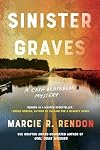
This third Cash Blackbear outing is the best so far. It's been a while since a book kept me reading almost to the exclusion of everything else, and I've missed that feeling. Sheriff Wheaton asks Cash to venture out through spring flood waters to his office, to see what she would make of an unidentified body that had floated into the town of Ada on the the overflowing river. This requires finding someone with a boat and the skill to navigate the still turbulent water that has covered most of show more the roadways in the area. Cash often "knows things", and Wheaton trusts her intuition. With only one deputy, he is always short-handed when something out of the ordinary comes up, and calls on Cash frequently for unofficial assistance in his investigations. After viewing the body, Cash is certain that the woman is Indian, so between her college classes she heads for the White Earth reservation to see if anyone knows anything about a missing woman. In her travels, she learns about a country church with a charismatic pastor who has developed quite a following among young Indian women through his assistance with a GED program. It seems like a good place to make inquiries, and sure enough, it turns out one of the women who had been a regular attendee hasn't been seen at church in a while. And the church is the same one where Cash had by chance come upon recent graves of two babies at the end of [Girl Gone Missing]. After meeting the pastor and his wife, Cash finds herself both drawn in and repelled by them; and she cannot let the mystery of those lost infants alone, especially as she so often gets one of her visions---a shapeless dark threatening form hovering nearby--when she is in the vicinity. There's a lot of substance to this story; Cash begins to make new friends, and to interact socially more with her peers. We see her maturing gradually through little changes in her behavior and outlook, as she begins to realize her wretched past does not necessarily need to define her future. The writing style quibbles I had with the previous book have vanished; it's almost as though a different person had written this one, or maybe the same person had written [Girl Gone Missing] 20 years before writing [Sinister Graves]. I'm hooked on Rendon now. There isn't another Cash Blackbear book out there...yet. I'm pretty sure there will be, and I can't wait. show less
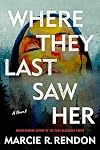
Just like in Marcie Rendon's hard-hitting Cash Blackbear trilogy (Murder on the Red River, Girl Gone Missing, Sinister Graves), When They Last Saw Her gives readers an unflinching portrait of life on the reservation for Native American women. It's a life filled with danger-- especially when "man camps" for pipeline workers are built on reservation land. Even tribal police don't do their due diligence when Quill reports the heart-stopping scream she heard when out running in the woods. When show more more women disappear, she and fellow runners must go in groups guarded by husbands, brothers, and boyfriends in pickup trucks.
Rendon not only paints a portrait of women living in fear, but she also shows us the loving family life Quill has with her husband, Crow, and her two young children. Quill's refusal to "let it go," to let "boys be boys," is admirable and frightening all at the same time. Readers know how easy it would be for her to disappear, too.
Readers can also learn how government policies, like the Indian Child Welfare Act of 1978, have changed family dynamics within the Native community. Rendon's books are poetic, life-affirming, informative, and compelling. Quill is a force of nature every bit as strong as Cash Blackbear, and I didn't want When They Last Saw Her to end. I can't wait for Rendon's next book.
(Review copy courtesy of the publisher and Net Galley) show less
Rendon not only paints a portrait of women living in fear, but she also shows us the loving family life Quill has with her husband, Crow, and her two young children. Quill's refusal to "let it go," to let "boys be boys," is admirable and frightening all at the same time. Readers know how easy it would be for her to disappear, too.
Readers can also learn how government policies, like the Indian Child Welfare Act of 1978, have changed family dynamics within the Native community. Rendon's books are poetic, life-affirming, informative, and compelling. Quill is a force of nature every bit as strong as Cash Blackbear, and I didn't want When They Last Saw Her to end. I can't wait for Rendon's next book.
(Review copy courtesy of the publisher and Net Galley) show less
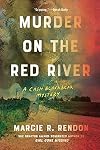
The first Cash Blackbear mystery introduces a fascinating character. Renee Blackbear, nicknamed Cash, is a Native American teen who was placed in the foster care system when her mother had a car accident while drunk. She's been moved from one farm family to another all around the Moorhead area. She began working - for Cash - when she was just eleven and emancipated herself from an especially nasty foster home at the age of thirteen with the help of the local sheriff who fills the role of show more guardian and mentor.
Cash's life consists of working on various farms, smoking, drinking beer, and shooting pool. Every once in a while, she gets a vision that helps Sheriff Wheaton solve a crime or two. This latest crime concerns the death of a Native man who had come down from the Leech Lake reservation to earn some cash to help his family through the winter. Her visions lead her to the reservation where she meets his wife and some of his seven kids. Snooping around in the local Fargo-Moorehead bars lets her overhear some guys talking about the guy's death. After another death, this time of a white guy, Cash overhears enough to point Sheriff Wheaton to the bad guys but not before they kidnap her and threaten to murder her.
This was a gritty sort of mystery filled with early 70s details including the pervasive prejudice against Native American and the systematic attempts to destroy Native culture. Cash is a victim of it as she spent a childhood separated from her family and in a succession of foster homes very often abusive.
I really liked Cash. She was resilient and very bright. But she was also a loner who doesn't form attachments to anyone but Sheriff Wheaton. Without him pushing her to do something with her life beyond farm work, she's content to just drift.
I can't wait to read more of Cash's adventures. show less
Cash's life consists of working on various farms, smoking, drinking beer, and shooting pool. Every once in a while, she gets a vision that helps Sheriff Wheaton solve a crime or two. This latest crime concerns the death of a Native man who had come down from the Leech Lake reservation to earn some cash to help his family through the winter. Her visions lead her to the reservation where she meets his wife and some of his seven kids. Snooping around in the local Fargo-Moorehead bars lets her overhear some guys talking about the guy's death. After another death, this time of a white guy, Cash overhears enough to point Sheriff Wheaton to the bad guys but not before they kidnap her and threaten to murder her.
This was a gritty sort of mystery filled with early 70s details including the pervasive prejudice against Native American and the systematic attempts to destroy Native culture. Cash is a victim of it as she spent a childhood separated from her family and in a succession of foster homes very often abusive.
I really liked Cash. She was resilient and very bright. But she was also a loner who doesn't form attachments to anyone but Sheriff Wheaton. Without him pushing her to do something with her life beyond farm work, she's content to just drift.
I can't wait to read more of Cash's adventures. show less
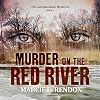
'Murder On The Red River' is vivid, realistic and beautifully written. It's a personal story of trauma and survival, disclosed around the investigation of a killing. The focus of the storytelling is not on the killing or even on finding the people who did the killing but on immersing the reader into the world of Renee "Cash" Blackbear, a nineteen-year-old Ojibwe woman making her living driving trucks for farmers in the Red River Valley in the 1970s.
We get to see the world as Cash sees it. show more We learn how she deals with the world and what she expects from it and, as she informally investigates the killing of an unidentified Native American man who was a long way from home, we learn about the childhood she had, being shifted from white foster home to white foster home and of the friendship she built with the local Sherriff, the only person who took any real interest in her welfare when she was a child.
The first thing we learn about Cash is that she's doing more than surviving. Her mind and her imagination are engaged with the world. We meet her as she walks into a local bar at the end of a long shift and her mind is as much on poetry as it is on the drinks she'll soon be winning as she dominates the pool table in the bar she thinks of as her evening home.
Here are the opening paragraphs:
"Sun-drenched wheat fields. The refrain ran through Cash's mind as she pulled open the Cashah's screen door. She stood still. Momentarily blinded, she waited for her eyes to adjust to the darkened barrio,. Outside, the sun rested on the western horizon Inside the Casbah it was always night. The wooden door thunked behind her. The bar smells- stale beer, cigarette smoke, sawdust and billiard chalk- welcomed her to her evening home.
Sun-drenched wheat fields, healing rays of god's love wash gently over me. Cash didn't like the word god. Even in her own mind it was written in lowercased letters. What had he ever done for her? Sun-drenched wheat fields, healing rays of sun's love... nah, didn't work. Healing rays of god's love- now thatworked."
I loved this storytelling style. It was immersive, visual and emotional. There is no separation between Cash and the story. The plot isn't just character-driven, the plot exists only as the trellis that the vine of Cash's personality blossoms on.
There is a plot and it's a good one. It shows not just how a native man from a long way away might come to be killed but how the people who did it might be fairly sure that they'd get away with it.
I liked that the killing and killers are treated as part of the landscape of Cash's world, as expected as a sunrise and as unsurprising as a familiar horizon. Cash throws her energy into solving the crime but not because she has a need to solve a puzzle or because she wants to be at the centre of the action but because this killing and these killers are part of her world and she can't let that pass.
Cash is tough but not callous. She's angry but she doesn't let that anger consume her. She does what she needs to do and she does it well. Yet she's aware that most of her life is still ahead of her and she's still thinking about what she should do with it, other than drive trucks, play pool and drink a lot of beer.
I was completely absorbed by this book. When it ended, it took a while for me to step back out of Cash's world and he way of seeing it.
'Murder On The Red River' was Marcie Rendon's debut novel. It was published in 2017, when she was sixty-five and already recognised as a playwright, a poet and a political activist. I think her maturity and her experience shine through in the novel. 'Murder On The Red River' is a remarkable book and a stunning debut novel.
I've already downloaded the second book in the series, 'Girl Gone Missing' (2019) and I'm looking forward to spending more time with Cash. show less
We get to see the world as Cash sees it. show more We learn how she deals with the world and what she expects from it and, as she informally investigates the killing of an unidentified Native American man who was a long way from home, we learn about the childhood she had, being shifted from white foster home to white foster home and of the friendship she built with the local Sherriff, the only person who took any real interest in her welfare when she was a child.
The first thing we learn about Cash is that she's doing more than surviving. Her mind and her imagination are engaged with the world. We meet her as she walks into a local bar at the end of a long shift and her mind is as much on poetry as it is on the drinks she'll soon be winning as she dominates the pool table in the bar she thinks of as her evening home.
Here are the opening paragraphs:
"Sun-drenched wheat fields. The refrain ran through Cash's mind as she pulled open the Cashah's screen door. She stood still. Momentarily blinded, she waited for her eyes to adjust to the darkened barrio,. Outside, the sun rested on the western horizon Inside the Casbah it was always night. The wooden door thunked behind her. The bar smells- stale beer, cigarette smoke, sawdust and billiard chalk- welcomed her to her evening home.
Sun-drenched wheat fields, healing rays of god's love wash gently over me. Cash didn't like the word god. Even in her own mind it was written in lowercased letters. What had he ever done for her? Sun-drenched wheat fields, healing rays of sun's love... nah, didn't work. Healing rays of god's love- now thatworked."
I loved this storytelling style. It was immersive, visual and emotional. There is no separation between Cash and the story. The plot isn't just character-driven, the plot exists only as the trellis that the vine of Cash's personality blossoms on.
There is a plot and it's a good one. It shows not just how a native man from a long way away might come to be killed but how the people who did it might be fairly sure that they'd get away with it.
I liked that the killing and killers are treated as part of the landscape of Cash's world, as expected as a sunrise and as unsurprising as a familiar horizon. Cash throws her energy into solving the crime but not because she has a need to solve a puzzle or because she wants to be at the centre of the action but because this killing and these killers are part of her world and she can't let that pass.
Cash is tough but not callous. She's angry but she doesn't let that anger consume her. She does what she needs to do and she does it well. Yet she's aware that most of her life is still ahead of her and she's still thinking about what she should do with it, other than drive trucks, play pool and drink a lot of beer.
I was completely absorbed by this book. When it ended, it took a while for me to step back out of Cash's world and he way of seeing it.
'Murder On The Red River' was Marcie Rendon's debut novel. It was published in 2017, when she was sixty-five and already recognised as a playwright, a poet and a political activist. I think her maturity and her experience shine through in the novel. 'Murder On The Red River' is a remarkable book and a stunning debut novel.
I've already downloaded the second book in the series, 'Girl Gone Missing' (2019) and I'm looking forward to spending more time with Cash. show less
Lists
Awards


You May Also Like


Associated Authors
Statistics
- Works
- 16
- Also by
- 13
- Members
- 1,083
- Popularity
- #23,732
- Rating
- 3.9
- Reviews
- 56
- ISBNs
- 53
- Languages
- 1
- Favorited
- 1