
Caroline Adderson
Author of Sitting Practice
About the Author
Image credit: photo:erichsaide2010
Series
Works by Caroline Adderson
Star of the Week 1 copy
Ellen in pieces 1 copy
Associated Works
Margaret Atwood Presents: Stories by Canada's Best New Women Writers (2004) — Contributor — 5 copies, 2 reviews
Tagged
Common Knowledge
- Canonical name
- Adderson, Caroline
- Birthdate
- 1963-09-09
- Gender
- female
- Education
- University of British Columbia (B.Ed. | 1982)
- Awards and honors
- Marian Engel Award (2006)
- Nationality
- Canada
- Birthplace
- Edmonton, Alberta, Canada
- Places of residence
- Vancouver, British Columbia, Canada
Edmonton, Alberta, Canada - Map Location
- Canada
Members
Reviews
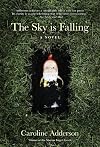
In Caroline Adderson’s suspenseful third novel, it is 2005. Jane is happily married to Joe, a doctor. They have a teenage son. She works as a freelance editor. But as Jane’s story opens, her memory is triggered when she unfolds the newspaper one morning and finds a photo of her former friend, Sonia, on the front page. Sonia, who has just been released from prison after serving a 20-year sentence on a terrorism charge, was a prominent member of Jane’s inner circle during her second year show more at UBC. Jane, as it turns out, has a secret in her past, and the reader subsequently spends most of The Sky is Falling with Jane in Vancouver during that fateful fall and winter of 1983-84. In September 1983, shy, studious, nineteen-year-old Jane, from Edmonton, is starting her second undergrad year at UBC, studying Russian Language and Literature. Having roomed with her watchful aunt in the city’s suburbs the previous year, for her second she wants to live closer to campus. Toward this end, she quells her misgivings and takes a room in a boarding house, sharing the (somewhat squalid) accommodations with three other students. Jane has made this bold move toward independence at a time of tense political uncertainty. Never friendly, Soviet-American relations have deteriorated further after the Russian military shot down a Korean airliner that strayed into Soviet airspace. The two countries have spent the weeks since that incident rattling sabres at each other, and with the specter of nuclear annihilation looming over the planet, peace advocates everywhere have been staging demonstrations. Jane’s three housemates, Pete, a self-proclaimed anarchist, Sonia and Dieter, have formed a group called NAG! (Non-Violent Action Group). Their activities so far have been largely mischievous, but they have plans to take their activism to the next level. The group’s muddled ideology forms a backdrop to Adderson’s vividly imagined story of misplaced allegiance. Jane, who has never regarded herself as radical or opinionated, is drawn into the fray by the unavoidable politics of the day and the urgency of the group’s desire to get their message out. But Jane’s adherence to the cause is not entirely political. Even as she is repelled by Pete’s narcissism and Dieter’s petulance, she finds herself slowly falling for Sonia, a small-boned sparrow of a woman whose apparent vulnerability arouses in Jane a protective impulse that is new to her. But Sonia is stronger than she looks, especially when it comes to her convictions. From time to time, Adderson interrupts Jane’s backstory with contemporary scenes in which middle-aged Jane considers her past in light of the present, confronts her lingering guilt and struggles with a decision whether or not to contact newly free Sonia, if only to prove to herself that her youthful fascination with the woman was a temporary lapse in judgment. Meanwhile, back in 1984, NAG! sets its action plan in motion. But everything goes spectacularly, tragically awry, and Pete and Sonia end up in jail. In The Sky is Falling, Caroline Adderson has written a modern coming-of-age story that chillingly evokes Cold War era tensions and builds a suspenseful and shocking tale around a group of earnest young men and women who are willing to go to extremes to do something about the state of the world. Published in 2010, The Sky is Falling is engaging and thought-provoking, and, in 2022, ominously relevant. show less
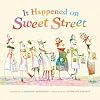
It Happened on Sweet Street is an adorable, comedic picture book for children!
This book is strange but really enchanting all at the same time. I couldn't put my finger on it, but it gave me some interesting Dr. Seuss-esque vibes (without the crazy rhyming, of course). It packs colours and comedy into this little story, and could be seen as whimsical by some. I think young readers will really enjoy it.
There is something that stands out and makes me feel odd about this book. It didn't sit well show more with me, and I felt very confused as to how to even review it. It seemed like it was trying to be fun and exciting, but it just felt strange. I think this is a book where I'd want to ask a kid for their opinion, because I can't figure out what I want to say. It's very hit or miss for me.
Two out of five stars.
Thank you to NetGalley and Tundra Books for providing me a free copy of this book in exchange of an honest review. show less
This book is strange but really enchanting all at the same time. I couldn't put my finger on it, but it gave me some interesting Dr. Seuss-esque vibes (without the crazy rhyming, of course). It packs colours and comedy into this little story, and could be seen as whimsical by some. I think young readers will really enjoy it.
There is something that stands out and makes me feel odd about this book. It didn't sit well show more with me, and I felt very confused as to how to even review it. It seemed like it was trying to be fun and exciting, but it just felt strange. I think this is a book where I'd want to ask a kid for their opinion, because I can't figure out what I want to say. It's very hit or miss for me.
Two out of five stars.
Thank you to NetGalley and Tundra Books for providing me a free copy of this book in exchange of an honest review. show less
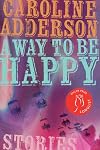
A number of these stories were too oblique and their conclusions too ambiguous for me to be satisfied. I felt the author sometimes failed to provide essential information that would have made the stories meaningful. (This is most evident in the story “Yolki-Palki” in which a Russian hitman who’s come to the US on assignment has baffling childhood memories well up. These appear to be connected with the painful lung ailment or tumour he’s enduring. I found the story quite show more inaccessible.)
For me, in the best short stories the prose and the details provided should not frustrate so much as open up my understanding of the characters. As a reader, I don’t want to be expending excessive mental energy figuring out what the writer is talking about; I want to focus on the characters, their situations, and the significance of them. The “mystery” should lie in those things. I become annoyed by arty cleverness, being tasked with connecting dots when too many of the dots (critical pieces of information) are missing. I read some of these stories twice and still couldn’t crack the code.
Here are summaries of a couple of the stories:
Two heroin addicts, Cory and Taryn, in fancy (stolen) dress crash New Year’s parties, with the aim of stealing wallets from coats. Taryn, however, is uncomfortable with this scheme. She seems to want to change her life, apparently a sad one including a history in the child welfare system. A mother and baby sitting among the coats contribute to this sense. The story is inconclusive, but the reader has the sense that Taryn can’t pull herself out of the rut she is in.
Ketman runs a landscaping business. He’s estranged from his son and his wife evidently doesn’t like him. He fears undergoing a colonoscopy for an insurance company physical. Not long ago, his mother, who (he feels) is the only person who really loved him died of a pulmonary embolism after a routine laparoscopic knee surgery. He’s afraid he’ll die too. Variously perceived as a bully, a redneck, and an intensely heteronormative male who’s distressed by the very thought of a scope entering his lower intestine. He agrees to the procedure, only if he’s knocked out. As it turns out, he isn’t. He can actually watch the scope move through his bowel. As is often the case for me with short stories, the conclusion seemed frustratingly ambiguous. It’s unclear whether cancer was detected or if the scary thing for Ketman is simply undergoing the procedure. show less
For me, in the best short stories the prose and the details provided should not frustrate so much as open up my understanding of the characters. As a reader, I don’t want to be expending excessive mental energy figuring out what the writer is talking about; I want to focus on the characters, their situations, and the significance of them. The “mystery” should lie in those things. I become annoyed by arty cleverness, being tasked with connecting dots when too many of the dots (critical pieces of information) are missing. I read some of these stories twice and still couldn’t crack the code.
Here are summaries of a couple of the stories:
Two heroin addicts, Cory and Taryn, in fancy (stolen) dress crash New Year’s parties, with the aim of stealing wallets from coats. Taryn, however, is uncomfortable with this scheme. She seems to want to change her life, apparently a sad one including a history in the child welfare system. A mother and baby sitting among the coats contribute to this sense. The story is inconclusive, but the reader has the sense that Taryn can’t pull herself out of the rut she is in.
Ketman runs a landscaping business. He’s estranged from his son and his wife evidently doesn’t like him. He fears undergoing a colonoscopy for an insurance company physical. Not long ago, his mother, who (he feels) is the only person who really loved him died of a pulmonary embolism after a routine laparoscopic knee surgery. He’s afraid he’ll die too. Variously perceived as a bully, a redneck, and an intensely heteronormative male who’s distressed by the very thought of a scope entering his lower intestine. He agrees to the procedure, only if he’s knocked out. As it turns out, he isn’t. He can actually watch the scope move through his bowel. As is often the case for me with short stories, the conclusion seemed frustratingly ambiguous. It’s unclear whether cancer was detected or if the scary thing for Ketman is simply undergoing the procedure. show less
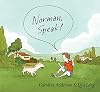
When the compassionate young narrator goes with his family to the animal shelter, he wants to adopt the dog that has been there the longest. Attempts to train Norman don’t work out; he just doesn’t understand. Norman, they figure, just isn’t smart, but they love their funny, friendly dog anyway. A chance encounter with another dog owner in the park changes everything (spoiler alert): Norman understands Chinese. The family gains a new appreciation of Norman when they attend Chinese show more classes and discover the difficulties of learning a new language. This clever picture book with pen and ink illustrations that radiate positive energy sheds light on cross-cultural issues in a child-friendly way. show less
Lists
Awards


You May Also Like


Associated Authors
Statistics
- Works
- 40
- Also by
- 3
- Members
- 797
- Popularity
- #31,987
- Rating
- 3.6
- Reviews
- 74
- ISBNs
- 120
- Languages
- 1
