
Laure Adler
Author of Marguerite Duras: A Life
About the Author
Laure Adler, a historian by training, has written several books on the history of women and is now the director of the France Cultur radio station. She has also worked in publishing and as a journalist. She lives in Paris
Image credit: Laure Adler en 2022
Works by Laure Adler
Associated Works
Tagged
Common Knowledge
- Legal name
- Clauzet, Laure Suzanne Anne
- Other names
- Adler, Laure (Nom d'alliance)
Veinstein, Laure (Nom d'alliance) - Birthdate
- 1950
- Gender
- female
- Education
- Maîtrise de philosophie, Paris, France
Ecole des Hautes Etudes en sciences sociales, Paris (Doctorat de 3e cycle, Histoire, Thèse "L'avènement de la parole des femmes : la presse des femmes, 18 30 - 18 50", 19 78)
Maîtrise de philosophie, Paris, France
Lycée Jeanne d'Arc, Clermont-Ferrand - Occupations
- Journaliste
Editrice
Productrice de TV - Organizations
- France Culture, Radio Publique (Productrice, 19 74, Directrice, 19 99 - 20 05)
Ministère de la cuture (Chargée de mission auprès de la Présidence de la République, 19 90 l 19 93)
La Martinière, Editeur (Directrice littéraire)
Grasset, Editeur (Directrice littéraire)
Denoël, Editeur (Directrice littéraire)
Payot, Editeur (Directrice littéraire (show all 8)
Plon, Editeur (Directrice littéraire, 19 88)
Institut d'études politiques, Paris, France - Awards and honors
- Officier de la Légion d'honneur (2015)
Officier de la Légion d'honneur (2006)
Chevalier de l'ordre national du Mérite (1998) - Relationships
- Veinstein, Alain (Epoux)
Alfred, Adler (Ex époux, 19 68 - 19 72)
Veinstein, Léa (Fille)
Aron, Jean-Paul (Directeur de thèse) - Nationality
- France
- Birthplace
- Caen, Calvados, Normandie, France
- Map Location
- France
- Associated Place (for map)
- France
Members
Reviews

Just Marguerite Duras is the title of the standard biography of Marguerite Duras by Laure Adler in 950 pages. The book offers a tremendous amount of knowledge and insight into the life of the French author. There are actually only eight chapters, so each phase of Duras's life if researched very thoroughly. The first part, about her youth in the Far East was both fascinating and shocking. Shocking because of the revelations with regard to violence and poverty. This part also convincingly show more reconstructs the background to novels such as L'Amant and L'Amant de la Chine du Nord. The second chapter describes her time back in France. This chapter is a bit boring, because no novels are directly linked to this period. However, homing in an apartment that Duras lived in till old age, activity in the resistance, and developing lifelong friendships, such as with Francois Mitterand, the later President of France, and her first husband, are all extremely interesting at this stage of her life. Each chapter is packed with interesting facts and descriptions. The final chapters are shocking as in the final stage of her life Duras became an alcoholic, and nearly drank herself to death.
This biography of Marguerite Duras packed with information about the author, but also describes the creation of her novels with sufficient detail. I was glad to read about many early novels that was not aware of, and have already seen them in the local French bookstore. Another this that pleased me a lot was the admission that Abahn Sabana David was so poorly written that even its author later on no longer knew what it was (supposed to be) about. show less
This biography of Marguerite Duras packed with information about the author, but also describes the creation of her novels with sufficient detail. I was glad to read about many early novels that was not aware of, and have already seen them in the local French bookstore. Another this that pleased me a lot was the admission that Abahn Sabana David was so poorly written that even its author later on no longer knew what it was (supposed to be) about. show less
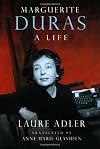
Laure Adler's book comes close, but no book will ever come close enough. Duras' fans will undoubtedly read anything written about her, so anxious are they for shimmers of truth regarding the woman who left such a perplexing legacy of literature. Adler's biography of the fascinating French writer is good and it is certainly much more revealing than say, Alain Vircondolet's DURAS which might be more of a pleasure to read (he took Duras up on a challenge to try and write as she did), but says show more far less about the woman.
There are times when Adler's sentence structure seems choppy, and this may be hard for more sophisticated readers, but bear in mind that although Anne-Marie Glasheen seems to have made a suitable translation, translations can be difficult and something is almost always lost.
The emphasis here should really be on content and Adler did a fair job considering the difficulty in separating the real Duras from the invented one. For those looking merely for facts, Adler clears up the myth around THE LOVER, does a superb job of showing Duras through the war years, and gives a reasonable look at her friendship with Mitterand. One will miss an in-depth report on her relations with her family and will undoubtedly want to know more - especially about the elusive younger brother. As we read we become struck by the presence of men in Duras' life, and we yearn a bit for insights from a close woman friend. Unfortunately, Duras did not seem to allow many women into her life.
Adler's book is recommended for any fan of Duras' literature as it will at least give some insight - possibly new - into her working mind. But don't expect miracles. And expect more books forthcoming. Duras' son, Outa, is a rather silent voice in this book and one can't help but think that there is part of Marguerite alive in the world who has not yet spoken (written) his thoughts. show less
There are times when Adler's sentence structure seems choppy, and this may be hard for more sophisticated readers, but bear in mind that although Anne-Marie Glasheen seems to have made a suitable translation, translations can be difficult and something is almost always lost.
The emphasis here should really be on content and Adler did a fair job considering the difficulty in separating the real Duras from the invented one. For those looking merely for facts, Adler clears up the myth around THE LOVER, does a superb job of showing Duras through the war years, and gives a reasonable look at her friendship with Mitterand. One will miss an in-depth report on her relations with her family and will undoubtedly want to know more - especially about the elusive younger brother. As we read we become struck by the presence of men in Duras' life, and we yearn a bit for insights from a close woman friend. Unfortunately, Duras did not seem to allow many women into her life.
Adler's book is recommended for any fan of Duras' literature as it will at least give some insight - possibly new - into her working mind. But don't expect miracles. And expect more books forthcoming. Duras' son, Outa, is a rather silent voice in this book and one can't help but think that there is part of Marguerite alive in the world who has not yet spoken (written) his thoughts. show less
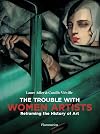
At the time I put this on my TBR list I figured that it had to be interesting but, on the whole, this had a very throwaway quality to it. I'm not even sure that the introductory essay really answered the rhetorical challenge of the title! This feels very much like the sort of book that winds up on the remainder table very soon after publication. Still, I did learn something about a fair number of artists who I had never really heard of.
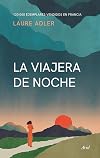
Actualmente cumplir años se ha convertido en una desgracia o, como mínimo, en un proceso que la sociedad rechaza y silencia. Frente a esta realidad, esta hermosa obra nos revela no solo los estereotipos y prejuicios que rodean la edad madura, sino el valor que pueden tener el sentimiento de finitud y la experiencia de lo vivido.
Entremezclando experiencias personales, anécdotas y referencias a autores como Herman Hesse, Annie Ernaux, Elias Canetti, Marguerite Duras, Virginia Woolf, Roland show more Barthes y un largo etcétera, este libro nos muestra que, si sumar años está visto como una fatalidad, saber envejecer es una posibilidad e incluso un privilegio. No hay duda de que la vejez supone una aceptación, tal vez un desdoblamiento de uno mismo —te ves distinto de lo que has sido—, pero esta aceptación pasa por mantener el deseo de vivir.
La viajera de noche no es una guía para envejecer bien, es un grito contra la invisibilidad y el rechazo a los que se exponen los viejos y, sobre todo, las viejas, así como una invitación a oponerse a la exigencia de la sociedad contemporánea de que nos hagamos mayores en silencio y de forma disimulada. Como dijo Simone de Beauvoir: «La vejez es una cuestión de civilización. ¡Continuemos con la batalla!». show less
Entremezclando experiencias personales, anécdotas y referencias a autores como Herman Hesse, Annie Ernaux, Elias Canetti, Marguerite Duras, Virginia Woolf, Roland show more Barthes y un largo etcétera, este libro nos muestra que, si sumar años está visto como una fatalidad, saber envejecer es una posibilidad e incluso un privilegio. No hay duda de que la vejez supone una aceptación, tal vez un desdoblamiento de uno mismo —te ves distinto de lo que has sido—, pero esta aceptación pasa por mantener el deseo de vivir.
La viajera de noche no es una guía para envejecer bien, es un grito contra la invisibilidad y el rechazo a los que se exponen los viejos y, sobre todo, las viejas, así como una invitación a oponerse a la exigencia de la sociedad contemporánea de que nos hagamos mayores en silencio y de forma disimulada. Como dijo Simone de Beauvoir: «La vejez es una cuestión de civilización. ¡Continuemos con la batalla!». show less
Oct 21, 2022Spanish
Awards

You May Also Like


Associated Authors
Statistics
- Works
- 53
- Also by
- 5
- Members
- 507
- Popularity
- #48,897
- Rating
- 3.7
- Reviews
- 10
- ISBNs
- 103
- Languages
- 9


