
John X. Doe
Author of Under the Big Black Sun: A Personal History of L.A. Punk
About the Author
Works by John X. Doe
Meet John Doe 8 copies
A Year in the Wilderness 1 copy
Associated Works
Tagged
Common Knowledge
- Birthdate
- 1953-02-25
- Gender
- male
- Nationality
- USA
- Birthplace
- Decatur, Illinois, USA
- Associated Place (for map)
- Illinois, USA
Members
Reviews
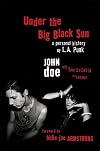
The LA punk scene was hardly silent, but books about its evolution are hard to come by. That's where Under the Big Black Sun comes in. The reflective essays by musicians and scenesters are somewhat akin to Please Kill Me: The Uncensored Oral History of Punk, but this book is more long-form than the episodically-structured chronicle of the NY scene.
It's astonishing how much territory a relatively short book covers. The economical essays evoke moods, people, music, a city-- in their way, the show more essays are lyrical in the way punk itself is. That is, relatively few words with appropriate repetition carry a strong message.
The contributors are not exactly talking to each other, but they are part of the same conversation. John Doe's essays are the closest thing the book has to a narrative structure. The other essays touch on the same people and events, but the perspectives vary widely. There's no attempt to give a definitive history of LA punk; as the title says, it's a "personal history."
In the essays, some motifs are apparent: DIY, inclusivity/exclusivity, pivotal moments. It's possible to piece together a timeline, ranging from the early days of everybody-in to the late days of slamming and violence. Doe recruited diverse contributors to write about a diverse scene, and he does appropriate service to music history by piecing together a narrative that debunks skinhead stereotypes of punk music.
Those writing essays for this book clearly have no particular common motive other than to recount their experience, though most stress creativity and being part of a counterculture. However, for example, different contributors have vastly different reflections on Darby Clash and the Germs, and such internal variances are the best way a contemporary reader can insert themselves into this late-70s period.
The book's main strengths are that the contributions veer away from nihilism or rose-colored glasses about this era. Good and bad are acknowledged in turn. The diversity of writers, as mentioned, derails Aryan stereotypes of punk. The writers attempt to recreate a time and place and succeed: you can't go back, but you can certainly listen to the music. After reading this, you definitely will be.
(Pair this one with Spheeris' The Decline of Western Civilization, Part I show less
It's astonishing how much territory a relatively short book covers. The economical essays evoke moods, people, music, a city-- in their way, the show more essays are lyrical in the way punk itself is. That is, relatively few words with appropriate repetition carry a strong message.
The contributors are not exactly talking to each other, but they are part of the same conversation. John Doe's essays are the closest thing the book has to a narrative structure. The other essays touch on the same people and events, but the perspectives vary widely. There's no attempt to give a definitive history of LA punk; as the title says, it's a "personal history."
In the essays, some motifs are apparent: DIY, inclusivity/exclusivity, pivotal moments. It's possible to piece together a timeline, ranging from the early days of everybody-in to the late days of slamming and violence. Doe recruited diverse contributors to write about a diverse scene, and he does appropriate service to music history by piecing together a narrative that debunks skinhead stereotypes of punk music.
Those writing essays for this book clearly have no particular common motive other than to recount their experience, though most stress creativity and being part of a counterculture. However, for example, different contributors have vastly different reflections on Darby Clash and the Germs, and such internal variances are the best way a contemporary reader can insert themselves into this late-70s period.
The book's main strengths are that the contributions veer away from nihilism or rose-colored glasses about this era. Good and bad are acknowledged in turn. The diversity of writers, as mentioned, derails Aryan stereotypes of punk. The writers attempt to recreate a time and place and succeed: you can't go back, but you can certainly listen to the music. After reading this, you definitely will be.
(Pair this one with Spheeris' The Decline of Western Civilization, Part I show less
Here's the thing about the audiobook. I can make an argument for it being a crucial document of one of the most interesting scenes ever to exist; nearly everybody involved in the first wave was, in the words of Dave Alvin, over-literate, even as many were musically underwhelming. And having everybody read their own chapters adds an immediacy that is fundamental to the appeal. As writers discuss each other indirectly, or give different impressions of the legendary (sad) musicians who died show more like Crash Darby, hearing their own voices lowers defenses and makes one less judgmental about their, um, bad decisions.
But, man, it would help to have chapters identified in some way other than a quick name at the beginning. If one is not married to the scene, it is not necessarily easy to remember that Dave Alvin was in "The Blasters" until he mentions it, and at that point, one has already missed a lot of context. That neither Amazon, nor Audible, nor Wikipedia list who narrated what chapter makes it extremely difficult to follow the entire arc of the scene, much less wean any sort of narrative from it. Which that last is probably a point, but one is not supposed to come to that conclusion simply by confusion.
Last note: some of these writers are really good. As mentioned above, Alvin called them over-literate, but that doesn't always mean people can write. About 2/3 of these chapters are fantastically written. Funny, dry, and always a bit sad not because of nostalgia, but because of what has been lost in order to get to this point. show less
But, man, it would help to have chapters identified in some way other than a quick name at the beginning. If one is not married to the scene, it is not necessarily easy to remember that Dave Alvin was in "The Blasters" until he mentions it, and at that point, one has already missed a lot of context. That neither Amazon, nor Audible, nor Wikipedia list who narrated what chapter makes it extremely difficult to follow the entire arc of the scene, much less wean any sort of narrative from it. Which that last is probably a point, but one is not supposed to come to that conclusion simply by confusion.
Last note: some of these writers are really good. As mentioned above, Alvin called them over-literate, but that doesn't always mean people can write. About 2/3 of these chapters are fantastically written. Funny, dry, and always a bit sad not because of nostalgia, but because of what has been lost in order to get to this point. show less
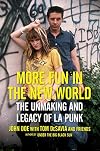
I moved, or more appropriately had military orders, to Camp Pendleton in 1982. This southern California Marine Corps base was my chance to experience the world whereThe Doors had lived and played in. Instead Oceanside, California and Los Angles were in full punk swing, and The Doors were a cultural has been. Safety pins, giant mohawks, and kids trading patches were the in thing. Weekend mornings one would find plenty of passed out punks on the beaches since Southern California lacked the show more squatter buildings of the UK and the cheap grungy apartments of New York City. My experience with punk before going west was from the New York area that made it to Cleveland radio and pulp rock magazines-- Lou Reed, Patti Smith, The New York Dolls, The Ramones, and The Dead Boys.
West Coast Punk was something entirely different from the New York scene, and I will admit it took me a long time to recognize it as something other than a distraction to rock music (with the notable exception of The Dead Kennedys). John Doe of "X" edits a history of the LA Punk Music using musicians and players of the scene. Some people bands are still active like Henry Rollins and Social Distortion. Others were the commercial high point of the movement like the GoGos. Most, however, were people that moved from band to band or simply bands that had their moments and passed on but leaving their mark. The use of first-hand accounts recreate the era better than a history and include that personal feeling that is often lost in editing. LA Punk is often overshadowed by the rise of 80s metal and good times rock of bands like Van Halen. The decadence of the 80s overtook the anti-establishment of the punk movement. Punk, too, was more interested in the message than being commercially viable. The economy silenced the message and viability limited radio exposure. It did create a ruckus in its run.
John Doe and Tom DeSavia create the first-hand history on par with Leggs McNeil's Please Kill Me: The Uncensored Oral History of Punk. Very well done. show less
West Coast Punk was something entirely different from the New York scene, and I will admit it took me a long time to recognize it as something other than a distraction to rock music (with the notable exception of The Dead Kennedys). John Doe of "X" edits a history of the LA Punk Music using musicians and players of the scene. Some people bands are still active like Henry Rollins and Social Distortion. Others were the commercial high point of the movement like the GoGos. Most, however, were people that moved from band to band or simply bands that had their moments and passed on but leaving their mark. The use of first-hand accounts recreate the era better than a history and include that personal feeling that is often lost in editing. LA Punk is often overshadowed by the rise of 80s metal and good times rock of bands like Van Halen. The decadence of the 80s overtook the anti-establishment of the punk movement. Punk, too, was more interested in the message than being commercially viable. The economy silenced the message and viability limited radio exposure. It did create a ruckus in its run.
John Doe and Tom DeSavia create the first-hand history on par with Leggs McNeil's Please Kill Me: The Uncensored Oral History of Punk. Very well done. show less
Some really great detail (from Chris D., Charlotte Caffey, Jane Wiedlen, Dave Alvin) and then some vague memories but nothing very specific from others.
Did give me a look into the scene and I learned quite a bit, but I could use an even more detailed history.
Did give me a look into the scene and I learned quite a bit, but I could use an even more detailed history.
Lists
You May Also Like


Associated Authors
Statistics
- Works
- 7
- Also by
- 6
- Members
- 244
- Popularity
- #93,238
- Rating
- 3.9
- Reviews
- 8
- ISBNs
- 14