
Jon Savage
Author of England's Dreaming: The Sex Pistols and Punk Rock
About the Author
Jon Savage is a writer and broadcaster. His books include England's Dreaming: Anarchy, Sex Pistols, Punk Rock, and Beyond and Teenage: The Creation of Youth Culture. Among the documentaries he has written are the award-winning The Brian Eqstein Story and Joy Division. He lives in North Wales.
Image credit: Justus Nussbaum
Works by Jon Savage
This Searing Light, the Sun and Everything Else: Joy Division: The Oral History (2019) 104 copies, 3 reviews
Associated Works
Tagged
Common Knowledge
- Canonical name
- Savage, Jon
- Legal name
- Sage, Jonathon
- Birthdate
- 1953
- Gender
- male
- Education
- University of Cambridge
- Occupations
- broadcaster
music journalist - Agent
- Tony Peake (Peake Associates)
- Short biography
- Jon Savage is a writer and broadcaster. After graduating from Cambridge he published a fanzine called London’s Outrage, and worked for Sounds, Melody Maker and The Face. His first book, The Kinks: The Official Biography was followed by England’s Dreaming, the award-winning history of the Sex Pistols, punk and Britain in the late seventies. He regularly writes for The Observer and Mojo, and his television credits include the BAFTA winning Arena documentary, The Brian Epstein Story. His recent compilation CDs include England’s Dreaming, Meridian 1970 and Shadows of Love. He lives in Anglesey.
- Nationality
- UK
- Places of residence
- Anglesey, North Wales, UK
- Associated Place (for map)
- North Wales, UK
Members
Reviews

This was published in 1991, two years after Greil Marcus’s punk-themed Lipstick Traces, a book of astounding erudition which has always defeated my every attempt to read it (I’ve long suspected it belongs to that peculiar class of books, often critically lauded, which aren’t actually meant to be read). Savage, by way of contrast, is highly readable, mainly because he sticks close to the compelling narrative of the Sex Pistols and punk. Punk, or at least the British version, started as show more an elite art/fashion movement - full of existential dread, polymorphous sexuality, dangerous political irony, and, of course, funny trousers - and became a mass movement by turning into a tabloid cartoon of proletarian life (tower blocks/dole queues), before ending in the genuine horror of those star-crossed lovers, Sid and Nancy. Not to mention the bathetic coda of young Master Rotten being replaced as Pistols frontman by middle-aged Great Train Robber Ronnie Biggs.
As befits an amphetamine-fuelled movement punk ran through its entire cycle in barely two years. Savage analyses its dizzying trajectory and multilayered complexities and contradictions with forensic skill, gives rose-tinted nostalgia a wide berth, and even achieves the not inconsiderable feat of portraying the much-maligned Malcolm McLaren in a positive light. ‘The definitive account’, everyone says. And everyone is right. show less
As befits an amphetamine-fuelled movement punk ran through its entire cycle in barely two years. Savage analyses its dizzying trajectory and multilayered complexities and contradictions with forensic skill, gives rose-tinted nostalgia a wide berth, and even achieves the not inconsiderable feat of portraying the much-maligned Malcolm McLaren in a positive light. ‘The definitive account’, everyone says. And everyone is right. show less
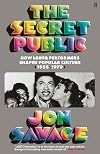
This is much more than a book about pop stars who happened to be LGBTQ. It’s a history of pop as a soft power: a performative space of possibilities, alternative realities, and freedoms. Pop made the marginalised and hidden visible, gave strength to young queer people, and offered liberation from restricting socially imposed gender roles to everyone.
Savage shows how pop, from Little Richard and Elvis onwards, undermined gender norms and was crucially informed by queer people, styles, show more images, and sensibilities. Running alongside the pop history is a history of gay life in Britain and America which reveals the complex but close relationship between the pop, politics, and lifestyle. The gap between the utopian visions of pop and the reality of life for gay people is sometimes sobering: sixties rock stars growing their hair long, and adopting increasingly flamboyant clothing and androgynous personas, while gay men in the real world kept their hair short and dressed conventionally in order to avoid exposure, social ostracism or imprisonment.
I thought some of this territory might be over-familiar (Warhol/Bowie/New York Dolls/Disco) but Savage’s research has thrown up a wealth of information and stories that were new to me. It’s a book full of insight and surprises: a wide-ranging, impressively detailed work of cultural history, and also a great read. show less
Savage shows how pop, from Little Richard and Elvis onwards, undermined gender norms and was crucially informed by queer people, styles, show more images, and sensibilities. Running alongside the pop history is a history of gay life in Britain and America which reveals the complex but close relationship between the pop, politics, and lifestyle. The gap between the utopian visions of pop and the reality of life for gay people is sometimes sobering: sixties rock stars growing their hair long, and adopting increasingly flamboyant clothing and androgynous personas, while gay men in the real world kept their hair short and dressed conventionally in order to avoid exposure, social ostracism or imprisonment.
I thought some of this territory might be over-familiar (Warhol/Bowie/New York Dolls/Disco) but Savage’s research has thrown up a wealth of information and stories that were new to me. It’s a book full of insight and surprises: a wide-ranging, impressively detailed work of cultural history, and also a great read. show less
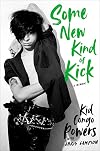
If you were born in the late fifties or early sixties and fell into the punk or alternative scene, this book will be like a welcome home to a place you forgot that you left. Kid Congo Powers (born Brian Tristan) seemed to know everyone in that scene, West Coast or East, and he has stories about them all — nice ones, because he's a nice guy, and seems to have had a gift for friendship. And beyond the nostalgia trip, he provides a remarkably gentle memoir of what could be a rough milieu. The show more Kid bounced around between the Gun Club and the Cramps before winding up for a few years with Nick Cave's Bad Seeds, all bands with bigger-than-life personalities. There has to have been some conflict along the way, but the humble way he tells his story lets you imagine it must have been minor.
Not that the tale is without drama. There are deaths and drug addictions and dangerous situations aplenty, much of which Kid survived by pure chance. Still, part of me wants to believe that his apparent good luck is just the karma that comes to a person deeply inclined never to judge another person. A punk rock saint? Maybe. Enjoy the show! show less
Not that the tale is without drama. There are deaths and drug addictions and dangerous situations aplenty, much of which Kid survived by pure chance. Still, part of me wants to believe that his apparent good luck is just the karma that comes to a person deeply inclined never to judge another person. A punk rock saint? Maybe. Enjoy the show! show less

Five stars even though: Savage complains about punk's whiteness, ethnically and musically (stiff rhythms, no black musical forms), but he never brings up: before skinhead was stolen by the racists of the National Front, it was a subculture of black and white youth bonding over music and style; The Clash brought dub and reggae into punk, stylistically, with covers, and through collaborations with Mikey Dread, etc; there were two tone bands like The Specials, The Selecter, The Beat, Madness, show more who toured with The Clash and other bands and were part of the punk movement. That deaf spot aside, a magisterial social history of 1970s Britain by way of the Sex Pistols. show less
Lists
Awards


You May Also Like


Associated Authors
Statistics
- Works
- 26
- Also by
- 10
- Members
- 1,937
- Popularity
- #13,294
- Rating
- 4.0
- Reviews
- 21
- ISBNs
- 83
- Languages
- 6