
Peter Hook (1) (1956–)
Author of Unknown Pleasures: Inside Joy Division
For other authors named Peter Hook, see the disambiguation page.
Works by Peter Hook
Associated Works
Tagged
Common Knowledge
- Canonical name
- Hook, Peter
- Legal name
- Woodhead, Peter
- Birthdate
- 1956-02-13
- Gender
- male
- Education
- Salford Grammar School
- Occupations
- musician
nightclub owner - Organizations
- Joy Division
New Order
Ad Infinitum
Monaco
Revenge
Freebass (show all 10)
Man Ray
The Haçienda
Factory Records
Peter Hook & The Light - Relationships
- Aherne, Caroline (wife)
- Nationality
- England
UK - Birthplace
- Broughton, Salford, England, UK
- Associated Place (for map)
- England, UK
Members
Reviews
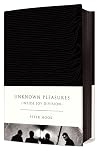
Really excellent rock writing--tempted to give it a 5. Hook gives us a fantastic view of what it was like to be in the studio and on the road w/Ian and the fellas, the Buzzcocks, Killing Joke, etc. Very poignant views on what it was like for him dealing with Ian's illness and suicide, but also gives us lots of moments of rock and roll tomfoolery and Ian's lighter side. Also, in depth views on both his opinions of recorded material and what it was like to be in the room with Hannett, how he show more felt about the records at the time and how his opinions have changed. All-in-all a must for anyone interested in British post-punk ca. '79-'80, Manchester, and of course, Joy Division fans. show less
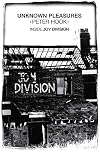
When I saw Control, all those years later, I didn’t even notice it was in black and white because it was exactly what my childhood had looked and felt like: dark and smoggy and brown, the colour of a wet cardboard box, which was how all of Manchester looked in those days.
This is a seemingly honest look at how things were back in the day when Peter Hook started out in not only Joy Division, but in life. He writes about having lived in Jamaica, in Manchester and of meeting Bernard Sumner, show more Ian Curtis and a plethora of drummers before coming across Stephen Morris.
He writes of the good, bad old days, and not so much of the current situation - where Hook and Sumner have communication issues that prevent them from functioning together - which is good. This is after all a book on Joy Division.
Hook has done a lot of thinking, maybe not because of Curtis' death, but maybe because he has re-hashed everything now that he's no longer part of New Order.
There's a lot of piss-taking of himself here, e.g.
You know what? It was the same being in a group. Just goes to show that you can take the boy out of Salford but you can’t take Salford out of the boy, because we were terrible for nicking things in Joy Division and New Order. We used to go to these wonderful gigs with all this beautiful stuff backstage and nick it all. Now you’ve got bands like the Happy Mondays, or Oasis (in the early days), who had big scally reputations, but they had the same background as us: just working class thieves. You never had anything so you took it. Same attitude to music: you’ve got to start somewhere. The difference was that nobody expected that sort of behaviour from us in Joy Division or New Order because we had the arty intellectual image. These days I restrict it to hotels.
At the same time, it's great to see another angle of Ian Curtis, which is not the apotheosised person we often see today:
But looking back that’s exactly what he was: a people pleaser; he could be whatever you wanted him to be. A poetic, sensitive, tortured soul, the Ian Curtis of the myth – he was definitely that. But he could also be one of the lads – he was one of the lads, as far as we were concerned. That was the people pleaser in him, the mirror. He adapted the way he behaved depending on who he was with. We all do a bit, of course, but with Ian the shift was quite dramatic. Nobody was better at moving between different groups of people than he was. But I also think this was an aspect of his personality that ended up being very damaging to him. He had three personas he was trying to juggle: he had his married-man persona, at home with the wife, the laddish side and the cerebral, literary side. By the end he was juggling home life and band life, and had two women on the go. There were just too many Ians to cope with.
The book also displays what it's like being in a band, even one which has been lauded since after Curtis' death:
22 September 1978
Joy Division play the Coach House, Huddersfield. “One person turned up. It was diabolical.”
Plus some other details on other bands, e.g.:
14 November 1978
Joy Division play the Odeon, Canterbury, as part of their tour with the Rezillos and the Undertones. “The Undertones – they were so young. They’d bought an air pistol and were having target practice backstage, shooting cans off the stairs. Then someone brought in letters from home because they’d been away touring for a while, and next thing they were all crying in the dressing room reading letters off their mums. Me and Ian were looking at each other like, Aw, isn’t that sweet?”
I love the bits about how the tracks came about, e.g.:
‘Shadowplay’ happened in a similar way: Bernard had been listening to ‘Ocean’ by Velvet Underground and wanted to write a track like that, with the surf sound, a rolling feeling in it. So we started jamming and that’s how we came up with ‘Shadowplay’. You wouldn’t say it sounded anything like Velvet Underground, but once you know you can hear the root.
And a bit on how very little money was very good:
So that was two days to record Unknown Pleasures. Closer took three weeks. Movement took about two months and Waiting for the Siren’s Call, New Order’s last, took three years.
...and:
The beauty of Joy Division is that we never made much money while the band existed so there was nothing to sully it – no piles of drugs or cases of booze in the dressing room. We went everywhere in a convoy of knackered van and Steve’s Cortina and stayed with friends – no hotels for us, just the odd B&B. Even when we went to London to record Closer we stayed in a quite scruffy pair of flats with £1.50 per diem: you could spend how you wished, dinner or a couple of pints but not both. We didn’t yet have any money from the record. (Publishing, as in who wrote what in the songs, brings nearly all bands down. I remember the immortal quote from the Mondays: ‘Why is the one playing the maracas getting as much as me who writes the songs?’ Ironically Bez is now as important as all the songwriters, if not more. How the world turns.)
So how reliable is the book? Hook answers that himself, and I deem him to be quite reliable just by judging on how he writes, e.g.:
I liked Annik, though, and still do. Years later we talked about that interview she did at Dave Pils’ flat. It was featured in Control and my character’s sitting there saying dopey things about the name ‘Buzzcocks’, which I hated when I saw it. Made me look a right twat. I told Annik I would never have said anything so daft and she said to me, ‘Ah, but I have the tape, ‘Ooky, and zat is exactly what you said.’ So there you go. You shouldn’t trust a word I say.
And in ending:
But we didn’t do it the normal way, of course. We did it the Factory way. Not that I’d change anything, mind you. I’d stop Ian hanging himself, obviously. But otherwise I really wouldn’t change anything.show less
Hooky oh Hooky.. this book managed to make me laugh till my stomach hurt and nearly cry as well.
Hooky, aka Peter Hook, needs no introduction. He is the bassist of Mancunian bands Joy Division and New Order, bands who have managed to make music spanning from the darkly gorgeous tones of Atmosphere and Shadowplay to the fluorescent crystalline tones of Blue Monday and Fine Time (lovely song btw).
He covers Joy Division's history from its early inception as Stiff Kittens and Warsaw; also adding show more in humourous ( if somewhat far-fetched stories) anecdotes about his bandmates, up till the tragic death of Ian Curtis and Joy Division.
Hooky is a brilliant curator, although the book, in all honesty, does tend to lean towards painting Bernard Sumner as a wimpy whiner and Hooky himself as long-suffering. I'll definitely be looking forward to reading Barney's acount of Joy Division. show less
Hooky, aka Peter Hook, needs no introduction. He is the bassist of Mancunian bands Joy Division and New Order, bands who have managed to make music spanning from the darkly gorgeous tones of Atmosphere and Shadowplay to the fluorescent crystalline tones of Blue Monday and Fine Time (lovely song btw).
He covers Joy Division's history from its early inception as Stiff Kittens and Warsaw; also adding show more in humourous ( if somewhat far-fetched stories) anecdotes about his bandmates, up till the tragic death of Ian Curtis and Joy Division.
Hooky is a brilliant curator, although the book, in all honesty, does tend to lean towards painting Bernard Sumner as a wimpy whiner and Hooky himself as long-suffering. I'll definitely be looking forward to reading Barney's acount of Joy Division. show less
Really excellent rock writing--tempted to give it a 5. Hook gives us a fantastic view of what it was like to be in the studio and on the road w/Ian and the fellas, the Buzzcocks, Killing Joke, etc. Very poignant views on what it was like for him dealing with Ian's illness and suicide, but also gives us lots of moments of rock and roll tomfoolery and Ian's lighter side. Also, in depth views on both his opinions of recorded material and what it was like to be in the room with Hannett, how he show more felt about the records at the time and how his opinions have changed. All-in-all a must for anyone interested in British post-punk ca. '79-'80, Manchester, and of course, Joy Division fans. show less
Lists
Awards


You May Also Like


Associated Authors
Statistics
- Works
- 4
- Also by
- 2
- Members
- 663
- Popularity
- #38,037
- Rating
- 3.9
- Reviews
- 24
- ISBNs
- 55
- Languages
- 6
- Favorited
- 1