
About the Author
Dan Epstein is an award-winning journalist, pop-culture historian, and avid baseball fan who has written for Rolling Stone. Fox Sports, the Los Angeles Times. The Jewish Daily Forward, and dozens of other publications. He currently resides in Chicago.
Works by Dan Epstein
Big Hair and Plastic Grass: A Funky Ride Through Baseball and America in the Swinging '70s (2010) 126 copies, 7 reviews
Stars and Strikes: Baseball and America in the Bicentennial Summer of ‘76 (2014) 58 copies, 6 reviews
The 80's Pop Culture 1 copy
The 90's Pop Culture 1 copy
Tagged
Common Knowledge
- Gender
- male
- Occupations
- freelance journalist
- Places of residence
- Los Angeles, California, USA
- Associated Place (for map)
- California, USA
Members
Reviews
Big Hair and Plastic Grass: A Funky Ride Through Baseball and America in the Swinging '70s by Dan Epstein
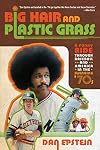
This was an entertaining look at one of baseball's most unique decades - the 70s. It was fun for this fan (who lived in that era) to revisit some of the best teams, best players, and most interesting characters from 1970-79. The great teams - the Big Red Machine, the Mustache Gang, and the Bronx Zoo - were all featured, along with plenty about Reggie Jackson, Billy Martin, Pete Rose, Nolan Ryan, Johnny Bench, George Steinbrenner, Charley Finley, Dick Allen, Dock Ellis, the Perry brothers, show more and even, Bill "Spaceman" Lee (plus many more). There are also numerous anecdotes about player nicknames, the ballparks, the wild uniforms, outrageous hairstyles/facial hair, and social changes of the decade.
Author Dan Epstein rehashes each year in some detail in a separate chapter with a recap of the pennant races, league MVP competition, and World Series winners. He even throws in a little pop culture free of charge with each year. This book brought back a lot of pleasant memories for this baseball fan! show less
Author Dan Epstein rehashes each year in some detail in a separate chapter with a recap of the pennant races, league MVP competition, and World Series winners. He even throws in a little pop culture free of charge with each year. This book brought back a lot of pleasant memories for this baseball fan! show less
Big Hair and Plastic Grass: A Funky Ride Through Baseball and America in the Swinging '70s by Dan Epstein
This was a fun one, sought at library after seeing a Rob Neyer tweet. These were my first baseball memories, Royals v Yankees, Brett vs Gossage.
My only complaint is that there was some glaring repetition between the 'year' chapters, and the 'overview' chapters.
My only complaint is that there was some glaring repetition between the 'year' chapters, and the 'overview' chapters.
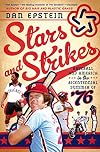
Every year of baseball should have a book like this.
1976, the year of the bicentennial, was an amazing year for the United States and baseball was no exception. Along with celebrations, a Presidential race, racial tensions, the increase popularity of Disco and the start of punk rock, baseball faced legal battles, expansion, free agency, eccentric and boisterous owners, and the designated hitter in the World Series.
Stars and Strikes takes the baseball season month by month, reviewing each show more major event, focusing on baseball but framing it within the scope of the nation.
Again, I want a book like this for every baseball season. show less
1976, the year of the bicentennial, was an amazing year for the United States and baseball was no exception. Along with celebrations, a Presidential race, racial tensions, the increase popularity of Disco and the start of punk rock, baseball faced legal battles, expansion, free agency, eccentric and boisterous owners, and the designated hitter in the World Series.
Stars and Strikes takes the baseball season month by month, reviewing each show more major event, focusing on baseball but framing it within the scope of the nation.
Again, I want a book like this for every baseball season. show less
Big Hair and Plastic Grass: A Funky Ride Through Baseball and America in the Swinging '70s by Dan Epstein
I don’t know what happened during the 1980s that ruined the two great passions of my childhood life—major league baseball and classic rock—but somehow shortly after I blossomed into a teenager my passion for each of them slowly and sorrowfully fizzled. I had just turned 13 years old when the Major League’s players went on strike—1981—and I immediately had this very raw “screw them” epiphany. By 1984 I had no real interest in major league baseball what so ever. I had stopped show more collecting baseball cards and obsessing over the league leaders and box scores in the Sunday paper, I couldn’t sit through an inning of watching a ball game on TV anymore and I soon found myself just channel surfing right past the highlight reels on ESPN. And on the rare occasion that I actually found myself at a major league ball game, I’d sit there interested in anything but the actual game; the guy selling peanuts, some large breasted woman three rows up, a cloud… Even when I consciously tried to focus on the game, after two or three pitches, I’d just think to myself, “What’s the frickin point?” Not just the point of watching the game, but what’s the frickin point of major league baseball in general? The broadcasters regurgitated one cliché after another, the players seemed like robots. The fans seemed ridiculous, with their puppet-like reactions of anger and/or rehearsed celebrations. Maybe I should have just blamed it all on Reagan and let it go at that.
But then one day, some 25 plus years later I came upon Josh Wilker’s Cardboard Gods in my library, and it got me to wondering “What the fuck happened?” How could something I once lived and breathed and cared so much about become totally meaningless and actually annoying to me? Had major league baseball really changed that much? Or was it me? Had I changed that much? I mean what was it about big league baseball that I had once thought that was so frickin great?
To find the answers to these questions and more I returned to my local library, and with a minimal amount of research came upon Dan Epstein’s book Big Hair And Plastic Grass: A Funky Ride Through Baseball and America in the Swinging ‘70s. The cover of Epstein’s book promised a treasures trove of interesting anecdotes, funny details and witty insight. Besides great images of Oscar Gamble and Mark "the bird" Fydrich, the cover also sports a retro design that instantly conjures up the distinct 1970s vibe. The title and sub-title promise a funky ride through the baseball landscape of the swingingest decade. Still I proceeded with caution for as I’ve seen before, cover promises aren’t always delievered. Then, as always, I look to the book’s back jacket to get an image of author. There I see Epstein. What a wanker, is my initial reaction. Dressed as hipster wannabe, complete with 70s side burns and height-ashbury jean jacket, his coolier-than-tho smirk makes me wanna slap him upside the head. Still though taking a bite out of his introduction, Epstein at first seems as though he might actually delivery on what the cover of Big Hair and Plastic Grass promises. He acknowledges the disparity between Major League baseball in the 1970s and Major League baseball post-70s when he writes: “In recent years, for example, the Atlanta Braves have held a ‘Faith Day’ promotion, featuring performances by Christian rock bands and testimonials from Braves players about how Jesus turned their lives around. This is same team that, back in 1977, drew more than 27,000 fans for a ‘Wet T-Shirt Night’ competition.” This book just might have my answers, I hoped.
But as I read on, it didnt take long to realize that this book was all style and no substance. The majority of Epstein's text is year by year summaries of how teams won their divisions, who the stat leaders on the teams were, with a few seasonal and individual game high lights mixed in that read like a 3rd year college journalism student covering the local college team. At the begining of each chapter Epstein tried very hard to put each year into some pop culture context. But no matter how hard Epstien tried to shoe horn pop culture into the baseball landscape, all he did was make it seem apparant that the two just didnt have anything in common. Or maybe they did have some relationship to one another and Epstien is just not intelligent enough to make the connection. Beyond not being overly birght, Epstein is also not a good writer. He's boring in fact. There was no passion, other than possibly the motivation of wanting to be considered an expert on 70s culture so that he might be asked by the producers of VH1's "I heart the 70s" to contribute witty comments about slinkys or moon boots.
Needless to say about halfway through, I began skipping around a bit. Then a bit more. There were some interesting narrative possibilities, but Epstein only touched the surface and gave the cliche wikipedia-ish treatment to them, and not much else. Pretty lame.
By the time I got to 1978 I was looking at maybe two words per paragraph until I finally just gave up. The most disappointing thing here, is that I DO believe that the subject matter is worthy of a book. A good book even. Possibly something in the tradition of an oral telling along the lines of Loose Balls (about the American Basketball Association) where we have the stories told directly to us from the mouths of the players, owners, coaches, managers, umps, anouncers, etc themselves.
Overall ths book did nothing for me. Basically a waste of time. show less
But then one day, some 25 plus years later I came upon Josh Wilker’s Cardboard Gods in my library, and it got me to wondering “What the fuck happened?” How could something I once lived and breathed and cared so much about become totally meaningless and actually annoying to me? Had major league baseball really changed that much? Or was it me? Had I changed that much? I mean what was it about big league baseball that I had once thought that was so frickin great?
To find the answers to these questions and more I returned to my local library, and with a minimal amount of research came upon Dan Epstein’s book Big Hair And Plastic Grass: A Funky Ride Through Baseball and America in the Swinging ‘70s. The cover of Epstein’s book promised a treasures trove of interesting anecdotes, funny details and witty insight. Besides great images of Oscar Gamble and Mark "the bird" Fydrich, the cover also sports a retro design that instantly conjures up the distinct 1970s vibe. The title and sub-title promise a funky ride through the baseball landscape of the swingingest decade. Still I proceeded with caution for as I’ve seen before, cover promises aren’t always delievered. Then, as always, I look to the book’s back jacket to get an image of author. There I see Epstein. What a wanker, is my initial reaction. Dressed as hipster wannabe, complete with 70s side burns and height-ashbury jean jacket, his coolier-than-tho smirk makes me wanna slap him upside the head. Still though taking a bite out of his introduction, Epstein at first seems as though he might actually delivery on what the cover of Big Hair and Plastic Grass promises. He acknowledges the disparity between Major League baseball in the 1970s and Major League baseball post-70s when he writes: “In recent years, for example, the Atlanta Braves have held a ‘Faith Day’ promotion, featuring performances by Christian rock bands and testimonials from Braves players about how Jesus turned their lives around. This is same team that, back in 1977, drew more than 27,000 fans for a ‘Wet T-Shirt Night’ competition.” This book just might have my answers, I hoped.
But as I read on, it didnt take long to realize that this book was all style and no substance. The majority of Epstein's text is year by year summaries of how teams won their divisions, who the stat leaders on the teams were, with a few seasonal and individual game high lights mixed in that read like a 3rd year college journalism student covering the local college team. At the begining of each chapter Epstein tried very hard to put each year into some pop culture context. But no matter how hard Epstien tried to shoe horn pop culture into the baseball landscape, all he did was make it seem apparant that the two just didnt have anything in common. Or maybe they did have some relationship to one another and Epstien is just not intelligent enough to make the connection. Beyond not being overly birght, Epstein is also not a good writer. He's boring in fact. There was no passion, other than possibly the motivation of wanting to be considered an expert on 70s culture so that he might be asked by the producers of VH1's "I heart the 70s" to contribute witty comments about slinkys or moon boots.
Needless to say about halfway through, I began skipping around a bit. Then a bit more. There were some interesting narrative possibilities, but Epstein only touched the surface and gave the cliche wikipedia-ish treatment to them, and not much else. Pretty lame.
By the time I got to 1978 I was looking at maybe two words per paragraph until I finally just gave up. The most disappointing thing here, is that I DO believe that the subject matter is worthy of a book. A good book even. Possibly something in the tradition of an oral telling along the lines of Loose Balls (about the American Basketball Association) where we have the stories told directly to us from the mouths of the players, owners, coaches, managers, umps, anouncers, etc themselves.
Overall ths book did nothing for me. Basically a waste of time. show less
Awards

You May Also Like


Associated Authors
Statistics
- Works
- 13
- Members
- 335
- Popularity
- #71,018
- Rating
- 3.7
- Reviews
- 14
- ISBNs
- 26