
Helen Dean Fish (1889–1953)
Author of Animals of the Bible: A Picture Book
About the Author
Works by Helen Dean Fish
Four and Twenty Blackbirds: A Collection of Old Nursery Rhymes (1937) — Editor — 44 copies, 3 reviews
Invitation to Travel 2 copies
Animals of American history 2 copies
Little Princess in the Wood 1 copy
Associated Works
Tagged
Common Knowledge
- Birthdate
- 1889-02-07
- Date of death
- 1953
- Gender
- female
Members
Reviews
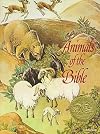
This was the very first book to be awarded the Randolph Caldecott Medal for the “most distinguished American picture book for children.”
Dorothy Lathrop’s black and white illustrations are wonderful. It is clear that she has experience drawing animals from real life. From the creation to Noah’s Ark, Daniel in the lion’s den, and on to the new testament, the drawings are detailed and life-like. Lathrop also took pains to include accurate depictions of the flora of the area depicted. show more
So why only one star?
The book was conceived and planned by Helen Dean Fish, who selected the texts used from the King James Bible. In some cases, the animal is but a small mention in the text (Abraham’s Ram or Jonah and the Great Fish). She did nothing to write these as child-friendly stories. I cannot imagine a child sitting still for any of these verses. If I needed a child’s picture book of Bible stories, I’d pick a different book.
That’s really a pity, because Lathrup’s drawings are magnificent. I’d rate the illustrations 5***** - but I still wouldn’t recommend the book. show less
Dorothy Lathrop’s black and white illustrations are wonderful. It is clear that she has experience drawing animals from real life. From the creation to Noah’s Ark, Daniel in the lion’s den, and on to the new testament, the drawings are detailed and life-like. Lathrop also took pains to include accurate depictions of the flora of the area depicted. show more
So why only one star?
The book was conceived and planned by Helen Dean Fish, who selected the texts used from the King James Bible. In some cases, the animal is but a small mention in the text (Abraham’s Ram or Jonah and the Great Fish). She did nothing to write these as child-friendly stories. I cannot imagine a child sitting still for any of these verses. If I needed a child’s picture book of Bible stories, I’d pick a different book.
That’s really a pity, because Lathrup’s drawings are magnificent. I’d rate the illustrations 5***** - but I still wouldn’t recommend the book. show less
Four and Twenty Blackbirds: Nursery Rhymes of Yesterday Recalled for Children of Today by Helen Dean Fish

An influential early twentieth-century children's book editor, Helen Dean Fish was the driving force behind the publication of the picture-book Animals of the Bible, which won its illustrator, Dorothy P. Lathrop, the very first Caldecott Medal back in 1938. That same year, another of Fish's projects, this collection of twenty-four nursery rhymes, illustrated by Robert Lawson, became the very first Caldecott Honor Book. Here, in Four and Twenty Blackbirds, we have some well-known selections, show more from Frog Went A-Courting to The Little Red Hen, but the majority of rhymes included are more obscure, hunted down by Fish from American contributors (although their origins are clearly European), and often recorded here (according to the foreword) for the very first time. Accompanying the rhymes are Lawson's engraving-style artwork, done in black and white, with green accents.
An engaging work, particularly for those with an interest in nursery rhymes and children's poetry, this collection contained a number of songs and poems previously unknown to me, although their themes were often familiar. Joe Dobson, for instance, in which a farmer and his wife (in the days of Robin Hood) switch tasks, with the farmer keeping house and his dame tending to the fields, put me strongly in mind of the Norwegian folktale concerning The Man Who Kept House. I haven't done a great deal of reading in this area - The Oxford Dictionary of Nursery Rhymes sits on my shelf as I type this, just waiting to be picked up - so I couldn't say if these selections are any more grisly than their literary descendents, but they certainly are quite gruesome, in parts! The scene, in The Tragic Tale of Hooty the Owl, in which the fox has eaten his strigine adversary's offspring, is quite bloody. I confess to a certain sadness, that the foxes here are all depicted as villains. Ah well! The artwork is appealing, although I wouldn't classify it was outstanding. It reminded me of the illustrations I've seen in some vintage Aesop collections.
All in all, an interesting work, one I would recommend to readers with a taste for older children's nursery rhymes - particularly ones not as frequently heard today - as well as to fans of Robert Lawson. show less
An engaging work, particularly for those with an interest in nursery rhymes and children's poetry, this collection contained a number of songs and poems previously unknown to me, although their themes were often familiar. Joe Dobson, for instance, in which a farmer and his wife (in the days of Robin Hood) switch tasks, with the farmer keeping house and his dame tending to the fields, put me strongly in mind of the Norwegian folktale concerning The Man Who Kept House. I haven't done a great deal of reading in this area - The Oxford Dictionary of Nursery Rhymes sits on my shelf as I type this, just waiting to be picked up - so I couldn't say if these selections are any more grisly than their literary descendents, but they certainly are quite gruesome, in parts! The scene, in The Tragic Tale of Hooty the Owl, in which the fox has eaten his strigine adversary's offspring, is quite bloody. I confess to a certain sadness, that the foxes here are all depicted as villains. Ah well! The artwork is appealing, although I wouldn't classify it was outstanding. It reminded me of the illustrations I've seen in some vintage Aesop collections.
All in all, an interesting work, one I would recommend to readers with a taste for older children's nursery rhymes - particularly ones not as frequently heard today - as well as to fans of Robert Lawson. show less

Originally published in 1941 by Lippincott, and then reprinted by The Green Tiger Press in this newer edition in 1988, Helen Dean Fish's When the Root Children Wake Up is (to the best of my knowledge) the first version of Sibylle von Olfers' 1906 picture-book, Etwas von den Wurzelkindern ("Something About the Root Children"), to be made available to English-language readers. It pairs Fish's prose adaptation, based loosely upon von Olfers' original poem, with von Olfers' Art Nouveau style show more illustrations, and is a charming retelling of a story that, in German-speaking parts of the world, is considered a children's classic.
The story of the Root Children - little cherub-like beings in the care of the Earth Mother - who emerge with the coming of the Spring, decorating the flowers and tiny creatures (beetles, ladybugs, grasshoppers) for the season ahead, and surfacing upon the earth to frolic and play, this tale is the epitome of anthropomorphism, and envisions the forces of nature being assisted by child-like creatures. Those who find such things abhorrent will want to skip it, while those who enjoy them - or who appreciate similar efforts by authors such as Elsa Beskow - are recommended to obtain a copy. For my part, I sometimes like this sort of things, and then again, sometimes I don't. In the case of von Olfers' tales, I've decided that I do!
The approach used here, of pairing von Olfers' artwork with a prose adaptation of, and expansion upon the original story, is also the one favored by those responsible for the more recent The Story of the Root-Children, although that version is presented as if it were a straight translation (with von Olfers listed as the author). I prefer the decision made here, to acknowledge the act of adaptation, and recommend this version to all those readers looking for a prose edition of the story. Those searching for a translation of the original poem itself might want to take a look at Jack Zipes' Mother Earth and Her Children: A Quilted Fairy Tale. show less
The story of the Root Children - little cherub-like beings in the care of the Earth Mother - who emerge with the coming of the Spring, decorating the flowers and tiny creatures (beetles, ladybugs, grasshoppers) for the season ahead, and surfacing upon the earth to frolic and play, this tale is the epitome of anthropomorphism, and envisions the forces of nature being assisted by child-like creatures. Those who find such things abhorrent will want to skip it, while those who enjoy them - or who appreciate similar efforts by authors such as Elsa Beskow - are recommended to obtain a copy. For my part, I sometimes like this sort of things, and then again, sometimes I don't. In the case of von Olfers' tales, I've decided that I do!
The approach used here, of pairing von Olfers' artwork with a prose adaptation of, and expansion upon the original story, is also the one favored by those responsible for the more recent The Story of the Root-Children, although that version is presented as if it were a straight translation (with von Olfers listed as the author). I prefer the decision made here, to acknowledge the act of adaptation, and recommend this version to all those readers looking for a prose edition of the story. Those searching for a translation of the original poem itself might want to take a look at Jack Zipes' Mother Earth and Her Children: A Quilted Fairy Tale. show less

The Caldecott Medal, named for nineteenth-century English artist Randolph Caldecott, is the premier children's illustration prize in the United States, and was first awarded in 1938. Animals of the Bible, which pairs quotations from the King James Bible, edited and presented by Helen Dean Fish, with black and white artwork by Dorothy P. Lathrop, was the first book to win the Caldecott. It is an advanced, text-heavy picture-book, and profiles many of the important animals of both the Hebrew show more Bible and the Christian Gospels, from the serpent who beguiled Eve, and the dove which Noah released from his ark, to the Palm Sunday colt, and the manger animals that were present during the Nativity. Each animal that appears in the biblical passage quoted, is then depicted in the accompanying illustration.
Less of a biblical storybook than a biblical sampling - perhaps it can be considered a young person's reference? - Animals of the Bible is not a title I would have picked up, in the normal course of events. Although interested in the ways in which these stories have been retold for children (I wish I remembered the name of collection I had myself, as a young girl!), as well as in the original text itself, a book which features brief biblical snippets paired with artwork is not really how I would have chosen to approach the subject. Having recently decided to read the entire Caldecott corpus, however (because clearly I don't have enough themed reading projects going already!), I picked it up this past weekend at the library, and discovered (perhaps not so surprisingly) that I was a bit disappointed with the first Caldecott. The quotations were fine, of course - the King James Bible, even when inaccurate as a translation, is quite beautiful - and the artwork was interesting. But being familiar with Lathrop's fairy-tale work - the illustrations she contributed to some of Walter de la Mare's books, for instance - I was not as impressed as I'd hoped to be. I'll have to see if The Fairy Circus, for which Lathrop won a Newbery Honor in 1932, and which I hope to read in the next few weeks for another ongoing project, is any better. show less
Less of a biblical storybook than a biblical sampling - perhaps it can be considered a young person's reference? - Animals of the Bible is not a title I would have picked up, in the normal course of events. Although interested in the ways in which these stories have been retold for children (I wish I remembered the name of collection I had myself, as a young girl!), as well as in the original text itself, a book which features brief biblical snippets paired with artwork is not really how I would have chosen to approach the subject. Having recently decided to read the entire Caldecott corpus, however (because clearly I don't have enough themed reading projects going already!), I picked it up this past weekend at the library, and discovered (perhaps not so surprisingly) that I was a bit disappointed with the first Caldecott. The quotations were fine, of course - the King James Bible, even when inaccurate as a translation, is quite beautiful - and the artwork was interesting. But being familiar with Lathrop's fairy-tale work - the illustrations she contributed to some of Walter de la Mare's books, for instance - I was not as impressed as I'd hoped to be. I'll have to see if The Fairy Circus, for which Lathrop won a Newbery Honor in 1932, and which I hope to read in the next few weeks for another ongoing project, is any better. show less
Lists
Awards

You May Also Like


Associated Authors
Statistics
- Works
- 12
- Also by
- 2
- Members
- 578
- Popularity
- #43,350
- Rating
- 3.5
- Reviews
- 22
- ISBNs
- 16
- Languages
- 1