
Richard Barksdale Harwell (1915–1988)
Author of The Confederate Reader: How the South Saw the War
About the Author
Works by Richard Barksdale Harwell
Washington: An abridgement in one volume by Richard Harwell of the seven-volume George Washington by Douglas Southall Freeman (1968) 37 copies, 1 review
In tall cotton: The 200 most important Confederate books for the reader, researcher, and collector (Contributions to bibliography) (1978) 13 copies
The Committees of Safety of Westmoreland and Fincastle : proceedings of the county committees, 1774-1776 (1956) 6 copies
Associated Works
Tagged
Common Knowledge
- Birthdate
- 1915-06-06
- Date of death
- 1988-03-09
- Gender
- male
- Education
- Emory University
- Occupations
- librarian
bibliographer
historian - Nationality
- USA
- Birthplace
- Washington, Georgia, USA
- Place of death
- Augusta, Georgia, USA
- Associated Place (for map)
- Georgia, USA
Members
Reviews
Washington: An abridgement in one volume by Richard Harwell of the seven-volume George Washington by Douglas Southall Freeman by Richard Barksdale Harwell
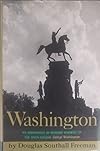
This book is monumental — in scope, in detail, and in density. It chronicles the life of George Washington from his birth in colonial Virginia to his death at Mount Vernon, with a focus on his internal character as much as his external actions. Freeman’s narrative reveres Washington as a model of restraint, principle, and resolve. But reading it is no small task. The text is deeply formal, written in a classic biographical style that demands attentiveness and patience — two things I show more used to have more of, and now, in this season of life, find in shorter supply.
I began reading it sometime before my father died in March of 2017. That alone gives the book a strange emotional shadow. It sat on my shelf, unopened for long stretches — not out of disinterest, but because life happened: projects, losses, joys, transitions, trauma, healing. Every time I returned to it, I picked up a few more pages, but never without effort. The font was small. The chapters long. The content noble, but relentless. In many ways, this book is George Washington: steady, disciplined, never frivolous, never yielding to flair.
Freeman’s Washington is not a man of dazzling charisma or unpredictable passion — he is duty-bound, deeply private, and profoundly human. He struggles with ambition, pride, loyalty, and reputation. And yet, he remains unwavering in his desire to serve the public good. His leadership during the Revolutionary War, his refusal to seize power, and his reluctant acceptance of the presidency are all rendered with respectful gravity.
I wanted to love this book more than I did. I wanted to devour it the way I did with other biographies in earlier chapters of my life. But this one dragged me. It slowed my whole reading rhythm. And yet — finishing it feels like a quiet personal victory. A long-lingering promise, finally fulfilled.
In the end, what I take away is this: George Washington was not exciting, but he was essential. And maybe, in his unshowy steadiness, he teaches me something about my own path — how to endure, how to lead with dignity, and how to take one more step, even when you're tired. show less
I began reading it sometime before my father died in March of 2017. That alone gives the book a strange emotional shadow. It sat on my shelf, unopened for long stretches — not out of disinterest, but because life happened: projects, losses, joys, transitions, trauma, healing. Every time I returned to it, I picked up a few more pages, but never without effort. The font was small. The chapters long. The content noble, but relentless. In many ways, this book is George Washington: steady, disciplined, never frivolous, never yielding to flair.
Freeman’s Washington is not a man of dazzling charisma or unpredictable passion — he is duty-bound, deeply private, and profoundly human. He struggles with ambition, pride, loyalty, and reputation. And yet, he remains unwavering in his desire to serve the public good. His leadership during the Revolutionary War, his refusal to seize power, and his reluctant acceptance of the presidency are all rendered with respectful gravity.
I wanted to love this book more than I did. I wanted to devour it the way I did with other biographies in earlier chapters of my life. But this one dragged me. It slowed my whole reading rhythm. And yet — finishing it feels like a quiet personal victory. A long-lingering promise, finally fulfilled.
In the end, what I take away is this: George Washington was not exciting, but he was essential. And maybe, in his unshowy steadiness, he teaches me something about my own path — how to endure, how to lead with dignity, and how to take one more step, even when you're tired. show less

This is a very interesting anthology for those who care about American Civil War history. It’s a collection of letters, newspaper columns and journal entries from people of all sorts who took part in the war or witnessed it the war from the Union side. (Harwell also published a companion collection, The Confederate Reader.)
We get journal entries from Union soldiers in far flung theaters of war like New Mexico, but we are also taken inside Fort Sumter at the very beginning of the war, a show more diary entry of a woman watching the soldiers of both sides rush back and forth through the streets of her hometown, Gettysburg, first-hand accounts of major engagements like the Battle of Shiloh, letters and telegrams back and forth from an increasingly exasperated Lincoln to his generals during the early years of the conflict. There are accounts of life inside prisoner of war camps and a description of life in New Orleans during the Federal occupation.
Editor Richard B. Harwell (1915-1988) was a prominent enough Civil War historian (especially regarding the Confederacy) that the Atlanta Civil War Round Table now confers the Harwell Book Award for the best book on a Civil War subject published in the preceding year: http://www.civilwarroundtableofatlanta.org/Harwell-Bio.htm
The Union Reader was published in 1958. My copy is a first edition hardback. show less
We get journal entries from Union soldiers in far flung theaters of war like New Mexico, but we are also taken inside Fort Sumter at the very beginning of the war, a show more diary entry of a woman watching the soldiers of both sides rush back and forth through the streets of her hometown, Gettysburg, first-hand accounts of major engagements like the Battle of Shiloh, letters and telegrams back and forth from an increasingly exasperated Lincoln to his generals during the early years of the conflict. There are accounts of life inside prisoner of war camps and a description of life in New Orleans during the Federal occupation.
Editor Richard B. Harwell (1915-1988) was a prominent enough Civil War historian (especially regarding the Confederacy) that the Atlanta Civil War Round Table now confers the Harwell Book Award for the best book on a Civil War subject published in the preceding year: http://www.civilwarroundtableofatlanta.org/Harwell-Bio.htm
The Union Reader was published in 1958. My copy is a first edition hardback. show less

Lists
You May Also Like


Associated Authors
Statistics
- Works
- 26
- Also by
- 2
- Members
- 670
- Popularity
- #37,679
- Rating
- 4.0
- Reviews
- 5
- ISBNs
- 33