
Margaret Mitchell (1) (1900–1949)
Author of Gone with the Wind
For other authors named Margaret Mitchell, see the disambiguation page.
About the Author
Margaret Mitchell, 1900 - 1949 Novelist Margaret Mitchell was born November 8, 1900 in Atlanta, Georgia to Eugene Muse Mitchell, a prominent attorney, and Maybelle Stephens Mitchell, a suffragette. She attended Smith College from 1918-1919 to study psychiatry, but she had to return to Atlanta when show more her mother died during the great flu epidemic of 1918. In 1922, she married Red Upshaw but left him three months later and had the marriage annulled. In 1925, she married John Marsh, the best man at her first wedding. He died in 1952. Mitchell joined the prestigious Debutante Club, but her public drinking, smoking and her performance of an Apache dance in a sensual costume, ended that for her. She was refused membership to the Atlanta Junior League. She began her writing career as a feature writer for the Atlanta Journal. She authored a freelance column for the paper called Elizabeth Bennett's Gossip. Mitchell is the author of the best selling novel of all time, "Gone with the Wind" (1936). In 1939, the film version was a smash hit and it received ten Academy Awards. Scarlett's original name was Pansy, which was also the book's working title, but editors insisted that it would be changed because of its use in the North to refer to homosexuals. Other early titles of the book were "Tote the Weary Load" and "Tomorrow Is Another Day." It is believed that the character Rhett Butler was inspired by her first husband Red Upshaw, and the character Ashley Wilkes was inspired by her first fiance, the attractive and idealistic Lieutenant Clifford Henry. Henry was killed in France during World War I and Mitchell declared him as the one great love of her life. On August 16, 1949, Margaret Mitchell died of injuries she received when she was hit by an intoxicated cabdriver while crossing Peachtree Street in Atlanta. She was mourned by so many that tickets had to be distributed for the funeral. Published posthumously was "Lost Laysen" (1996), which was a novella Mitchell wrote in 1915, at the age of fifteen, as a gift for her boyfriend. (Bowker Author Biography) show less
Works by Margaret Mitchell
Gone with the Wind (Part 4/4) 7 copies
℗[Via col vento] ℗2 2 copies
Borta Med Vinden Del I 2 copies
Borta Med Vinden Del II 2 copies
Tuulest viidud I 2 copies
Stolz und unbeugsam wie Scarlett: Briefe an einen Freund (rororo / Rowohlts Rotations Romane) (1989) 2 copies
PE ARIPILE VANTULUI VOL3 2 copies
℗[Via col vento] ℗1 2 copies
Pe aripile vantului vol.2 1 copy
Pe aripile vantului vol.1 1 copy
Pe aripile vântului 2 1 copy
Pe aripile vântului 1 1 copy
Via col vento 2 1 copy
Scarlett 1 copy
Przeminęło z wiatrem. T. 3 1 copy
Gejaagd door de wind 3 dln 1 copy
Pe aripile vantului (# 1-2) 1 copy
Przeminęło z wiatrem. T. 1-2 1 copy
[Title missing] 1 copy
Gone With the Wind Calendar 1 copy
Associated Works
Tagged
Common Knowledge
- Canonical name
- Mitchell, Margaret
- Legal name
- Mitchell, Margaret Munnerlyn
- Birthdate
- 1900-11-08
- Date of death
- 1949-08-16
- Gender
- female
- Education
- Smith College
- Occupations
- journalist
novelist - Awards and honors
- Georgia Women of Achievement (1994)
Georgia Writers Hall of Fame - Cause of death
- hit and run accident
- Nationality
- USA
- Birthplace
- Atlanta, Georgia, USA
- Places of residence
- Atlanta, Georgia, USA
- Place of death
- Atlanta, Georgia, USA
- Burial location
- Oakland Cemetery, Atlanta, Georgia, USA
- Associated Place (for map)
- Atlanta, Georgia, USA
Members
Discussions
New book, author in Book talk (April 2025)
Reviews

Gone with the Wind stands as one of the greatest American Civil War sagas from the point of view of the Confederates. Southern belle Scarlett O'Hara is the protagonist readers just love to hate (or at least be annoyed by). We first meet Scarlett as a scrappy sixteen year old teenager, manipulative and naïve. She enjoys causing other people pain and thrives on their jealousies. Even at this tender age, she is beyond selfish and spoiled. Scarlett is not beneath marrying the first boy she show more could, just to make the true love of her young life jealous. Of course it backfires when her beloved Ashley marries Melanie Hamilton instead.
Even after losing her teenage husband to illness during the American Civil War, Scarlett continues to live a lie. At seventeen and a new mother, she is not in mourning for poor lost Charles. He did not even die a heroic death that she could brag about! Scarlett does not swell with patriotic pride for the Confederate cause, nor is she grateful for Melanie and her family's generosity and friendship. Instead, she hold a steadfast and unrequited love for Ashley. Enter Rhett Butler, the dashing and controversial blockade runner. Scarlett's life gets a whole lot more complicated and emotionally confusing when he shows up. They are bound together in unconventional ways. He knows her secret. Together, they share the same sarcastic opinion of the war; one they cannot voice. They both use people (even family) for the betterment of themselves. They both do not give a damn what others say.
While I (obviously) did not care for Scarlett, Mitchell's writing is spectacular. She was the master of stylized descriptions. Take Melanie's brown eyes, for a simple example. Mitchell describes them as "a forest pool of water in winter when brown leaves shine up through quiet water" (p 102). A word of warning. While Mitchell has a way with words, she is also an author true to the times. Some language may not be suitable for the easily offended. show less
Even after losing her teenage husband to illness during the American Civil War, Scarlett continues to live a lie. At seventeen and a new mother, she is not in mourning for poor lost Charles. He did not even die a heroic death that she could brag about! Scarlett does not swell with patriotic pride for the Confederate cause, nor is she grateful for Melanie and her family's generosity and friendship. Instead, she hold a steadfast and unrequited love for Ashley. Enter Rhett Butler, the dashing and controversial blockade runner. Scarlett's life gets a whole lot more complicated and emotionally confusing when he shows up. They are bound together in unconventional ways. He knows her secret. Together, they share the same sarcastic opinion of the war; one they cannot voice. They both use people (even family) for the betterment of themselves. They both do not give a damn what others say.
While I (obviously) did not care for Scarlett, Mitchell's writing is spectacular. She was the master of stylized descriptions. Take Melanie's brown eyes, for a simple example. Mitchell describes them as "a forest pool of water in winter when brown leaves shine up through quiet water" (p 102). A word of warning. While Mitchell has a way with words, she is also an author true to the times. Some language may not be suitable for the easily offended. show less
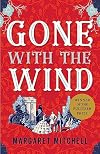
First sentence: Scarlett O’Hara was not beautiful, but men seldom realized it when caught by her charm as the Tarleton twins were.
ETA: I listened on audio this one. It was WONDERFUL on audio. Because it was audio, it slowed me down in the 'reading' and it helped me notice details that perhaps I might have skimmed over in a forgetting way. Then again, it has been a few years since I sat down and read this one.
Premise/plot: Scarlett’s “love” for her brainy neighbor, Ashley Wilkes, show more prevents her from living happily ever after with Charleston-born bad-boy, Rhett Butler. Set during the war between the states and reconstruction, Gone With The Wind showcases the good, the bad, the ugly—and everything in between—of the American south. An example of the good would be Melanie Hamilton Wilkes. An example of the bad would be Scarlett O’Hara Hamilton Kennedy Butler, our “heroine” who excels at math and manipulation. (But fails completely in being a good human.) An example of the ugly...should I pick the racism, the sexism, or both?!
Even if you've never read the book, I would imagine you've got a fairly good notion of what Gone With The Wind is about. At least on the surface. It's the story of the spoiled-rotten Scarlett O'Hara and her quest to win her heart's desire through any means possible. Scarlett is one that doesn't ask if it's wrong or right. She only lives by this question--does it get me one step closer to what I want? If it does--then look out!
Scarlett. Rhett. Ashley. You probably know the basics. A woman wants what she can't have. She wants it until she can have it. The moment she has it. She doesn't want it anymore. Scarlett is in a perpetual state of frustration. The man in her bed doing her bidding is rarely the man in her heart.
The book is about much more than Scarlett and her quest for love, however. It's a love story, I won't deny it. But there is much more than love at stake in the novel. War. Reconstruction. Civilization. Society. Culture. Class. Race. Money. Politics. Survival. It's a novel of contrasts. The Old South vs. The New South. Conformity vs. Individuality. The haves vs. the have-nots. If asked to sum up Gone With The Wind in one word, most would probably say "Love." I'd say gumption. People who have it; people who don't. What do I mean by gumption? Partly spirit. Partly courage. Partly determination. Partly ambition. People with gumption act. They do what they must when they must.
One of my favorite non-love scenes from the book is Scarlett's conversation with Grandma Fontaine. A wonderful, wonderful character by the way. The setting is after Gerald's funeral. Scarlett is pregnant with Frank Kennedy's baby. (Yes, the movie killed Gerald, her father, off too soon.)
"We bow to the inevitable. We’re not wheat, we’re buckwheat! When a storm comes along it flattens ripe wheat because it’s dry and can’t bend with the wind. But ripe buckwheat’s got sap in it and it bends. And when the wind has passed, it springs up almost as straight and strong as before. We aren’t a stiff-necked tribe. We’re mighty limber when a hard wind’s blowing, because we know it pays to be limber. When trouble comes we bow to the inevitable without any mouthing, and we work and we smile and we bide our time. And we play along with lesser folks and we take what we can get from them. And when we’re strong enough, we kick the folks whose necks we’ve climbed over. That, my child, is the secret of the survival.” And after a pause, she added: “I pass it on to you.”
The old lady cackled, as if she were amused by her words, despite the venom in them. She looked as if she expected some comment from Scarlett but the words had made little sense to her and she could think of nothing to say. (709-710)
It's a novel that goes above and beyond the central character of Scarlett. Even if you hate Scarlett, I'd imagine you'd find some character to love. Be it Melanie. Rhett. Mammy. Uncle Peter. Grandma Fontaine. How could you not? There are so many characters, so many individual stories. Stories of triumph. Stories of loss. Stories of hope. Stories of disappointment. Stories of survival. Stories of failure. There is depth and meaning that the movie doesn't even try to accommodate. Depth and meaning that even diehard fans can't help but learn something new with each rereading.
My thoughts: I have read this one dozens of times. It is nothing like the movie. You probably doubt me on this. The movie is so iconic, so classic, so beloved that surely it does a good to great job adapting the book to the big screen. But no. Scarlett’s character is definitely more complex and many of the events that shape and mold her most are just not to be found on screen. Several relationships that shed light on Scarlett are never developed because the characters never appear on screen at all. True not every character in Mitchell’s novel can make it to the screen. But some exclusions make no sense. For example, Scarlett having Charles’ baby, Wade, and Frank’s baby, Ella. Or take the existence of Will, a Confederate soldier who stays at Tara after the war and ultimately marries Suellen. Or Archie, a prisoner—murderer—freed close to the end of the war to fight for the Confederacy. He is taken in by the kind-hearted open-minded Melanie. But probably my favorite character that is excluded from the movie is Grandma Fontaine. Her scenes with Scarlett (mainly after the war but before her marriage to Rhett) are among my absolute favorites in the entire book. Her observations on Scarlett are spot-on. Her advice, though not taken or understood, is excellent. But it isn’t just an absence of characters, but scenes or events as well. The tones and themes differ as well.
There were so many transformative moments in the book that fundamentally shape and change Scarlett. PIVOTAL moments that forever leave an impact that the movie simply ignores. So the character in the movie lacks ALL THE LAYERS. This time I read it through the lens of Scarlet's MENTAL HEALTH. How did the trauma impact and change her. HOW does she cope with trauma. DOES she ever process her trauma, her grief, her losses. We know that she copes by avoidance AND drinking alcohol, for example, but we also know those aren't working for her.
Hollywood’s “South” does not resemble Mitchell’s South. One could go ahead and argue that Mitchell’s South bares little resemblance to the actual South. But perhaps that is just its limited perspective. Scarlett, the heroine, does a poor job observing and understanding the world around her. She doesn’t bother with anything requiring deep thought or analysis. She also takes selfishness to an extreme. But the novel isn’t told merely or exclusively through her eyes, it includes other perspectives—both of specific characters and a general omniscient narrator. These would be limited as well. It is set during the war and reconstruction and reflect that mindset. It was written by an author who grew up listening to family stories from those who lived through that time. Her growing up years would have not only been shaped by her personal family but through her community, her culture. It was written over a series of years—late twenties to mid-thirties. Would Mitchell’s text have been viewed as (overly) racist when it was published? Would it have been fitting given the time the novel was set historically and the time it was published? That being said, reading the book today begs for discussion. And not just about race, by the way. By all means talk about the problems in the text. But try to keep context in mind.
My rule is context, context, context. My second rule is that it is better to discuss and employ critical thinking skills than it is to deny, hide, or censor. There are two contexts for reading Gone With The Wind. The first is that of the author. Margaret Mitchell. A Southern woman growing up in turn-of-the-century America. The 1920s and the 1930s. These were the years that Margaret Mitchell was living and working on her novel. This is the culture and mindset of the author and of the original audience. Gone With The Wind is not alone. It doesn't stand out from the crowd. Many books, many authors used the n-word without batting an eye. Many wrote with the mindset that whites are superior--intellectually at least--to blacks. It doesn't make it true then or now. But that is the mindset. The second is that of the setting of the novel. 1860s-1870s America's South. You can't be true to history without going there. It's a fact in America's history. There's no disputing or denying it. It's not pleasant; it's often ugly. But there you have it. You've got to know where you've been so you can measure how far you've come. And so you can measure how far you've still got to go. America--both as a nation and as a people--has never been perfect. Will probably never be perfect.
As a reader, I can enjoy the story without being brainwashed. I can see. I can question. I can realize when I'm being fed bull. Lines where the former slaves still faithful servants are talking about how they've never wanted freedom??? about how they've never wanted money or independence??? I think I know that Mitchell was full of it. I think most readers can make that division. I hope.
The last chapter was written first. Rhett’s leaving Scarlett was set in stone—inevitable. What does this mean for interpreting the novel? Mitchell never intended a sequel. Didn’t want one. Nothing ambiguous as far as she was concerned. Scarlett had lost Rhett. Rhett’s love for Scarlett was gone with the wind. Her happy ending just as much a lost cause as the Confederacy. But readers like ambiguity. Scarlett is not to be discounted just yet. She will live to fight another day. She will not let go easily. But who will prove more stubborn? Can Rhett withstand Scarlett’s manipulations? Is he really ready to walk away from her forever?
I think Scarlett is at a crossroad. I have no doubt she’ll come out standing, stronger than before. I have no doubt that she’ll prove resilient. But will she get him back?! Much tougher. Because what she needs is a complete, total, radical transformation or change of tactics. Aggressive will not win Rhett back. I’m not sure passive-aggressive will win him back. But perhaps passive, passive, passive, aggressive, passive passive will. Her pursuit of him needs to be so subtle, so layered-ly subtle that no one can even suspects she still wants him back. Can Scarlett pull that off? She’s not good at subtle. Another tactic might be to attract him back by being a better mother. It won’t take much for Scarlett to be better than previously. She’s horrible, absolutely horrible. But if she can learn to treat Wade and Ella with kindness, give them affection and attention, spend time getting to know and understand them. Perhaps Rhett will see her as capable of change, of maturity. Perhaps he can see that she is capable of putting others first, of empathy, of being human. Even if that should fail to get him back, she won’t be alone-alone. Maybe she’ll be a super strong single mother who has healthy relationships with her kids. But is Scarlett capable of this? Does Mitchell write her that way? Does it matter what her intentions are? I hate to think of Scarlett staying the same, of her misery and desperation increasing day by day, week by week, etc.
What Scarlett needs though she does not know it—more than a return trip to Tara, more than winning Rhett back—is Jesus Christ. She has a god-shaped hole that can’t be filled with alcohol, with money, with power, with lust, with love. show less
ETA: I listened on audio this one. It was WONDERFUL on audio. Because it was audio, it slowed me down in the 'reading' and it helped me notice details that perhaps I might have skimmed over in a forgetting way. Then again, it has been a few years since I sat down and read this one.
Premise/plot: Scarlett’s “love” for her brainy neighbor, Ashley Wilkes, show more prevents her from living happily ever after with Charleston-born bad-boy, Rhett Butler. Set during the war between the states and reconstruction, Gone With The Wind showcases the good, the bad, the ugly—and everything in between—of the American south. An example of the good would be Melanie Hamilton Wilkes. An example of the bad would be Scarlett O’Hara Hamilton Kennedy Butler, our “heroine” who excels at math and manipulation. (But fails completely in being a good human.) An example of the ugly...should I pick the racism, the sexism, or both?!
Even if you've never read the book, I would imagine you've got a fairly good notion of what Gone With The Wind is about. At least on the surface. It's the story of the spoiled-rotten Scarlett O'Hara and her quest to win her heart's desire through any means possible. Scarlett is one that doesn't ask if it's wrong or right. She only lives by this question--does it get me one step closer to what I want? If it does--then look out!
Scarlett. Rhett. Ashley. You probably know the basics. A woman wants what she can't have. She wants it until she can have it. The moment she has it. She doesn't want it anymore. Scarlett is in a perpetual state of frustration. The man in her bed doing her bidding is rarely the man in her heart.
The book is about much more than Scarlett and her quest for love, however. It's a love story, I won't deny it. But there is much more than love at stake in the novel. War. Reconstruction. Civilization. Society. Culture. Class. Race. Money. Politics. Survival. It's a novel of contrasts. The Old South vs. The New South. Conformity vs. Individuality. The haves vs. the have-nots. If asked to sum up Gone With The Wind in one word, most would probably say "Love." I'd say gumption. People who have it; people who don't. What do I mean by gumption? Partly spirit. Partly courage. Partly determination. Partly ambition. People with gumption act. They do what they must when they must.
One of my favorite non-love scenes from the book is Scarlett's conversation with Grandma Fontaine. A wonderful, wonderful character by the way. The setting is after Gerald's funeral. Scarlett is pregnant with Frank Kennedy's baby. (Yes, the movie killed Gerald, her father, off too soon.)
"We bow to the inevitable. We’re not wheat, we’re buckwheat! When a storm comes along it flattens ripe wheat because it’s dry and can’t bend with the wind. But ripe buckwheat’s got sap in it and it bends. And when the wind has passed, it springs up almost as straight and strong as before. We aren’t a stiff-necked tribe. We’re mighty limber when a hard wind’s blowing, because we know it pays to be limber. When trouble comes we bow to the inevitable without any mouthing, and we work and we smile and we bide our time. And we play along with lesser folks and we take what we can get from them. And when we’re strong enough, we kick the folks whose necks we’ve climbed over. That, my child, is the secret of the survival.” And after a pause, she added: “I pass it on to you.”
The old lady cackled, as if she were amused by her words, despite the venom in them. She looked as if she expected some comment from Scarlett but the words had made little sense to her and she could think of nothing to say. (709-710)
It's a novel that goes above and beyond the central character of Scarlett. Even if you hate Scarlett, I'd imagine you'd find some character to love. Be it Melanie. Rhett. Mammy. Uncle Peter. Grandma Fontaine. How could you not? There are so many characters, so many individual stories. Stories of triumph. Stories of loss. Stories of hope. Stories of disappointment. Stories of survival. Stories of failure. There is depth and meaning that the movie doesn't even try to accommodate. Depth and meaning that even diehard fans can't help but learn something new with each rereading.
My thoughts: I have read this one dozens of times. It is nothing like the movie. You probably doubt me on this. The movie is so iconic, so classic, so beloved that surely it does a good to great job adapting the book to the big screen. But no. Scarlett’s character is definitely more complex and many of the events that shape and mold her most are just not to be found on screen. Several relationships that shed light on Scarlett are never developed because the characters never appear on screen at all. True not every character in Mitchell’s novel can make it to the screen. But some exclusions make no sense. For example, Scarlett having Charles’ baby, Wade, and Frank’s baby, Ella. Or take the existence of Will, a Confederate soldier who stays at Tara after the war and ultimately marries Suellen. Or Archie, a prisoner—murderer—freed close to the end of the war to fight for the Confederacy. He is taken in by the kind-hearted open-minded Melanie. But probably my favorite character that is excluded from the movie is Grandma Fontaine. Her scenes with Scarlett (mainly after the war but before her marriage to Rhett) are among my absolute favorites in the entire book. Her observations on Scarlett are spot-on. Her advice, though not taken or understood, is excellent. But it isn’t just an absence of characters, but scenes or events as well. The tones and themes differ as well.
There were so many transformative moments in the book that fundamentally shape and change Scarlett. PIVOTAL moments that forever leave an impact that the movie simply ignores. So the character in the movie lacks ALL THE LAYERS. This time I read it through the lens of Scarlet's MENTAL HEALTH. How did the trauma impact and change her. HOW does she cope with trauma. DOES she ever process her trauma, her grief, her losses. We know that she copes by avoidance AND drinking alcohol, for example, but we also know those aren't working for her.
Hollywood’s “South” does not resemble Mitchell’s South. One could go ahead and argue that Mitchell’s South bares little resemblance to the actual South. But perhaps that is just its limited perspective. Scarlett, the heroine, does a poor job observing and understanding the world around her. She doesn’t bother with anything requiring deep thought or analysis. She also takes selfishness to an extreme. But the novel isn’t told merely or exclusively through her eyes, it includes other perspectives—both of specific characters and a general omniscient narrator. These would be limited as well. It is set during the war and reconstruction and reflect that mindset. It was written by an author who grew up listening to family stories from those who lived through that time. Her growing up years would have not only been shaped by her personal family but through her community, her culture. It was written over a series of years—late twenties to mid-thirties. Would Mitchell’s text have been viewed as (overly) racist when it was published? Would it have been fitting given the time the novel was set historically and the time it was published? That being said, reading the book today begs for discussion. And not just about race, by the way. By all means talk about the problems in the text. But try to keep context in mind.
My rule is context, context, context. My second rule is that it is better to discuss and employ critical thinking skills than it is to deny, hide, or censor. There are two contexts for reading Gone With The Wind. The first is that of the author. Margaret Mitchell. A Southern woman growing up in turn-of-the-century America. The 1920s and the 1930s. These were the years that Margaret Mitchell was living and working on her novel. This is the culture and mindset of the author and of the original audience. Gone With The Wind is not alone. It doesn't stand out from the crowd. Many books, many authors used the n-word without batting an eye. Many wrote with the mindset that whites are superior--intellectually at least--to blacks. It doesn't make it true then or now. But that is the mindset. The second is that of the setting of the novel. 1860s-1870s America's South. You can't be true to history without going there. It's a fact in America's history. There's no disputing or denying it. It's not pleasant; it's often ugly. But there you have it. You've got to know where you've been so you can measure how far you've come. And so you can measure how far you've still got to go. America--both as a nation and as a people--has never been perfect. Will probably never be perfect.
As a reader, I can enjoy the story without being brainwashed. I can see. I can question. I can realize when I'm being fed bull. Lines where the former slaves still faithful servants are talking about how they've never wanted freedom??? about how they've never wanted money or independence??? I think I know that Mitchell was full of it. I think most readers can make that division. I hope.
The last chapter was written first. Rhett’s leaving Scarlett was set in stone—inevitable. What does this mean for interpreting the novel? Mitchell never intended a sequel. Didn’t want one. Nothing ambiguous as far as she was concerned. Scarlett had lost Rhett. Rhett’s love for Scarlett was gone with the wind. Her happy ending just as much a lost cause as the Confederacy. But readers like ambiguity. Scarlett is not to be discounted just yet. She will live to fight another day. She will not let go easily. But who will prove more stubborn? Can Rhett withstand Scarlett’s manipulations? Is he really ready to walk away from her forever?
I think Scarlett is at a crossroad. I have no doubt she’ll come out standing, stronger than before. I have no doubt that she’ll prove resilient. But will she get him back?! Much tougher. Because what she needs is a complete, total, radical transformation or change of tactics. Aggressive will not win Rhett back. I’m not sure passive-aggressive will win him back. But perhaps passive, passive, passive, aggressive, passive passive will. Her pursuit of him needs to be so subtle, so layered-ly subtle that no one can even suspects she still wants him back. Can Scarlett pull that off? She’s not good at subtle. Another tactic might be to attract him back by being a better mother. It won’t take much for Scarlett to be better than previously. She’s horrible, absolutely horrible. But if she can learn to treat Wade and Ella with kindness, give them affection and attention, spend time getting to know and understand them. Perhaps Rhett will see her as capable of change, of maturity. Perhaps he can see that she is capable of putting others first, of empathy, of being human. Even if that should fail to get him back, she won’t be alone-alone. Maybe she’ll be a super strong single mother who has healthy relationships with her kids. But is Scarlett capable of this? Does Mitchell write her that way? Does it matter what her intentions are? I hate to think of Scarlett staying the same, of her misery and desperation increasing day by day, week by week, etc.
What Scarlett needs though she does not know it—more than a return trip to Tara, more than winning Rhett back—is Jesus Christ. She has a god-shaped hole that can’t be filled with alcohol, with money, with power, with lust, with love. show less
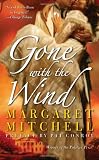
Complicated feelings with this one, both in reading it and how to review it. I don’t know that I’ve ever wavered so much on a star rating, in many ways this is five stars, but other aspects have me uneasy about giving it such a wholehearted recommendation.
This is most definitely a page-turner, which can’t be said of many books over a thousand pages long, it’s epic and yet intimately character driven, I get why it won a Pulitzer, I get why it made PBS’s 100 last year, and why it’s show more been on other favorite lists for decades.
As appealing as I sometimes (emphasis on sometimes) found Rhett to be, and though its engrossing in train wreck fashion (Scarlett is so smart in some ways and so oblivious in all the Ashley ways), the romantic entanglements tended to be of less importance to me than the women on their own.
Her racist views aside (I’ll address those momentarily), Scarlett felt very much ahead of her time. She’s ruthlessly and sometimes corruptly ambitious, she’s more obsessed with building an empire than being a mother, and she’s quite willing to break societal rules, including coveting a married man. While many of Scarlett’s choices would not be my own, I love that she just is who she is and is mostly unapologetic about it, there are plenty of male characters in pop culture unconcerned with their likability, but it’s far less common for female characters, so weirdly, a book from the thirties, managed to feel refreshing in that respect.
I also found it interesting to spend time on the losing side of a war, and loved that rather than it being so much about men running to the rescue and rebuilding, it’s more often these two women who pick up the pieces for their families, figuring out how to survive. Scarlett with her schemes, and Melanie leading with her heart, each, in her own way, proves emotionally stronger than any man in the story.
But, there’s also the cringe-worthy dialect for every black character, and consistently referring to them as stupid and lazy and like they need white people’s guidance or they just wouldn’t know what to do, not to mention all the other horrifying descriptors that I don’t want to mention. Obviously there’s a context to this, the book is told from the confederate south’s point of view, so racism isn’t unexpected and it wouldn’t be an honest depiction of that time and this particular set of white people if it pretended they weren’t racist. There’s also the fact that this wasn’t written in our more politically correct era so it couldn’t be handled with the delicacy that maybe (big maybe) the author might have used now, but even when you read with those caveats in mind, no caveat makes it comfortable to read ignorant, hateful things for page after page.
Sometimes I questioned why I would read a book with such problematic content, but at the same time I wondered, is it really better to to only read point of views you agree with, to only read about things that don’t make you angry or sad? Should we only read books where everyone is depicted as equals and treated fairly even though the world is still so far from that ideal? Or, is there maybe some value in reading challenging things that sting your heart and soul and compel you to stop and think, really stop and think about how it must feel to actually be on the receiving end of such hatred and disrespect, not just page after page, but day after day?
I continuously went back and forth about all of that in my head throughout the reading of Gone With The Wind and I still have no idea if there is a correct answer. Just, if you're going to read it, and it certainly is worth reading, it's this impressive achievement in storytelling, but brace for how offensive it also is. show less
This is most definitely a page-turner, which can’t be said of many books over a thousand pages long, it’s epic and yet intimately character driven, I get why it won a Pulitzer, I get why it made PBS’s 100 last year, and why it’s show more been on other favorite lists for decades.
As appealing as I sometimes (emphasis on sometimes) found Rhett to be, and though its engrossing in train wreck fashion (Scarlett is so smart in some ways and so oblivious in all the Ashley ways), the romantic entanglements tended to be of less importance to me than the women on their own.
Her racist views aside (I’ll address those momentarily), Scarlett felt very much ahead of her time. She’s ruthlessly and sometimes corruptly ambitious, she’s more obsessed with building an empire than being a mother, and she’s quite willing to break societal rules, including coveting a married man. While many of Scarlett’s choices would not be my own, I love that she just is who she is and is mostly unapologetic about it, there are plenty of male characters in pop culture unconcerned with their likability, but it’s far less common for female characters, so weirdly, a book from the thirties, managed to feel refreshing in that respect.
I also found it interesting to spend time on the losing side of a war, and loved that rather than it being so much about men running to the rescue and rebuilding, it’s more often these two women who pick up the pieces for their families, figuring out how to survive. Scarlett with her schemes, and Melanie leading with her heart, each, in her own way, proves emotionally stronger than any man in the story.
But, there’s also the cringe-worthy dialect for every black character, and consistently referring to them as stupid and lazy and like they need white people’s guidance or they just wouldn’t know what to do, not to mention all the other horrifying descriptors that I don’t want to mention. Obviously there’s a context to this, the book is told from the confederate south’s point of view, so racism isn’t unexpected and it wouldn’t be an honest depiction of that time and this particular set of white people if it pretended they weren’t racist. There’s also the fact that this wasn’t written in our more politically correct era so it couldn’t be handled with the delicacy that maybe (big maybe) the author might have used now, but even when you read with those caveats in mind, no caveat makes it comfortable to read ignorant, hateful things for page after page.
Sometimes I questioned why I would read a book with such problematic content, but at the same time I wondered, is it really better to to only read point of views you agree with, to only read about things that don’t make you angry or sad? Should we only read books where everyone is depicted as equals and treated fairly even though the world is still so far from that ideal? Or, is there maybe some value in reading challenging things that sting your heart and soul and compel you to stop and think, really stop and think about how it must feel to actually be on the receiving end of such hatred and disrespect, not just page after page, but day after day?
I continuously went back and forth about all of that in my head throughout the reading of Gone With The Wind and I still have no idea if there is a correct answer. Just, if you're going to read it, and it certainly is worth reading, it's this impressive achievement in storytelling, but brace for how offensive it also is. show less

Nobody can deny that Gone With the Wind is a sweeping story of the south during its time of greatest upheaval. In this novel, Margaret Mitchell created a rich story of unrequited love, war-time tragedy, personal loss, and dogged determination to thrive in the midst of chaos and destruction. The novel covers an impressive span of time, and bridges the distance between the antebellum south and the aftermath of the bloody and destructive Civil War.
Of course, Mitchell also created a colossally show more selfish main character in Scarlett O'Hara, and an extremely one-sided depiction of life in the Civil War south. Scarlett is a woman who will go to any length to create a comfortable lifestyle for herself, and she operates without any regard for her family and friends or the suffering of those around her. Scarlett's cruelty and selfishness are thinly veiled under the guise of Scarlett's "passion for life". But even more upsetting, Mitchell glorifies the southern plantations and slave owners' lifestyles, and villainizes anything and everything that threatens that lifestyle. The long and horrible history of slavery in the United States is glossed over completely in Gone With the Wind, and Mitchell justifies her portrayal of the south by creating African American characters who actually want to serve Scarlett and her family, and who feel lost without their subservient roles. This narrative is a sweeping saga, yes, but Mitchell's specialty seems to be sweeping the inhumane treatment of slaves under the rug.
The only positive thing that can be said for the book is that it reads quickly, and it is extremely easy to get engrossed in the story. Even as you cringe at Mitchell's blatant racism and idealistic view of the south, it is a book that makes you want to keep reading. show less
Of course, Mitchell also created a colossally show more selfish main character in Scarlett O'Hara, and an extremely one-sided depiction of life in the Civil War south. Scarlett is a woman who will go to any length to create a comfortable lifestyle for herself, and she operates without any regard for her family and friends or the suffering of those around her. Scarlett's cruelty and selfishness are thinly veiled under the guise of Scarlett's "passion for life". But even more upsetting, Mitchell glorifies the southern plantations and slave owners' lifestyles, and villainizes anything and everything that threatens that lifestyle. The long and horrible history of slavery in the United States is glossed over completely in Gone With the Wind, and Mitchell justifies her portrayal of the south by creating African American characters who actually want to serve Scarlett and her family, and who feel lost without their subservient roles. This narrative is a sweeping saga, yes, but Mitchell's specialty seems to be sweeping the inhumane treatment of slaves under the rug.
The only positive thing that can be said for the book is that it reads quickly, and it is extremely easy to get engrossed in the story. Even as you cringe at Mitchell's blatant racism and idealistic view of the south, it is a book that makes you want to keep reading. show less
Lists
Guilty Pleasures (1)
A Novel Cure (1)
BBC Big Read (1)
Unread books (1)
THE WAR ROOM (1)
Page Turners (1)
. (1)
BitLife (1)
Read These Too (1)
. (1)
Southern Fiction (1)
BBC Big Read (1)
aijowenuwaneaw (1)
Favourite Books (1)
Elevenses (1)
War Literature (1)
Overdue Podcast (1)
Best War Stories (1)
1930s (1)
Five star books (1)
Carole's List (1)
Female Author (1)
First Novels (1)
Books I've read (1)
Plantations (1)
100 knjiga (1)
Awards


You May Also Like


Associated Authors
Statistics
- Works
- 60
- Also by
- 1
- Members
- 27,413
- Popularity
- #748
- Rating
- 4.3
- Reviews
- 502
- ISBNs
- 458
- Languages
- 30
- Favorited
- 60


