

Anton Hansen Tammsaare (1878–1940)
Author of Truth and Justice
About the Author
Series
Works by Anton Hansen Tammsaare
Novellid (1922-1939) ; Meie rebane 14 copies
Jutustused : lühiproosa (1900-1907) 13 copies
Näidendid ; Vested ; Varia : 9 copies
Valitud artiklid 9 copies
Jutustused. 1. köide 6 copies
Jutustused 5 copies
Poiss ja liblikas 5 copies
Kogutud teosed 3 copies
Jutustused. 2. 3 copies
Publitsistika. (1914-1925) / 2 3 copies
Elavad nukud 3 copies
Pähklipüha 2 copies
Viiul 2 copies
Valitud jutustused 2 copies
Jutustusi ja novelle 2 copies
Pähklipüha : jutte ja romaanikatkeid 2 copies
Maldi un atzīšana : romāns 1 copy
Hozyain Usadbi Kirboya 1 copy
Tõde ja õigus 1 copy
Jutustusi ja novelle 1 copy
Karīnas mīlestība : romāns 1 copy
Tõde ja õigus 1 copy
Miniatūras 1 copy
Näidendid ; Vested ; Varia : 1 copy
Sarkanās ogas : romāns 1 copy
Dzīve : romāns 1 copy
Viena laulība : romāns 1 copy
Sex appeal 1 copy
Jutustused II 1 copy
Neli miniatuuri 1 copy
Pikad sammud : novell 1 copy
Kogutud teosed 14 1 copy
Kuritöö ja karistus 1 copy
Itaalia-reis 1 copy
Lehekandja nr. 17 1 copy
Mäetaguse vanad 1 copy
Jõulurõõm 1 copy
Kooli Alma 1 copy
Pöialpoiss 1 copy
Associated Works
Tagged
Common Knowledge
- Canonical name
- Tammsaare, Anton Hansen
- Legal name
- Hansen, Anton
- Birthdate
- 1878-01-30
- Date of death
- 1940-03-01
- Gender
- male
- Education
- University of Tartu, Tartu, Estonia
- Relationships
- Hansen, Käthe (wife)
- Nationality
- Estonia
- Birthplace
- Järvamaa, municipality of Albu, village of Vetepere
- Places of residence
- Vetepere, Estonia
Tartu, Estonia
Sochi, Russia
Koitjärve, Estonia
Tallinn, Estonia - Place of death
- Tallinn, Estonia
- Burial location
- Metsakalmistu, Tallinn, Estonia
- Associated Place (for map)
- Estonia
Members
Reviews

Truth and Justice, Volume 2: Indrek
Review of the Vagabond Voices paperback (September 2022) translated by Christopher Moseley & Matthew Hyde from the Estonian language original published by Noor-Eesti (1929).
I assisted in proofreading and copy-editing this English language translation of the 2nd volume of Tammsaare's massive pentalogy Truth and Justice. I can't be unbiased about my rating as I thoroughly enjoyed the experience. Hopefully this work will continue with the further 3 volumes to show more be published annually from 2023 to 2025.
Truth and Justice Volume 1 (published in English translation as Vargamäe (orig. 1926/trans. 2019)) dealt with farmer Andres Paas and his struggles with the land and his search for justice in dealing with his quarrelsome neighbour Pearu. In the 2nd volume, the main character is Andres' son Indrek and his coming of age while seeking his education at Mr. Maurus's school in the city of Tartu, Estonia. Indrek's educational journey includes his various mishaps with other students and teachers, his first love and its tragic consequences.
While the tone of Volume 1 was mostly serious, Volume 2 has both comedy and pathos, even as it debates education and the search for knowledge, about beauty and truth, as well as the existence of God. Just as Volume 1 has been described as man's struggle with the land, Volume 2 is described as being about man's struggle with God. A few quotes will provide a sense of the work:
About teaching and learning (also excusing the occasional drunken teacher):
About beauty and truth (also hearkening back to the theme of truth in Volume 1):
Mr. Maurus laments that Christ wasn't born in Estonia, and that writer/politician Carl Robert Jakobson (1841-1882), a leader of the Estonian national awakening, was sent instead:
Indrek causes a final break with Mr. Maurus when he writes an article questioning the existence of God in the school's student newspaper:
See illustration at https://pbs.twimg.com/media/FZAgk71WQAE5WOn?format=jpg&name=large
The Eesti Raamat edition from 1965 includes 7 illustrations consisting of woodcut engravings by the artist Herald Eelma. This mage of Indrek and Maurus is sourced from Twitter.
See book cover at https://pbs.twimg.com/media/FZBDkwbWQAA3WfW?format=jpg&name=small
Cover image of the Noor-Eesti first edition hardcover (1929). Image sourced from Twitter.
Trivia and Links
The Estonian language original of Truth and Justice II: Indrek from 1929 can be read online at Wikisource. The 1929 edition divides the work into 40 chapters, although later editions re-order it into 38 chapters. As best as I can determine the texts are identical.
The same 1929 Estonian language edition can be read online Estonian Literary Museum website. There you can read an online facsimile edition or download it as an eBook.
See photograph at https://pbs.twimg.com/media/Fb6KOWYXoAAVg5v?format=jpg&name=900x900
A screen still from the 1975 film "Indrek". Image sourced from Twitter. show less
Review of the Vagabond Voices paperback (September 2022) translated by Christopher Moseley & Matthew Hyde from the Estonian language original published by Noor-Eesti (1929).
I assisted in proofreading and copy-editing this English language translation of the 2nd volume of Tammsaare's massive pentalogy Truth and Justice. I can't be unbiased about my rating as I thoroughly enjoyed the experience. Hopefully this work will continue with the further 3 volumes to show more be published annually from 2023 to 2025.
Truth and Justice Volume 1 (published in English translation as Vargamäe (orig. 1926/trans. 2019)) dealt with farmer Andres Paas and his struggles with the land and his search for justice in dealing with his quarrelsome neighbour Pearu. In the 2nd volume, the main character is Andres' son Indrek and his coming of age while seeking his education at Mr. Maurus's school in the city of Tartu, Estonia. Indrek's educational journey includes his various mishaps with other students and teachers, his first love and its tragic consequences.
While the tone of Volume 1 was mostly serious, Volume 2 has both comedy and pathos, even as it debates education and the search for knowledge, about beauty and truth, as well as the existence of God. Just as Volume 1 has been described as man's struggle with the land, Volume 2 is described as being about man's struggle with God. A few quotes will provide a sense of the work:
About teaching and learning (also excusing the occasional drunken teacher):
It is a matter of no great consequence when a teacher indulges in the odd drink, as it is only the pupil who has to be sober. Learning is harder than teaching. You can even teach when you don’t understand, whilst you definitely have to understand if you’re learning ...
About beauty and truth (also hearkening back to the theme of truth in Volume 1):
"Mr Molotov, you're a good-looking man, why don't you take more care of your appearance?" What do you think of that: a man, and good-looking she says! So I told her, "I don't have a mirror, and beauty is not the same as truth, and anyway you can't see the truth in a mirror."
Mr. Maurus laments that Christ wasn't born in Estonia, and that writer/politician Carl Robert Jakobson (1841-1882), a leader of the Estonian national awakening, was sent instead:
"In that case Christ could still be alive today, after all, what's a couple of thousand years for God. It could have been thus, if God had wanted. But God wanted his son to be a Jew, that was God's will. And so all we got from God was Jakobson …"
At that, Mr. Maurus seemed to grow despondent. He stood there silently in front of Indrek for a while, as if he'd been unable to say the most important thing.
Indrek causes a final break with Mr. Maurus when he writes an article questioning the existence of God in the school's student newspaper:
"This man is stark crazy! He's the first truly crazy person in Mr Maurus's decent and respectable establishment. There have been some half-crazy ones, of course, but this one is totally crazy. He got zero in mathematics but he's one hundred percent crazy himself. And he's decided to take on Mr Maurus's holy bull and Jehovah. He wants to be famous, he wants to win fame in Estonia for killing God. You understand? The first to murder God! He could at least have gone for the devil instead. But no, he doesn't touch the devil, he goes straight for God, as if he couldn't get to the devil otherwise, first he has to despatch God."
See illustration at https://pbs.twimg.com/media/FZAgk71WQAE5WOn?format=jpg&name=large
The Eesti Raamat edition from 1965 includes 7 illustrations consisting of woodcut engravings by the artist Herald Eelma. This mage of Indrek and Maurus is sourced from Twitter.
See book cover at https://pbs.twimg.com/media/FZBDkwbWQAA3WfW?format=jpg&name=small
Cover image of the Noor-Eesti first edition hardcover (1929). Image sourced from Twitter.
Trivia and Links
The Estonian language original of Truth and Justice II: Indrek from 1929 can be read online at Wikisource. The 1929 edition divides the work into 40 chapters, although later editions re-order it into 38 chapters. As best as I can determine the texts are identical.
The same 1929 Estonian language edition can be read online Estonian Literary Museum website. There you can read an online facsimile edition or download it as an eBook.
See photograph at https://pbs.twimg.com/media/Fb6KOWYXoAAVg5v?format=jpg&name=900x900
A screen still from the 1975 film "Indrek". Image sourced from Twitter. show less
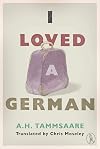
Translation of a Tammsaare classic bungled by copy-editing fails
This will have to be one of my compromise reviews. Tammsaare's "Ma armastasin sakslast" (I Loved a German) (1935) which, aside from having a great yearning love-story contains all sorts of layers about the miscommunication and lack of understanding between individuals and classes and of people's aspirations about nationalism and independence, has to rate a 5 star review. Unfortunately, the various failures of copy-editing in show more this first-time English language translation are so disheartening and anger-provoking that a 1 star rank is the only choice. So it is a 3 star rating as a compromise.
Errata & EndNote suggestions
These are likely not complete, as there is always an element of mental auto-correct going on, but there should be enough here to give an idea of the number and scope of editing issues.
pg. 4 "...but not criminal one..." s/b "...but not a criminal one..."
pg. 7 "By using my name we were also attempting With my name we were also considering achieving certain results in literary policy." = There was no final decision made here between the two translation phrases "By using my name we were also attempting..." and "With my name we were also considering achieving..." and both have been left intact.
pg. 15 "...so great was my hunger was so great..." = no final decision made about the placement of "so great", and both options were left intact.
pg. 18 "...which due my hunger." s/b "...which was due to my hunger."
pg. 18 "...any nobility such a nose." s/b "...any nobility in such a nose."
pg. 21 "...I haven't yet put anything between my teeth today,..." = this is a perfectly correct literal translation of the Estonian idiomatic expression "Ma pole veel saanud midagi hamba vahele täna." but an English translation would be more understandable as "I haven't yet had anything to eat today." I could see a translator trying out the literal translation, but I would expect that an editor would have adjusted it. (This one is perhaps too nitpicky.)
pg. 41, 42, 50 & 51 "Corporation" seems out of place on these 4 pages as throughout the rest of the book the Germanic / Estonian "Korporation" is used in an untranslated and italicized state in about 100 other cases. From the context you understand that a student fraternal organization is being discussed so it seems odd to slip in the word "Corporation" which in English has the meaning of a business organization. This is also a case where some footnotes would have been useful (there are none at all).
pg. 44 "I cried with a certain with a certain impatience..." accidentally doubles up the words "...with a certain..."
pg. 54 "You could stay like until..." s/b "You could stay like that until..."
pg. 61 "...she doesn't into raptures..." s/b "...she doesn't go into raptures..."
pg. 65 "I think that if German men had been as clever and virtuous about their affairs as German women have been, they would have all gone with our men beyond Narva and near Pskov, but not down to Võnnu." = another case where footnotes or endnotes would have been helpful. International readers would have no idea of the meaning behind these references to the Estonian War of Independence 1918-1920. "...gone with our men beyond Narva and near Pskov," means that the Baltic Germans should have fought on the side of the Estonian Independence Army vs. the Red Russian Communists in Narva & Pskov and not joined the German Baltische Landeswehr (Baltic Territorial Army) to fight against Baltic independence. The Landeswehr were defeated at the Battle of Cēsis, known in Estonian as the Battle of Võnnu .
pg. 71 "She went on talking for a while about the German Embassy reception, her auntie and the lady in white with the big red rose, who she only remembered dimly memory as something white." = jumbled up unfinished sentence translation that leaves the impression that she remembers the red rose as being white?
pg. 77 "...thinking of how to revolve (sic) my own perplexity." s/b "...thinking of how to resolve my own perplexity." = obvious typo here.
pg. 91 "...you're better of (sic) falling..." s/b "...you're better off falling..." = obvious typo
pg. 124 "...I had to got (sic) and see him, ..." s/b "...I had to go and see him, ..." = obvious typo
pg. 148 "...I want avoid that..." s/b "...I want to avoid that..."
pg. 155 "I don't believe Enn would ever regard you as her debtor..." s/b "I don't believe Enn would ever regard you as his debtor..." = Some gender confusion here due to the Estonian genderless word "tema" (which can mean "his" or "her"). In the context it is the brother Enn that is being discussed but you would have to know that Enn is a male name in Estonian to supply the correct English language gender.
pg. 159 "I was talking about it with Enn, and she doesn't seem to having anything against it either. She said, 'Well..." = same issue as pg. 155, Enn is an Estonian male name.
pg. 193 "Others take part in the quick-rent(sic) work..." s/b "Others take part in the quit-rent work..." = "Quit-rent" is a land tax paid for leased land in lieu of services to the owner. I've never heard it called "quick-rent." On the preceding pg. 192 it is spelt correctly. show less
This will have to be one of my compromise reviews. Tammsaare's "Ma armastasin sakslast" (I Loved a German) (1935) which, aside from having a great yearning love-story contains all sorts of layers about the miscommunication and lack of understanding between individuals and classes and of people's aspirations about nationalism and independence, has to rate a 5 star review. Unfortunately, the various failures of copy-editing in show more this first-time English language translation are so disheartening and anger-provoking that a 1 star rank is the only choice. So it is a 3 star rating as a compromise.
Errata & EndNote suggestions
These are likely not complete, as there is always an element of mental auto-correct going on, but there should be enough here to give an idea of the number and scope of editing issues.
pg. 4 "...but not criminal one..." s/b "...but not a criminal one..."
pg. 7 "By using my name we were also attempting With my name we were also considering achieving certain results in literary policy." = There was no final decision made here between the two translation phrases "By using my name we were also attempting..." and "With my name we were also considering achieving..." and both have been left intact.
pg. 15 "...so great was my hunger was so great..." = no final decision made about the placement of "so great", and both options were left intact.
pg. 18 "...which due my hunger." s/b "...which was due to my hunger."
pg. 18 "...any nobility such a nose." s/b "...any nobility in such a nose."
pg. 21 "...I haven't yet put anything between my teeth today,..." = this is a perfectly correct literal translation of the Estonian idiomatic expression "Ma pole veel saanud midagi hamba vahele täna." but an English translation would be more understandable as "I haven't yet had anything to eat today." I could see a translator trying out the literal translation, but I would expect that an editor would have adjusted it. (This one is perhaps too nitpicky.)
pg. 41, 42, 50 & 51 "Corporation" seems out of place on these 4 pages as throughout the rest of the book the Germanic / Estonian "Korporation" is used in an untranslated and italicized state in about 100 other cases. From the context you understand that a student fraternal organization is being discussed so it seems odd to slip in the word "Corporation" which in English has the meaning of a business organization. This is also a case where some footnotes would have been useful (there are none at all).
pg. 44 "I cried with a certain with a certain impatience..." accidentally doubles up the words "...with a certain..."
pg. 54 "You could stay like until..." s/b "You could stay like that until..."
pg. 61 "...she doesn't into raptures..." s/b "...she doesn't go into raptures..."
pg. 65 "I think that if German men had been as clever and virtuous about their affairs as German women have been, they would have all gone with our men beyond Narva and near Pskov, but not down to Võnnu." = another case where footnotes or endnotes would have been helpful. International readers would have no idea of the meaning behind these references to the Estonian War of Independence 1918-1920. "...gone with our men beyond Narva and near Pskov," means that the Baltic Germans should have fought on the side of the Estonian Independence Army vs. the Red Russian Communists in Narva & Pskov and not joined the German Baltische Landeswehr (Baltic Territorial Army) to fight against Baltic independence. The Landeswehr were defeated at the Battle of Cēsis, known in Estonian as the Battle of Võnnu .
pg. 71 "She went on talking for a while about the German Embassy reception, her auntie and the lady in white with the big red rose, who she only remembered dimly memory as something white." = jumbled up unfinished sentence translation that leaves the impression that she remembers the red rose as being white?
pg. 77 "...thinking of how to revolve (sic) my own perplexity." s/b "...thinking of how to resolve my own perplexity." = obvious typo here.
pg. 91 "...you're better of (sic) falling..." s/b "...you're better off falling..." = obvious typo
pg. 124 "...I had to got (sic) and see him, ..." s/b "...I had to go and see him, ..." = obvious typo
pg. 148 "...I want avoid that..." s/b "...I want to avoid that..."
pg. 155 "I don't believe Enn would ever regard you as her debtor..." s/b "I don't believe Enn would ever regard you as his debtor..." = Some gender confusion here due to the Estonian genderless word "tema" (which can mean "his" or "her"). In the context it is the brother Enn that is being discussed but you would have to know that Enn is a male name in Estonian to supply the correct English language gender.
pg. 159 "I was talking about it with Enn, and she doesn't seem to having anything against it either. She said, 'Well..." = same issue as pg. 155, Enn is an Estonian male name.
pg. 193 "Others take part in the quick-rent(sic) work..." s/b "Others take part in the quit-rent work..." = "Quit-rent" is a land tax paid for leased land in lieu of services to the owner. I've never heard it called "quick-rent." On the preceding pg. 192 it is spelt correctly. show less

Tõde ja õigus. 2. köide: Indrek
Arvustus Eesti Raamatu kõvakaanelisest väljaandest (1965) Noor-Eesti kõvakaanelisest originaalist (1929).
Ma aitasin korrektuuri teha uuest ingliskeelset tõlkeväljaannest Tõde ja õigus IIst, mis ilmus Indreku nime all Šotimaa Glasgow' kirjastuse Vagabond Voicesi poolt. See töö nõudis muidugi ka originaali lugemist, nii et see on esimene kahest arvustusest.
Tõde ja õigus 1. köide käsitles Andres Paasi ja tema võitlusi maaga ning õigluse show more otsimist läbikäimisel tülika naabri Pearuga. 2. köites saab peategelaseks Andrese poeg Indrek ja tema täisealiseks saamine Tartus härra Mauruse koolis haridust otsides. Indreku haridustee hõlmab ka tema erinevaid äpardusi teiste õpilaste ja õpetajatega, tema esimest armastust ja selle traagilisi tagajärgi.
Kui 1. köite toon oli enamasti tõsist laadi, siis 2. köites on nii koomikat kui paatost, isegi kui vaieldakse haridusest, ilust ja tõest ja ka Jumala olemasolu üle.
Vaata puugravüüri pilt siit: https://pbs.twimg.com/media/FZAgk71WQAE5WOn?format=jpg&name=large
See 1965. aasta Eesti Raamatu väljaanne sisaldab kunstnik Herald Eelma 7 puugravüüri illustratsiooni. Illustratsioon Indrekust ja härra Maurusest pärit Twitterist.
Vaata kaanepilt siit: https://pbs.twimg.com/media/FZBDkwbWQAA3WfW?format=jpg&name=small
Noor-Eesti Kirjastuse kõvakaanelise originaalväljaande kaanepilt (1929 a.). Pilt pärineb Twitterist.
Trivia ja viited
Tõe ja õiguse II 1929. aasta väljaannet saate lugeda veebis eestikeelsest vikiallikast. 1929. aasta väljaanne jagab teose 40 peatükiks, kuigi hilisemates väljaannetes on see ümber järjestatud 38 peatükiks. Tekstid on minu teadmiste kohaselt samad.
Sama 1929. aasta väljaannet saab lugeda ka internetis Eesti Kirjandusmuuseumi kodulehelt. Seal saate lugeda faksiversiooni või selle e-raamatuna alla laadida.
Erinevalt Tõe ja õiguse esimesest köitest pole teisest köitest veel moodsat filmitöötlust tehtud. Küll aga oli varasem 1975. aastal filmitud mustvalge adaptsioon, mille režissöör oli Mikk Mikiver, mida saad vaadata Eesti Rahvusringhäälingu arhiivist siit. show less
Arvustus Eesti Raamatu kõvakaanelisest väljaandest (1965) Noor-Eesti kõvakaanelisest originaalist (1929).
Ma aitasin korrektuuri teha uuest ingliskeelset tõlkeväljaannest Tõde ja õigus IIst, mis ilmus Indreku nime all Šotimaa Glasgow' kirjastuse Vagabond Voicesi poolt. See töö nõudis muidugi ka originaali lugemist, nii et see on esimene kahest arvustusest.
Tõde ja õigus 1. köide käsitles Andres Paasi ja tema võitlusi maaga ning õigluse show more otsimist läbikäimisel tülika naabri Pearuga. 2. köites saab peategelaseks Andrese poeg Indrek ja tema täisealiseks saamine Tartus härra Mauruse koolis haridust otsides. Indreku haridustee hõlmab ka tema erinevaid äpardusi teiste õpilaste ja õpetajatega, tema esimest armastust ja selle traagilisi tagajärgi.
Kui 1. köite toon oli enamasti tõsist laadi, siis 2. köites on nii koomikat kui paatost, isegi kui vaieldakse haridusest, ilust ja tõest ja ka Jumala olemasolu üle.
... õpilane peab kaine olema, sest õppida on raskem, kui õpetada. Õpetada võib ka siis, kui ise aru ei saa, aga õppides peab tingimata aru saama, muidu pole võimalik ...
„Härra Molotov, teie olete ilus mees, miks te oma välimuse eest sugugi ei hoolitse?“ Mõistate: mees ja ilus. Ütlesin talle: „Mul peeglit ei ole, ilu pole tõde ja tõde ei näe peeglist."
"Ka meie parunid oleksid pidanud siis ise oma viljapäid kitkuma, mitte aga aus ja korralik eesti mees, kelle keskel kõnnib Kristus. Nii oleks see olnud, kui jumal oleks tahtnud. Aga jumal tahtis, et tema poeg oleks juut, nõnda tahtis tema oma armunõuga. Meile saatis ta ainult Jakobsoni …"
Härra Mauruse meel läks nagu nukraks. Hulk aega seisis ta vaikides Indreku ees, nagu jätaks ta kõige tähtsama ütlemata.
"See mees on püsti hull! See on esimene päris hull härra Mauruse ausas ja kõrralikus majas. On olnud küll poolhulle, aga see on täishull. Tema nimi on Indrek Paas. Matemaatika on temal null ja ise on ta hull. Aga härra Maurusele, pühale härjale ja Jehoovale hakkab ta vastu. Tema tahab kuulsaks saada, tema tahab Eestimaal jumala tapmisega kuulsaks saada. Mõistate? Esimene jumala mõrtsukas. Selle asemel oleks võinud ta kuradi maha lüüa. Aga ei, kuradit ta ei puutu, vaid kohe jumala kallale, nagu ei pääseks ta muidu kuradile ligi, enne peab jumala eest maha võtma."
Vaata puugravüüri pilt siit: https://pbs.twimg.com/media/FZAgk71WQAE5WOn?format=jpg&name=large
See 1965. aasta Eesti Raamatu väljaanne sisaldab kunstnik Herald Eelma 7 puugravüüri illustratsiooni. Illustratsioon Indrekust ja härra Maurusest pärit Twitterist.
Vaata kaanepilt siit: https://pbs.twimg.com/media/FZBDkwbWQAA3WfW?format=jpg&name=small
Noor-Eesti Kirjastuse kõvakaanelise originaalväljaande kaanepilt (1929 a.). Pilt pärineb Twitterist.
Trivia ja viited
Tõe ja õiguse II 1929. aasta väljaannet saate lugeda veebis eestikeelsest vikiallikast. 1929. aasta väljaanne jagab teose 40 peatükiks, kuigi hilisemates väljaannetes on see ümber järjestatud 38 peatükiks. Tekstid on minu teadmiste kohaselt samad.
Sama 1929. aasta väljaannet saab lugeda ka internetis Eesti Kirjandusmuuseumi kodulehelt. Seal saate lugeda faksiversiooni või selle e-raamatuna alla laadida.
Erinevalt Tõe ja õiguse esimesest köitest pole teisest köitest veel moodsat filmitöötlust tehtud. Küll aga oli varasem 1975. aastal filmitud mustvalge adaptsioon, mille režissöör oli Mikk Mikiver, mida saad vaadata Eesti Rahvusringhäälingu arhiivist siit. show less

Kui pidime seda raamatut lugema hakkama, siis ei tahtnud kuidagi alustada, viitsimist ei olnud. Aga kui ma lõpuks kätte võtsin, siis ei tahtnud enam käest ära panna. Teos on väga huvitav, kõik on täpselt nii kujutatud nagu vanal ajal oli. Mõndade kohtade ajal oli isegi selline tunne, et isegi oleks tahtnud sellisel ajal elada. Kindlasti on plaanis läbi lugeda ka teised osad. Väga hea raamat.
Lists
You May Also Like


Associated Authors
Statistics
- Works
- 95
- Also by
- 1
- Members
- 760
- Popularity
- #33,469
- Rating
- 3.9
- Reviews
- 18
- ISBNs
- 107
- Languages
- 6