

Sofi Oksanen
Author of Purge
About the Author
Image credit: Sofi Oksanen at the 6th Annual PEN World Voices Festival at CUNY Graduate Center on April 30, 2010 in New York City
Series
Works by Sofi Oksanen
Kaiken takana oli pelko : kuinka Viro menetti historiansa ja miten se saadaan takaisin (2009) — Editor — 28 copies
al-Tathir 1 copy
Associated Works
Granta : uuden kirjallisuuden areena. 3 : [Parhaat nuoret suomalaiset kertojat] (2014) — Contributor — 11 copies
Tagged
Common Knowledge
- Legal name
- Oksanen, Sofi-Elina
- Birthdate
- 1977-01-07
- Gender
- female
- Education
- University of Helsinki
University of Jyväskylä
Finnish Theater Academy - Occupations
- writer
journalist
playwright - Nationality
- Finland
- Birthplace
- Jyväskylä, Finland
- Places of residence
- Helsinki, Finland
- Associated Place (for map)
- Finland
Members
Reviews
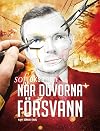
When The Doves Disappeared continues the themes from (the rather magnificent) Purge; wartime and post-war Estonia, a small country caught between Nazi Germany and Stalin's Soviet Union. And like Purge, it does so in two parallel timelines, with the story set first in the early 40s as nationalist Estonians welcome the German forces who "liberate" the newly incorporated Estonian SSR, and picking up again in the early 60s as an entire generation has grown up under Soviet rule.
And yet the focus show more character remains the same: Edgar Parts (or Eggart Fürst, as he prefers to go by for a few years), master of that most hallowed of human traits, the ability to adapt to his environment. From failed nationalist soldier to Nazi collaborator to KGB propagandist, he's perfected the art of fitting in, of telling his superiors what they want to hear and changing his face to fit the current political situation - in other words, he lies, he spins stories, and now he sits there in his grey Soviet apartment writing the definitive history of Nazi collaborators during the Hitler years. He should know, after all, he was one of the leading... uh, anti-Nazi collaborators. Yup, that's the ticket. (In the foreword, Oksanen says she was inspired by the story of a man who made everyone around him believe he was famous pioneer pilot without ever having set foot in a plane, and wondered what that life must have been like for his wife.)
So then there's his wife who hated her sexless marriage and fell in love with a German soldier, and his cousin who still believes in neither Nazi nor Soviet supremacy, and all the other people he's run into, and whose stories he gets to tell on their behalf, except when they get to take over for a chapter or two and tell their own side of the story... which doesn't matter, since in the end they're not the ones writing an Official Soviet History, and their superior officers never praised them for their initiative, so there.
When The Doves Disappeared is a very confident novel, with vivid characters; the parallel timelines and conflicting narrative voices complement each other beautifully, and the themes of self-deception and survival mechanisms mean that Oksanen has to be subtle in putting across what the characters don't allow themselves to think or feel; like the Estonian flag they quickly run up the pole in the short days between the Nazis evacuating and the Red Army coming back, things show through the cracks. Occupation (in whatever meaning you want to take the word) permeates everything, and not everyone manages to cope - in fact, the novel seems to say, the only way of fully coping is to give up and play along. It's an indictment of tyranny - political, sexual, social - told through someone whose entire life is spent justifying it even as it affects himself.
The only thing that bugs me is that as much as I like unreliable narrators, Parts just doesn't grab me as a main character. His actions are fascinating, and the more we learn about him the more we understand who he is and why he is like that, but he himself remains... kind of an annoying coward, whose identity has been so thoroughly scrubbed that he barely exists. Which may be the point; we want our villains to be audacious, like he describes them in his book, we want a Hitler and a Stalin and a Bin Laden, not an army of faceless yes men who quietly adapt to anything and help put pressure on the ones who won't.
It's a very good novel, one I sped through in a couple of days, unable to get out of my head; just not quite as brilliant and as immediate as Purge was. But then, that's a very high standard to hold someone to. show less
And yet the focus show more character remains the same: Edgar Parts (or Eggart Fürst, as he prefers to go by for a few years), master of that most hallowed of human traits, the ability to adapt to his environment. From failed nationalist soldier to Nazi collaborator to KGB propagandist, he's perfected the art of fitting in, of telling his superiors what they want to hear and changing his face to fit the current political situation - in other words, he lies, he spins stories, and now he sits there in his grey Soviet apartment writing the definitive history of Nazi collaborators during the Hitler years. He should know, after all, he was one of the leading... uh, anti-Nazi collaborators. Yup, that's the ticket. (In the foreword, Oksanen says she was inspired by the story of a man who made everyone around him believe he was famous pioneer pilot without ever having set foot in a plane, and wondered what that life must have been like for his wife.)
So then there's his wife who hated her sexless marriage and fell in love with a German soldier, and his cousin who still believes in neither Nazi nor Soviet supremacy, and all the other people he's run into, and whose stories he gets to tell on their behalf, except when they get to take over for a chapter or two and tell their own side of the story... which doesn't matter, since in the end they're not the ones writing an Official Soviet History, and their superior officers never praised them for their initiative, so there.
When The Doves Disappeared is a very confident novel, with vivid characters; the parallel timelines and conflicting narrative voices complement each other beautifully, and the themes of self-deception and survival mechanisms mean that Oksanen has to be subtle in putting across what the characters don't allow themselves to think or feel; like the Estonian flag they quickly run up the pole in the short days between the Nazis evacuating and the Red Army coming back, things show through the cracks. Occupation (in whatever meaning you want to take the word) permeates everything, and not everyone manages to cope - in fact, the novel seems to say, the only way of fully coping is to give up and play along. It's an indictment of tyranny - political, sexual, social - told through someone whose entire life is spent justifying it even as it affects himself.
The only thing that bugs me is that as much as I like unreliable narrators, Parts just doesn't grab me as a main character. His actions are fascinating, and the more we learn about him the more we understand who he is and why he is like that, but he himself remains... kind of an annoying coward, whose identity has been so thoroughly scrubbed that he barely exists. Which may be the point; we want our villains to be audacious, like he describes them in his book, we want a Hitler and a Stalin and a Bin Laden, not an army of faceless yes men who quietly adapt to anything and help put pressure on the ones who won't.
It's a very good novel, one I sped through in a couple of days, unable to get out of my head; just not quite as brilliant and as immediate as Purge was. But then, that's a very high standard to hold someone to. show less

I don't like open endings - they rarely work and they make me fill cheated - why did I read the whole book just to be denied the end. And yet, when they work, they can add to a novel.
We meet the narrator of this novel, Olenka, in a dog park in Helsinki where she is watching a family - Mom, Dad, a boy, a girl and a dog. All very innocent, all very mundane. Except that she has a reason to watch that specific family. It is 2016 and Olenka had been in Finland for 6 years - under an assumed show more name, hiding from almost anyone who knows her.
The novel goes in two directions - one in the past, catching up to how she ended up on that bench, and a second one in the present - chronicling the end of her relatively carefree days.
The bulk of the novel is in the past, told to us by Olenka in a somewhat chronological order (with some flashbacks inside of the flashbacks and with sudden revelations that throw off any ideas about where the story was going). The story unspools slowly, adding the missing pieces to form the whole story. Told in any other way, it would not have been as effective (which also makes this book almost impossible to reread...) - part of what makes the story what it is, is this order.
In the mid 2000s, Olenka comes back from Paris to her village in the Donbas area of Eastern Ukraine with her tail between her legs - she tried to be a model and she failed. Her mother and her aunt are cultivating poppies and cooking compote - the lowest grade heroin that exists - and the family survives from the money they make from it. Despite speaking a few languages, finding a job proves to be hard - you need to either be related to someone or to sleep with someone... and the only two businesses which does not require either are mail catalog brides and donating eggs (or surrogacy). Before long, she works for one of the agencies dealing with the latter - not just donating but as a coordinator. And her new life begins. Except that in order to have it, some of her past had to be reinvented.
The parts of the novel that deals with the business of human babies is fascinating - Olenka insists that they are doing nothing wrong but the weak laws of Ukraine in that regard allow way too much leeway. The revolutions and upheaval that keeps going on in the country in the 2000s do not help matter much so the business continues. And then there is Daria. The two girls know each other from the town they both erased from their collective history. But erasing it from the papers do not erase reality and while Olenka sees Daria as her own ticket back to France, Daria proves to be her downfall. Just how badly and how exactly we won't learn until almost the end of the novel but it is the appearance of Daria in the Helsinki dog park that would spell the end of the life Olenka had built for herself.
Although noone can blame Daria for everything - for all her sins (and we will learn that there are a lot of them), she did not fare that well either. It all started innocently enough - a new customer (a local and not a foreigner this time around) who turns out to be a lot more important than Olenka expected. But in the process of helping the family to get their child, she falls in love and ends up moving in circles noone expected her to be. And that is how her mother finally learns who she works for - and we get a flashback inside of the flashback to the mid 1990s - the days after the fall of USSR and her childhood - from Tallinn to Ukraine, finally filling in the missing pieces. Her choices doom her and she runs - losing everything. And that's how we find her on that bench in Helsinki - trying to survive and now being threatened by Daria.
We never learn the end of the tale - although there are only two possible outcomes. And despite my distaste for open endings, I actually like it here - it works. It allows someone to decide who will be believed at the end, with all the consequences of it. Writing the end would have been the cheating here - especially if it did not go the direction one wanted to after reading Olenka's account. And despite it almost sounding pre-ordained, there are two things that make it less so - we only heard her story and the man she expects never really tried to find her properly. And both tell you that there might be more to the story - despite Daria's explanations, despite how things appear on the surface, Olenka may not be doomed. Not having the end means that one can hope that there will be some kind of justice.
It is a masterfully weaved novel covering a time and a place that rarely gets much exposure. At its core is the story of the families who cannot have children and the girls who were able to help them. But because it is Ukraine in mid-2000s, it is also a tale of gangsters and broken dreams. It is also a cautionary tale about the connections in small places - you never know when a lie will come to haunt you - and the past tends to rear its head out of nowhere when you least expect it. And it is a love story - because love does not care where you are or who you are. show less
We meet the narrator of this novel, Olenka, in a dog park in Helsinki where she is watching a family - Mom, Dad, a boy, a girl and a dog. All very innocent, all very mundane. Except that she has a reason to watch that specific family. It is 2016 and Olenka had been in Finland for 6 years - under an assumed show more name, hiding from almost anyone who knows her.
The novel goes in two directions - one in the past, catching up to how she ended up on that bench, and a second one in the present - chronicling the end of her relatively carefree days.
The bulk of the novel is in the past, told to us by Olenka in a somewhat chronological order (with some flashbacks inside of the flashbacks and with sudden revelations that throw off any ideas about where the story was going). The story unspools slowly, adding the missing pieces to form the whole story. Told in any other way, it would not have been as effective (which also makes this book almost impossible to reread...) - part of what makes the story what it is, is this order.
In the mid 2000s, Olenka comes back from Paris to her village in the Donbas area of Eastern Ukraine with her tail between her legs - she tried to be a model and she failed. Her mother and her aunt are cultivating poppies and cooking compote - the lowest grade heroin that exists - and the family survives from the money they make from it. Despite speaking a few languages, finding a job proves to be hard - you need to either be related to someone or to sleep with someone... and the only two businesses which does not require either are mail catalog brides and donating eggs (or surrogacy). Before long, she works for one of the agencies dealing with the latter - not just donating but as a coordinator. And her new life begins. Except that in order to have it, some of her past had to be reinvented.
The parts of the novel that deals with the business of human babies is fascinating - Olenka insists that they are doing nothing wrong but the weak laws of Ukraine in that regard allow way too much leeway. The revolutions and upheaval that keeps going on in the country in the 2000s do not help matter much so the business continues. And then there is Daria. The two girls know each other from the town they both erased from their collective history. But erasing it from the papers do not erase reality and while Olenka sees Daria as her own ticket back to France, Daria proves to be her downfall. Just how badly and how exactly we won't learn until almost the end of the novel but it is the appearance of Daria in the Helsinki dog park that would spell the end of the life Olenka had built for herself.
Although noone can blame Daria for everything - for all her sins (and we will learn that there are a lot of them), she did not fare that well either. It all started innocently enough - a new customer (a local and not a foreigner this time around) who turns out to be a lot more important than Olenka expected. But in the process of helping the family to get their child, she falls in love and ends up moving in circles noone expected her to be. And that is how her mother finally learns who she works for - and we get a flashback inside of the flashback to the mid 1990s - the days after the fall of USSR and her childhood - from Tallinn to Ukraine, finally filling in the missing pieces. Her choices doom her and she runs - losing everything. And that's how we find her on that bench in Helsinki - trying to survive and now being threatened by Daria.
We never learn the end of the tale - although there are only two possible outcomes. And despite my distaste for open endings, I actually like it here - it works. It allows someone to decide who will be believed at the end, with all the consequences of it. Writing the end would have been the cheating here - especially if it did not go the direction one wanted to after reading Olenka's account. And despite it almost sounding pre-ordained, there are two things that make it less so - we only heard her story and the man she expects never really tried to find her properly. And both tell you that there might be more to the story - despite Daria's explanations, despite how things appear on the surface, Olenka may not be doomed. Not having the end means that one can hope that there will be some kind of justice.
It is a masterfully weaved novel covering a time and a place that rarely gets much exposure. At its core is the story of the families who cannot have children and the girls who were able to help them. But because it is Ukraine in mid-2000s, it is also a tale of gangsters and broken dreams. It is also a cautionary tale about the connections in small places - you never know when a lie will come to haunt you - and the past tends to rear its head out of nowhere when you least expect it. And it is a love story - because love does not care where you are or who you are. show less

This novel is set in Estonia between 1939 and 1992, a time span in which Estonia was occupied first by the Soviets, then by the Nazis, then, for a much longer time, by the Soviets again, to eventually achieve independence that brought with it the emergence of criminal gangs. Aliide has lived in a village in western Estonia throughout those turbulent times and she's survived horrible things, things which have made her a survivor. Now she's hanging on, hated by her neighbors and hoping to get show more her family's land back. Zara shows up one morning in her yard, filthy and frightened. Aliide is worried that Zara's been sent by a criminal gang, but she takes her in nonetheless and a guarded friendship builds between the women. They both have a lot to hide and things to hide from and as their relationship develops, the story moves back and forth between their present and the pasts that they're trying to bury.
Purge is an excellent and nuanced story of a place and time that would challenge anyone. Oksanen writes eloquently of rural Estonian life among the birch trees and cows and fear, where what a family member did can destroy your life unless you do what you need to do to preserve it. This wasn't always an easy book to read; Oksanen doesn't linger over the atrocities, but neither does she brush over them, but it was a compelling and important book about a place and time I know too little about. show less
Purge is an excellent and nuanced story of a place and time that would challenge anyone. Oksanen writes eloquently of rural Estonian life among the birch trees and cows and fear, where what a family member did can destroy your life unless you do what you need to do to preserve it. This wasn't always an easy book to read; Oksanen doesn't linger over the atrocities, but neither does she brush over them, but it was a compelling and important book about a place and time I know too little about. show less
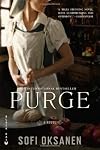
Purge is a compelling story, albeit a dark one which at times makes for difficult reading—those who are triggered by issues of sexual violence would do well to avoid it. The novel shifts back and forth in time between the period immediately around the Second World War and the early 1990s; during the earlier period, we see Aliide Truu as a young woman, in the latter as an elderly woman who opens her door one day to find a terrified, abused young woman called Zara lying in her farm yard. show more Purge contains most of the hallmarks of Greek tragedy—betrayal and long-simmering hatred, collusion and passionate desire and resolve which can turn murderous. Aliide is perhaps a more thoroughly imagined character than is Zara, for all that she is never likeable and her actions are sometimes not quite believable. I'm also not quite sure as to the reasons for Oksanen's including that last chapter—either it simply confirmed everything the reader has previously been told or has inferred, or there was some new piece of information in there that I missed. Still, these are minor quibbles with what is otherwise a very solid book. show less
Lists
2024 Reads (1)
Awards


You May Also Like


Associated Authors
Statistics
- Works
- 17
- Also by
- 4
- Members
- 3,384
- Popularity
- #7,531
- Rating
- 3.8
- Reviews
- 176
- ISBNs
- 280
- Languages
- 24
- Favorited
- 15


