
Jaan Kross (1920–2007)
Author of The Czar's Madman
About the Author
Image credit: Portrait by Zero
Series
Works by Jaan Kross
De kring van Mesmer : geromantiseerde memoires, zoals alle memoires en bijna iedere roman (1995) 29 copies
Kajalood : [jutustused] 6 copies
Ülesõidukohad 5 copies
Vihm teeb toredaid asju 4 copies
Voog ja kolmpii : luuletusi 3 copies
Kivist viiulid : [luuletused] 3 copies
Lauljad laevavööridel : luuletused 3 copies
Draama, Kogutud Teosed 18 3 copies
Vahelugemised. [1] 2 copies
Neli monoloogi Püha Jüri asjus 2 copies
Omaeluloolisus ja alltekst : 1998. aastal Tartu Ülikooli filosoofiateaduskonna vabade kunstide professorina peetud loengud (2003) 2 copies
Luule, Kogutud Teosed 17 2 copies
Kogutud teosed. 4 : Taevakivi ; Kolmandad mäed ; Kahe kaotsiläinud paberi lugu ; Pöördtoolitund (1999) 2 copies
Kejsarens galning 1 copy
Teosed 1 copy
Vastutuulelaev 1 copy
Järelehüüd : [jutustused] 1 copy
Associated Works
Tagged
Common Knowledge
- Canonical name
- Kross, Jaan
- Birthdate
- 1920-02-19
- Date of death
- 2007-12-27
- Gender
- male
- Education
- University of Tartu
- Relationships
- Niit, Ellen (wife)
- Short biography
- Born in 1920 in Estonia, Jaan Kross was arrested by the Soviets in 1946 and spent nine years in exile and labor camps in the Soviet Union's eastern regions.
- Nationality
- Estonia
- Birthplace
- Tallinn, Estonia
- Places of residence
- Tallinn, Estonia (birth)
- Place of death
- Tallinn, Estonia
- Burial location
- Rahumäe Cemetery, Tallinn, Estonia
- Map Location
- Estonia
Members
Reviews

This historical novel is based on the life of Timotheus von Bock (1787–1836), an aristocratic landowner in Estonia whose liberal ideals and excessive devotion to honesty led him in 1818 to send Czar Alexander I a sixty-page memorandum setting out what was wrong with absolutist rule in the Russian Empire and proposing a new constitution based on accountability and the rule of law. Possibly not a completely wise move. Alexander seems to have been fond of Timo, who had been his aide-de-camp show more as a young man, so instead of having him charged with treason he went for the milder option of declaring him insane and locking him up in solitary confinement in a gloomy fortress for nine years (but with a piano in his cell!). After Alexander's death, Timo is released into house-arrest on his own estate, but he remains officially insane and therefore legally incompetent.
Timo's liberalism is also manifested in his marriage to Eeva Mättik, an Estonian who was a serf in domestic service when he met her. He has bought the freedom of Eeva's whole family, and sent her and her elder brother Jakob to be educated by a clergyman friend before they marry. Eeva is a very strong character in the novel, resourceful and tireless in her campaigns to prevent Timo from being forgotten about and eventually getting him released.
It is the nosy and cynical Jakob who narrates the story through his secret diary of his life with Timo and Eeva during the period of house-arrest. He takes care to give us the necessary context for Timo's "radical" ideas, which he classes as being almost as progressive as Magna Carta. Timo, after all, is a proud member of a social class that traces its origins back to the Teutonic Knights, and has spent the last six hundred years treating the people of the Baltic region as little better than beasts of burden. (Kross notes in an afterword that in addition to that, Timo almost certainly knew the family tradition that his grandmother was an illegitimate daughter of Peter the Great, and that he would thus consider himself to have more genuine imperial blood in his veins than Alexander.)
Of course, this book was written in the 1970s, and what Jakob tells us about abuses of absolute power, foreign oppression of Estonians, and the misuse of the mental health system to silence dissidents is clearly also meant as covert criticism of the current situation in the Soviet Union, and the Baltic States in particular. What he tells us about Timo's experience of imprisonment and solitary confinement has a very strong sense of personal experience about it.
I found this slightly unsatisfying in narrative terms because Kross is rather reluctant to go beyond the things we have actual historical evidence for, so for instance Jakob's imaginative solution to the mystery of Timo's death is only put forward as a very tentative hypothesis, and not followed up in any way. But it is very strong in giving us a picture of the social situation in Baltic states in the early nineteenth century and in analysing the complicated intersections between protest against an oppressive regime and real or simulated madness. show less
Timo's liberalism is also manifested in his marriage to Eeva Mättik, an Estonian who was a serf in domestic service when he met her. He has bought the freedom of Eeva's whole family, and sent her and her elder brother Jakob to be educated by a clergyman friend before they marry. Eeva is a very strong character in the novel, resourceful and tireless in her campaigns to prevent Timo from being forgotten about and eventually getting him released.
It is the nosy and cynical Jakob who narrates the story through his secret diary of his life with Timo and Eeva during the period of house-arrest. He takes care to give us the necessary context for Timo's "radical" ideas, which he classes as being almost as progressive as Magna Carta. Timo, after all, is a proud member of a social class that traces its origins back to the Teutonic Knights, and has spent the last six hundred years treating the people of the Baltic region as little better than beasts of burden. (Kross notes in an afterword that in addition to that, Timo almost certainly knew the family tradition that his grandmother was an illegitimate daughter of Peter the Great, and that he would thus consider himself to have more genuine imperial blood in his veins than Alexander.)
Of course, this book was written in the 1970s, and what Jakob tells us about abuses of absolute power, foreign oppression of Estonians, and the misuse of the mental health system to silence dissidents is clearly also meant as covert criticism of the current situation in the Soviet Union, and the Baltic States in particular. What he tells us about Timo's experience of imprisonment and solitary confinement has a very strong sense of personal experience about it.
I found this slightly unsatisfying in narrative terms because Kross is rather reluctant to go beyond the things we have actual historical evidence for, so for instance Jakob's imaginative solution to the mystery of Timo's death is only put forward as a very tentative hypothesis, and not followed up in any way. But it is very strong in giving us a picture of the social situation in Baltic states in the early nineteenth century and in analysing the complicated intersections between protest against an oppressive regime and real or simulated madness. show less
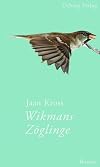
This is Jaan Kross' autobiographical, highly political and comic novel about how the first generation of Estonians gained independence after 1918. The brevity of this freedom, limited by the outbreak of the Second World War, is captured by Kross in all its tragedy and irony.
Tallinn, 1938: Jaak Sirkel attends the prestigious Wikman Gymnasium in the Estonian capital. For the young men, the years before the outbreak of the Second World War are characterised by a rare light-heartedness and a show more short-lived national consciousness. The pupils spend their days playing pranks on teachers, trying to avoid exams and meeting new girlfriends.
The Wikmansche Gymnasium is a school of ideals where strict principles prevail. Jaak Sirkel and his final year class adhere to these principles, but do everything they can to make everyday school life easier. They do everything they can to avoid unannounced exams or to get their grades up to ‘very good’ without much effort. Although everyday life at grammar school is strictly organised, ‘Wikman's Pupils’ plays out with plenty of comedy and mutual respect. The pupils are not supposed to break with discipline and order, but rather learn with them and thus grow into a new, strong generation for their homeland.
Jaak Sirkel and his classmates are about to graduate from grammar school. But what is supposed to be a transition to adult life also becomes a battle on the front line of the Second World War, where the pupils fight on different sides. Although the last two years of school determine a large part of the novel, the last short chapters are the highlights, when the former classmates meet again in 1943 - divided by different political views, connected by many different fates. Kross deliberately plays with a break in the story here when, having previously described everything in detail, he suddenly skips a few years and throws the reader in at the deep end.
‘Wikmans Zöglinge’ is a monumental work that focuses on a small country whose inhabitants have long had to fight for their own culture and history. The novel manages remarkably well to interweave elementary questions of identity with those of puberty in a seemingly harmless school story and to give a voice to an entire lost generation. show less
Tallinn, 1938: Jaak Sirkel attends the prestigious Wikman Gymnasium in the Estonian capital. For the young men, the years before the outbreak of the Second World War are characterised by a rare light-heartedness and a show more short-lived national consciousness. The pupils spend their days playing pranks on teachers, trying to avoid exams and meeting new girlfriends.
‘Here, the past has been so oppressive over a long period of time that now, right now - yesterday, today, tomorrow - men and women, ideas and deeds, must be born on which our greatness will one day be founded. And I want - and you must want - the Wikmansche Gymnasium to play an honourable part in this.’
The Wikmansche Gymnasium is a school of ideals where strict principles prevail. Jaak Sirkel and his final year class adhere to these principles, but do everything they can to make everyday school life easier. They do everything they can to avoid unannounced exams or to get their grades up to ‘very good’ without much effort. Although everyday life at grammar school is strictly organised, ‘Wikman's Pupils’ plays out with plenty of comedy and mutual respect. The pupils are not supposed to break with discipline and order, but rather learn with them and thus grow into a new, strong generation for their homeland.
Jaak Sirkel and his classmates are about to graduate from grammar school. But what is supposed to be a transition to adult life also becomes a battle on the front line of the Second World War, where the pupils fight on different sides. Although the last two years of school determine a large part of the novel, the last short chapters are the highlights, when the former classmates meet again in 1943 - divided by different political views, connected by many different fates. Kross deliberately plays with a break in the story here when, having previously described everything in detail, he suddenly skips a few years and throws the reader in at the deep end.
‘Wikmans Zöglinge’ is a monumental work that focuses on a small country whose inhabitants have long had to fight for their own culture and history. The novel manages remarkably well to interweave elementary questions of identity with those of puberty in a seemingly harmless school story and to give a voice to an entire lost generation. show less

The Lost Jaan Kross Verse-Novel
Review of the Loomingu Raamatukogu paperback (2020) edited from previously unpublished notebooks (c 1952-1954) and with an Afterword by Jaan Undusk
Tiit Pagu is the newly discovered verse-novel that Jaan Kross (1920-2017) worked on during his Siberian exile in Krasnoyarsk Krai during the years 1952-1954 after having already served 5 years from 1947-1951 in a prison labour camp in the Komi region for his anti-Soviet activities during the early 1940’s. Kross was show more able to return to Estonia in 1954 after Stalin’s death in 1953 had allowed for an amnesty. He became generally known as a poet in the late 1950’s with his solo debut of Söerikastaja (The Coal Concentrator) (1958) and throughout the 1960’s until his first major historical novel Kolme katku vahel. Balthasar Russowi romaan, I-IV (Between Three Plagues. A Novel about Balthasar Russow, I-IV) was released in stages from 1970 to 1980. From that point onwards, Kross’s major output were novels which usually featured protagonists associated with Estonian history and about their stresses and conflicts of living and working under autocratic regimes in prior historical eras. These works thus managed to avoid directly criticizing the Soviet Russian occupation of Estonia by disguising it in the problems of earlier occupations of which Estonia had a several hundred year history to draw upon.
Much of what we can now know about Tiit Pagu has been unearthed from Kross’s correspondence by Jaan Undusk, the editor and the writer of the Afterword in this newly published edition. Kross himself was entirely silent about the work in his own memoirs about his early years up to 1960 in Kallid kaasteelised I (Dear Companions, Volume 1) (2003). Even the reason for his disavowal of the work has to be speculated on, whether it was embarrassment about its youthful arrogance or about the work’s seeming sympathy to the communist proletariat.
Tiit Pagu can be seen as both an homage and an attempt to out-Onegin Pushkin’s verse-novel Eugene Onegin (1833). Onegin consists of 389 fourteen-line stanzas with the rhyme scheme of "AbAbCCddEffEgg." Pagu, as we now have it, had a projected 267+ 18-line stanzas with the rhyme scheme of “a(3)Ba(3)BcDcDEEFgFghIIh” (I don’t know how to write subscripts in LibraryThing, so the (3)s after the lowercase a’s are to signify that the rhymes are 3 syllables in length). Otherwise the Capital letters signify 1 syllable rhymes and the lowercase letters signify 2 syllable rhymes in both Onegin and Pagu.
I call it “projected” for Pagu as there are several dozen stanzas missing in the recovered work including a supposed 8th Chapter of stanzas 220-250 which is entirely missing. Whether this is an aspect to the homage to Pushkin’s missing original 8th chapter of “Onegin’s Journey” or whether that part of Pagu is truly lost is unknown.
It is the masterful and inventive rhyming of Pagu that is its chief delight. Kross expands his source rhyming vocabulary considerably by also drawing on several foreign languages such as English, French, Greek, German, Latin and Russian. It is rather a joy to read it out loud. All of that combined with Undusk’s very thorough Afterword made this a real discovery and an easy 5 rating.
For the curiosity of non-Estonian readers, I have translated Undusk’s plot summary below:
Trivia and Links
* A member of an Estonian fraternal student organization, derived from the German Student Corps.
** Viktor Kingissepp (1888-1922) was an early Estonian communist leader.
The Loomingu Raamatukogu (The Creation Library) is a modestly priced one-time Estonian literary weekly paperback (from 1957 to 1994) which now publishes 40 issues a year as of 1995. It is a great source for discovery as its relatively cheap prices (currently 3 to 5€ per issue) allow for access to a multitude of international writers in Estonian translation and of shorter works by Estonian authors themselves. These include poetry, theatre, essays, short stories, novellas and novels (the lengthier works are usually parcelled out over several issues).
For a complete listing of all works issued to date by Loomingu Raamatukogu see Estonian Wikipedia at: https://et.wikipedia.org/wiki/Loomingu_Raamatukogus_ilmunud_teoste_loend_aastak%... show less
Review of the Loomingu Raamatukogu paperback (2020) edited from previously unpublished notebooks (c 1952-1954) and with an Afterword by Jaan Undusk
Tiit Pagu is the newly discovered verse-novel that Jaan Kross (1920-2017) worked on during his Siberian exile in Krasnoyarsk Krai during the years 1952-1954 after having already served 5 years from 1947-1951 in a prison labour camp in the Komi region for his anti-Soviet activities during the early 1940’s. Kross was show more able to return to Estonia in 1954 after Stalin’s death in 1953 had allowed for an amnesty. He became generally known as a poet in the late 1950’s with his solo debut of Söerikastaja (The Coal Concentrator) (1958) and throughout the 1960’s until his first major historical novel Kolme katku vahel. Balthasar Russowi romaan, I-IV (Between Three Plagues. A Novel about Balthasar Russow, I-IV) was released in stages from 1970 to 1980. From that point onwards, Kross’s major output were novels which usually featured protagonists associated with Estonian history and about their stresses and conflicts of living and working under autocratic regimes in prior historical eras. These works thus managed to avoid directly criticizing the Soviet Russian occupation of Estonia by disguising it in the problems of earlier occupations of which Estonia had a several hundred year history to draw upon.
Much of what we can now know about Tiit Pagu has been unearthed from Kross’s correspondence by Jaan Undusk, the editor and the writer of the Afterword in this newly published edition. Kross himself was entirely silent about the work in his own memoirs about his early years up to 1960 in Kallid kaasteelised I (Dear Companions, Volume 1) (2003). Even the reason for his disavowal of the work has to be speculated on, whether it was embarrassment about its youthful arrogance or about the work’s seeming sympathy to the communist proletariat.
Tiit Pagu can be seen as both an homage and an attempt to out-Onegin Pushkin’s verse-novel Eugene Onegin (1833). Onegin consists of 389 fourteen-line stanzas with the rhyme scheme of "AbAbCCddEffEgg." Pagu, as we now have it, had a projected 267+ 18-line stanzas with the rhyme scheme of “a(3)Ba(3)BcDcDEEFgFghIIh” (I don’t know how to write subscripts in LibraryThing, so the (3)s after the lowercase a’s are to signify that the rhymes are 3 syllables in length). Otherwise the Capital letters signify 1 syllable rhymes and the lowercase letters signify 2 syllable rhymes in both Onegin and Pagu.
I call it “projected” for Pagu as there are several dozen stanzas missing in the recovered work including a supposed 8th Chapter of stanzas 220-250 which is entirely missing. Whether this is an aspect to the homage to Pushkin’s missing original 8th chapter of “Onegin’s Journey” or whether that part of Pagu is truly lost is unknown.
It is the masterful and inventive rhyming of Pagu that is its chief delight. Kross expands his source rhyming vocabulary considerably by also drawing on several foreign languages such as English, French, Greek, German, Latin and Russian. It is rather a joy to read it out loud. All of that combined with Undusk’s very thorough Afterword made this a real discovery and an easy 5 rating.
For the curiosity of non-Estonian readers, I have translated Undusk’s plot summary below:
Let's briefly summarize the plot of the piece. Korporant* Tiit Pagu is attracted to Lo Tarvel, an medical student, who gives him an odd operational task one day: Tiit is to go on a 50-kilometer ski trip from Tartu to the nearby Taadi farm to secretly deliver a letter to someone named Enn Karrus. On his return to Tartu, Tiit accidentally kills Ott Rammul, an agent of the political police (aka The PolPol) who has followed him. Tiit realizes that Lo is associated with the underground communist movement, and, as an involuntary murderer, he must now escape. Lo secures a place of refuge for him in Tallinn with an old revolutionary worker named Jaan Raud. Thanks to Raud, Tiit learns the works of Marx, Lenin and Kingissepp** in his spare time and develops a practical proletarian worldview while also doing basic work in a metal factory. Under the pseudonym of Ants Tamm, he returns to public life in June 1940, when both the blue-black-and-white flag of the Republic of Estonia and the blood-red flag of the Soviet Union are hanging on the wall of the Tartu town hall. It is time for a decisive choice. And this is where the novel ends. - excerpt translated from pgs. 154-155 in Jaan Undusk’s Afterword to Tiit Pagu.
Trivia and Links
* A member of an Estonian fraternal student organization, derived from the German Student Corps.
** Viktor Kingissepp (1888-1922) was an early Estonian communist leader.
The Loomingu Raamatukogu (The Creation Library) is a modestly priced one-time Estonian literary weekly paperback (from 1957 to 1994) which now publishes 40 issues a year as of 1995. It is a great source for discovery as its relatively cheap prices (currently 3 to 5€ per issue) allow for access to a multitude of international writers in Estonian translation and of shorter works by Estonian authors themselves. These include poetry, theatre, essays, short stories, novellas and novels (the lengthier works are usually parcelled out over several issues).
For a complete listing of all works issued to date by Loomingu Raamatukogu see Estonian Wikipedia at: https://et.wikipedia.org/wiki/Loomingu_Raamatukogus_ilmunud_teoste_loend_aastak%... show less

Kross was Estonian, arrested in 1946 after which he spent nine years in the Gulag. He has other works available in English, though out-of-print, so I will have to search a bit to find them.
The story concerns a Professor Martens, of Estonian origin, who has through his career become an internationally recognized expert on international law and treaties and the conduct of war; a polyglot who speaks, writes and thinks equally well in six or seven languages; a man who has pulled himself up from show more humble origins to become a world-renowned jurist and Privy Councillor who advises the Minister of Foreign Affairs and through him, even the Tsar himself; a man who has always been ambivalent about his national origins, pretending when necessary to be of German stock which has a higher value in Russian circles than does Estonian; a man who turns his back on the nascent nationalism of his own country and the backlash against the repressiveness of the Tsarist regime; a man who posits that states can only have international legitimacy if they respect human rights within their borders, but who uses his authority and abilities to justify various actions by Russia; and, finally, a man who, towards the end of his career and life reflects upon the moral and personal costs of the honours and recognition that he has achieved. He is, at the same time, haunted by the memory or knowledge of a German jurist who lived some years before him, and of whom he believes he may be the reincarnation, and whose career and compromises mirror his own. Finally, he also strives to resolve, in his mind, a lack of honesty and candour in his relationship with his wife.
As an historical novel, the book conveys with light strokes the growing unrest in the empire (the time is 1909), and the essential weaknesses at its core which foreshadow the collapse of the empire and increasing nationalism of some of its peoples.
Professor Martens comes to the realization that he has dedicated his life and considerable talents to supporting a regime that is basically hollow and undeserving, and which will trample over him as easily as any of its subjects when the need arises, or when the machinations of those in power prevail. He realizes that he is but a cog in a much larger enterprise, and that by not lifting his eyes or ambitions higher, despite opportunities to do so, he has sacrificed himself and his values. A quote from a recent article by William Rees Moog is appropriate here:
A Hitler creates the myth; an Eichmann develops the mechanism that turns myth into reality. The world has rather few Hitlers, it has only too many Eichmanns, the obedient technocrats of large-scale organization, abdicating responsibility to other's ideas.
A thousand Eichmanns on their own would not have had the imagination or the will, to create a holocaust. They are inert until a figure such as Hitler triggers their energies and sets them to work.
That does not make the civil servants of the holocaust free of moral responsibility. The demons that Hitler called forth already existed inside them. The Eichmanns of this world do not so much sell their souls to the devil; they give their souls to him as thanks for his inspiration. We still have reason to fear the potential of Hitler's "new age of magic".
(from a discussion on Eichmann's diaries, The Times of London, and Ottawa Citizen, August 15.1999)
Martens is not an Eichmann in the substance of the gross harm done to other human beings, but he is a fellow-traveller as a technocrat who obeys and abdicates his own responsibilities. (2005)
---------------
Should have checked my own reviews before I re-read the book and wrote another review of it!....but, for better or worse, here is the second one!
Friedrich Fromhold Martens (1845-1909) was a real person. Born Estonian in the Russian Empire, he became an internationally recognized jurist and expert on international law, contributed a number of books and compilations on the subject, was active in various peace conferences and as one the first international arbitrators settling disputes between various countries; was a candidate for the Nobel Peace Prize in 1902. He became a full professor at the University of St.Petersburg and then a member of the Russian Foreign Ministry. A polyglot, he spoke and worked fluently in half-a-dozen languages.
The novel is set on a train ride that Professor Martens takes from his home town to St.Petersburg during which he reflects upon his life, his rise, entirely on his own merits, from humble origins to a position of international renown and privilege in Russia. The novel reminds me of Marguerite Yourcenar’s, Hadrian in that it takes an historical personage and tries to get inside his head to construct a feasible world; both are successful in this regard. A major difference between the two men is that a Roman Emperor creates his own world and his own morality while an ordinary human being must live within and adjust to his circumstances. This is much of what Martens reflects upon: his pride at rising from his humble origins, but his sense that he has always fallen just a little bit short because of the social prejudices of his age. He cannot admit openly that he is of Estonian origin because that would condemn him to the lower ranks; he has his enemies and must bear professional and personal slights; but he remains the loyal retainer, always ready to serve. And in this he feels a failure in himself because he never took a moral stand (even when a nephew becomes involved in a nationalist movement) and, he realizes, that his international legal stature in fact gave a patina of respectability to the repressive regime in Russia, a regime always ready to use his talents, but never ready to fully admit him to its ranks. He goes further and admits his moral culpability in the age-old consideration of the agglomeration of large and small contributions necessary to make oppression work.
“ Whatever else our professional obligations may be in this era of oppression, all of (not me, thank God, for that, at least)—or many of us—have been made accomplices in the violence oppression requires…Parnu’s stationsmaster Huik, that decent fellow, has been put in charge of prison transports and so have his colleagues up and down the line. The engine drivers are carting prisoners from one town to the next. Instead of investigating the crimes of which those prisoners are accused, the judges are obliged to hand down blanket death-sentences. Young recruits may find themselves ordered to act as executioners…..To be honest, I can’t deny my own part in all this. I’m an accomplice too, perhaps the most culpable one, at least compared to the Huiks and the engine drivers….Because I am in a position to really to see the big picture. In fact, am I not the one who renders the most important services to the machinery of the state—even if I don’t directly serve the machinery of slaughter---God, no, not that…One might even say that I’m the one who has helped that machinery of the state to survive, that I have generated a rather essential portion of the energy it has needed to go on functioning during these years of massacres!”
Although he recognizes this, Martens cannot summon the courage to do otherwise than he does, he cannot, for instance, do other than remain neutral in the “increasingly vocal groundswell of resistance among my own German countrymen”, even though he reaches a harsh judgment on himself: “Should I renounce the esteem in which I am held—as well- or ill-deserved as it may be? My reputation as a conscientious peacemaker, gained by years of hard work? Give it all up, because it is, in the final analysis, a lie?”
In his contemplations, Martens also holds imaginary conversations with his wife, Kati, in which he reflects on their life together, the strength she has been for him, and admits to his unfaithfulness with a woman whom he loved but again, did not have the strength to renounce his life of privilege and respect to be with her.
A thoughtful, thought-provoking book. show less
The story concerns a Professor Martens, of Estonian origin, who has through his career become an internationally recognized expert on international law and treaties and the conduct of war; a polyglot who speaks, writes and thinks equally well in six or seven languages; a man who has pulled himself up from show more humble origins to become a world-renowned jurist and Privy Councillor who advises the Minister of Foreign Affairs and through him, even the Tsar himself; a man who has always been ambivalent about his national origins, pretending when necessary to be of German stock which has a higher value in Russian circles than does Estonian; a man who turns his back on the nascent nationalism of his own country and the backlash against the repressiveness of the Tsarist regime; a man who posits that states can only have international legitimacy if they respect human rights within their borders, but who uses his authority and abilities to justify various actions by Russia; and, finally, a man who, towards the end of his career and life reflects upon the moral and personal costs of the honours and recognition that he has achieved. He is, at the same time, haunted by the memory or knowledge of a German jurist who lived some years before him, and of whom he believes he may be the reincarnation, and whose career and compromises mirror his own. Finally, he also strives to resolve, in his mind, a lack of honesty and candour in his relationship with his wife.
As an historical novel, the book conveys with light strokes the growing unrest in the empire (the time is 1909), and the essential weaknesses at its core which foreshadow the collapse of the empire and increasing nationalism of some of its peoples.
Professor Martens comes to the realization that he has dedicated his life and considerable talents to supporting a regime that is basically hollow and undeserving, and which will trample over him as easily as any of its subjects when the need arises, or when the machinations of those in power prevail. He realizes that he is but a cog in a much larger enterprise, and that by not lifting his eyes or ambitions higher, despite opportunities to do so, he has sacrificed himself and his values. A quote from a recent article by William Rees Moog is appropriate here:
A Hitler creates the myth; an Eichmann develops the mechanism that turns myth into reality. The world has rather few Hitlers, it has only too many Eichmanns, the obedient technocrats of large-scale organization, abdicating responsibility to other's ideas.
A thousand Eichmanns on their own would not have had the imagination or the will, to create a holocaust. They are inert until a figure such as Hitler triggers their energies and sets them to work.
That does not make the civil servants of the holocaust free of moral responsibility. The demons that Hitler called forth already existed inside them. The Eichmanns of this world do not so much sell their souls to the devil; they give their souls to him as thanks for his inspiration. We still have reason to fear the potential of Hitler's "new age of magic".
(from a discussion on Eichmann's diaries, The Times of London, and Ottawa Citizen, August 15.1999)
Martens is not an Eichmann in the substance of the gross harm done to other human beings, but he is a fellow-traveller as a technocrat who obeys and abdicates his own responsibilities. (2005)
---------------
Should have checked my own reviews before I re-read the book and wrote another review of it!....but, for better or worse, here is the second one!
Friedrich Fromhold Martens (1845-1909) was a real person. Born Estonian in the Russian Empire, he became an internationally recognized jurist and expert on international law, contributed a number of books and compilations on the subject, was active in various peace conferences and as one the first international arbitrators settling disputes between various countries; was a candidate for the Nobel Peace Prize in 1902. He became a full professor at the University of St.Petersburg and then a member of the Russian Foreign Ministry. A polyglot, he spoke and worked fluently in half-a-dozen languages.
The novel is set on a train ride that Professor Martens takes from his home town to St.Petersburg during which he reflects upon his life, his rise, entirely on his own merits, from humble origins to a position of international renown and privilege in Russia. The novel reminds me of Marguerite Yourcenar’s, Hadrian in that it takes an historical personage and tries to get inside his head to construct a feasible world; both are successful in this regard. A major difference between the two men is that a Roman Emperor creates his own world and his own morality while an ordinary human being must live within and adjust to his circumstances. This is much of what Martens reflects upon: his pride at rising from his humble origins, but his sense that he has always fallen just a little bit short because of the social prejudices of his age. He cannot admit openly that he is of Estonian origin because that would condemn him to the lower ranks; he has his enemies and must bear professional and personal slights; but he remains the loyal retainer, always ready to serve. And in this he feels a failure in himself because he never took a moral stand (even when a nephew becomes involved in a nationalist movement) and, he realizes, that his international legal stature in fact gave a patina of respectability to the repressive regime in Russia, a regime always ready to use his talents, but never ready to fully admit him to its ranks. He goes further and admits his moral culpability in the age-old consideration of the agglomeration of large and small contributions necessary to make oppression work.
“ Whatever else our professional obligations may be in this era of oppression, all of (not me, thank God, for that, at least)—or many of us—have been made accomplices in the violence oppression requires…Parnu’s stationsmaster Huik, that decent fellow, has been put in charge of prison transports and so have his colleagues up and down the line. The engine drivers are carting prisoners from one town to the next. Instead of investigating the crimes of which those prisoners are accused, the judges are obliged to hand down blanket death-sentences. Young recruits may find themselves ordered to act as executioners…..To be honest, I can’t deny my own part in all this. I’m an accomplice too, perhaps the most culpable one, at least compared to the Huiks and the engine drivers….Because I am in a position to really to see the big picture. In fact, am I not the one who renders the most important services to the machinery of the state—even if I don’t directly serve the machinery of slaughter---God, no, not that…One might even say that I’m the one who has helped that machinery of the state to survive, that I have generated a rather essential portion of the energy it has needed to go on functioning during these years of massacres!”
Although he recognizes this, Martens cannot summon the courage to do otherwise than he does, he cannot, for instance, do other than remain neutral in the “increasingly vocal groundswell of resistance among my own German countrymen”, even though he reaches a harsh judgment on himself: “Should I renounce the esteem in which I am held—as well- or ill-deserved as it may be? My reputation as a conscientious peacemaker, gained by years of hard work? Give it all up, because it is, in the final analysis, a lie?”
In his contemplations, Martens also holds imaginary conversations with his wife, Kati, in which he reflects on their life together, the strength she has been for him, and admits to his unfaithfulness with a woman whom he loved but again, did not have the strength to renounce his life of privilege and respect to be with her.
A thoughtful, thought-provoking book. show less
Lists
Awards


You May Also Like


Associated Authors
Statistics
- Works
- 72
- Also by
- 3
- Members
- 1,297
- Popularity
- #19,796
- Rating
- 3.8
- Reviews
- 21
- ISBNs
- 171
- Languages
- 15
- Favorited
- 5