
Donald McCaig (1940–2018)
Author of Rhett Butler's People
About the Author
Donald Robert McCaig was born in Butte, Montana on May 1, 1940. He received a bachelor's degree in philosophy from the University of Montana. He served two years in the Marine Corps and pursued graduate studies at the University of Waterloo and Wayne State University. During the 1960s, he worked as show more a copy chief for an advertising agency in New York. In 1971, he bought a Virginia sheep farm. He wrote historical novels, books about Border collies, and two authorized follow-ups to Gone with the Wind. His fiction works included Jacob's Ladder, Canaan, The Butte Polka, Nop's Trials, Nop's Hope, Rhett Butler's People, and Ruth's Journey. His nonfiction works included An American Homeplace; Eminent Dogs, Dangerous Men; and Mr. and Mrs. Dog: Our Travels, Trials, Adventures, and Epiphanies. He died on November 11, 2018 at the age of 78. (Bowker Author Biography) show less
Series
Works by Donald McCaig
Ruth's Journey: The Authorized Novel of Mammy from Margaret Mitchell's Gone with the Wind (2014) — Author — 330 copies, 19 reviews
新編・風と共に去りぬ レット・バトラー4 (ゴマ文庫) 1 copy
新編・風と共に去りぬ レット・バトラー 5 (ゴマ文庫) 1 copy
新編・風と共に去りぬ レット・バトラー 6 (ゴマ文庫) 1 copy
新編・風と共に去りぬ レット・バトラー3 (ゴマ文庫) 1 copy
Associated Works
Reader's Digest Condensed Books 1984 v04: Nop's Trials / Lee and Grant / Murder and the First Lady / Jennie About to Be (1984) — Author — 36 copies
Reader's Digest Best Sellers 1984: Nop's Trials | Murder and the First Lady (1984) — Author — 14 copies
Reader's Digest Condensed Books: Nop's Trials • The Fourth Protocol • The Canyon • Stormswift (1984) — Author — 5 copies
Reader's Digest Auswahlbücher: Nop, der Sieger / Ein Tag des Iwan Denissowitsch / Meine Kleine Arche Noah / Der Tod baut mit (1986) 4 copies
Het Beste Boek: Koorts; Mevrouw Pollifax en de boeddha van Hong Kong; Landgenoten; Nop, een hondeleven 2 copies, 1 review
Det bästas bokval : Tecken i skyn; Att höra gräset växa...; Mrs Pollifax i Kina; Prövningen — Contributor — 2 copies
Tagged
Common Knowledge
- Legal name
- McCaig, Donald Robert
- Birthdate
- 1940-05-01
- Date of death
- 2018-11-11
- Gender
- male
- Education
- Wayne State University
University of Waterloo
University of Montana (BA - Philosophy) - Occupations
- novelist
poet
essayist
sheepdog trainer
advertising copywriter - Organizations
- U. S. Marine Corps
- Short biography
- Upon receiving the (six-figure) proceeds for option of a book by the film industry: "I don't know what I'm going to do with the money," McCaig told The Post in 1984. "Put it in the bank, I guess. The sum total of the movie sale was that Anne and I couldn't sleep the night we found out about it, and I forgot to milk the cow. Money's fine, but I didn't feel very good about myself, forgetting the cow."
- Nationality
- USA
- Birthplace
- Butte, Montana, USA
- Places of residence
- New York, New York, USA
- Place of death
- Highland County, Virginia, USA
- Associated Place (for map)
- USA
Members
Reviews
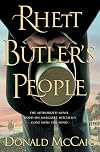
I’m the first to admit that I am a hopeless romantic who swoons when Rhett Butler sweeps Scarlett up the stairs in Gone With the Wind. No matter how many times I’ve read the book or seen the movie, my heart always aches as Butler declares how he doesn’t give a damn. Yet I have never read Scarlett or cared to find out what happens after he closes that door. Part of the joy of Gone With the Wind is that there is no real happy ending, except the determined declaration of Scarlett show more O’Hara. Mitchell, though besiged by many to write a sequal, always refused because (I like to believe) she realized that’s one reason the story is so magical.
It is in this capacity where Rhett Butler’s People fails as an appropriate companion to Gone With the Wind. The novel is excellent as it weaves the story of Rhett Butler, a character whose past is mostly cloudy in the original novel. McCaig does an excellent job of introducing and fleshing out addition characters that were only mentioned briefly by Mitchell, such as Rosemary Butler, while at the same time giving the reader a glimpse of the motivations that drive such a complicated character like Rhett Butler. McCaig sticks closely to Mitchell’s novel, sometimes replicated dialogue word for word.
The problems begin though when he continues past Rhett’s famous last line, and tries to imagine what happens past the closed door. The most glaring fault of McCaig is his depiction of Scarlett, who he waters down into what he probably feels is a likeable character. That’s the problem though: we aren’t suppose to like Scarlett. We may admire her, we are definitely frustrated with her, but we aren’t suppose to love her. She is a difficult woman, but Rhett Butler wouldn’t have her any other way and neither would the reader. McCaig’s protrayal of her in the last hundred pages is laughable, and not even remotely close to the character Mitchell created. In the end, I’d rather take getting my heart broken again by the thought of Rhett and Scarlett not together. Though an enjoyable novel on its own merits, I would only recommend it to a select few people. show less
It is in this capacity where Rhett Butler’s People fails as an appropriate companion to Gone With the Wind. The novel is excellent as it weaves the story of Rhett Butler, a character whose past is mostly cloudy in the original novel. McCaig does an excellent job of introducing and fleshing out addition characters that were only mentioned briefly by Mitchell, such as Rosemary Butler, while at the same time giving the reader a glimpse of the motivations that drive such a complicated character like Rhett Butler. McCaig sticks closely to Mitchell’s novel, sometimes replicated dialogue word for word.
The problems begin though when he continues past Rhett’s famous last line, and tries to imagine what happens past the closed door. The most glaring fault of McCaig is his depiction of Scarlett, who he waters down into what he probably feels is a likeable character. That’s the problem though: we aren’t suppose to like Scarlett. We may admire her, we are definitely frustrated with her, but we aren’t suppose to love her. She is a difficult woman, but Rhett Butler wouldn’t have her any other way and neither would the reader. McCaig’s protrayal of her in the last hundred pages is laughable, and not even remotely close to the character Mitchell created. In the end, I’d rather take getting my heart broken again by the thought of Rhett and Scarlett not together. Though an enjoyable novel on its own merits, I would only recommend it to a select few people. show less
Ruth's Journey: The Authorized Novel of Mammy from Margaret Mitchell's Gone with the Wind by Donald McCaig
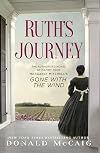
Ruth’s Journey is nothing more than fodder for fans of Margaret Mitchell’s classic. If anything, Ruth’s actual journey shows just how small the South actually was given with whom Ruth interacts, when, and why. All of the key figures of Ms. Mitchell’s novel are here, and fans will have a blast connecting the dots between them and seeing certain famous scenes through someone else’s eyes. Without this singular interest however, readers unfamiliar with the O’Hara and the Robillard show more families will find Ruth’s Journey rather dull.
For one thing, while Ruth is in almost every scene, she is most certainly not the main character during the first half of the novel. The first half is all Solange Fornier Robillard. In it, readers discover that Scarlett comes by her obstinance and tendency to flout society rules not just from Gerald’s side of the family. The similarities between Solange and Scarlett are undeniable and makes a lot of sense when trying to build a bridge between two novels. Yet, the whole thing is just too expected and therein lies the rub. In trying to create a novel that connects to a much-beloved classic, one expects certain connections and discoveries. There is nothing terribly surprising about anything that happens in the novel, and all of it feels repetitive. Solange is a perfect stand-in for Scarlett, even down to the number of children she has as well as the number of husbands.
Then there is Ruth herself. This is not the Mammy from the novel or the movie. It is supposed to be how she came to be so feisty and outspoken, but one never sees Ruth adopt that persona. Even before she moves to Tara with the newlyweds, this version of Mammy lacks that spirited bite with which she attacks her duties. Throughout most of the novel, Ruth is a follower; she is meek, mild, and bound by a slave’s code of silence towards her white owners. At her lowest point, she remains quiet and implacable. The Mammy from the original book is anything but quiet and certainly not implacable.
There is more to Ruth’s life other than her time with the O’Hara’s, especially with Scarlett and her sisters, but that ends up being the part of the story readers will remember the most. In many ways, this is fitting because Mammy only became famous because of Scarlett O’Hara. One wants to see young Katie Scarlett and how she grew into the formidable woman she became. However, that portion of her life is such a small portion, that for readers not to remember or care about the path of her life prior to Tara is a disservice of the author.
Mr. McCaig tries to maintain a fan’s interest by throwing in well-known names and faces – ones that play a large role in the original story. This only works for a time before it begins to test a reader’s patience. The coincidental meetings between Ruth and the Hamiltons, the Butlers, the O’Haras, and pretty much everyone else who factors into Scarlett’s adult life only works to a certain extent before they become too convenient and nothing more than a plot device to keep a reader’s interest.
The final lasting impression of Ruth’s Journey is not one of marvel at everything she endures. Rather, it is one in which readers will wonder at everyone’s ages in Gone With the Wind. Ruth meets all of the supporting cast years before Scarlett’s birth, which drives home her incredible youth and the acceptability of Southern women marrying men twice their age. It is definitely not the impression one imagines Mr. McCaig was hoping to make when he started the novel, but it is there nonetheless.
In the end, it becomes too difficult to reconcile Ms. Mitchell’s Mammy with Mr. Mccaig’s version. They do not have the same voice or the same spark. While one knows that Ms. Mitchell’s Mammy has eons of experience under her kerchief, one gets the uneasy sense that what happens in Ruth’s Journey is just not it. While fans, like this reader, will continue to flock to anything remotely related to Ms. Mitchell’s masterpiece, it is best to start Ruth’s Journey with the understanding that it is a paltry substitute for the original. Only then can one sit back, enjoy the story, and get a tiny thrill every time a familiar name crosses the page. show less
For one thing, while Ruth is in almost every scene, she is most certainly not the main character during the first half of the novel. The first half is all Solange Fornier Robillard. In it, readers discover that Scarlett comes by her obstinance and tendency to flout society rules not just from Gerald’s side of the family. The similarities between Solange and Scarlett are undeniable and makes a lot of sense when trying to build a bridge between two novels. Yet, the whole thing is just too expected and therein lies the rub. In trying to create a novel that connects to a much-beloved classic, one expects certain connections and discoveries. There is nothing terribly surprising about anything that happens in the novel, and all of it feels repetitive. Solange is a perfect stand-in for Scarlett, even down to the number of children she has as well as the number of husbands.
Then there is Ruth herself. This is not the Mammy from the novel or the movie. It is supposed to be how she came to be so feisty and outspoken, but one never sees Ruth adopt that persona. Even before she moves to Tara with the newlyweds, this version of Mammy lacks that spirited bite with which she attacks her duties. Throughout most of the novel, Ruth is a follower; she is meek, mild, and bound by a slave’s code of silence towards her white owners. At her lowest point, she remains quiet and implacable. The Mammy from the original book is anything but quiet and certainly not implacable.
There is more to Ruth’s life other than her time with the O’Hara’s, especially with Scarlett and her sisters, but that ends up being the part of the story readers will remember the most. In many ways, this is fitting because Mammy only became famous because of Scarlett O’Hara. One wants to see young Katie Scarlett and how she grew into the formidable woman she became. However, that portion of her life is such a small portion, that for readers not to remember or care about the path of her life prior to Tara is a disservice of the author.
Mr. McCaig tries to maintain a fan’s interest by throwing in well-known names and faces – ones that play a large role in the original story. This only works for a time before it begins to test a reader’s patience. The coincidental meetings between Ruth and the Hamiltons, the Butlers, the O’Haras, and pretty much everyone else who factors into Scarlett’s adult life only works to a certain extent before they become too convenient and nothing more than a plot device to keep a reader’s interest.
The final lasting impression of Ruth’s Journey is not one of marvel at everything she endures. Rather, it is one in which readers will wonder at everyone’s ages in Gone With the Wind. Ruth meets all of the supporting cast years before Scarlett’s birth, which drives home her incredible youth and the acceptability of Southern women marrying men twice their age. It is definitely not the impression one imagines Mr. McCaig was hoping to make when he started the novel, but it is there nonetheless.
In the end, it becomes too difficult to reconcile Ms. Mitchell’s Mammy with Mr. Mccaig’s version. They do not have the same voice or the same spark. While one knows that Ms. Mitchell’s Mammy has eons of experience under her kerchief, one gets the uneasy sense that what happens in Ruth’s Journey is just not it. While fans, like this reader, will continue to flock to anything remotely related to Ms. Mitchell’s masterpiece, it is best to start Ruth’s Journey with the understanding that it is a paltry substitute for the original. Only then can one sit back, enjoy the story, and get a tiny thrill every time a familiar name crosses the page. show less

All in all, I enjoyed this book. It is well written and has a great deal of information on the border collie breed. I was a little disappointed that after all the time and adventure that went into finding his dog, he spent almost no time developing her as his working dog. As a child I had a border collie as a pet that was rescued out of a shelter. They are a remarkable breed and McCaig does them justice. He presents a wonderful picture of the people who are tied to the land, sheep and dogs show more as well. show less

Nop's Trials was not what I expected. I was thinking since it was primarily about a Border Collie named Nop that it would be sweet and gentle, like the breed itself. Indeed, the story definitely has warm and tender moments - like when Nop is communicating with other friendly dogs but there is definitely a harsher side to Nop's Trials. If you know anything about Border Collies you know they are working dogs, used on farms to corral livestock like sheep or cattle. They are so smart and quick show more to learn that people have created competitions to showcase their abilities. These competitions are called "trials" and McCaig uses the word "trials" to steer the reader to this mode of thinking. In reality, Nop's "trials" stem from the competition but are more of the "trials and tribulations" variety. Because Nop is a prize winner, always taking first place at the trials, a vicious man named Grady Gumm is hired to steal Nop from his owner, farmer Lewis Burkholder. This is to prevent Nop from ever competing again. Grady is an unscrupulous dog owner who keeps dogs for fighting so pretty soon into the story there is violence. I have to admit it shocked me. The good news is that Nop escapes Grady only to bounce from one trial to another. He encounters many walks of life, dog lovers and dog haters alike.
But Nop's Trials isn't just about Nop and his misadventures. It also delves into Lewis Burkholder's life without Nop. It portrays a man as a farmer, a father and a husband. It examines the relationships between man and land, father and pregnant daughter, father and son-in-law, and husband and patient wife. Life's lessons are masterfully played out while Nop's fate remains a mystery. show less
But Nop's Trials isn't just about Nop and his misadventures. It also delves into Lewis Burkholder's life without Nop. It portrays a man as a farmer, a father and a husband. It examines the relationships between man and land, father and pregnant daughter, father and son-in-law, and husband and patient wife. Life's lessons are masterfully played out while Nop's fate remains a mystery. show less
Lists
Awards


You May Also Like


Associated Authors
Statistics
- Works
- 23
- Also by
- 8
- Members
- 3,576
- Popularity
- #7,090
- Rating
- 3.5
- Reviews
- 134
- ISBNs
- 156
- Languages
- 16
- Favorited
- 3