
Robert W. Smith (2) (1952–)
Author of Hubble: Imaging Space and Time
For other authors named Robert W. Smith, see the disambiguation page.
Works by Robert W. Smith
Associated Works
Tagged
Common Knowledge
- Legal name
- Smith, Robert William
- Birthdate
- 1952-12-07
- Gender
- male
- Education
- University of Cambridge
University of London - Occupations
- historian
historian of science - Organizations
- University of Alberta
Merseyside County Museums
Johns Hopkins University
National Air and Space Museum - Awards and honors
- Herbert C. Pollock Prize in the History of Astronomy (1989)
Watson Davis Prize (1990) - Nationality
- UK
- Birthplace
- Leicester, Leicestershire, England, UK
- Associated Place (for map)
- England, UK
Members
Reviews
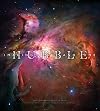
If there is one book you ever look at, make it this one. What you see above your head does not even begin to describe it all. I can almost hear the sawing noise as I type this...
Launched today on April 24, 1990, NASA's Hubble Space Telescope has made more than 1.3 million observations of more than 42,000 celestial objects. In its 27-year lifetime, the telescope has made nearly 148,000 trips around our planet. Hubble has racked up plenty of frequent-flier miles, about 3.8 billion. An average of approximately 2 terabytes of Hubble data is added to the archive every month. Hubble observations have produced more than 141 terabytes of data, which will be available for show more present and future generations of researchers. Astronomers using Hubble data have published more than 14,600 scientific papers.
Hubble's powerful ability to detect galaxies that are much farther away than those ever seen before is allowing astronomers to trace the history of the universe. The deeper Hubble peers into space, the farther back in time it looks. The farthest galaxies detected by Hubble were forming just a few hundred million years after the big bang. Hubble's visible "core sample" of the universe shows galaxies during their youth, providing evidence that galaxies grew over time through mergers with other galaxies to become the giant galaxies we see today.
Young galaxies have close encounters that sometimes ended in grand mergers that yield overflowing sites of new star birth as the colliding galaxies morph into wondrous new shapes. The early galaxies spied by Hubble are smaller and more irregularly shaped than today's grand spiral and elliptical galaxies. By studying galaxies at different epochs, astronomers can see how galaxies change over time. The process is analogous to a very large scrapbook of pictures documenting the lives of children from infancy to adulthood.
And the evolution continues. Hubble observations of our neighbouring galaxy, M31, has allowed astronomers to predict with certainty that titanic collision between our Milky Way galaxy Andromeda will inevitably take place beginning 4 billion years from now. The galaxy is now 2.5 million light-years away, but it is inexorably falling toward the Milky Way under the mutual pull of gravity between the two galaxies and the invisible dark matter that surrounds them both. The merger will result in the creation of a giant elliptical galaxy.
http://hubblesite.org/(adapted)
HUBBLE
Above our Earth so high
The Hubble telescope now hangs
Beyond our vault-like sky:
An all embracing eye;
Now showing us the universe
In all her glory.
Those swirling galaxies give way to seemingly endless
Tracts of quasars, dust and gas.
Through Hubble we look back through time,
At remnants of the Big Bang:
The Birth, they tell us, of Creation,
That might be repeated,
Over and over again.
Yet, before this satellite was launched,
Or telescopes invented,
Just what did humans know?
What did the Aztecs know of England,
Or fourteenth century English folk know of America?
As technological advances have
Been swift, so our state of ignorance
Has been revealed for all to see.
For no-one knows The Purpose of Life.
Why?
Oh Why!
Do We Live
To Die
Why?
For we will Die
Not Knowing Why.
Ask Christ they say,
He’ll show The Way.
Ask God and He will too.
Ask Allah, Buddha,
Anyone you like;
And Me, I’ll tell you just to Hope,
For Love will see us through.
Paul Butters show less
Hubble's powerful ability to detect galaxies that are much farther away than those ever seen before is allowing astronomers to trace the history of the universe. The deeper Hubble peers into space, the farther back in time it looks. The farthest galaxies detected by Hubble were forming just a few hundred million years after the big bang. Hubble's visible "core sample" of the universe shows galaxies during their youth, providing evidence that galaxies grew over time through mergers with other galaxies to become the giant galaxies we see today.
Young galaxies have close encounters that sometimes ended in grand mergers that yield overflowing sites of new star birth as the colliding galaxies morph into wondrous new shapes. The early galaxies spied by Hubble are smaller and more irregularly shaped than today's grand spiral and elliptical galaxies. By studying galaxies at different epochs, astronomers can see how galaxies change over time. The process is analogous to a very large scrapbook of pictures documenting the lives of children from infancy to adulthood.
And the evolution continues. Hubble observations of our neighbouring galaxy, M31, has allowed astronomers to predict with certainty that titanic collision between our Milky Way galaxy Andromeda will inevitably take place beginning 4 billion years from now. The galaxy is now 2.5 million light-years away, but it is inexorably falling toward the Milky Way under the mutual pull of gravity between the two galaxies and the invisible dark matter that surrounds them both. The merger will result in the creation of a giant elliptical galaxy.
http://hubblesite.org/(adapted)
HUBBLE
Above our Earth so high
The Hubble telescope now hangs
Beyond our vault-like sky:
An all embracing eye;
Now showing us the universe
In all her glory.
Those swirling galaxies give way to seemingly endless
Tracts of quasars, dust and gas.
Through Hubble we look back through time,
At remnants of the Big Bang:
The Birth, they tell us, of Creation,
That might be repeated,
Over and over again.
Yet, before this satellite was launched,
Or telescopes invented,
Just what did humans know?
What did the Aztecs know of England,
Or fourteenth century English folk know of America?
As technological advances have
Been swift, so our state of ignorance
Has been revealed for all to see.
For no-one knows The Purpose of Life.
Why?
Oh Why!
Do We Live
To Die
Why?
For we will Die
Not Knowing Why.
Ask Christ they say,
He’ll show The Way.
Ask God and He will too.
Ask Allah, Buddha,
Anyone you like;
And Me, I’ll tell you just to Hope,
For Love will see us through.
Paul Butters show less
Launched today on April 24, 1990, NASA's Hubble Space Telescope has made more than 1.3 million observations of more than 42,000 celestial objects. In its 27-year lifetime, the telescope has made nearly 148,000 trips around our planet. Hubble has racked up plenty of frequent-flier miles, about 3.8 billion. An average of approximately 2 terabytes of Hubble data is added to the archive every month. Hubble observations have produced more than 141 terabytes of data, which will be available for show more present and future generations of researchers. Astronomers using Hubble data have published more than 14,600 scientific papers.
Hubble's powerful ability to detect galaxies that are much farther away than those ever seen before is allowing astronomers to trace the history of the universe. The deeper Hubble peers into space, the farther back in time it looks. The farthest galaxies detected by Hubble were forming just a few hundred million years after the big bang. Hubble's visible "core sample" of the universe shows galaxies during their youth, providing evidence that galaxies grew over time through mergers with other galaxies to become the giant galaxies we see today.
Young galaxies have close encounters that sometimes ended in grand mergers that yield overflowing sites of new star birth as the colliding galaxies morph into wondrous new shapes. The early galaxies spied by Hubble are smaller and more irregularly shaped than today's grand spiral and elliptical galaxies. By studying galaxies at different epochs, astronomers can see how galaxies change over time. The process is analogous to a very large scrapbook of pictures documenting the lives of children from infancy to adulthood.
And the evolution continues. Hubble observations of our neighbouring galaxy, M31, has allowed astronomers to predict with certainty that titanic collision between our Milky Way galaxy Andromeda will inevitably take place beginning 4 billion years from now. The galaxy is now 2.5 million light-years away, but it is inexorably falling toward the Milky Way under the mutual pull of gravity between the two galaxies and the invisible dark matter that surrounds them both. The merger will result in the creation of a giant elliptical galaxy.
http://hubblesite.org/(adapted)
HUBBLE
Above our Earth so high
The Hubble telescope now hangs
Beyond our vault-like sky:
An all embracing eye;
Now showing us the universe
In all her glory.
Those swirling galaxies give way to seemingly endless
Tracts of quasars, dust and gas.
Through Hubble we look back through time,
At remnants of the Big Bang:
The Birth, they tell us, of Creation,
That might be repeated,
Over and over again.
Yet, before this satellite was launched,
Or telescopes invented,
Just what did humans know?
What did the Aztecs know of England,
Or fourteenth century English folk know of America?
As technological advances have
Been swift, so our state of ignorance
Has been revealed for all to see.
For no-one knows The Purpose of Life.
Why?
Oh Why!
Do We Live
To Die
Why?
For we will Die
Not Knowing Why.
Ask Christ they say,
He’ll show The Way.
Ask God and He will too.
Ask Allah, Buddha,
Anyone you like;
And Me, I’ll tell you just to Hope,
For Love will see us through.
Paul Butters show less
Hubble's powerful ability to detect galaxies that are much farther away than those ever seen before is allowing astronomers to trace the history of the universe. The deeper Hubble peers into space, the farther back in time it looks. The farthest galaxies detected by Hubble were forming just a few hundred million years after the big bang. Hubble's visible "core sample" of the universe shows galaxies during their youth, providing evidence that galaxies grew over time through mergers with other galaxies to become the giant galaxies we see today.
Young galaxies have close encounters that sometimes ended in grand mergers that yield overflowing sites of new star birth as the colliding galaxies morph into wondrous new shapes. The early galaxies spied by Hubble are smaller and more irregularly shaped than today's grand spiral and elliptical galaxies. By studying galaxies at different epochs, astronomers can see how galaxies change over time. The process is analogous to a very large scrapbook of pictures documenting the lives of children from infancy to adulthood.
And the evolution continues. Hubble observations of our neighbouring galaxy, M31, has allowed astronomers to predict with certainty that titanic collision between our Milky Way galaxy Andromeda will inevitably take place beginning 4 billion years from now. The galaxy is now 2.5 million light-years away, but it is inexorably falling toward the Milky Way under the mutual pull of gravity between the two galaxies and the invisible dark matter that surrounds them both. The merger will result in the creation of a giant elliptical galaxy.
http://hubblesite.org/(adapted)
HUBBLE
Above our Earth so high
The Hubble telescope now hangs
Beyond our vault-like sky:
An all embracing eye;
Now showing us the universe
In all her glory.
Those swirling galaxies give way to seemingly endless
Tracts of quasars, dust and gas.
Through Hubble we look back through time,
At remnants of the Big Bang:
The Birth, they tell us, of Creation,
That might be repeated,
Over and over again.
Yet, before this satellite was launched,
Or telescopes invented,
Just what did humans know?
What did the Aztecs know of England,
Or fourteenth century English folk know of America?
As technological advances have
Been swift, so our state of ignorance
Has been revealed for all to see.
For no-one knows The Purpose of Life.
Why?
Oh Why!
Do We Live
To Die
Why?
For we will Die
Not Knowing Why.
Ask Christ they say,
He’ll show The Way.
Ask God and He will too.
Ask Allah, Buddha,
Anyone you like;
And Me, I’ll tell you just to Hope,
For Love will see us through.
Paul Butters show less
Lists
Awards

You May Also Like


Associated Authors
Statistics
- Works
- 4
- Also by
- 2
- Members
- 392
- Popularity
- #61,821
- Rating
- 4.2
- Reviews
- 6
- ISBNs
- 147
- Languages
- 2
- Favorited
- 1