
Paul Raeburn
Author of Mars: Uncovering the Secrets of the Red Planet
About the Author
Paul Raeburn a journalist and the author four books, included Acquainted with the Night. He's stories have appeared in Discover. The Huffington Post. The New York Times Magazine, Scientific American, AND Psychology today among many other publications A Past president of the National Association OF show more Science Write he has been a science editor at BusinessWeek and the Associated Press, and the creator and host of innovations m Medicine on XM satellite radionn Reebum lives in New York City with his wife the write Elizabeth DeVita Raeburn and their children. You can find him on Twitter@praeburn and on his website at www.paulraeburn.com. show less
Image credit: Courtesy of Paul Raeburn
Works by Paul Raeburn
Acquainted with the Night: A Parent's Quest to Understand Depression and Bipolar Disorder in His Children (2004) 64 copies, 2 reviews
Do Fathers Matter?: What Science Is Telling Us About the Parent We've Overlooked (2014) 63 copies, 3 reviews
The Game Theorist's Guide to Parenting: How the Science of Strategic Thinking Can Help You Deal with the Toughest Negotiators You Know--Your Kids (2016) 45 copies, 1 review
Tagged
Common Knowledge
- Birthdate
- 1950-11-26
- Gender
- male
- Education
- Massachusetts Institute of Technology (BA|Physics)
Berklee College of Music (Boston ∙ Massachusetts ∙ USA) - Occupations
- journalist
editor
writer
radio broadcaster - Organizations
- National Association of Science Writers (former president)
Sigma XI (honorary member) - Relationships
- DeVita-Raeburn, Elizabeth (wife)
- Short biography
- Paul Raeburn is the author of the memoir Acquainted with the Night: A Parent’s Quest to Understand Depression and Bipolar Disorder in His Children (Broadway Books, 2004). From 1996-2003, he was the science editor and a senior writer at Business Week. Before that, he was the science editor and chief science correspondent at The Associated Press (1981-96). He is a commentator for National Public Radio’s Morning Edition, and occasional guest host of NPR’s Talk of the Nation: Science Friday. And he is the organizer of the annual New Horizons in Science writers’ conference, sponsored by the Council for the Advancement of Science Writing.
Raeburn is also the author of Mars published by the National Geographic Society in 1998, and The Last Harvest, published by Simon & Schuster in 1995. He has written for The New York Times Sunday Magazine, Psychology Today, The Washington Post, Discover, Popular Science, Child, Self, Technology Review and many other newspapers and magazines.
Raeburn is a past president of the National Association of Science Writers and a recipient of its Science-in-Society Award. He has also received the Associated Press Managing Editors Award for excellence, two Deadline Club awards, two Computer Press Association awards, and the John P. McGovern Award for Excellence in Medical Communications from the American Medical Writers Association. He is an honorary member of Sigma Xi, the scientific research society.
Raeburn has been a journalism fellow at Stanford University, and science-writer-in-residence at the University of Wisconsin and the University of California, Santa Cruz. He is a graduate of the Massachusetts Institute of Technology, where he received a bachelor's degree in physics. He also studied composition at the Berklee School of Music in Boston, and he plays piano and guitar. Before joining the AP, he worked for the Boston Phoenix and the Lowell (Mass.) Sun.
A native of Detroit, Raeburn now lives and works in New York City with his wife, the writer Elizabeth DeVita-Raeburn.
- Nationality
- USA
- Birthplace
- Detroit, Michigan, USA
- Places of residence
- New York, New York, USA
- Associated Place (for map)
- USA
Members
Reviews
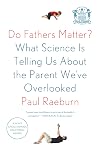
Do fathers matter? At a time when there seem to be a war on dads, you may be excused to ask the question!
The award-winning journalist and father of five Paul Raeburn doesn’t offer here an answer from a social perspective, as has often been done. He, in fact, tackle the subject mainly from a purely scientific one.
Of course, fathers do matter! And, to nail the point, this book is cleverly divided into stages, following the impact of dads from conception to early years.
Drawing upon show more neuroscience, animal behaviorism, genetics, developmental psychology and other fields, Paul Raeburn shows that if it’s mothers who carry and ultimately birth a child, the importance of a man’s biology is no less crucial. He relies, for example, on epigenetic to show how sperm quality can affect the foetus. He also opposes the reproductive strategies of men and women to show how imprinted genes from fathers are as crucial as that of mothers for the development of the embryo (both sperm quality and imprinted genes turning out, in fact, to have an impact upon the child’s health in later life...).
What I found particularly engrossing, though, is how he debunks a common myth, that according to which mothers, because they give birth, ultimately have a stronger bond and emotional bond with their children than fathers do. It’s bogus, yet it’s a belief so deeply ingrained in the popular psyche that it has contributed to this relegation of fathers to second class parents, their role not deemed as important as that of mothers, supposedly more ‘nurturing’ and ‘caring’ simply because they are female. And yet...
As the author shows, fathers too build strong bonds with their child, and it starts at the time of conception and all the way through pregnancy. It’s not about a few cases of couvade syndrome. It’s about showing how all expectant fathers experience a change in hormones, preparing them for childrearing as much as mothers. The bond, in fact, will carry on after birth, when, detailing what synchrony is, Paul Raeburn shows how interaction between fathers and their infants sculpt and shape the brains of both… and for the better!
Seen from such biological and neurological perspective, the positive impact of fathers which has been shown over and over and over again upon children’s social, emotional, and overall cognitive development starts to unravel and making sense. As such, if his book, being about science, is not a political statement, it remains a must read as it surely offers a perspective that can sustain one: if we care about our children, then we must change the way we view fatherhood.
Here’s a clever, brilliant, and very engrossing read. show less
The award-winning journalist and father of five Paul Raeburn doesn’t offer here an answer from a social perspective, as has often been done. He, in fact, tackle the subject mainly from a purely scientific one.
Of course, fathers do matter! And, to nail the point, this book is cleverly divided into stages, following the impact of dads from conception to early years.
Drawing upon show more neuroscience, animal behaviorism, genetics, developmental psychology and other fields, Paul Raeburn shows that if it’s mothers who carry and ultimately birth a child, the importance of a man’s biology is no less crucial. He relies, for example, on epigenetic to show how sperm quality can affect the foetus. He also opposes the reproductive strategies of men and women to show how imprinted genes from fathers are as crucial as that of mothers for the development of the embryo (both sperm quality and imprinted genes turning out, in fact, to have an impact upon the child’s health in later life...).
What I found particularly engrossing, though, is how he debunks a common myth, that according to which mothers, because they give birth, ultimately have a stronger bond and emotional bond with their children than fathers do. It’s bogus, yet it’s a belief so deeply ingrained in the popular psyche that it has contributed to this relegation of fathers to second class parents, their role not deemed as important as that of mothers, supposedly more ‘nurturing’ and ‘caring’ simply because they are female. And yet...
As the author shows, fathers too build strong bonds with their child, and it starts at the time of conception and all the way through pregnancy. It’s not about a few cases of couvade syndrome. It’s about showing how all expectant fathers experience a change in hormones, preparing them for childrearing as much as mothers. The bond, in fact, will carry on after birth, when, detailing what synchrony is, Paul Raeburn shows how interaction between fathers and their infants sculpt and shape the brains of both… and for the better!
Seen from such biological and neurological perspective, the positive impact of fathers which has been shown over and over and over again upon children’s social, emotional, and overall cognitive development starts to unravel and making sense. As such, if his book, being about science, is not a political statement, it remains a must read as it surely offers a perspective that can sustain one: if we care about our children, then we must change the way we view fatherhood.
Here’s a clever, brilliant, and very engrossing read. show less
The Game Theorist's Guide to Parenting: How the Science of Strategic Thinking Can Help You Deal with the Toughest Negotiators You Know—Your Kids by Paul Raeburn

Anyone not familiar with game theory but who normally enjoys a good parenting book might still be a little bored by this one. However, if you're like me in that you prefer your non-fiction mixed with a smattering of math and dry economic principles whenever appropriate AND you happen to be a parent of small children, then the Game Theorist's Guide to Parenting could be the book for you. You'll likely discover you employ some of these tactics already, but didn't realize there was a name for show more it.
The authors make an original case for their methods—a modern twist based on centuries-old ideas—and then provide demonstrations using the paradoxical rules of parental negotiation. Even a term like "parental negotiation," for example, usually means the parents' word is the law (Authoritarian), but the authors argue that this approach still has the side effect of child resentment which in turn causes a slew of other unintended consequences. The goal, after all, is to arrive at an elegant and fair solution even though children possess little more than a nonsensical sense of logic and argument. Then again, you might lack the patience for game theory if you're on a road with a car full of hungry kids trying to find a friggin' place to eat. show less
The authors make an original case for their methods—a modern twist based on centuries-old ideas—and then provide demonstrations using the paradoxical rules of parental negotiation. Even a term like "parental negotiation," for example, usually means the parents' word is the law (Authoritarian), but the authors argue that this approach still has the side effect of child resentment which in turn causes a slew of other unintended consequences. The goal, after all, is to arrive at an elegant and fair solution even though children possess little more than a nonsensical sense of logic and argument. Then again, you might lack the patience for game theory if you're on a road with a car full of hungry kids trying to find a friggin' place to eat. show less
Acquainted with the Night: A Parent's Quest to Understand Depression and Bipolar Disorder in His Children by Paul Raeburn
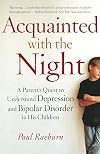
I was shocked and amazed at this memoir. The author writes about his family's problems with mental illness, alcoholism, and anger issues as if her were writing about people on another continent. He is so detached from the experience, as well as from himself. I couldn't believe that he could write about his controlling nature and anger problems without acknowledging them to himself or the reader. I felt like he was trying to pull one over on the reader, make himself appear to be above his show more family's troubles, or at least an innocent bystander, rather than a cause of the problems. I would not recommend this to someone who was seriously interested in a parent's honest exploration of their own children's mental illness. I would recommend this to someone who wants to read about a narcissistic, self centered individual's refusal to recognize how his treatment of his family has affected them! show less
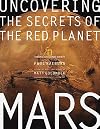
One of the more... interesting... things about having a few hundred books on your to-read pile is that sometimes you find yourself thinking things like, "Hmm, this big coffee table book on Mars has been sitting here for a while. Maybe I should pull it off and give it a read," only to realize in shock that "for a while" actually means something more like "since 1998." Well, better late than never, I guess.
Needless to say, a lot has happened on Mars since 1998, so this book is at least show more incomplete and, in a few places, pretty dated. But it's a decent overview of the Mars missions prior to that point, featuring detailed but relatively non-technical descriptions of the Mariner and Viking probes and especially the Mars Pathfinder mission, which featured the first Mars Rover, Sojourner. There may not be quite as many pictures as I'd usually expect from this kind of a book, but there are a fair number, including a few in 3D. (Red/blue glasses are included.) show less
Needless to say, a lot has happened on Mars since 1998, so this book is at least show more incomplete and, in a few places, pretty dated. But it's a decent overview of the Mars missions prior to that point, featuring detailed but relatively non-technical descriptions of the Mariner and Viking probes and especially the Mars Pathfinder mission, which featured the first Mars Rover, Sojourner. There may not be quite as many pictures as I'd usually expect from this kind of a book, but there are a fair number, including a few in 3D. (Red/blue glasses are included.) show less
Lists
Awards


You May Also Like


Associated Authors
Statistics
- Works
- 9
- Members
- 428
- Popularity
- #57,055
- Rating
- 3.6
- Reviews
- 9
- ISBNs
- 27
- Languages
- 5