
Gary D. Chapman
Author of The Five Love Languages: The Secret to Love That Lasts
About the Author
Gary Chapman-author speaker, and counselor-has a passion for helping people form lasting relationships. He is the beststelling author of the 5 love languages series and the director of Marriage and Family Life consultants. Inc. Gary travels the world presenting seminars, and his radio programs air show more on more than 400 stations. For More information visit 5lovelanguages.com. show less
Series
Works by Gary D. Chapman
The Five Love Languages: How to Express Heartfelt Commitment to Your Mate (Men's Edition) (2004) 914 copies, 8 reviews
The Five Languages of Apology: How to Experience Healing in All Your Relationships (2006) 741 copies, 5 reviews
The 5 Languages of Appreciation in the Workplace: Empowering Organizations by Encouraging People (2011) 616 copies, 6 reviews
Love as a Way of Life: Seven Keys to Transforming Every Aspect of Your Life (2008) 321 copies, 5 reviews
Desperate Marriages: Moving Toward Hope and Healing in Your Relationship (1998) 297 copies, 1 review
Now You're Speaking My Language: Honest Communication and Deeper Intimacy for a Stronger Marriage (2007) 253 copies, 3 reviews
The 5 Love Languages Singles Edition: The Secret that Will Revolutionize Your Relationships (2017) 157 copies, 1 review
The 5 Love Languages for Men : Tools for Making a Good Relationship Great (2014) 140 copies, 1 review
Parenting Your Adult Child: How You Can Help Them Achieve Their Full Potential (1999) 123 copies, 1 review
How to Really Love Your Adult Child: Building a Healthy Relationship in a Changing World (2011) 75 copies
Keeping Love Alive as Memories Fade: The 5 Love Languages and the Alzheimer's Journey (2016) 74 copies, 2 reviews
Everybody Wins: The Chapman Guide to Solving Conflicts without Arguing (Chapman Guides) (2006) 74 copies
Rising Above a Toxic Workplace: Taking Care of Yourself in an Unhealthy Environment (2014) 70 copies, 1 review
Happily Ever After: Six Secrets to a Successful Marriage (Chapman Guides) (2011) 66 copies, 2 reviews
Loving Your Spouse When You Feel Like Walking Away: Real Help for Desperate Hearts in Difficult Marriages (2018) 64 copies
The World's Easiest Guide to Family Relationships (World's Easiest Guides) (2001) 63 copies, 1 review
A Teen's Guide to the 5 Love Languages: How to Understand Yourself and Improve All Your Relationships (2016) 62 copies
Extraordinary Grace: How the Unlikely Lineage of Jesus Reveals God's Amazing Love (2013) 58 copies, 2 reviews
The DIY Guide to Building a Family that Lasts: 12 Tools for Improving Your Home Life (2019) 52 copies, 1 review
Home Improvements: The Chapman Guide to Negotiating Change with Your Spouse (Chapman Guides) (2006) 47 copies
Making Love: The Chapman Guide to Making Sex an Act of Love (Marriage Saver) (2008) 38 copies, 1 review
The Love as a Way of Life Devotional: A Ninety-Day Adventure That Makes Love a Daily Habit (2008) 36 copies, 2 reviews
Building Love Together in Blended Families: The 5 Love Languages and Becoming Stepfamily Smart (2020) 31 copies
Sync or Swim: A Fable About Workplace Communication and Coming Together in a Crisis (2014) 26 copies, 1 review
Profit Sharing: The Chapman Guide to Making Money an Asset in Your Marriage (Chapman Guides) (2007) 25 copies
In-Law Relationships: The Chapman Guide to Becoming Friends with Your In-Laws (2008) 21 copies, 1 review
The 5 Loves Languages 21 copies
Discovering the 5 Love Languages at School (Grades 1-6): Lessons that Promote Academic Excellence and Connections for Life (2015) 21 copies, 1 review
Sharing Love Abundantly in Special Needs Families: The 5 Love Languages® for Parents Raising Children with Disabilities (2019) 20 copies
As 5 linguagens do amor das crianças: Como expressar um compromisso de amor a seu filho (Portuguese Edition) (2021) 12 copies
Holding on to Love After You've Lost a Baby: The 5 Love Languages® for Grieving Parents (2020) 8 copies
As cinco linguagens do amor - 3ª edição: Como expressar um compromisso de amor a seu cônjuge (Portuguese Edition) (2013) 4 copies
The Light Inside 4 copies
What’s Love Got to Do With It? PLUS Negative Thinking in Marriage: Its Power & Problem DVD 100 MIN 4 copies
Master Work: Lessons from the Other Side of Love &The Gift of Forgiveness (Essential Messages From God's Servants) (2006) 3 copies
Te ve. Te conoce, Te ama.: 5 verdades acerca de Dios y tu lenguaje de amor (Spanish Edition) (2020) 2 copies
O amor como estilo de vida - A arte japonesa de fazer as pazes com o seu dinheiro (Em Portugues do Brasil) (2019) 2 copies
Five Love Languages, The – How to Express Heartfelt Commitment to Your Mate (Kit includes one Bible study book, two DVDs, one CD-Rom, one The 5 Love Languages paperback book (2007) 2 copies, 1 review
365× liefdestalen : dagboek voor 2 2 copies
Upptc̃k din tonr̄ings kr̃lekssprk̄ : nyckeln till att visa tonr̄ingar kr̃lek p ̄ett effektivt st̃t (2014) 1 copy
Szeretetbe kapaszkodva : Hogyan segít az öt szeretetnyelv a vendégbabát gyászoló szülőknek 1 copy, 1 review
As cinco linguagens do amor 1 copy
愛之語 1 copy
Comunicação & intimidade: O segredo para fortalecer seu casamento (Portuguese Edition) (2021) 1 copy
Armastuse 5 keelt 1 copy
Esperança para os separados 1 copy
Børnenes 5 kærlighedssprog 1 copy
Undskyld på 5 sprog 1 copy
Dospívající a pět jazyků lásky : odhalte jazyk lásky, kterým komunikuje vaše dospívající dítě (2003) 1 copy
Újra kettesben hogyan éljük meg szeretetben a házasság második felének örömeit és kihívásait? (2024) 1 copy
5 tale van die liefde 1 copy
As 5 linguagens do amor para homens: Como expressar um compromisso de amor a sua esposa (Portuguese Edition) (2018) 1 copy
The 5 Love Languages/5 Love Languages for Men/5 Love Languages of Teenagers/5 Love Languages of Children (2016) 1 copy
The Journey of Marriage 1 copy
Dream marriage 1 copy
How Will We Love 1 copy
How Will We Love 1 copy
Tagged
Common Knowledge
- Canonical name
- Chapman, Gary D.
- Legal name
- Chapman, Gary Demonte
- Other names
- Chapman, Gary D.
Chapman, Gary
蓋瑞.查普曼
盖瑞.‧查普曼
蓋瑞.巧門 - Birthdate
- 1938-01-10
- Gender
- male
- Education
- Moody Bible Institute
Wheaton College
Wake Forest University
Southwestern Baptist Theological Seminary (Ph.D) - Occupations
- pastor
professor
counselor - Organizations
- Calvary Baptist Church
- Nationality
- USA
- Birthplace
- China Grove, North Carolina, USA
- Associated Place (for map)
- North Carolina, USA
Members
Reviews
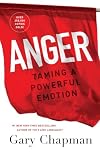
I’d be a bad therapist. See, Aristotle says anger is like any other human trait: there’s an excess, a deficiency, and a mean. An excess explodes at everyone over everything all the time. A deficiency tolerates abuse it shouldn’t accept. The mean expresses anger in the right proportion at the right times and at the right people. By the time I’ve finished talking, found my copy of the Nicomachean Ethics, and turned back around, my office is empty and I’ve lost another client. Bad show more therapist.
This is why Gary Chapman’s book “Anger: Taming a Powerful Emotion” is a better bet than a session with Dr. Nathan. Whether you’re shoving anger down into a festering ball of rot or gracing the entire world with your “truth telling,” you need a lecture on Aristotelian ethics less than you need to learn how to take control of all that righteous indignation before it sinks your most important relationships.
These two concepts, righteous indignation and relationships, are good prisms for understanding Chapman’s angle on anger. Chapman writes both as a professional counselor and as an evangelical Christian. He starts, then, with the presumption that everything about human nature is created by a good God for a good reason — including anger.
Thus, indignation serves a righteous end. It’s a warning light on the dashboard, alerting us to a problem that needs a solution. Anger is good. It’s neither a vestigial “fight or flight” response from our time as apes on a savanna, nor a mistake we should try to deny or evade. The trick is to learn how to be angry for good reasons, in a good proportion, and in a good direction. (As Aristotle said…never mind.)
Whether or not you find a Christian worldview compelling, Chapman’s techniques for anger management are agnostic. What I mean is that his methods don’t really require the lordship of Jesus or a sinner’s prayer, although Chapman suggests a lot of prayer and provides enough scriptural support to reassure the reader he’s not working at cross purposes to the Bible.
Chapman assumes you wouldn’t have turned to him if you weren’t a Christian, so he isn’t out to convert you. Rather, he wants to empower you to stabilize and restore the relationships that unmanaged anger always damages. He emphasizes thinking together: writing your feelings down, expressing yourself in “we” language that requests help instead of “you” language that accuses, and other approaches that prioritize healthy relationships over proving your point or extracting confessions of guilt.
Along the way, Chapman handles a host of sensitive subjects with sensitivity and grace. What do you do when the other person refuses to see a problem and doesn’t want to reconcile? How do you help an immature child deal with maturing emotions? Is it okay to be angry with God? What about when you’re angry at yourself, and how do you confront an angry person without setting off a landmine?
I appreciate Chapman’s clear, calm, rational recommendations. Anger is hard, especially since so much of a person’s identity is wrapped up in feeling right. Though I may quibble with some of his prooftexts, it’s hard to fault his strategies. I personally have never regretted slowing down, thinking before I open my big mouth, and redirecting my energy toward building bridges with the people I love. show less
This is why Gary Chapman’s book “Anger: Taming a Powerful Emotion” is a better bet than a session with Dr. Nathan. Whether you’re shoving anger down into a festering ball of rot or gracing the entire world with your “truth telling,” you need a lecture on Aristotelian ethics less than you need to learn how to take control of all that righteous indignation before it sinks your most important relationships.
These two concepts, righteous indignation and relationships, are good prisms for understanding Chapman’s angle on anger. Chapman writes both as a professional counselor and as an evangelical Christian. He starts, then, with the presumption that everything about human nature is created by a good God for a good reason — including anger.
Thus, indignation serves a righteous end. It’s a warning light on the dashboard, alerting us to a problem that needs a solution. Anger is good. It’s neither a vestigial “fight or flight” response from our time as apes on a savanna, nor a mistake we should try to deny or evade. The trick is to learn how to be angry for good reasons, in a good proportion, and in a good direction. (As Aristotle said…never mind.)
Whether or not you find a Christian worldview compelling, Chapman’s techniques for anger management are agnostic. What I mean is that his methods don’t really require the lordship of Jesus or a sinner’s prayer, although Chapman suggests a lot of prayer and provides enough scriptural support to reassure the reader he’s not working at cross purposes to the Bible.
Chapman assumes you wouldn’t have turned to him if you weren’t a Christian, so he isn’t out to convert you. Rather, he wants to empower you to stabilize and restore the relationships that unmanaged anger always damages. He emphasizes thinking together: writing your feelings down, expressing yourself in “we” language that requests help instead of “you” language that accuses, and other approaches that prioritize healthy relationships over proving your point or extracting confessions of guilt.
Along the way, Chapman handles a host of sensitive subjects with sensitivity and grace. What do you do when the other person refuses to see a problem and doesn’t want to reconcile? How do you help an immature child deal with maturing emotions? Is it okay to be angry with God? What about when you’re angry at yourself, and how do you confront an angry person without setting off a landmine?
I appreciate Chapman’s clear, calm, rational recommendations. Anger is hard, especially since so much of a person’s identity is wrapped up in feeling right. Though I may quibble with some of his prooftexts, it’s hard to fault his strategies. I personally have never regretted slowing down, thinking before I open my big mouth, and redirecting my energy toward building bridges with the people I love. show less
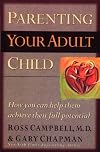
This excellent book covers all aspects of relating to adult children. For instance, it describes problems with children in their twenties who drift, never leaving home; or who don't want independence; or who treat their parents as doormats.
I don't have any of those problems, but still found it very interesting in understanding better how younger people think, and why the traditional model of the empty next is no longer so appropriate. There was advice in dealing with behaviour problems, show more with boyfriends/girlfriends, with in-laws, with money... and one about what we leave our children as legacies, not just financial but moral and spiritual too.
The book is very well written, with anecdotes and clear advice. My only quibble was that almost every page was advice about going to counselling to resolve problems - but for some that may, of course, be appropriate.
All in all, highly recommended to anyone with adult (or nearly adult) children, particularly if you are having any problems with them. Written from a Judaeo-Christian perspective, but relevant to anyone. show less
I don't have any of those problems, but still found it very interesting in understanding better how younger people think, and why the traditional model of the empty next is no longer so appropriate. There was advice in dealing with behaviour problems, show more with boyfriends/girlfriends, with in-laws, with money... and one about what we leave our children as legacies, not just financial but moral and spiritual too.
The book is very well written, with anecdotes and clear advice. My only quibble was that almost every page was advice about going to counselling to resolve problems - but for some that may, of course, be appropriate.
All in all, highly recommended to anyone with adult (or nearly adult) children, particularly if you are having any problems with them. Written from a Judaeo-Christian perspective, but relevant to anyone. show less
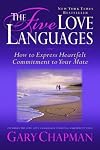
We were pretty disappointed in this book (my husband and I read it together).
Although he might have something worth while to say about the 5 love languages we couldn't really pay attention to those without cringing in pain at his awful gender stereotypes. Firstly, he does not include homosexual couples in this book at all. He presumes that everyone is heterosexual. Then repeatedly made it seem that women were more in need of emotional support than men, one-sidedly using stereotypes about show more how women cry etc without recognizing that men are emotional beings as well. However, what was the worst part for us however was in the 'act of service' section. The husband fully expected his wife to be a stay at home, work all day doing house chores, no career wife. Rather than addressing this as the problem (as Betty Friedman did in The Feminine Mystique 50 years ago), Chapman told the couple that the wife needed to make sure she did 4 things for the husband everyday and in turn he would *help her* with 4 things of his choice. Why doesn't he just do four things for her? There's still an expectation that she will be doing at least twice as much housework. There is no equality in that marriage. A woman's place is not in the home. Only a patriarchal oppressor would force a woman to stay home and do housework when she aspires to do greater things.
Overall, Chapman was greatly disappointing. He really needs to take a Sociology of Gender class before he writes another book because his views are very outdated... but considering he's an 80 year old man perhaps we can cut him some slack.
Sincerely,
Not impressed at all show less
Although he might have something worth while to say about the 5 love languages we couldn't really pay attention to those without cringing in pain at his awful gender stereotypes. Firstly, he does not include homosexual couples in this book at all. He presumes that everyone is heterosexual. Then repeatedly made it seem that women were more in need of emotional support than men, one-sidedly using stereotypes about show more how women cry etc without recognizing that men are emotional beings as well. However, what was the worst part for us however was in the 'act of service' section. The husband fully expected his wife to be a stay at home, work all day doing house chores, no career wife. Rather than addressing this as the problem (as Betty Friedman did in The Feminine Mystique 50 years ago), Chapman told the couple that the wife needed to make sure she did 4 things for the husband everyday and in turn he would *help her* with 4 things of his choice. Why doesn't he just do four things for her? There's still an expectation that she will be doing at least twice as much housework. There is no equality in that marriage. A woman's place is not in the home. Only a patriarchal oppressor would force a woman to stay home and do housework when she aspires to do greater things.
Overall, Chapman was greatly disappointing. He really needs to take a Sociology of Gender class before he writes another book because his views are very outdated... but considering he's an 80 year old man perhaps we can cut him some slack.
Sincerely,
Not impressed at all show less
After taking a love languages quiz as part of premarital counseling, my fiancee and I decided to acquire and read the book. Its advice and insight is terribly helpful, and all couples (whether married or only engaged) couldn't lose by reading it.
I found out that at least some reviews accuse author Dr. Gary Chapman of being a "Bible-thumper." I wish I could say merely "they have got to be kidding," but I know perfectly well the explanation: those reviewers are individuals who recoil in show more disgust from the slightest hint of a Christian worldview. At least those reviewers did seem to actually read the book. Well, then, *is* this book Bible-thumping in tone? Absolutely not. I'm fairly sure I don't recall Dr. Chapman mentioning the Bible once in the entire book. Actually, before the last chapter (where he finally explicitly states his belief that Jesus is the Christ), the tone is fairly secular; I could not tell whether Chapman was a Christian of any sort. He successfully left that unclear (again until the last chapter), by calling Jesus "Jesus of Nazareth" or only "Jesus" when mentioning Him at all. The people who tend to reveal their beliefs and habits are Dr. Chapman's counseling patients, not him. Several patients mention the mere fact of going to church. If either that, or Dr. Chapman's tone and implicit worldview, offend the reader, the reader frankly gets offended easily. They also don't know what a "Bible-thumper" actually is. show less
I found out that at least some reviews accuse author Dr. Gary Chapman of being a "Bible-thumper." I wish I could say merely "they have got to be kidding," but I know perfectly well the explanation: those reviewers are individuals who recoil in show more disgust from the slightest hint of a Christian worldview. At least those reviewers did seem to actually read the book. Well, then, *is* this book Bible-thumping in tone? Absolutely not. I'm fairly sure I don't recall Dr. Chapman mentioning the Bible once in the entire book. Actually, before the last chapter (where he finally explicitly states his belief that Jesus is the Christ), the tone is fairly secular; I could not tell whether Chapman was a Christian of any sort. He successfully left that unclear (again until the last chapter), by calling Jesus "Jesus of Nazareth" or only "Jesus" when mentioning Him at all. The people who tend to reveal their beliefs and habits are Dr. Chapman's counseling patients, not him. Several patients mention the mere fact of going to church. If either that, or Dr. Chapman's tone and implicit worldview, offend the reader, the reader frankly gets offended easily. They also don't know what a "Bible-thumper" actually is. show less
Lists
GAL Book Club (1)
BitLife (1)
Awards


You May Also Like


Associated Authors
Statistics
- Works
- 240
- Members
- 29,846
- Popularity
- #672
- Rating
- 3.9
- Reviews
- 319
- ISBNs
- 768
- Languages
- 26
- Favorited
- 2

