
Matthew Reynolds (1) (1969–)
Author of Translation: A Very Short Introduction (Very Short Introductions)
For other authors named Matthew Reynolds, see the disambiguation page.
About the Author
Matthew Reynolds is a Fellow of St Anne's College Oxford, and The Times Lecturer in the English Faculty. It has been said of him that 'the best critics, like the best poets (in Browning's words) impart the gift of seeing to the rest: Reynolds has this gift of seeing and imparting' (TLS). His show more earlier books are The Poetry of Translation, The Realms of Verse 1830-1870, the novels The World Was All Before Them and Designs for a Happy Home, and editions of Dante in English and of Manzoni. show less
Works by Matthew Reynolds
Associated Works
The Epistle of Forgiveness, or A Pardon to Enter the Garden (1053) — Foreword, some editions — 33 copies, 1 review
Tagged
Common Knowledge
- Canonical name
- Reynolds, Matthew
- Birthdate
- 1969
- Gender
- male
- Education
- University of Cambridge
Scuola Normale Superiore di Pisa - Occupations
- literary scholar
novelist
lecturer - Organizations
- University of Oxford (Professor of English and Comparative Criticism)
Members
Reviews

A nice little overview of what translation is, what problems it seeks to overcome, and what kinds of decisions translators have to make when translating a text from one language to another. Professor Reynolds steers away from theory — although he does question the value of George Steiner’s “all communication involves translation” idea. He spends the bulk of his time on the specific question of literary translation, which is of course the most interesting, as a literary text (unlike, show more say, an instruction manual or a legal document) does not have a single, clearly defined function. As well as dealing with simple meaning, the literary translator has to make choices about what aspects of the original’s form and style to bring out in the translation, and how to reflect these most effectively in ways that will make sense to a reader who comes from a different literary tradition.
Reynolds also looks a little at machine translation (although that is a topic that has gone through quite a lot of progress in the ten years since this was written), and speculates about the future of translation in an increasingly globalised world.
As should be obvious, this isn’t a book that is aiming to teach you how to translate, but it will at least prime you with some interesting questions to ask when you are looking at a translated text or when discussing a project with a professional translator. show less
Reynolds also looks a little at machine translation (although that is a topic that has gone through quite a lot of progress in the ten years since this was written), and speculates about the future of translation in an increasingly globalised world.
As should be obvious, this isn’t a book that is aiming to teach you how to translate, but it will at least prime you with some interesting questions to ask when you are looking at a translated text or when discussing a project with a professional translator. show less
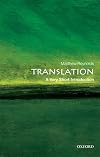
The author tries to define translation as a wider activity than what most people think of but most of the examples he gives are still focussed on the translation of one national literature into another despite occasional nods in the direction of translations of other types of document such as the output of international bodies and manga. By the end of the book his predilection for coining new terms such as translationality and transadaption just gets irritating. A disappointment.
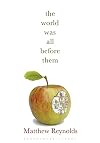
The World Was All Before Them is a book that takes a little perseverance, but is well worth it in the end. The book opens somewhat surreally in the midst of an accident on the motorway and initially I wasn’t sure what was going on. As I settled into the narrative, which is told from the third person views of lover Philip and Sue, I was taken over by the story and its unique style. The World Was All Before Them is told almost in a stream of consciousness, the way your thoughts run from one show more thing to another and another. It took a bit of concentration between the jumps from Philip to Sue and back again, but it was absolutely amazing the amount of things I learned about the couple in the short time frames of each section.
Philip is a doctor, undertaking a locum in a GP surgery for a year. He’s somewhat insecure about his knowledge (or lack of it) and worries about his patients. Over the course of the year of the novel, we meet two patients who highlight Philip’s strengths and weaknesses. Sue commutes to her job in an art gallery in London each day. After a big name artist pulls out of an exhibition, Sue and her colleague try to produce an exhibition themselves. In between all of this, there’s the minutiae of everyday lives and the big decisions that came in-between.
I think The World Was All Before Them is a strong, individual book. Reynolds isn’t afraid to try something different in the narrative, jumping from Philip to Sue and back again quickly. It ended up working for me by not speed reading and just going with the flow. (Perhaps that’s a lesson that applies to other parts of life?) I felt like I became part of Sue and Philip’s lives, like a fly on the wall. I found Philip’s insecurity to be rather interesting – you don’t really expect doctors to be this way – and the way he bottled it up alone made me want to comfort him. I think Philip helps to show that it’s okay not to know everything.
In comparison, Sue seemed much more secure within herself, demonstrated by her massive undertaking of a whole exhibition. She has a sensitive side that balanced Philip out nicely, but seemed more aloof to me as a reader. I couldn’t get quite as deeply into her head as Philip’s.
I would recommend this book if you’re looking for something a little bit different that pushes the envelope of your experiences as a reader. The fold out cover is also gorgeous and well worth a look!
Thank you to Bloomsbury Sydney for the copy of this book.
http://samstillreading.wordpress.com show less
Philip is a doctor, undertaking a locum in a GP surgery for a year. He’s somewhat insecure about his knowledge (or lack of it) and worries about his patients. Over the course of the year of the novel, we meet two patients who highlight Philip’s strengths and weaknesses. Sue commutes to her job in an art gallery in London each day. After a big name artist pulls out of an exhibition, Sue and her colleague try to produce an exhibition themselves. In between all of this, there’s the minutiae of everyday lives and the big decisions that came in-between.
I think The World Was All Before Them is a strong, individual book. Reynolds isn’t afraid to try something different in the narrative, jumping from Philip to Sue and back again quickly. It ended up working for me by not speed reading and just going with the flow. (Perhaps that’s a lesson that applies to other parts of life?) I felt like I became part of Sue and Philip’s lives, like a fly on the wall. I found Philip’s insecurity to be rather interesting – you don’t really expect doctors to be this way – and the way he bottled it up alone made me want to comfort him. I think Philip helps to show that it’s okay not to know everything.
In comparison, Sue seemed much more secure within herself, demonstrated by her massive undertaking of a whole exhibition. She has a sensitive side that balanced Philip out nicely, but seemed more aloof to me as a reader. I couldn’t get quite as deeply into her head as Philip’s.
I would recommend this book if you’re looking for something a little bit different that pushes the envelope of your experiences as a reader. The fold out cover is also gorgeous and well worth a look!
Thank you to Bloomsbury Sydney for the copy of this book.
http://samstillreading.wordpress.com show less
Reading plans, pshaw!
Every now and again a book turns up in the letter box and I drop what I’m doing and simply sit down and read it. And that’s what happened with Translation, a Very Short Introduction by Matthew Reynolds. It’s a new title in a series called Very Short Introductions and yes, it is very short, only 120 pages not counting the References, Further Reading, Publisher’s acknowledgements and the Index, which takes the book up to 142 pages. I read it in an afternoon.
I was show more interested in it because the worth of translation per se is a topic that is persistent in the literary world. There are people who loudly scorn translations because they can’t possibly be true to the original, and so they confine themselves with lofty moralising to books in languages that they know. Every now and again there’s a little flurry on Twitter with links to someone or other pontificating about what a distorted experience it is to read in translation, or picking to pieces this translation versus that one and how this is proof that the whole process of translation is a bad idea.
For the opposition there are bloggers like Stu at Winston’s Dad, Tara at Reading@Large (formerly Book Sexy), Jacqui at JacquieWine and plenty of others as well and you will find links to their reviews of books in translations all over this blog. I like to read and review books in translation, because it brings me worlds I cannot otherwise know. I can just about read books in Indonesian and in French, but it is hard work, and I know I’ll never be able to read in all the languages that I’d like to. I can’t imagine life without having read The Great Russians, Zola or Balzac, The Iliad, The Odyssey, The Bible or Thomas Mann, and that’s just to mention ones that come quickly to mind. Orhan Pamuk, Marguerite Duras, Hans Fallada, Irene Nemirovsky, Simone de Beauvoir, Ismail Kadare, Jose Saramago, Herta Muller, Veronique Olmi, Patrick Modiano … once I get started there’s no stopping!
Well, Matthew Reynolds tackles the topic with aplomb. He’s Professor of English and Comparative Criticism at the University of Oxford and his books include The Poetry of Translation: From Chaucer and Petrarch to Homer and Logue (OUP, 2011) and he’s a judge for the annual Oxford-Weidenfeld Translation Prize. So we know what ‘side’ he’s on. And a nicely reasoned argument it is too.
To read the rest of my review please visit https://anzlitlovers.com/2016/10/22/translation-a-very-short-introduction-by-mat... show less
Every now and again a book turns up in the letter box and I drop what I’m doing and simply sit down and read it. And that’s what happened with Translation, a Very Short Introduction by Matthew Reynolds. It’s a new title in a series called Very Short Introductions and yes, it is very short, only 120 pages not counting the References, Further Reading, Publisher’s acknowledgements and the Index, which takes the book up to 142 pages. I read it in an afternoon.
I was show more interested in it because the worth of translation per se is a topic that is persistent in the literary world. There are people who loudly scorn translations because they can’t possibly be true to the original, and so they confine themselves with lofty moralising to books in languages that they know. Every now and again there’s a little flurry on Twitter with links to someone or other pontificating about what a distorted experience it is to read in translation, or picking to pieces this translation versus that one and how this is proof that the whole process of translation is a bad idea.
For the opposition there are bloggers like Stu at Winston’s Dad, Tara at Reading@Large (formerly Book Sexy), Jacqui at JacquieWine and plenty of others as well and you will find links to their reviews of books in translations all over this blog. I like to read and review books in translation, because it brings me worlds I cannot otherwise know. I can just about read books in Indonesian and in French, but it is hard work, and I know I’ll never be able to read in all the languages that I’d like to. I can’t imagine life without having read The Great Russians, Zola or Balzac, The Iliad, The Odyssey, The Bible or Thomas Mann, and that’s just to mention ones that come quickly to mind. Orhan Pamuk, Marguerite Duras, Hans Fallada, Irene Nemirovsky, Simone de Beauvoir, Ismail Kadare, Jose Saramago, Herta Muller, Veronique Olmi, Patrick Modiano … once I get started there’s no stopping!
Well, Matthew Reynolds tackles the topic with aplomb. He’s Professor of English and Comparative Criticism at the University of Oxford and his books include The Poetry of Translation: From Chaucer and Petrarch to Homer and Logue (OUP, 2011) and he’s a judge for the annual Oxford-Weidenfeld Translation Prize. So we know what ‘side’ he’s on. And a nicely reasoned argument it is too.
To read the rest of my review please visit https://anzlitlovers.com/2016/10/22/translation-a-very-short-introduction-by-mat... show less
Awards


You May Also Like
Associated Authors
Statistics
- Works
- 8
- Also by
- 2
- Members
- 97
- Popularity
- #194,531
- Rating
- 3.1
- Reviews
- 5
- ISBNs
- 39
- Languages
- 3