
Diane Hoyt-Goldsmith
Author of Pueblo Storyteller (HBJ Treasury of Literature)
Series
Works by Diane Hoyt-Goldsmith
Water Life (Nature Pop-Ups) 1 copy
Criaturas de las cavernas 1 copy
Tagged
Common Knowledge
- Gender
- female
Members
Reviews
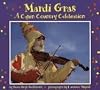
I had mixed feelings about this book. I liked this book because it was describing a culture different from mine and also showed reasons why people celebrate the holiday Mardi Gras but at times when I was reading I felt a little bored. The pictures in the book were at times nice and descriptive but since this book is about the Cajun culture and the holiday Mardi Gras I thought that the pictures would be more colorful and spectacular because it is such a spectacular holiday. I enjoyed that show more this book offered accurate and interesting information of Mardi Gras and the language of the book helped me to understand more because it was descriptive and easy to follow. I disliked how the book seemed to be crammed with a lot of material in such a small book, for a child this book could be kind of hard to understand fully because pronunciations of different words and just the overwhelming amount of information on one culture. show less
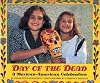
This author discusses the way that a Mexican family celebrates a holiday referred to as the Day of the Dead in their hometown of Sacramento, CA. The author paints a picture of what the mainstream United States citizens would define as an American family portrayed with a Mexican family that has happily conformed to the ways of the United States. She does this is many ways, such as by demonstrating how the kids are into American sports, a picture of the happy mother and children in front of show more the Capital building, where the mom works “down the street” from, and a picture of the daughter “helping” her brother and father collect reeds for the celebration.
The author makes the assumption that the reader celebrates Christmas and understands what it feels like and actually enjoys unpacking Christmas tree ornaments. She assumes that the intended audience would be afraid to play with the old masks that are used in the celebrations and afraid of various other issues associated with death.
The authors description of how the Catholic Celebrations referred to as All Saints’ Day and All Souls Day “…just so happened…” to fall on the same day as the Mexican Festival, which is not how it actually happened, as recognized by Denise Davila in her article, In Search of the Ideal Reader. If the author is going to mislead the reader in one instance for reasons unknown, the rest of the book is considered to be taken with a grain of salt. It is for this reason that I would not introduce this book into my elementary classroom if I had one. If it was available to my students anyway, I would inform them of the inaccuracies with the text, urge them to not to necessarily believe too much of this book, and use it to teach students not to believe everything they read. show less
The author makes the assumption that the reader celebrates Christmas and understands what it feels like and actually enjoys unpacking Christmas tree ornaments. She assumes that the intended audience would be afraid to play with the old masks that are used in the celebrations and afraid of various other issues associated with death.
The authors description of how the Catholic Celebrations referred to as All Saints’ Day and All Souls Day “…just so happened…” to fall on the same day as the Mexican Festival, which is not how it actually happened, as recognized by Denise Davila in her article, In Search of the Ideal Reader. If the author is going to mislead the reader in one instance for reasons unknown, the rest of the book is considered to be taken with a grain of salt. It is for this reason that I would not introduce this book into my elementary classroom if I had one. If it was available to my students anyway, I would inform them of the inaccuracies with the text, urge them to not to necessarily believe too much of this book, and use it to teach students not to believe everything they read. show less
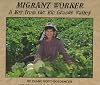
"Migrant Worker: A Boy From the Rio Grande Valley" is the story of Ricardo, a young boy who lives in Rio Grande City, Texas. It is told in first person perspective and tells the story of Ricardo and his family. Ricardo is a boy, who during the summers, becomes a migrant worker. His father lives in Chicago, throughout the year, working to support his family. Ricardo explains to the reader about his community, his schooling, and his general life. This book also introduces us to other children show more at his school who are also migrant workers.
This book uses many photographs and captions to help explain to the reader what Ricardo is discussing. The photographs add much to the text. This book also tells us a little about Cesar Chavez who helped get migrant workers organized into a union.
I would use this book in my classroom to discuss migrant workers. I would also use it to show students how important captions are in a book with many photographs.
Reading this book makes me feel sad for how migrant workers continue to be treated today. The fact that we allow children under 16 to work on farms makes me upset. I feel like these children should be able to live as children and not workers. The children in this book don't seem to mind working and enjoy helping their families. show less
This book uses many photographs and captions to help explain to the reader what Ricardo is discussing. The photographs add much to the text. This book also tells us a little about Cesar Chavez who helped get migrant workers organized into a union.
I would use this book in my classroom to discuss migrant workers. I would also use it to show students how important captions are in a book with many photographs.
Reading this book makes me feel sad for how migrant workers continue to be treated today. The fact that we allow children under 16 to work on farms makes me upset. I feel like these children should be able to live as children and not workers. The children in this book don't seem to mind working and enjoy helping their families. show less
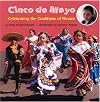
I absolutely love this book. I really loved how to talked about what Cinco de Mayo is and why it's an important celebration in Mexico and in the US. It talked about President Benito Juarez and how he reached an agreement with both Spain and England. The way that some communities near the Puebla will showcase a reenactment of the battle with the complete costumes, horses, and replicas of the rifles. And then there are some people who join a mariachi group and a folklorico group because those show more activities are also apart of Cinco de Mayo. I also enjoyed reading the about President Benito Jaurez and how he lived his live. The book also talked about all the different kinds of food that people make during this time.
I would use this book in future lesson plans during Cinco de Mayo. show less
I would use this book in future lesson plans during Cinco de Mayo. show less
Awards


You May Also Like


Associated Authors
Statistics
- Works
- 40
- Members
- 1,888
- Popularity
- #13,619
- Rating
- 3.8
- Reviews
- 39
- ISBNs
- 73