
George Ancona (1929–2021)
Author of It's Our Garden: From Seeds to Harvest in a School Garden
About the Author
George Ancona was born December 4, 1929 in Brooklyn , NY. When he finished high school, he went to Mexico for six months to meet his family. He returned to New York and went to work as a graphic designer. Ancona began taking pictures of his children, and decided that photography would be his hobby. show more After ten years he quit his job and become a professional photographer. From these photos, he began to make children's books using the words of other writers. After several books, his editor asked him to try his own hand at writing Since then, Ancona has produced more than eighty books for children. Ancona's awards include a Best Illustrated Children's Book of the Year Citation for Handtalk Birthday, a Parent's Choice Award for The Piñata Maker, and an Outstanding Science Trade Book Citation for The Golden Tamarind Comes Home. (Bowker Author Biography) show less
Works by George Ancona
Mi Familia / My Family (Somos Latinos / We Are Latinos) (Spanish Edition) (2004) 63 copies, 1 review
Associated Works
Handtalk Birthday: A Number & Story Book in Sign Language (1987) — Illustrator, some editions — 51 copies, 10 reviews
Tagged
Common Knowledge
- Canonical name
- Ancona, George
- Legal name
- Ancona Diaz, Jorge Efrain
- Birthdate
- 1929-12-04
- Date of death
- 2021-01-01
- Gender
- male
- Education
- Art Students League of New York
Cooper Union - Occupations
- photographer
designer
art director
cinematographer - Organizations
- New York Times
Esquire - Nationality
- USA
- Birthplace
- Brooklyn, New York, USA
- Places of residence
- New York, New York, USA
Santa Fe, New Mexico, USA - Place of death
- Santa Fe, New Mexico, USA
- Associated Place (for map)
- USA
Members
Reviews
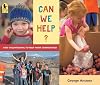
Kids don’t often get a chance to help others outside their families in meaningful ways. This book may change that.
Ancona’s focus is not on connecting readers with specific organizations but on showing kids the myriad ways they can make a difference, whether working with their parents, their friends, their schools, or people in their communities. A classroom’s students knit hats and scarves for the homeless; families harvest produce for soup kitchens; kids bag plums and snacks for needy show more families; a girl accompanies her dad when he delivers a hot meal to an elderly man; children help train dogs for service jobs; one boy helps another who is disabled to ski; children water young trees during a drought; mentors help younger students with schoolwork; a club cleans up their section of adopted roadway. Ancona gives a general idea of what each volunteer opportunity entails and how long it takes. Lots of pictures fill the spreads. The kids are named in the text, which gives the whole package a nicely personal feel—individuals are doing this work, not generic people. The children are focused and obviously trying their best, but they are also finding time for fun.
While this may be too didactic for many readers to choose on their own, it’s a sure bet for groups and families focused on doing some community service. (Nonfiction. 5-12)
-Kirkus Review show less
Ancona’s focus is not on connecting readers with specific organizations but on showing kids the myriad ways they can make a difference, whether working with their parents, their friends, their schools, or people in their communities. A classroom’s students knit hats and scarves for the homeless; families harvest produce for soup kitchens; kids bag plums and snacks for needy show more families; a girl accompanies her dad when he delivers a hot meal to an elderly man; children help train dogs for service jobs; one boy helps another who is disabled to ski; children water young trees during a drought; mentors help younger students with schoolwork; a club cleans up their section of adopted roadway. Ancona gives a general idea of what each volunteer opportunity entails and how long it takes. Lots of pictures fill the spreads. The kids are named in the text, which gives the whole package a nicely personal feel—individuals are doing this work, not generic people. The children are focused and obviously trying their best, but they are also finding time for fun.
While this may be too didactic for many readers to choose on their own, it’s a sure bet for groups and families focused on doing some community service. (Nonfiction. 5-12)
-Kirkus Review show less
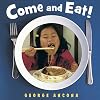
I won this book from a NY Journal of Books giveaway. This brief little book with a beautiful cover and very expressive photographs of actual people, is an impressive analysis of what food means to all of us. At first, it seems simple enough, comprised of beautiful pictures of food with varied peoples enjoying its consumption, but it grows into the expression of a much deeper concept. The initial pages have few words but the few words grow into paragraphs when necessary. It is a book that can show more be shared by all ages. It would be fine if it was read by a child able to read by his/herself and it would be just as wonderful an experience if it were to be read to a child who cannot read the book alone. The key thing is the fact that it really illuminates the value of a shared meal. Food is not just a means to an end, satisfying a bodily need. It is a psychological and emotional event as well. Mealtime should be a time of family, a time of talking about the events of the day, a time to grow closer. We have lost a lot of this ability today, since families have two working parents who make little effort to sit down together. If nothing else, this book points out the need to return to the days of shared meals. The book itself does another good job. The photographs displayed on the pages are sharp. Their meaning is imparted with clarity, and the picture is worth 1000 words as the saying goes. I gave this book five stars. It accomplished its purpose and it did it well. It includes almost every culture in its discussion of mealtime. Eating is a fundamental joy in Jewish households, and as a Jew, I can appreciate the value of shared meals since all of our holidays revolve around a wonderful meal with traditional foods and happy conversation. show less
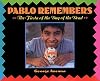
Pablo Remembers The Fiesta of the Day of the Dead by George Aconda is an informative children’s book about the Mexican holiday and cultural traditions of the same name. While published in 1993, I found the colorful photographs and cheerful images they projected to fit modern times and would be easily relevant for young children today.
The narrative of this book talked specifically about one family’s celebration during the Days of the Dead while providing a perspective about the culture show more celebrating as a whole. I had read a journal critique about this book, and seven others, which placed this one at the top. The author is familiar and most likely practices this holiday which certainly adds a depth of understanding that translates to a well written children’s book on the subject.
I would assume this book would be of value in young elementary education while discussing world culture and beliefs. The author portrays nothing scary about this holiday to young children and I cannot imagine parents would be adverse to instruction of this material while discussing foreign cultures. show less
The narrative of this book talked specifically about one family’s celebration during the Days of the Dead while providing a perspective about the culture show more celebrating as a whole. I had read a journal critique about this book, and seven others, which placed this one at the top. The author is familiar and most likely practices this holiday which certainly adds a depth of understanding that translates to a well written children’s book on the subject.
I would assume this book would be of value in young elementary education while discussing world culture and beliefs. The author portrays nothing scary about this holiday to young children and I cannot imagine parents would be adverse to instruction of this material while discussing foreign cultures. show less
Books like 'Can We Help' are so important because you never know what may inspire a child to act. I have seen children on the news who start a movement on their own without prompting from adults. For example, I know of a child who began collecting used shoes to send to poverty-stricken areas and I had the privilege to work alongside a student in Pass Christian Mississippi who organized a food pantry at his high school to distribute food to the less fortunate in his community.
Through colorful show more and engaging photos, readers are drawn to the activities pictured. The writing is for younger children and uses the children's names in the photos to help the readers see them as real people doing real activities, not just characters in a story.
My only critique is that the book was almost totally Caucasion. It is an odd choice considering the author is the child of a Mexican immigrant and has written many children's books dedicated to culturally sensitive topics. Considering our diverse classrooms, children of all color and ethnecity would like to see themselves reflected in the literature they read. show less
Through colorful show more and engaging photos, readers are drawn to the activities pictured. The writing is for younger children and uses the children's names in the photos to help the readers see them as real people doing real activities, not just characters in a story.
My only critique is that the book was almost totally Caucasion. It is an odd choice considering the author is the child of a Mexican immigrant and has written many children's books dedicated to culturally sensitive topics. Considering our diverse classrooms, children of all color and ethnecity would like to see themselves reflected in the literature they read. show less
Lists
Awards


You May Also Like


Associated Authors
Statistics
- Works
- 82
- Also by
- 9
- Members
- 3,161
- Popularity
- #8,080
- Rating
- 3.8
- Reviews
- 77
- ISBNs
- 210
- Languages
- 2
