
Ann Morris (2) (1930–)
Author of Bread, Bread, Bread
For other authors named Ann Morris, see the disambiguation page.
About the Author
Image credit: via author's website
Series
Works by Ann Morris
Tagged
Common Knowledge
- Birthdate
- 1930
- Gender
- female
- Occupations
- teacher
- Organizations
- Scholastic
- Relationships
- Heyman, Ken (collaborator)
- Short biography
- Ann Morris has taught children and adults around New York City. She left teaching to be the Editorial Director for Scholastic's early childhood department. She frequently works with photographer Ken Heyman and illustrator Peter Linenthal.
- Nationality
- USA
- Places of residence
- New York, New York, USA
- Associated Place (for map)
- New York, USA
Members
Reviews
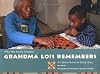
At the start of this book, photos were used to show relationships between the little boy in the book, Erick, and each of his family members. Specifically, the book focuses on Erick’s grandmother, who flips through different photographs and tells her grandson about her childhood and how she was raised. She tells about how she lived in Birmingham Alabama, and needed to ride in the back of the trolley through the city to get to work. When the boy tells the story of how “Grandma Lois said show more that the black and white people had to use separate drinking fountains” he is using language that will appeal to children’s sense of curiosity and have them wonder why it was like that back then. Honing in on a small part of segregation back when Erick’s grandmother was a child helps children to understand that black and white people used separate public things back then.
The old pictures displayed in the book give children an insight as to what people looked like, dressed like, the jobs they worked in, and what their houses looked like. I think that in order to give children a history lesson, pictures are crucial so they could really imagine the time period. Grandma Lois explains that her family was better off than most: she had a house with a porch, a car, her dad had a job at a steel factory, but she did not have running water or electricity.
I think that this book is important because it starts out by describing a boy and his family, and changes topics to focus on a bigger issue that children may not be aware of, like the civil rights movement. It’s important for American children to understand American history at a young age that was they are always “in the know” on more current issues, due to things that may have happened in the past. show less
The old pictures displayed in the book give children an insight as to what people looked like, dressed like, the jobs they worked in, and what their houses looked like. I think that in order to give children a history lesson, pictures are crucial so they could really imagine the time period. Grandma Lois explains that her family was better off than most: she had a house with a porch, a car, her dad had a job at a steel factory, but she did not have running water or electricity.
I think that this book is important because it starts out by describing a boy and his family, and changes topics to focus on a bigger issue that children may not be aware of, like the civil rights movement. It’s important for American children to understand American history at a young age that was they are always “in the know” on more current issues, due to things that may have happened in the past. show less

Ann Morris' book 'Families' is a sparsely worded text filled with photos of various types of families throughout the world. Care has been taken to ensure that families are shown in a variety of contexts and represent a wide spectrum of population. However, Morris explicitly reveals the commonality of families via text and implicitly through carefully clustered photos. The book enumerates the rituals and activities in which all families, regardless of size and form, share: eating, playing, show more helping each other, sharing, celebrating, working, loving and caring. The final pages of the book contain a slideshow like guide of photos and captions explaining each photo in the book and the country of origin of the families. There is also a map that asks "Where in the world were these photographs taken?" For a teacher of younger children this book is not only an introduction to the idea of multiculturalism, but is also a powerful tool to elicit a complex conversation on how things can be very different, yet, be so very similar. show less
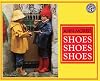
This book depicts the many different types of shoes you would see all around the world, and also shoes that have different uses. I liked this book as it is simple, yet informative and it uses real pictures. I was very excited to find this book as shoes are a topic that kids are interested in, yet do not usually have the opportunity to explore. It was a very unique book in my opinion.
Ages: 3 and up
Source: Pierce College and Barnes and Noble
Ages: 3 and up
Source: Pierce College and Barnes and Noble
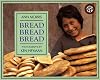
This is probably good for young readers, like in preschool, but I do not see I would personally incorporate it into my classroom. The cultural representation was great, but a bit outdated, and it perpetuates many stereotypes about people across the world by showing minorities as poor and white people as wealthier individuals who bathe more often.
Lists
Awards


You May Also Like


Associated Authors
Statistics
- Works
- 74
- Members
- 9,153
- Popularity
- #2,620
- Rating
- 3.8
- Reviews
- 457
- ISBNs
- 250
- Languages
- 2