

Éilís Ní Dhuibhne
Author of The Dancers Dancing
About the Author
Image credit: via portraidi.ie
Works by Éilís Ní Dhuibhne
Viking Ale: Studies on Folklore Contacts Between the Northern and the Western Worlds (1991) — Editor — 7 copies
Ùpraid 1 copy
The Dancers Dancing 1 copy
Associated Works
Tagged
Common Knowledge
- Canonical name
- Ní Dhuibhne, Éilís
- Legal name
- Ní Dhuibhne, Éilís
- Other names
- O'Hara, Elizabeth
Almquist, Eilis - Birthdate
- 1954
- Gender
- female
- Education
- National University of Ireland (PhD - Medieval Studies)
University College Dublin (BA, MA) - Occupations
- novelist
short story writer - Relationships
- Almqvist, Bo (husband)
- Nationality
- Ireland
- Birthplace
- Dublin, Ireland
- Associated Place (for map)
- Dublin, Ireland
Members
Reviews

Three Dublin teenagers approach their Leaving Certificate - a final examination at the end of their secondary school careers - in this Irish young adult novel, original published in Irish as Hurlamaboc. Privileged golden boy Ruán, whose mother Lísín is the preeminent "home-maker" on prestigious Ashfield Avenue; misfit Emma, whose single mother Eileen is the only working woman on that same exclusive street; and reserved Colm, who spends most of his out-of-school time working at the local show more Spar, in order to avoid his abusive alcoholic father, and miserable home-life in the nearby council estate - all three find themselves confronting unexpected challenges and tragedies as the Leaving Cert looms. Although from very different socio-economic and familial backgrounds, the teens find their lives interwoven in unexpected ways...
I enjoyed reading Snobs, Dogs and Scobies, which I initially picked up because it was published by Little Island, a small, independent children's book publisher based in Dublin, and owned and run by renowned Irish children's author, Siobhán Parkinson. Although I purchased it almost two years ago, I've only just now gotten around to reading it, after living in Dublin for some time. I think this is probably fortunate, as there is quite a bit of vocabulary I might otherwise have stumbled over, and any number of Dublin and/or Irish places and contexts I might have found confusing. These range from references to such things as the Dart and Luas - the train and tram systems here in Dublin - to the idea of the 'land of twitching curtains,' referring to the Irish propensity for keeping tabs on their neighbors, and not necessarily in a good way. The narrative here alternates between the three main characters, allowing the reader to witness events from multiple perspectives. I found it amusing that Emma seems to criticize Ruán for his "communist" ideas, in his interactions with 'scobie' Colm, seemingly unaware that Ruán's friend see her as a 'dog,' and unworthy of his attention. Of the three characters, I liked Colm the most, and found his journey to Wales fascinating. I found myself wondering if O'Hara was obliquely hinting that he was gay, in her brief references to his friendship with Welsh boy Dafydd, which Colm sees as "the most important bit" of his experience in Wales, and which he is inexplicably reluctant to discuss with Ruán, when they meet. However that may be, I found the low-key friendship between the two boys, begun when they were in primary school together, and then seemingly abandoned until circumstance brings them together again, rather moving. All in all, a worthwhile read, one I would recommend to those looking for Irish young adult fare. show less
I enjoyed reading Snobs, Dogs and Scobies, which I initially picked up because it was published by Little Island, a small, independent children's book publisher based in Dublin, and owned and run by renowned Irish children's author, Siobhán Parkinson. Although I purchased it almost two years ago, I've only just now gotten around to reading it, after living in Dublin for some time. I think this is probably fortunate, as there is quite a bit of vocabulary I might otherwise have stumbled over, and any number of Dublin and/or Irish places and contexts I might have found confusing. These range from references to such things as the Dart and Luas - the train and tram systems here in Dublin - to the idea of the 'land of twitching curtains,' referring to the Irish propensity for keeping tabs on their neighbors, and not necessarily in a good way. The narrative here alternates between the three main characters, allowing the reader to witness events from multiple perspectives. I found it amusing that Emma seems to criticize Ruán for his "communist" ideas, in his interactions with 'scobie' Colm, seemingly unaware that Ruán's friend see her as a 'dog,' and unworthy of his attention. Of the three characters, I liked Colm the most, and found his journey to Wales fascinating. I found myself wondering if O'Hara was obliquely hinting that he was gay, in her brief references to his friendship with Welsh boy Dafydd, which Colm sees as "the most important bit" of his experience in Wales, and which he is inexplicably reluctant to discuss with Ruán, when they meet. However that may be, I found the low-key friendship between the two boys, begun when they were in primary school together, and then seemingly abandoned until circumstance brings them together again, rather moving. All in all, a worthwhile read, one I would recommend to those looking for Irish young adult fare. show less

Prince Hugo O'Neill goes in search of the Sunshine Girl in this novelized retelling of a traditional Irish folktale, related to the author by Donegal storyteller Joe McCafferty in 1978. Following the death of his mother when he is a young boy, Hugo suffers many years of abuse at the hands of his malicious stepmother, into whose hands his neglectful father places him, before eventually escaping and making his own way in the world. Settling in another part of Donegal, he soon has his own show more castle, and a never-ending source of wealth - both supplied by the wishes he is granted, after winning some card games with a trio of magical swans - but his luck eventually turns. When Hugo loses a card game to the swans, he finds that he must fetch the Sunshine Girl within the space of a year, or lose his head. With the aid of the motherly old woman who lives near his castle, he soon sets out, visiting the Rain, Wind and Frost giants on his journey, before eventually locating the Sunshine Girl in the far east, in the palace of her ogre-father. Aided in a series of impossible tasks by the young woman for whom he has long sought, Hugo falls deeply in love with the Sunshine Girl, and eventually they escape together, evading the ogre's pursuit with the help of three magical stratagems. But is the adventure over, or will new challenges arise, when Hugo brings his would-be bride home...?
Described by the author as a variant of 'The Girl as Helper in the Hero's Flight' tale-type, Hugo and the Sunshine Girl reminded me of any number of folktales I have read over the years. The magical swans, although villainous, are reminiscent of the enchanted Children of Llyr, while Hugo's journey recalls the similar quest undertaken by the heroine of East o' the Sun, West o' the Moon. Just as she had to visit the various winds for news of her lost bridegroom, so Hugo visits the three giants, each of whom is convinced to help him (rather than eat him), by the gift of bread baked by their sister, the motherly old woman who aids Hugo in his distress. The escape from the ogre's pursuit, with the aid of three magical objects, was also a familiar element, as was the temporary forgetfulness of Hugo, upon the couple's arrival at their home. I enjoyed Hugo and the Sunshine Girl, largely because of these many familiar folkloric themes and plot elements, although I would not describe it as a particularly strong work of fantasy, on its own. I was interested to see how Ní Dhuibhne would play with the elements of her story, but less invested in the characters themselves, or in the resolution of their adventures. Recommended to readers with an interest in the use of folklore, particularly Irish, in fantasy fiction, or in the recently popular sub-genre of fairy-tale fiction. show less
Described by the author as a variant of 'The Girl as Helper in the Hero's Flight' tale-type, Hugo and the Sunshine Girl reminded me of any number of folktales I have read over the years. The magical swans, although villainous, are reminiscent of the enchanted Children of Llyr, while Hugo's journey recalls the similar quest undertaken by the heroine of East o' the Sun, West o' the Moon. Just as she had to visit the various winds for news of her lost bridegroom, so Hugo visits the three giants, each of whom is convinced to help him (rather than eat him), by the gift of bread baked by their sister, the motherly old woman who aids Hugo in his distress. The escape from the ogre's pursuit, with the aid of three magical objects, was also a familiar element, as was the temporary forgetfulness of Hugo, upon the couple's arrival at their home. I enjoyed Hugo and the Sunshine Girl, largely because of these many familiar folkloric themes and plot elements, although I would not describe it as a particularly strong work of fantasy, on its own. I was interested to see how Ní Dhuibhne would play with the elements of her story, but less invested in the characters themselves, or in the resolution of their adventures. Recommended to readers with an interest in the use of folklore, particularly Irish, in fantasy fiction, or in the recently popular sub-genre of fairy-tale fiction. show less

When Saoirse loses her boyfriend, her job and her apartment she leaves Dublin to get away from it all in a remote part of West Kerry, far from the crazy world of the city. There she sets about making a new life for herself… but instead of contentment she finds dark secrets when she begins to track down a murderer.
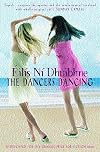
Éilís Ní Dhuibhne writes a story on “the experiences and emotions of girls on the cusp of womanhood.” The girls attend an “Irish college” one summer, where they learn much about themselves and life in addition to the intensive lessons in the Irish language. An entertaining, quick-paced story full of Irish insight, wisdom, and humor.
Lists
Awards


You May Also Like


Associated Authors
Statistics
- Works
- 45
- Also by
- 6
- Members
- 353
- Popularity
- #67,813
- Rating
- 3.7
- Reviews
- 13
- ISBNs
- 56
- Languages
- 5
