
Tim Reiterman
Author of Raven: The Untold Story of the Rev. Jim Jones and His People
Works by Tim Reiterman
Tagged
Common Knowledge
- Birthdate
- 1947
- Gender
- male
- Education
- University of California, Berkeley
- Occupations
- journalist
- Nationality
- USA
- Associated Place (for map)
- USA
Members
Reviews
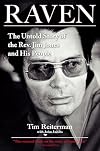
As many of us on LT remember, "pastor" Jim Jones established a settlement in Guyana called Jonestown. On November 18, 1978, he coerced the entire settlement (over 900 people, minus a few who escaped) into drinking Flavor-Aid laced with cyanide and other drugs, dying excruciating deaths. How on God's green earth could someone have so much power over others?!!! Seeing the pictures of the masses of people laying on the grounds of the compound is one of the "flashbulb memories" of my childhood. show more Reiterman has written a stunning book which reveals the all-too-fallible personality behind the murder-suicides.
Reiterman has more than earned the street cred to write this story. He is a journalist who covered the People's Temple for over a year before the massacre. He visited Jonestown with Congressman Leo Ryan, and was wounded in the airstrip shootings which killed Ryan (perpetrated by Temple members). He has done his homework as well, with massive amounts of interviews of people with all levels of involvement in the cult. His portait of Jim Jones is especially revealing, what psychologists call a "psychological autopsy". I can verify that it is topnotch. Reiterman chillingly builds the madness, piece by insurmountable piece. The strategies used by Jones are similar to what abusive husbands use only on a grander scale. Reading this book is like being on an out-of-control roller-coster with no brakes. We see the ending coming and it is the stuff of nightmares. A blurb on the back of the book puts it succinctly.. "carefully compiled and completely horrifying". show less
Reiterman has more than earned the street cred to write this story. He is a journalist who covered the People's Temple for over a year before the massacre. He visited Jonestown with Congressman Leo Ryan, and was wounded in the airstrip shootings which killed Ryan (perpetrated by Temple members). He has done his homework as well, with massive amounts of interviews of people with all levels of involvement in the cult. His portait of Jim Jones is especially revealing, what psychologists call a "psychological autopsy". I can verify that it is topnotch. Reiterman chillingly builds the madness, piece by insurmountable piece. The strategies used by Jones are similar to what abusive husbands use only on a grander scale. Reading this book is like being on an out-of-control roller-coster with no brakes. We see the ending coming and it is the stuff of nightmares. A blurb on the back of the book puts it succinctly.. "carefully compiled and completely horrifying". show less
The saga of Jim Jones and Peoples Temple is unaccountably bizarre in every respect, from Jones' shady beginnings as a street preacher in 1940s Indiana to the apparently senseless horror of Jonestown three decades later. There are many lingering questions about Jones and his quasi-Marxist church; unfortunately, the answers are nowhere to be found in Raven. It's a monster of a book (nearly seven hundred pages), and it does dispel the popular misconception of Jones' followers as mindless show more fanatics by painting a sympathetic group portrait of them as the human beings they actually were, but Tim Reiterman glosses over numerous strange events in Jones' life, thereby reducing the story to a real-life soap opera about a megalomaniac and his tragically misguided disciples.
Is it possible that Jones' long association with CIA undercover operative Dan Mitrione meant nothing? Yes, but Reiterman doesn't even mention Mitrione. 913 Americans died at Jonestown (the heaviest loss of American civilian lives prior to 9/11), but the U.S. State Department proposed burying all the bodies in a mass grave in Guyana and, even when the bodies wound up being flown back home for burial, balked at performing autopsies. Why? The drugs that Jones used to weaken the resistance of his followers happen to have been the same substances used on unwilling test subjects by the CIA in its MK-ULTRA mind control experiments. How did Jones obtain such large quantities of these drugs? Why did the State Department refuse to intervene at Jonestown even after numerous reports of abuse (including a sworn affidavit from a former member of Peoples Temple) had emerged? The ingestion of cyanide causes violent convulsions, so how had the bodies come to be arranged in neat, face-down rows by the time they were photographed? Is it just a coincidence that Congressman Leo Ryan, a vocal critic of the CIA, was assassinated in this setting?
The author (one of the journalists who accompanied Ryan to Guyana, and who survived the airstrip shooting that killed Ryan and four others) never really addresses these mysteries. He's a good writer and a determined researcher, but he's also selective: of far more interest to Reiterman than the troubling inconsistencies of the official Jonestown narrative are Jones' slow psychological dissolution and the personal histories of his followers. Do these things belong in the book? Of course they do, and quite often they make for engrossing reading (which is why I've given Raven a four-star rating). But they don't tell the whole story. Bearing that in mind, Reiterman's account is still a good place to start if you're new to the subject. show less
Is it possible that Jones' long association with CIA undercover operative Dan Mitrione meant nothing? Yes, but Reiterman doesn't even mention Mitrione. 913 Americans died at Jonestown (the heaviest loss of American civilian lives prior to 9/11), but the U.S. State Department proposed burying all the bodies in a mass grave in Guyana and, even when the bodies wound up being flown back home for burial, balked at performing autopsies. Why? The drugs that Jones used to weaken the resistance of his followers happen to have been the same substances used on unwilling test subjects by the CIA in its MK-ULTRA mind control experiments. How did Jones obtain such large quantities of these drugs? Why did the State Department refuse to intervene at Jonestown even after numerous reports of abuse (including a sworn affidavit from a former member of Peoples Temple) had emerged? The ingestion of cyanide causes violent convulsions, so how had the bodies come to be arranged in neat, face-down rows by the time they were photographed? Is it just a coincidence that Congressman Leo Ryan, a vocal critic of the CIA, was assassinated in this setting?
The author (one of the journalists who accompanied Ryan to Guyana, and who survived the airstrip shooting that killed Ryan and four others) never really addresses these mysteries. He's a good writer and a determined researcher, but he's also selective: of far more interest to Reiterman than the troubling inconsistencies of the official Jonestown narrative are Jones' slow psychological dissolution and the personal histories of his followers. Do these things belong in the book? Of course they do, and quite often they make for engrossing reading (which is why I've given Raven a four-star rating). But they don't tell the whole story. Bearing that in mind, Reiterman's account is still a good place to start if you're new to the subject. show less
Fascinating historical account of the history of Jim Jones from childhood, through his early adulthood as a charismatic pastor in suburban Indianappolis, to becoming a cult leader in California, and then in British Guyana. Written by one of the San Francisco Chronical reporters who accompanied Congressman Ryan down to "Jonestown" in his fateful trip of November 1978, which resulted in a shootout which killed 5, and which caused Jones and his followers to commit mass-suicide. Ultimately 913 show more people died- the largest civilian loss of American lives up until 9/11.
Several points were very well-explored here: 1) Jones' transition gradually to become a paranoid autocrat with God-delusions; 2) the mechanisms with which Jones took over his followers' finances, got them to take responsibilites for crimes he engineered (extortion, election fraud, kidnapping, etc) and how he even took legal guardianship and custody of followers' children to prevent them from leaving the cult; and 3) the shocking relationship between Jones and several figures in high office in the 1970s. Apparently Jones' "Peoples' Temple" voted as a massive block, which got Muscone elected mayor of San Francisco in '76. The Peoples' Temple also had sway with the California governors, and even got Jones an audience with First Lady Ros Carter.
The tragedy of Jonestown is straight out of a horror movie, but it is really just the culmination of three decades of manipulation, deception and intimidation by Jones on everyone's life whom he touched. He is a first-order psychopath, up there with Hitler, Stalin and Mao. show less
Several points were very well-explored here: 1) Jones' transition gradually to become a paranoid autocrat with God-delusions; 2) the mechanisms with which Jones took over his followers' finances, got them to take responsibilites for crimes he engineered (extortion, election fraud, kidnapping, etc) and how he even took legal guardianship and custody of followers' children to prevent them from leaving the cult; and 3) the shocking relationship between Jones and several figures in high office in the 1970s. Apparently Jones' "Peoples' Temple" voted as a massive block, which got Muscone elected mayor of San Francisco in '76. The Peoples' Temple also had sway with the California governors, and even got Jones an audience with First Lady Ros Carter.
The tragedy of Jonestown is straight out of a horror movie, but it is really just the culmination of three decades of manipulation, deception and intimidation by Jones on everyone's life whom he touched. He is a first-order psychopath, up there with Hitler, Stalin and Mao. show less
Tim Reiterman was one of the journalists who accompanied Congressman Leo Ryan to Jonestown in November of 1978. His book not only examines what happened there, but goes back to the childhood of Jim Jones and the beginnings of the movement known as the Peoples Temple so as to "capture the lure of the Temple, to convey the thinking and personalities of not just disgruntled defectors but also of the heartbroken loyalists with something positive to preserve and remember -- and to unmask the real show more Jim Jones. And I wanted to humanize them all to get at the truth, to make the ending comprehensible" (5). To achieve this goal, he and his co-author John Jacobs did 800+ interviews, reviewed tens of thousands of pages of documents, tape recordings, video, and film. The result is a phenomenal book.
What really interested me the most, I think, was Reiterman's examination, starting with Jones' boyhood, of how exactly Jones learned to get others to do exactly what he wanted them to do. The people who came to the Peoples Temple and who became followers of Jones early on weren't coerced or forced into it -- they all had various reasons for being there and for embracing Jones' message. However, it was what happened once they were inside that matters, as little by little Jones began to isolate them from the rest of the world so that they came to depend solely on him and the movement. Reiterman shows clearly how this occurred, and how Jones, along with his top tier of chosen people, manipulated things from inside.
He also shows how when there were attacks on the movement (from the media, "defectors", etc.), Jones' paranoia only made things worse, causing him to do and say things that only heightened their attackers' interests in the Peoples Temple. It was this type of paranoia that led Jones to Guyana and Jonestown and ultimately to the horrifying events of November 1978.
The narrative is at times chilling, but very clear, based mostly on first-hand evidence and testimony. I very highly recommend this book to anyone even remotely interested in Jonestown, the Peoples Temple movement or in how otherwise intelligent people might find themselves in this sort of predicament.
Excellent reading; long, but well worth every second. show less
What really interested me the most, I think, was Reiterman's examination, starting with Jones' boyhood, of how exactly Jones learned to get others to do exactly what he wanted them to do. The people who came to the Peoples Temple and who became followers of Jones early on weren't coerced or forced into it -- they all had various reasons for being there and for embracing Jones' message. However, it was what happened once they were inside that matters, as little by little Jones began to isolate them from the rest of the world so that they came to depend solely on him and the movement. Reiterman shows clearly how this occurred, and how Jones, along with his top tier of chosen people, manipulated things from inside.
He also shows how when there were attacks on the movement (from the media, "defectors", etc.), Jones' paranoia only made things worse, causing him to do and say things that only heightened their attackers' interests in the Peoples Temple. It was this type of paranoia that led Jones to Guyana and Jonestown and ultimately to the horrifying events of November 1978.
The narrative is at times chilling, but very clear, based mostly on first-hand evidence and testimony. I very highly recommend this book to anyone even remotely interested in Jonestown, the Peoples Temple movement or in how otherwise intelligent people might find themselves in this sort of predicament.
Excellent reading; long, but well worth every second. show less
Lists
Awards

You May Also Like


Associated Authors
Statistics
- Works
- 1
- Members
- 326
- Popularity
- #72,686
- Rating
- 4.3
- Reviews
- 10
- ISBNs
- 7
- Languages
- 1