
Kristan Lawson
Author of Darwin and Evolution for Kids: His Life and Ideas with 21 Activities
Works by Kristan Lawson
Associated Works
Parenting Beyond Belief: On Raising Ethical, Caring Kids Without Religion (2007) — Contributor — 344 copies, 11 reviews
Tagged
Common Knowledge
- Gender
- female
Members
Reviews
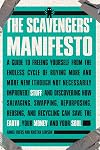
“We, the authors of this book, redefine scavenging as any way of legally acquiring stuff that does not involve paying full price.” [pg viii]
It's definitely a manifesto, written in staccato, almost poetic sentences that read like a rallying speech. It makes you feel good to be a scavenger – proud and empowered about your unusual state. It makes you want to fly your freak flag. Early on, they liken standard consumers to screaming, pouting soiled brats [pg 9] and non-consumer scavengers show more to “capitalism's naughty children, little rebels . . .” [pg 8] and tries to open your eyes to the fact that:
“Marketers have so mesmerized consumers that consumers see brand logos as their own logos, their new flags. Today the brand is the new nation, the new army, the new clan, the new religion, the new tribe. Consumers by the billions line up behind logo, vanish into logos, pour their income into brands.” [pg 12]
As the book moves along it addresses the misconceptions standard consumers have about scavengers (that they're poor or desperate or penny pinching and that used merchandise is second-rate, dirty, or suspect) and the reasons scavengers scavenge (to save money or the environment, to survive, for the mystery and the thrill of the hunt, because we prefer an item with a past). It covers the history and economics of scavenging (Pointing out a little-known fact that reinforces why reusing is preferable to recycling: “If recycling is done inefficiently, then it can be a net loss in regard to energy consumption, compared to modern mining costs.” [pg 94]), while stressing that scavenging will always be a fringe, subculture activity because it feeds off of mainstream society's cast-offs. If we were all scavengers the economy would break down.
As the authors move on from their history of the very old prejudices against scavenging and their glacially slow melt into something that could almost be called acceptance, they profile the many kinds of modern scavengers who fall into four main categories: Retail Scavengers, Urban scavengers, Social Scavengers, and Specialty Scavengers. They also discuss the spirituality of scavenging – it's a little Taoist, involves a certain amount of faith, and devoting oneself to scavenging can be like taking a vow. They end the book with a nice, common-sense scavenger code of ethics. show less
It's definitely a manifesto, written in staccato, almost poetic sentences that read like a rallying speech. It makes you feel good to be a scavenger – proud and empowered about your unusual state. It makes you want to fly your freak flag. Early on, they liken standard consumers to screaming, pouting soiled brats [pg 9] and non-consumer scavengers show more to “capitalism's naughty children, little rebels . . .” [pg 8] and tries to open your eyes to the fact that:
“Marketers have so mesmerized consumers that consumers see brand logos as their own logos, their new flags. Today the brand is the new nation, the new army, the new clan, the new religion, the new tribe. Consumers by the billions line up behind logo, vanish into logos, pour their income into brands.” [pg 12]
As the book moves along it addresses the misconceptions standard consumers have about scavengers (that they're poor or desperate or penny pinching and that used merchandise is second-rate, dirty, or suspect) and the reasons scavengers scavenge (to save money or the environment, to survive, for the mystery and the thrill of the hunt, because we prefer an item with a past). It covers the history and economics of scavenging (Pointing out a little-known fact that reinforces why reusing is preferable to recycling: “If recycling is done inefficiently, then it can be a net loss in regard to energy consumption, compared to modern mining costs.” [pg 94]), while stressing that scavenging will always be a fringe, subculture activity because it feeds off of mainstream society's cast-offs. If we were all scavengers the economy would break down.
As the authors move on from their history of the very old prejudices against scavenging and their glacially slow melt into something that could almost be called acceptance, they profile the many kinds of modern scavengers who fall into four main categories: Retail Scavengers, Urban scavengers, Social Scavengers, and Specialty Scavengers. They also discuss the spirituality of scavenging – it's a little Taoist, involves a certain amount of faith, and devoting oneself to scavenging can be like taking a vow. They end the book with a nice, common-sense scavenger code of ethics. show less
The Scavenger's Manifesto by Anneli Rufus and Kristan Lawson is part history, part philosophy, part screed and a smidge of how to. I picked it up for the how to part and unfortunately that isn't the best bit. It is interesting and informative but not what i really wanted. The history of society's prejudice against scavenging goes back to biblical times and the author's reference all those random rules from the old Testament. They move through the 60's counter-culture to 70's punk style to show more our modern notions of vintage and shabby-chic. They rail against modern consumer culture while admitting if it stopped there would be nothing the scavengers to find. The authors have some great pro-scavenging arguments. The problem is that i didn't need to be convinced! I had hoped the book would be more about the details of Dumpster diving or how to score the best finds at flea markets. The authors advice comes down to "free your mind" and to be curious and always searching. Not bad and i think it would make a great present to give someone who can't comprehend why anyone would want to go to yard sales or used bookstores. show less
Darwin and Evolution for Kids: His Life and Ideas with 21 Activities (For Kids series) by Kristan Lawson
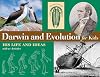
This may not look like the kind of book you can go ahead and read straight through -- especially if you're a grownup -- but this book has *heft*. Not only does it cover the history of the idea of evolution (which is far older than I ever suspected), it explains the concept itself using accessible language. But it doesn't oversimplify. If you're a lightweight like me, I strongly recommend reading this book before tackling Darwin himself.
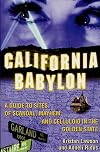
Quick read that serves as a guidebook for people traveling from San Diego northerly to San Francisco. Interesting writing even if all the events listed aren't widely known. Good bibliography. Small thumbnail B&W photos. Says that the Tom Sawyer Island was once taken over by hippies who raised the Vietcong flag over it, and that there was a fight over whose kids would be the very first on to ride the carousel.
Awards

You May Also Like


Associated Authors
Statistics
- Works
- 8
- Also by
- 1
- Members
- 305
- Popularity
- #77,180
- Rating
- 4.0
- Reviews
- 8
- ISBNs
- 18