
Ed Stafford
Author of Walking the Amazon
About the Author
Ed Stafford is a British explorer and the face of survival on the Discovery Channel. He holds the Guinness World Record for being the first person ever to walk the length of the Amazon River.
Works by Ed Stafford
Associated Works
Tagged
Common Knowledge
- Birthdate
- 1975-12-26
- Gender
- male
- Education
- Newcastle University (BS, Geography)
Royal Military Academy, Sandhurst - Organizations
- British Army
- Agent
- Gordon Poole Agency
- Birthplace
- Peterborough, Cambridgeshire, England, UK
- Places of residence
- Leicestershire, England, UK
- Associated Place (for map)
- England, UK
Members
Reviews

Fieldnotes:
The Amazon River Basin (all the way from Nevada Mismi, Peru to the river delta in Brazil, 2008-2010
1 Self-Absorbed, Overconfident and Underprepared "Adventurer"
Many Idiotic Ground Rules
1 Pointless Expedition ("Getting into the Record Books" doesn't count as a point)
860 Days
Over 4,000 Miles
Over 200,000 Mosquito/Ant Bites (His Reckoning)
Too Much Motivational Speaking Nonsense Focused on "Controlling One's Mental State"
Not Enough Description of Flora, Fauna, History, Culture, show more Geography or Issues facing the Amazon
Complete Lack of Self-Awareness Masquerading as Self-Reflection
The Lengthy Rant:
Look, I should have known to get rid of this early on. Stafford's overbearing machismo "laddishness" was on display early on when he talked about how the entire expedition was essentially born of a drunken brainstorming lark and then a game of chicken about backing down while ball-scratching in line for the shower (the ball-scratching detail the first of several unnecessary descriptions of the state of Stafford's scrotum).
On page 79, he's run off his expedition partner through adherence to undiscussed, un agreed-upon and nonsensical "ground rules", bubbling resentment and a desperate need to blame every suffered discomfort on the other man (and other asshole behavior). But I persevered because I thought we would start getting descriptions of the Amazon.
Reader, we didn't. Ed talked about thorns in his feet, about his crappy footwear, about his poor mental state, about how much Inca Kola they drank. He does not talk about any of the things that make the expedition interesting - descriptions of scenery, people, wildlife, history. He talks about Ed. And only Ed. Anything else only exactly how it relates to Ed and his feelings.
Most frustratingly, the expedition just seems a mess - he didn't realize the first leg was through a desert, so they don't have sunscreen or adequate gear. They never seem to carry adequate water or food supplies - so his "no hunting" policy is abandoned with simultaneously smug and defensive justification about "the food chain". He lets medical insurance lapse. He doesn't bother with visas because he paid a bad fixer and he decides being illegal for 6 months is a better choice than sorting it. He's too tired to make observations about the jungle and hasn't learned the languages enough to speak to people (nor does he have the energy to make an effort). The whole things sounds a misery and as such, it's miserable to be slogging through the book.
The rest of the book is a mess of Ed trying to convince the readers (or himself) about how he "controlled" his mental state through positive self-talk and coaching. A springboard for the motivational speaker career he touts in the author's note. No, thank you. show less
The Amazon River Basin (all the way from Nevada Mismi, Peru to the river delta in Brazil, 2008-2010
1 Self-Absorbed, Overconfident and Underprepared "Adventurer"
Many Idiotic Ground Rules
1 Pointless Expedition ("Getting into the Record Books" doesn't count as a point)
860 Days
Over 4,000 Miles
Over 200,000 Mosquito/Ant Bites (His Reckoning)
Too Much Motivational Speaking Nonsense Focused on "Controlling One's Mental State"
Not Enough Description of Flora, Fauna, History, Culture, show more Geography or Issues facing the Amazon
Complete Lack of Self-Awareness Masquerading as Self-Reflection
The Lengthy Rant:
Look, I should have known to get rid of this early on. Stafford's overbearing machismo "laddishness" was on display early on when he talked about how the entire expedition was essentially born of a drunken brainstorming lark and then a game of chicken about backing down while ball-scratching in line for the shower (the ball-scratching detail the first of several unnecessary descriptions of the state of Stafford's scrotum).
On page 79, he's run off his expedition partner through adherence to undiscussed, un agreed-upon and nonsensical "ground rules", bubbling resentment and a desperate need to blame every suffered discomfort on the other man (and other asshole behavior). But I persevered because I thought we would start getting descriptions of the Amazon.
Reader, we didn't. Ed talked about thorns in his feet, about his crappy footwear, about his poor mental state, about how much Inca Kola they drank. He does not talk about any of the things that make the expedition interesting - descriptions of scenery, people, wildlife, history. He talks about Ed. And only Ed. Anything else only exactly how it relates to Ed and his feelings.
Most frustratingly, the expedition just seems a mess - he didn't realize the first leg was through a desert, so they don't have sunscreen or adequate gear. They never seem to carry adequate water or food supplies - so his "no hunting" policy is abandoned with simultaneously smug and defensive justification about "the food chain". He lets medical insurance lapse. He doesn't bother with visas because he paid a bad fixer and he decides being illegal for 6 months is a better choice than sorting it. He's too tired to make observations about the jungle and hasn't learned the languages enough to speak to people (nor does he have the energy to make an effort). The whole things sounds a misery and as such, it's miserable to be slogging through the book.
The rest of the book is a mess of Ed trying to convince the readers (or himself) about how he "controlled" his mental state through positive self-talk and coaching. A springboard for the motivational speaker career he touts in the author's note. No, thank you. show less

Ed Stafford spent well over two full years traversing the entire length of the Amazon on foot. Why? As far as I can tell, the answer to that seems to be "Well, nobody'd ever done it before, and, hey, why not?"
This book wasn't quite what I was expecting. Stafford doesn't describe the jungle in vivid, you-are-there terms for the armchair traveler, and there isn't too much in the way of long, thoughtful musings about the ecological significance of the rainforest. Instead, he recounts the show more details of his journey step by step in a linear fashion, including where they slept, the people they encountered, what kind of time they made, what they did for food, and how much trouble they had financing it all. He also focuses a lot on the psychological aspects of spending that long traipsing through the wilderness, freely admitting that it was a struggle -- and often a losing one -- for him not to get depressed and short-tempered and behave like a jerk to his traveling companions. (Having experienced more than enough of this phenomenon myself just on a three-day hiking trip, I find myself sympathizing with everybody involved, there.)
Even excusing his self-confessed periods of jerkiness, it's a little hard for me to know quite what to make of Stafford. He struck me as entirely too over-confident and cavalier about the whole thing at the beginning, but you do have to admire his fortitude, if nothing else. And there is a certain kind of honesty about this narrative that I came to appreciate. He's not trying to turn this journey into something it's not; he's just telling us what it was like for him, day to day. Although no matter how much of a look he tries to give us into his head, I must confess that I never will understand the mindset of someone who would just randomly decide to spend years of his life doing something as miserably uncomfortable and essentially pointless as this.
Also alien to me is the Amazon itself, and I don't think I'd realized before just how vague and stereotyped my ideas about the place were. For some reason, I was profoundly surprised by the fact that, for a good portion of the trip, they were able to find small settlements to stay at most nights, and sometimes even large towns with hotels. In retrospect, it's silly that that should surprise me. It's a huge, navigable river. Of course people live along it. It's just that apparently the entry labelled "Amazon" in my mental encyclopedia contained little more than an image of trackless jungle populated by the thinly scattered remnants of hunter-gatherer tribes. So it was interesting to get some better perspective on that. And it was also interesting to get a sense of what this kind of expedition is like in the 21st century. There's something utterly bizarre to me, somehow, about the idea of someone hacking his way through the jungle with a machete all day, making camp in some isolated spot, and pulling out his laptop to check his e-mail and update his blog. It really brought home to me just how very, very connected the modern world is.
Anyway. I wasn't entirely sure how I felt about this book at first, but I found myself getting more and more into it by the end. I think it was the descriptions of moving with immense difficulty through a landscape of chest-high water and tangled thorns during the river's flood season that probably did it. There's just something weirdly compelling about experiencing that kind of awfulness vicariously. Although I am, of course, quite happy to leave experiencing it first-hand to the Ed Staffords of the world. show less
This book wasn't quite what I was expecting. Stafford doesn't describe the jungle in vivid, you-are-there terms for the armchair traveler, and there isn't too much in the way of long, thoughtful musings about the ecological significance of the rainforest. Instead, he recounts the show more details of his journey step by step in a linear fashion, including where they slept, the people they encountered, what kind of time they made, what they did for food, and how much trouble they had financing it all. He also focuses a lot on the psychological aspects of spending that long traipsing through the wilderness, freely admitting that it was a struggle -- and often a losing one -- for him not to get depressed and short-tempered and behave like a jerk to his traveling companions. (Having experienced more than enough of this phenomenon myself just on a three-day hiking trip, I find myself sympathizing with everybody involved, there.)
Even excusing his self-confessed periods of jerkiness, it's a little hard for me to know quite what to make of Stafford. He struck me as entirely too over-confident and cavalier about the whole thing at the beginning, but you do have to admire his fortitude, if nothing else. And there is a certain kind of honesty about this narrative that I came to appreciate. He's not trying to turn this journey into something it's not; he's just telling us what it was like for him, day to day. Although no matter how much of a look he tries to give us into his head, I must confess that I never will understand the mindset of someone who would just randomly decide to spend years of his life doing something as miserably uncomfortable and essentially pointless as this.
Also alien to me is the Amazon itself, and I don't think I'd realized before just how vague and stereotyped my ideas about the place were. For some reason, I was profoundly surprised by the fact that, for a good portion of the trip, they were able to find small settlements to stay at most nights, and sometimes even large towns with hotels. In retrospect, it's silly that that should surprise me. It's a huge, navigable river. Of course people live along it. It's just that apparently the entry labelled "Amazon" in my mental encyclopedia contained little more than an image of trackless jungle populated by the thinly scattered remnants of hunter-gatherer tribes. So it was interesting to get some better perspective on that. And it was also interesting to get a sense of what this kind of expedition is like in the 21st century. There's something utterly bizarre to me, somehow, about the idea of someone hacking his way through the jungle with a machete all day, making camp in some isolated spot, and pulling out his laptop to check his e-mail and update his blog. It really brought home to me just how very, very connected the modern world is.
Anyway. I wasn't entirely sure how I felt about this book at first, but I found myself getting more and more into it by the end. I think it was the descriptions of moving with immense difficulty through a landscape of chest-high water and tangled thorns during the river's flood season that probably did it. There's just something weirdly compelling about experiencing that kind of awfulness vicariously. Although I am, of course, quite happy to leave experiencing it first-hand to the Ed Staffords of the world. show less
In which an Englishman, accompanied by his Afro-Peruvian Sancho Panza, Cho, undertakes to walk the length of the Amazon, which, if accomplished, would be a first. Their sufferings are many, and often disturbing, despite the author's laconic, understated recounting of them (i.e., he mentions in passing that they frequently stepped on vipers, and devotes two paragraphs to his contracting a disease which would have stopped almost anybody in their tracks. This is not a sunny book, it is not a show more nature book (nature appears mostly as something to get eaten), and the author admits that he was so focused on survival most of the time that the concept of scenery ceased to exist. One also gets almost no sense of the presence of the Amazon; that's because they rarely walked alongside it, though of tributaries a tad more is detailed. The people he met were almost universally hostile in Peru --much of the book's drama happens there-- and almost always helpful and friendly in Brazil (despite Cho being Peruvian and a native Spanish speaker and neither of them having much Portuguese). And so, as with most good travel books, this essentially becomes a book about the people he encounters, albeit with a pallet of difficulties natural, financial, medical, psychological, and interpersonal. This was truly an astounding accomplishment. show less
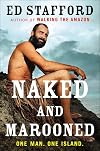
Ed Stafford, following up on his previous ordeal of spending two years walking the entire length of the Amazon river, spends sixty days alone on a small island with no supplies or even clothing. (Well, unless you count the cameras he used to film it for TV, of course.) His stated goal was not just to survive, but to thrive, building shelters and hunting animals. Which he more or less succeeded in, although he ran into a lot of difficulties and generally didn't seem to enjoy the show more experience.
Despite the reality-TV-stunt feel to the whole thing, there's something irresistible about this idea. Who doesn't love a good desert island survival story? Unfortunately, Stafford's story was never quite as engaging as it felt like it ought to be. While some of the details of how he lived on the island are interesting, he spends a lot of time thinking and talking about his own mental state, rather than about the island and its external challenges, and while that also seems like it could be really interesting, it mostly comes across as a lot of whiny self-recrimination, usually over things that seem perfectly understandable in the circumstances. I feel a little bad saying that, especially after reading the epilogue, in which he talks about lingering psychological problems he experienced as a result of this period of prolonged isolation, but, well... it does.
And even the survival story aspect of things is... not a particularly pure experience. It turns out that mostly he was able to get along because he was able to make use of trash washed up on the shore or left behind by previous visitors to the island. (Plastic bottles to store water, cans to cook in, bits of metal to sharpen into cutting tools, and so on.) I don't remotely begrudge him for using whatever he could find, but it sort of makes the whole thing feel less like an exciting primitive adventure and more like a sad reflection of the fact that nowhere is untouched by human trash.
Rating: 3/5. Although I admit that the above probably sounds more negative than that. show less
Despite the reality-TV-stunt feel to the whole thing, there's something irresistible about this idea. Who doesn't love a good desert island survival story? Unfortunately, Stafford's story was never quite as engaging as it felt like it ought to be. While some of the details of how he lived on the island are interesting, he spends a lot of time thinking and talking about his own mental state, rather than about the island and its external challenges, and while that also seems like it could be really interesting, it mostly comes across as a lot of whiny self-recrimination, usually over things that seem perfectly understandable in the circumstances. I feel a little bad saying that, especially after reading the epilogue, in which he talks about lingering psychological problems he experienced as a result of this period of prolonged isolation, but, well... it does.
And even the survival story aspect of things is... not a particularly pure experience. It turns out that mostly he was able to get along because he was able to make use of trash washed up on the shore or left behind by previous visitors to the island. (Plastic bottles to store water, cans to cook in, bits of metal to sharpen into cutting tools, and so on.) I don't remotely begrudge him for using whatever he could find, but it sort of makes the whole thing feel less like an exciting primitive adventure and more like a sad reflection of the fact that nowhere is untouched by human trash.
Rating: 3/5. Although I admit that the above probably sounds more negative than that. show less
Awards

You May Also Like


Associated Authors
Statistics
- Works
- 10
- Also by
- 1
- Members
- 304
- Popularity
- #77,405
- Rating
- 3.7
- Reviews
- 18
- ISBNs
- 26
- Languages
- 5