
About the Author
John U. Bacon has won numerous national writing awards & now freelances for "Sports Illustrated", "Time", "ESPN Magazine", & the "New York Times", among others. (Publisher Provided) John U. Bacon received an honors degree in history from the University of Michigan in 1986 and a master's degree in show more education in 1994. He started his journalism career covering high school sports for The Ann Arbor News then wrote a lifestyle column before becoming the Sunday sports feature writer for The Detroit News in 1995. In 2005-2006, the Knight-Wallace Journalism Fellowship named him the first recipient of the Benny Friedman Fellowship for Sports Journalism. He teaches at Northwestern's Medill School of Journalism and the University of Michigan. He is the author or co-author several books on sports and business including Walgreens: America's Corner Store, Cirque du Soleil - The Spark: Igniting the Creative Fire That Lives Within Us All, Bo's Lasting Lessons: The Legendary Coach Teaches the Timeless Fundamentals of Leadership, Three and Out: Rich Rodriguez and the Michigan Wolverines in the Crucible of College Football, Fourth and Long: The Fight for the Soul of College Football, and Endzone: The Rise, Fall, and Return of Michigan Football. (Bowker Author Biography) show less
Image credit: via Macmillan Publishers
Works by John U. Bacon
The Great Halifax Explosion: A World War I Story of Treachery, Tragedy, and Extraordinary Heroism (2017) 462 copies, 24 reviews
Cirque du Soleil: The Spark - Igniting the Creative Fire that Lives within Us All (2006) 138 copies, 4 reviews
Three and Out: Rich Rodriguez and the Michigan Wolverines in the Crucible of College Football (2011) 92 copies, 2 reviews
Overtime: Jim Harbaugh and the Michigan Wolverines at the Crossroads of College Football (2019) 33 copies, 1 review
The Greatest Comeback: How Team Canada Fought Back, Took the Summit Series, and Reinvented Hockey (2022) 12 copies, 2 reviews
Associated Works
Bo's Lasting Lessons: The Legendary Coach Teaches the Timeless Fundamentals of Leadership (2007) 87 copies, 1 review
Tagged
Common Knowledge
- Birthdate
- 1964
- Gender
- male
- Education
- University of Michigan
- Occupations
- journalist
- Organizations
- The Ann Arbor News
The Detroit News - Nationality
- USA
- Associated Place (for map)
- USA
Members
Reviews
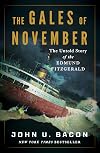
On November 10, 1975, the Edmund Fitzgerald the biggest, best, and most profitable ship on the Great Lakes sank in Lake Superior during the 'storm of the century'. Facing 100 mile-per-hour winds and 50-foot waves on Lake Superior, the Mighty Fitz found itself at the worst possible place, at the worst possible time. When she sank, she took all 29 men onboard down with her.
This book was a mixture of the history of shipping on the Great Lakes and background about the crew much of it told by show more friends and family. I knew a bit about the Edmund Fitzgerald but not that when it went down, it was the best made ship on the water with a well-seasoned captain who was admired by all. There was a lot of information about the history of shipping as well as the building of the Fitzgerald. These boats were crucial to the early auto production in Detroit as well as other cities. I found that part of the book interesting but to me the best part of the book was the information about the crew and what their jobs were on the ship. There were several men interviewed who made last minute decisions not to go on that final voyage and sad stories about many - the captain who planned to retire after this one last voyage and other men who had just started working the ship. His research was so good that I felt like I knew some of these men and, yes, I shed a few tears at their loss.
Many people who live near the Great Lakes remember the storm and remember where they were when they first heard about the loss of the Edmund Fitzgerald. Others have only heard about it from the wonderful song written and sung by Gordon Lightfoot (The Wreck of the Edmund Fitzgerald). Others know nothing about it. No matter which category you fall into, this is a book that you don't want to miss. The author has done extensive research and makes the story come alive with his descriptions of the crew and the captain who went down with the ship. I don't read a lot of nonfiction because I find it pretty dry but this book was a real page turner, especially during the ship's final hours as the author re-created what must have been going on in the ship during the high winds and 50 foot waves. The Gales of November is an emotional tribute to the lives lost and a propulsive, page-turning history of the loss of this great ship and its crew. show less
This book was a mixture of the history of shipping on the Great Lakes and background about the crew much of it told by show more friends and family. I knew a bit about the Edmund Fitzgerald but not that when it went down, it was the best made ship on the water with a well-seasoned captain who was admired by all. There was a lot of information about the history of shipping as well as the building of the Fitzgerald. These boats were crucial to the early auto production in Detroit as well as other cities. I found that part of the book interesting but to me the best part of the book was the information about the crew and what their jobs were on the ship. There were several men interviewed who made last minute decisions not to go on that final voyage and sad stories about many - the captain who planned to retire after this one last voyage and other men who had just started working the ship. His research was so good that I felt like I knew some of these men and, yes, I shed a few tears at their loss.
Many people who live near the Great Lakes remember the storm and remember where they were when they first heard about the loss of the Edmund Fitzgerald. Others have only heard about it from the wonderful song written and sung by Gordon Lightfoot (The Wreck of the Edmund Fitzgerald). Others know nothing about it. No matter which category you fall into, this is a book that you don't want to miss. The author has done extensive research and makes the story come alive with his descriptions of the crew and the captain who went down with the ship. I don't read a lot of nonfiction because I find it pretty dry but this book was a real page turner, especially during the ship's final hours as the author re-created what must have been going on in the ship during the high winds and 50 foot waves. The Gales of November is an emotional tribute to the lives lost and a propulsive, page-turning history of the loss of this great ship and its crew. show less
The Great Halifax Explosion: A World War I Story of Treachery, Tragedy, and Extraordinary Heroism by John U. Bacon
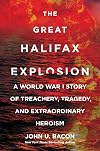
Outstanding non-fiction about a disastrous explosion in Halifax in 1917. On December 6, 1917, the freighter Mont-Blanc arrived in Halifax Harbor, Nova Scotia, laden with six million pounds of explosives destined for the trenches of the Great War in France. The Mont-Blanc collided with the Imo, resulting in a fire, which eventually caused the explosives to detonate, devastating the surrounding area. It was, at the time, the most powerful blast ever unleashed, until eclipsed by the atomic bomb show more at Hiroshima. John U. Bacon tells the story of how this disaster occurred and what happened in its aftermath. It is a story of almost unbelievable heroism and people rising to the occasion by altruistically helping each other through the tragedy.
The author employs several techniques which bring the story to life. First, he follows the lives of several people who were impacted by the event. I cared about these people and hoped they made it through the blast. Second, he tells the history of United States-Canadian relations, which have not always been as cordial as they are now. Third, he outlines an almost a minute-by-minute reconstruction of the circumstances leading to the explosion. Taken together, they make for riveting reading.
Once he lays the foundation for the events that would cause the explosion, Bacon turns to a mini-biography of Joseph Barrs, who volunteered for the Canadian army in World War I. He was injured severely in battle and spent six months in a body cast, returning to the Halifax area struggling to walk and suffering from what we would now call post-traumatic stress disorder. He feels he has lost his direction in life, and the way in which he rediscovers a sense of purpose is directly related to the actions taken in response to the Halifax explosion. I found this a very powerful way to tell the story of how the explosion connects to what was happening with the Great War overseas and felt invested in his plight.
The author paints a vivid picture of what was occurring in the city at the time, a seemingly ordinary day, with men working, children on their way to school, families eating breakfast. People were curious about the burning ship and were coming down to the pier to watch, unaware of its dangerous cargo. The author tells many individual stories of what happened to the people and how the community responded, eventually receiving assistance from many places, including Boston, where they had an emergency preparedness plan already established. Just when you think circumstances can’t get much worse for the people of Halifax, they do. In the wake of the explosion, a massive tsunami is generated. The next day, as people were attempting to recover survivors, the city is hit with the worst blizzard in a decade.
This story deserves to be more well-known than it is, and I very much enjoyed learning about it. My only quibbles with the book, and they are minor, is that the author sometimes includes superfluous or repetitive information and I would have liked to hear more about what the captain and crew faced afterward. Overall, I found this book fascinating and highly recommend it to anyone interested in World War I, the history of man-made disasters, or stories of tragic events that bring out the best of human nature. show less
The author employs several techniques which bring the story to life. First, he follows the lives of several people who were impacted by the event. I cared about these people and hoped they made it through the blast. Second, he tells the history of United States-Canadian relations, which have not always been as cordial as they are now. Third, he outlines an almost a minute-by-minute reconstruction of the circumstances leading to the explosion. Taken together, they make for riveting reading.
Once he lays the foundation for the events that would cause the explosion, Bacon turns to a mini-biography of Joseph Barrs, who volunteered for the Canadian army in World War I. He was injured severely in battle and spent six months in a body cast, returning to the Halifax area struggling to walk and suffering from what we would now call post-traumatic stress disorder. He feels he has lost his direction in life, and the way in which he rediscovers a sense of purpose is directly related to the actions taken in response to the Halifax explosion. I found this a very powerful way to tell the story of how the explosion connects to what was happening with the Great War overseas and felt invested in his plight.
The author paints a vivid picture of what was occurring in the city at the time, a seemingly ordinary day, with men working, children on their way to school, families eating breakfast. People were curious about the burning ship and were coming down to the pier to watch, unaware of its dangerous cargo. The author tells many individual stories of what happened to the people and how the community responded, eventually receiving assistance from many places, including Boston, where they had an emergency preparedness plan already established. Just when you think circumstances can’t get much worse for the people of Halifax, they do. In the wake of the explosion, a massive tsunami is generated. The next day, as people were attempting to recover survivors, the city is hit with the worst blizzard in a decade.
This story deserves to be more well-known than it is, and I very much enjoyed learning about it. My only quibbles with the book, and they are minor, is that the author sometimes includes superfluous or repetitive information and I would have liked to hear more about what the captain and crew faced afterward. Overall, I found this book fascinating and highly recommend it to anyone interested in World War I, the history of man-made disasters, or stories of tragic events that bring out the best of human nature. show less
Does anyone know where the love of god goes
When the waves turn the minutes to hours?
Gordon LIghtfoot - The Wreck of the Edmund Fitzgerald
Going in, I knew this entire book wasn't going to just be about the fateful last days of the Edmund Fitzgerald, but I truly didn't expect to learn so much about the shipping trade in the Great Lakes, or of the people who worked it, as well as the surrounding community.
But I did. And honestly, all of it was fascinating. It's rare for me to find a book that show more teaches me so much about a topic that I literally have no knowledge of going in, yet also provides heartbreaking scenes and builds dread throughout the story.
I was thirteen when "the good ship and crew" went down and, weirdly, while I remember all the news about the Jimmy Hoffa disappearance only a few months earlier, I have no memory of ever hearing anything about the Edmund Fitzgerald.
This filled in that void of knowledge wonderfully, and brought the places, the people, and the times to life. So much so, in fact that, upon finishing the book—cliché as it may sound—I played the Gordon Lightfoot song that I've literally heard thousands of times, yet experienced it as something completely new.
Before, it was a song about a tragedy from long ago. This time, every line held volumes. Every drumbeat was the pulse of a crew member that didn't survive that day. The song became real and bonecrushing. It brought tears to my eyes for the first time, after hearing it for five decades.
This book did that. This book told the story, and brought it to life and made it real. show less
When the waves turn the minutes to hours?
Gordon LIghtfoot - The Wreck of the Edmund Fitzgerald
Going in, I knew this entire book wasn't going to just be about the fateful last days of the Edmund Fitzgerald, but I truly didn't expect to learn so much about the shipping trade in the Great Lakes, or of the people who worked it, as well as the surrounding community.
But I did. And honestly, all of it was fascinating. It's rare for me to find a book that show more teaches me so much about a topic that I literally have no knowledge of going in, yet also provides heartbreaking scenes and builds dread throughout the story.
I was thirteen when "the good ship and crew" went down and, weirdly, while I remember all the news about the Jimmy Hoffa disappearance only a few months earlier, I have no memory of ever hearing anything about the Edmund Fitzgerald.
This filled in that void of knowledge wonderfully, and brought the places, the people, and the times to life. So much so, in fact that, upon finishing the book—cliché as it may sound—I played the Gordon Lightfoot song that I've literally heard thousands of times, yet experienced it as something completely new.
Before, it was a song about a tragedy from long ago. This time, every line held volumes. Every drumbeat was the pulse of a crew member that didn't survive that day. The song became real and bonecrushing. It brought tears to my eyes for the first time, after hearing it for five decades.
This book did that. This book told the story, and brought it to life and made it real. show less

On November 10, 1975 the Edmund Fitzgerald, a Great Lakes freighter, sank in a storm on Lake Superior, and the entire 29-man crew was lost. The exact cause of the disaster has never been determined, and is likely to have been the result of several factors from the obvious weather to the possibility of damage from contact with a shoal. The tragedy was memorialized in Gordon Lightfoot’s 1976 emotional ballad, The Wreck of the Edmund Fitzgerald.
This basic outline was familiar to me, but I show more had no idea how much I didn’t know. This book begins with a detailed account of Great Lakes shipping, and the building of The Fitz itself. Then, Author John Bacon introduces the reader to the captain and every member of the crew from veterans, many of whom planned to retire after the November sailing, to rookies fresh from the Great Lakes Marine Academy. The ship’s final voyage is told in just 65 pages, followed by the search for survivors and the impact on those the crew left behind.
This book captivated me from start to finish. I expected an account of the industry and technical details of the ship, but hadn’t anticipated the profound impact of reading the profiles of crew members and the stories of their survivors. John Bacon interviewed friends and colleagues to present each crew member as a unique individual with plans for their future. In the final chapters he introduces survivors and shows how each of them carried on after such a huge loss. There’s also an interesting section about the making of Lightfoot’s ballad. I knew the song of course, but can now appreciate it in a different way. show less
This basic outline was familiar to me, but I show more had no idea how much I didn’t know. This book begins with a detailed account of Great Lakes shipping, and the building of The Fitz itself. Then, Author John Bacon introduces the reader to the captain and every member of the crew from veterans, many of whom planned to retire after the November sailing, to rookies fresh from the Great Lakes Marine Academy. The ship’s final voyage is told in just 65 pages, followed by the search for survivors and the impact on those the crew left behind.
This book captivated me from start to finish. I expected an account of the industry and technical details of the ship, but hadn’t anticipated the profound impact of reading the profiles of crew members and the stories of their survivors. John Bacon interviewed friends and colleagues to present each crew member as a unique individual with plans for their future. In the final chapters he introduces survivors and shows how each of them carried on after such a huge loss. There’s also an interesting section about the making of Lightfoot’s ballad. I knew the song of course, but can now appreciate it in a different way. show less
Lists
Awards


You May Also Like


Associated Authors
Statistics
- Works
- 11
- Also by
- 1
- Members
- 1,320
- Popularity
- #19,470
- Rating
- 4.2
- Reviews
- 61
- ISBNs
- 57
- Languages
- 1