
David Bell (13) (1969–)
Author of Cemetery Girl
For other authors named David Bell, see the disambiguation page.
About the Author
Image credit: David Bell in 2017
Works by David Bell
Associated Works
Bibliomysteries: Crime in the World of Books and Bookstores, Volume One (2013) — Contributor — 241 copies, 14 reviews
Tagged
Common Knowledge
- Canonical name
- Bell, David
- Legal name
- Bell, David Jack
- Other names
- Wainer, Jack (pseudonym)
- Birthdate
- 1969-11-17
- Gender
- male
- Education
- Indiana University (English)
Miami University (MA|Creative Writing)
University of Cincinnati (PhD|Creative Writing) - Occupations
- professor
waiter
bartender
book store clerk
telemarker - Organizations
- Western Kentucky University
- Relationships
- McCaffrey, Molly (wife)
- Nationality
- USA
- Birthplace
- Cincinnati, Ohio, USA
- Places of residence
- Cincinnati, Ohio, USA
Laurinburg, North Carolina, USA
Bowling Green, Kentucky, USA - Map Location
- Etats-Unis
- Associated Place (for map)
- USA
Members
Reviews
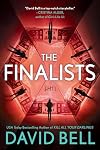
David Bell’s novel The Finalists calls to mind the “Breakfast Club” movie, but instead of sacrificing an afternoon to detention, these students might have to sacrifice their lives. Bell sets up a prototypic small New England college, which is facing financial straits like so many institutions are today. The narrator is a sycophantic mid-level administrator who is organizing a traditional scholarship competition while hoping to parlay it into an opportunity to lobby for a donation to show more the school. Every year, five students are selected to try for the Hyde Scholarship, which awards the winner a great deal of money and a guaranteed job after graduation. To qualify, the students must agree to be locked into the Hyde House on campus with an administrator and an appointed heir from the Hyde family. It all seems very straightforward, an essay contest followed by individual interviews. This year, however, the event turns out to be a catastrophe sparked by the student high pressure, diminishing resources, and sheer desperation. David Bell’s novel, while not ground-breaking, is an exciting and nicely paced mystery. The anxieties about staggering tuition costs and student debt are amplified within the “closed room” scenario. Those looking to bond with a likeable protagonist, however, will not find one here. The Finalists would be recommended for those who like inheritance gauntlets or for fans of Agatha Christie’s And Then There Were None. show less

Cemetery Girl is the story of Caitlin Stuart, a girl who disappears at age 12 and is found alive four years later. Caitlin refuses to talk about what happened to her while she was gone, and her father, Tom, struggles to uncover the mystery behind those lost years.
Cemetery Girl is told from the perspective of Tom, and as the story unfolds, the reader is treated to great writing that relays so much more than the typical mystery/thriller abduction tale. The author, David Bell, does an excellent show more job examining the effect of a tragic event and its aftermath on the different aspects of a person's life, all while showing the varied reactions of people to crises.
This is a thought-provoking book, and one that would be good for a book club. I imagine many readers will be made uncomfortable by the choices different characters make in the novel, and the discussion about those choices could be excellent.
Finally, let me say that I love the cover art for this book.
Disclaimer: I received an ARC of Cemetery Girl from the publisher; no payment was received for this review. show less
Cemetery Girl is told from the perspective of Tom, and as the story unfolds, the reader is treated to great writing that relays so much more than the typical mystery/thriller abduction tale. The author, David Bell, does an excellent show more job examining the effect of a tragic event and its aftermath on the different aspects of a person's life, all while showing the varied reactions of people to crises.
This is a thought-provoking book, and one that would be good for a book club. I imagine many readers will be made uncomfortable by the choices different characters make in the novel, and the discussion about those choices could be excellent.
Finally, let me say that I love the cover art for this book.
Disclaimer: I received an ARC of Cemetery Girl from the publisher; no payment was received for this review. show less
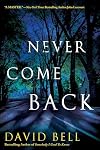
3.75 Stars — NEVER COME BACK is another exciting and emotional family drama/mystery from author David Bell. Elizabeth Hampton’s life is thrown out of whack when her mother Leslie is murdered, and the police suspect her special needs brother Ronnie is the killer. Elizabeth is surprised to learn that her mother left a third of her estate to a mystery woman, also named Elizabeth, and that her will was changed recently. In her quest to find out who this other woman is, Elizabeth discovers show more some shocking secrets her mother had been hiding, and she believes those secrets have something to do with Leslie’s death. My favorite thing about this book was thinking I had the big secret all figured out, and then – surprise! I did not see that ending coming.
Elizabeth’s character wasn’t easy to like at first, but she grew on me. In the beginning, she came off as a little selfish and cold, but as the story progressed, I could see where she was coming from. Her brother Ronnie has Down Syndrome, and even though he’s fairly independent, he still needs someone to care for him. This was a huge source of contention between Elizabeth and her mother. Elizabeth loved her brother, but held some resentment toward him, since taking over his care would mean giving up her independence.
The murder mystery in NEVER COME BACK was intriguing, wrapped up in a web of family secrets, lies, betrayals. I do think that Elizabeth missed a lot of obvious clues, particularly ones her brother gave her. I don’t want to give any spoilers, so I’ll just say that things should have clicked into place for Elizabeth much sooner. Though some of the revelations along the way seemed far-fetched, overall I still enjoyed this book. The emotional family dynamics in David Bells’ mysteries make them worthwhile reads. show less
Elizabeth’s character wasn’t easy to like at first, but she grew on me. In the beginning, she came off as a little selfish and cold, but as the story progressed, I could see where she was coming from. Her brother Ronnie has Down Syndrome, and even though he’s fairly independent, he still needs someone to care for him. This was a huge source of contention between Elizabeth and her mother. Elizabeth loved her brother, but held some resentment toward him, since taking over his care would mean giving up her independence.
The murder mystery in NEVER COME BACK was intriguing, wrapped up in a web of family secrets, lies, betrayals. I do think that Elizabeth missed a lot of obvious clues, particularly ones her brother gave her. I don’t want to give any spoilers, so I’ll just say that things should have clicked into place for Elizabeth much sooner. Though some of the revelations along the way seemed far-fetched, overall I still enjoyed this book. The emotional family dynamics in David Bells’ mysteries make them worthwhile reads. show less
Author David Bell sets The Finalists on a Kentucky college campus and, at the outset, asks readers to suspend their disbelief and accept the story's premise. Six finalists, all students at Hyde College, are competing on the third Saturday in April for the Hyde Fellowship which has been awarded for the past one hundred and fifty-two years. The private liberal arts college was founded by Major Ezekiel Hyde, who served in the Union Army during the Civil War and established the college not long show more after.
On the morning of the competition, the students arrive at Hyde House, the stately but somewhat dilapidated Victorian home on the edge of the campus that once served as the Hyde family residence, to find a protest underway. The campus police are working to control the crowd that objects to the anticipated arrival of Nicholas Hyde, the great-great-great-great grandson of the school's founder, to administer the competition. It will be the first time Nicholas will do the honors, since his father, Theodore, died recently, leaving Nicholas the sole Hyde heir to a fortune made mostly through coal. The company has announced its intention to move away from coal to green energy over the course of the next two decades. Nicholas has a reputation for being spoiled, entitled, and irresponsible, which he lives up to when he arrives disheveled and hung over.
The protestors are also angry about recently-discovered information about Ezekiel's military career as a result of research conducted by one of the college's history professors. It seems that the statue on campus of Ezekiel on his horse, Lancer, heralding him as a war hero does not tell the whole story. Now there is proof that Ezekiel participated in the Palmyra Massacre on October 18, 1862, in Palmyra, Missouri. Ten Confederate prisoners of war were executed in reprisal for the abduction of a local Union supporter, Andrew Alsman, even though none of them had any connection to his disappearance.
The Hyde Fellowship finalists are chosen by the Hyde family, based on a combination of academic achievement and financial need. The winner will have any outstanding student debt up to a maximum of $100,000 paid in full and receive a full scholarship for the remainder of their education that includes tuition, books, and room and board. Upon graduation, they are assured an entry-level job with the Hyde Corporation. The winner must accept the job and work for at least one year or forfeit the remainder of the prize. Runners-up receive $5,000.
But the arcane Hyde Scholarship bylaws prohibit anyone from entering the house before the presiding member of the Hyde family arrives. And once the competitors and administrators enter the house, they must remain there for the full eight hours. "If anyone steps so much as one foot out the door, they are disqualified from any consideration for the Hyde Scholarship and all its attendant perks." The chief of police points out that he has inspected every door and window to ensure that they are all secured (in fact, they are nailed shut), and once he locks the front door from the outside, there is no way to unlock it from the inside. "Per the Hyde family bylaws."
"There's something ominous about being locked inside a house," Troy Gaines notes in his first-person narration through which Bell tells the tale. In past years, he has assisted Theodore during the competition. He's anxious to pin Nicholas down about his support for the 100 More Initiative he has been working on for the past two years, during which he has failed to meet his fund-raising goal in his role as the college's Vice President for Institutional Development. The Initiative is a plan to increase the number of minority and first-time students who enroll at Hyde College and Nicholas promised that the Hyde family will contribute two million dollars toward the effort. In recent years, the Hyde family has reduced its contributions to the college which has struggled to compete with other institutions offering their students more up-to-date technology and courses, not to mention modern dormitories and classrooms. Troy misses his days as a professor, when he could really get to know and mentor his pupils, lamenting that now he hardly knows most of the students. "I sold out for money. My fault for having three kids who want to go to college." The college's President has made it very clear that Troy's job is on the line.
The six finalists will compete following the handwritten, highly detailed bylaws that govern every aspect of the proceedings, including the lunch menu, that Nicholas keeps in his locked briefcase. In the morning, they will be served tea and then draft an essay that responds to a prompt. Following lunch, they will participate in individual interviews conducted by Nicholas and Troy. They will be judged on comportment, presentation, and communication, and Nicholas has the sole power to evaluate the competitors and select the winner. There is no appeal process.
Bell has amassed an intriguingly complex, if largely unlikable cast of characters, and skillfully makes every one of them a suspect at various points in the tale. The oldest finalist is forty-two-year-old Captain James Stephenson, a history major who served in the U.S. Army for twenty-five years. Originally from Los Angeles, he has a wife and two children, and is intent on being the first student of color to ever win the prestigious scholarship. Duffy Mansfield is an agriculture major who grew up raising cattle in a nearby county. Sydney Mosley is a marketing major from Plainfield, Illinois and a member of the volleyball team with "Persistence" tattooed on one arm. Her friend, Milo Reed, an art major from Louisville, arrives in a BLM T-shirt and announces that his "politics are really important" to him. Milo has the highest grand point average of any current student. Natalia Gomez, an honors student from Columbus, Ohio, is studying cellular biology. And Emily Paine, from Montgomery, Alabama, is majoring in creative writing She arrives last and is observed walking with some of the protestors gathered outside the house.
The drama begins immediately as the finalists, some of whom are already acquainted, meet each other, are introduced to Nicholas and Troy, and the rules are explained to them. They quickly size each other up and begin angling to establish any possible advantage for themselves. After they gather in the parlor for tea, they begin the written exam, but it's not long before one of them suddenly dies. Since no one has a cell phone and there is no landline in the home, it is impossible to summon help without leaving the house to summon the campus police who are holding the protestors off at some distance from the residence. One finalist voices what everyone is thinking: "Isn't it clear someone killed him to get him out of the way of the competition?"
From there, Bell illustrates, through Troy's thoughts and observations, the machinations and deliberations of the group as they weigh the pros and cons of abandoning the competition in light of the tragedy. As they debate whether to proceed, and explain their justifications, the day wears on and the available choices narrow even as the characters' levels of fear and suspicion escalate. Bell deftly reveals the competitors' backgrounds and motivations for agreeing to compete for the scholarship, as well as advocating for forging ahead with the selection of a winner . . . or finding a way to escape from the home in which dead bodies are piling up. He says it "was a lot of fun to create both empathy and suspicion around everyone." At various points, ideas are voiced and vetoed as Jonathan consults Ezekiel's exhaustively explicit bylaws and reveals the various contingencies outlined therein.
With this moderately-paced locked-room mystery, Bell once again demonstrates his ability to deliver an entertaining story replete with red herrings, misdirection, surprising revelations, and an ending that most readers will not guess. Is there a murderer inside the Hyde house? And if so, how many victims will he/she claim? Bell masterfully brings his fully developed characters to life through snappy, believable dialogue and Troy's descriptions of his interactions with them. Troy is at the heart of the tale and the most sympathetic. He has sold out and knows it. He surrendered the career that provided him a sense of purpose and fulfillment because of economic pressures. The ever-escalating cost of a college education impacts all involved, including the professors and administrators who do not earn enough to send their own children to the institution that employs them, even taking into account the discounts they are ordinarily offered. Troy has been unable to keep up with his employer's demand that he bring in large donations, putting his current position as a vice president is in jeopardy. He understands and appreciates the sense of powerlessness and despair that drives the finalists, even as he is repulsed at times by their behavior and has no idea which, if any of them, he dares trust. He is trapped and constrained in many of the same ways he learns the students are, and relates to their perception that they are part of a system that is unjust, excluding them and condemning them to failure without affording them a fair chance to succeed. For those reasons, he is deeply committed to the 100 More Initiative and determined to ensure that it is launched . . . if he gets out of Hyde house alive.
The Finalists succeeds as a thought-provoking examination of the ways desperation and the feeling of being an outsider for whom success is beyond one's grasp can drive people to do the unthinkable.
Thanks to NetGalley for an Advance Reader's Copy of the book. show less
On the morning of the competition, the students arrive at Hyde House, the stately but somewhat dilapidated Victorian home on the edge of the campus that once served as the Hyde family residence, to find a protest underway. The campus police are working to control the crowd that objects to the anticipated arrival of Nicholas Hyde, the great-great-great-great grandson of the school's founder, to administer the competition. It will be the first time Nicholas will do the honors, since his father, Theodore, died recently, leaving Nicholas the sole Hyde heir to a fortune made mostly through coal. The company has announced its intention to move away from coal to green energy over the course of the next two decades. Nicholas has a reputation for being spoiled, entitled, and irresponsible, which he lives up to when he arrives disheveled and hung over.
The protestors are also angry about recently-discovered information about Ezekiel's military career as a result of research conducted by one of the college's history professors. It seems that the statue on campus of Ezekiel on his horse, Lancer, heralding him as a war hero does not tell the whole story. Now there is proof that Ezekiel participated in the Palmyra Massacre on October 18, 1862, in Palmyra, Missouri. Ten Confederate prisoners of war were executed in reprisal for the abduction of a local Union supporter, Andrew Alsman, even though none of them had any connection to his disappearance.
The Hyde Fellowship finalists are chosen by the Hyde family, based on a combination of academic achievement and financial need. The winner will have any outstanding student debt up to a maximum of $100,000 paid in full and receive a full scholarship for the remainder of their education that includes tuition, books, and room and board. Upon graduation, they are assured an entry-level job with the Hyde Corporation. The winner must accept the job and work for at least one year or forfeit the remainder of the prize. Runners-up receive $5,000.
But the arcane Hyde Scholarship bylaws prohibit anyone from entering the house before the presiding member of the Hyde family arrives. And once the competitors and administrators enter the house, they must remain there for the full eight hours. "If anyone steps so much as one foot out the door, they are disqualified from any consideration for the Hyde Scholarship and all its attendant perks." The chief of police points out that he has inspected every door and window to ensure that they are all secured (in fact, they are nailed shut), and once he locks the front door from the outside, there is no way to unlock it from the inside. "Per the Hyde family bylaws."
"There's something ominous about being locked inside a house," Troy Gaines notes in his first-person narration through which Bell tells the tale. In past years, he has assisted Theodore during the competition. He's anxious to pin Nicholas down about his support for the 100 More Initiative he has been working on for the past two years, during which he has failed to meet his fund-raising goal in his role as the college's Vice President for Institutional Development. The Initiative is a plan to increase the number of minority and first-time students who enroll at Hyde College and Nicholas promised that the Hyde family will contribute two million dollars toward the effort. In recent years, the Hyde family has reduced its contributions to the college which has struggled to compete with other institutions offering their students more up-to-date technology and courses, not to mention modern dormitories and classrooms. Troy misses his days as a professor, when he could really get to know and mentor his pupils, lamenting that now he hardly knows most of the students. "I sold out for money. My fault for having three kids who want to go to college." The college's President has made it very clear that Troy's job is on the line.
The six finalists will compete following the handwritten, highly detailed bylaws that govern every aspect of the proceedings, including the lunch menu, that Nicholas keeps in his locked briefcase. In the morning, they will be served tea and then draft an essay that responds to a prompt. Following lunch, they will participate in individual interviews conducted by Nicholas and Troy. They will be judged on comportment, presentation, and communication, and Nicholas has the sole power to evaluate the competitors and select the winner. There is no appeal process.
Bell has amassed an intriguingly complex, if largely unlikable cast of characters, and skillfully makes every one of them a suspect at various points in the tale. The oldest finalist is forty-two-year-old Captain James Stephenson, a history major who served in the U.S. Army for twenty-five years. Originally from Los Angeles, he has a wife and two children, and is intent on being the first student of color to ever win the prestigious scholarship. Duffy Mansfield is an agriculture major who grew up raising cattle in a nearby county. Sydney Mosley is a marketing major from Plainfield, Illinois and a member of the volleyball team with "Persistence" tattooed on one arm. Her friend, Milo Reed, an art major from Louisville, arrives in a BLM T-shirt and announces that his "politics are really important" to him. Milo has the highest grand point average of any current student. Natalia Gomez, an honors student from Columbus, Ohio, is studying cellular biology. And Emily Paine, from Montgomery, Alabama, is majoring in creative writing She arrives last and is observed walking with some of the protestors gathered outside the house.
The drama begins immediately as the finalists, some of whom are already acquainted, meet each other, are introduced to Nicholas and Troy, and the rules are explained to them. They quickly size each other up and begin angling to establish any possible advantage for themselves. After they gather in the parlor for tea, they begin the written exam, but it's not long before one of them suddenly dies. Since no one has a cell phone and there is no landline in the home, it is impossible to summon help without leaving the house to summon the campus police who are holding the protestors off at some distance from the residence. One finalist voices what everyone is thinking: "Isn't it clear someone killed him to get him out of the way of the competition?"
From there, Bell illustrates, through Troy's thoughts and observations, the machinations and deliberations of the group as they weigh the pros and cons of abandoning the competition in light of the tragedy. As they debate whether to proceed, and explain their justifications, the day wears on and the available choices narrow even as the characters' levels of fear and suspicion escalate. Bell deftly reveals the competitors' backgrounds and motivations for agreeing to compete for the scholarship, as well as advocating for forging ahead with the selection of a winner . . . or finding a way to escape from the home in which dead bodies are piling up. He says it "was a lot of fun to create both empathy and suspicion around everyone." At various points, ideas are voiced and vetoed as Jonathan consults Ezekiel's exhaustively explicit bylaws and reveals the various contingencies outlined therein.
With this moderately-paced locked-room mystery, Bell once again demonstrates his ability to deliver an entertaining story replete with red herrings, misdirection, surprising revelations, and an ending that most readers will not guess. Is there a murderer inside the Hyde house? And if so, how many victims will he/she claim? Bell masterfully brings his fully developed characters to life through snappy, believable dialogue and Troy's descriptions of his interactions with them. Troy is at the heart of the tale and the most sympathetic. He has sold out and knows it. He surrendered the career that provided him a sense of purpose and fulfillment because of economic pressures. The ever-escalating cost of a college education impacts all involved, including the professors and administrators who do not earn enough to send their own children to the institution that employs them, even taking into account the discounts they are ordinarily offered. Troy has been unable to keep up with his employer's demand that he bring in large donations, putting his current position as a vice president is in jeopardy. He understands and appreciates the sense of powerlessness and despair that drives the finalists, even as he is repulsed at times by their behavior and has no idea which, if any of them, he dares trust. He is trapped and constrained in many of the same ways he learns the students are, and relates to their perception that they are part of a system that is unjust, excluding them and condemning them to failure without affording them a fair chance to succeed. For those reasons, he is deeply committed to the 100 More Initiative and determined to ensure that it is launched . . . if he gets out of Hyde house alive.
The Finalists succeeds as a thought-provoking examination of the ways desperation and the feeling of being an outsider for whom success is beyond one's grasp can drive people to do the unthinkable.
Thanks to NetGalley for an Advance Reader's Copy of the book. show less
Lists
Awards


You May Also Like


Associated Authors
Statistics
- Works
- 17
- Also by
- 5
- Members
- 3,904
- Popularity
- #6,485
- Rating
- 3.5
- Reviews
- 276
- ISBNs
- 305
- Languages
- 6
- Favorited
- 1

