
Brett J. Talley
Author of That Which Should Not Be
About the Author
Works by Brett J. Talley
The Chamber 3 copies
Limbus, Inc. - Book III 2 copies
Associated Works
Tagged
Common Knowledge
- Canonical name
- Talley, Brett J.
- Birthdate
- 1981
- Gender
- male
- Education
- University of Alabama (BA)
Harvard University (JD) - Occupations
- attorney
- Organizations
- U.S. Department of Justice
- Nationality
- USA
- Birthplace
- Birmingham, Alabama, USA
- Associated Place (for map)
- Alabama, USA
Members
Reviews
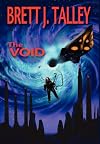
I received this novel from the LibraryThing Early Reviewers program.
Oh, how I wanted to like this book. The premise had everything going for it: humankind discovers that there is a price to be paid for scientific advances in a mix of science fiction and horror. Shades of Lovecraft! Mixed with "Event Horizon" and "Star Trek"! Sounds fantastic! Sign me up!
*sigh*
First, do we really need an introductory essay explaining how wonderful the book is? If the book were some influential classic of show more yesteryear that needed to be explained to the reader ("here's the socio-political context of when the book was written so you're not totally lost or something"), then I could see this being included. For a sophomore tale from a new writer? Not so much.
Second, a note to small e-publishers: Yes, it's wonderful that you can get books out to your audiences more quickly and easily. No, that doesn't mean you should just churn those puppies out without the same care in editing that the big houses take. Redundancies, homonyms, clichés everywhere, grammatical errors, and more. These are the sorts of things that should be caught in one of the pass-throughs. I understand that mistakes will get through (even the big publishing houses have that happen; hence second, third, and fourth editions), but this many?
Third, and I'm not sure if this one goes to the writer or the editor: Pick a style. If you want to write neo-Lovecraftian, then embrace that style and go with it. If you want to write in a more modern style that gives the reader the same creepiness of Lovecraft, then do that. But, please, please, please don't try to shoehorn one into the other.
Fourth, please learn to better differentiate your characters. I should not be paging back trying to figure out who this person is when I'm midway through the book (or worse, in the last quarter). I should also not be mentally shrugging my shoulders and giving up on figuring out the identity since they're mostly interchangeable anyway.
Fifth, please take that list you've obviously got of "stuff what's creepy in dreams" and throw it away. Now find ways to make three-dimensional characters with real fears that don't ping everything on that list aside from clowns. (Please, don't add clowns to your next story. Stephen King already did it better than you ever could.)
Sixth, remember the old saw about "show, don't tell"? Yeah. That. Don't just tell us that something was scary. Scare us. Frighten the hell out of your readers. We'll appreciate it and love you for it. (Hell, go read some King. Just don't try to copy him like you've obviously been copying Lovecraft.) And please ditch the "sit around and discuss things 'everybody' knows" bits next time.
Seventh, if you're going to write science-fiction and not going to just hand-wave concepts like artificial gravity, find an actual scientist to go over your descriptions so they're at least in the realm of the plausible. "Star Trek" was successful because the science & tech were based on actual scientific principles. Which is why our current tech looks so much like the stuff the Enterprise crew were using.
Finally, I wouldn't have gone into this big, long list had I not felt there was some promise here. It just needs another couple of passes by a good editor. And a physicist. show less
Oh, how I wanted to like this book. The premise had everything going for it: humankind discovers that there is a price to be paid for scientific advances in a mix of science fiction and horror. Shades of Lovecraft! Mixed with "Event Horizon" and "Star Trek"! Sounds fantastic! Sign me up!
*sigh*
First, do we really need an introductory essay explaining how wonderful the book is? If the book were some influential classic of show more yesteryear that needed to be explained to the reader ("here's the socio-political context of when the book was written so you're not totally lost or something"), then I could see this being included. For a sophomore tale from a new writer? Not so much.
Second, a note to small e-publishers: Yes, it's wonderful that you can get books out to your audiences more quickly and easily. No, that doesn't mean you should just churn those puppies out without the same care in editing that the big houses take. Redundancies, homonyms, clichés everywhere, grammatical errors, and more. These are the sorts of things that should be caught in one of the pass-throughs. I understand that mistakes will get through (even the big publishing houses have that happen; hence second, third, and fourth editions), but this many?
Third, and I'm not sure if this one goes to the writer or the editor: Pick a style. If you want to write neo-Lovecraftian, then embrace that style and go with it. If you want to write in a more modern style that gives the reader the same creepiness of Lovecraft, then do that. But, please, please, please don't try to shoehorn one into the other.
Fourth, please learn to better differentiate your characters. I should not be paging back trying to figure out who this person is when I'm midway through the book (or worse, in the last quarter). I should also not be mentally shrugging my shoulders and giving up on figuring out the identity since they're mostly interchangeable anyway.
Fifth, please take that list you've obviously got of "stuff what's creepy in dreams" and throw it away. Now find ways to make three-dimensional characters with real fears that don't ping everything on that list aside from clowns. (Please, don't add clowns to your next story. Stephen King already did it better than you ever could.)
Sixth, remember the old saw about "show, don't tell"? Yeah. That. Don't just tell us that something was scary. Scare us. Frighten the hell out of your readers. We'll appreciate it and love you for it. (Hell, go read some King. Just don't try to copy him like you've obviously been copying Lovecraft.) And please ditch the "sit around and discuss things 'everybody' knows" bits next time.
Seventh, if you're going to write science-fiction and not going to just hand-wave concepts like artificial gravity, find an actual scientist to go over your descriptions so they're at least in the realm of the plausible. "Star Trek" was successful because the science & tech were based on actual scientific principles. Which is why our current tech looks so much like the stuff the Enterprise crew were using.
Finally, I wouldn't have gone into this big, long list had I not felt there was some promise here. It just needs another couple of passes by a good editor. And a physicist. show less
 This review was written for LibraryThing Early Reviewers.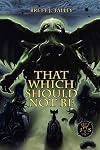
A framing story surrounds several shorter and quite chilling first person narratives of supernatural or other-worldly events as these story-tellers strive to convince their skeptical listener that monsters do exist. They are not just sharing these tales because they wish to scare this traveler who has found himself in their company---there is a purpose because dark forces are at work to trigger events that threaten the safety of the planet.
This novel struck all the right chords with me. A show more heady brew steeped in legendary monsters, demons, black arts, profane books, and Cthulhu mythos, this novel unfolds with the atmosphere of a timeless Hammer film---if Bram Stoker and H.P. Lovecraft combined their talents to write the script. Talley really pulls this one off masterfully. It is easy to see why it got Bram Stoker Award attention. The stories are compelling and the language and texture of the prose makes it easy to forget that this book wasn't written 100 years ago.
Highest recommendation. One of my favorite books of the year. show less
This novel struck all the right chords with me. A show more heady brew steeped in legendary monsters, demons, black arts, profane books, and Cthulhu mythos, this novel unfolds with the atmosphere of a timeless Hammer film---if Bram Stoker and H.P. Lovecraft combined their talents to write the script. Talley really pulls this one off masterfully. It is easy to see why it got Bram Stoker Award attention. The stories are compelling and the language and texture of the prose makes it easy to forget that this book wasn't written 100 years ago.
Highest recommendation. One of my favorite books of the year. show less
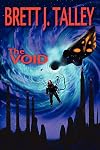
The Void is set 150 years in the future and takes place in space. That makes me inclined to want to read it as a science fiction novel, as that is a genre I am well-read in and comfortable with. That would be a mistake, however, as The Void isn't a work of science fiction, it is a horror novel that happens to be set in space. This is an important distinction, as the goals of a science fiction writer and a horror writer are not the same. It is not very successful as science fiction, but I show more think it may be successful as horror. It is a little hard for me to judge it on that basis, however, as I don't read a lot of horror, so I am less familiar with the genre conventions and have less knowledge of the canon to compare it to.
There will be spoilers in this review.
It takes place in 2169. Humans are traveling through warp space and have colonies and trading outposts scattered around. Because warping space and traveling through it is too weird and horrific for the human mind to experience and remain intact, people are rendered unconscious for that part of their trip. The problem is that they have horrible, frightening, incredibly real dreams, and have the same dream every time they warp. Occasionally someone will go insane or die in the warp process. Our protagonist is Aidan Connor, a ship's navigator, who is the sole survivor of his ship's destruction. He is found, injured and drugged unconscious, floating in space in an escape pod weeks after his ship was destroyed. He has no memory of what happened or what caused the ship to destruct.
He is able to get hired on for the maiden voyage of a cargo ship called the Chronos. They are bound for one of the more outlying colonies, and along the way they stumble upon a derelict ship that is about to be swallowed by a black hole. They investigate, at first concerned for the crew, and then with the thought of salvaging the ship. But creepy, malevolent creatures are lurking on the ship, in the darkness, and the crew of the Chronos are going to have to face their dreams in real life and try to save humanity while they're at it.
As I said, as a science fiction novel this book just doesn't work. There are way too many things that we are just told, that if you think about it don't make much sense, or seem too arbitrary and contrived. For instance, the computers and engine of the derelict ship were destroyed by one of its crew before her death, and Aiden and his very capable lady sidekick conclude that they can't be repaired, but then someone else manages to get everything operational again very quickly with no explanation of how this was done. There are lots of things like that that don't make a lot of sense if you give them much thought.
Further, the crew aren't very convincing as residents of the future. Some of what we are told of their lives and experiences sound very much set in the here and now (one crew member is a fan of the New England Patriots, who have recently won the Super Bowl--it would be more believable if football were different then, if the team had moved cities, if the game were different--I really doubt that it will remain unchanged for 150 years) or even kind of old-fashioned, even in our current time (the character whose mother went crazy after bleeding a lot during childbirth, for instance). Plus they are listening to the Beatles, the Beach Boys, and Lynyrd Skynyrd. The characters read like Baby Boomers, not people having adventures in space in the future.
But as a work of horror? I kind of bought it (keeping in mind I don't read a lot of horror). The story did a fairly effective job of showing characters who are feeling overwhelming dread and fear throughout. Most importantly, it hooked me and kept me reading. I would have gulped it down in one sitting except that I ran out of time and had to set it down just a couple of chapters shy of finishing it. However, when I went back to the beginning and re-read, I found a lot of problems catching my attention.
For one thing, there is head-hopping. We switch from one person's point of view, over to someone else, and back again in the span of a few sentences. That was really distracting to me. There is some weird punctuation that caught my eye, too, especially not putting in a quote mark at the beginning of a paragraph of dialogue if the same person is speaking as in the previous paragraph. But there were also bigger problems of continuity. For instance, the captain of the Chronos calls everybody to a meeting, which should have been five people, and yet two people were never mentioned and didn't say anything (and I don't believe they would have been silent had they been in attendance), making me wonder if they were even there, or if "everyone" wasn't actually everyone.
Worse, there was the matter of sleeping quarters. At the beginning of their voyage, a crewman says to a passenger: "Sorry about the accommodations but this is a freighter, not a passenger ship. Only the captain and the navigator get their own cabins. Even the ship's doctor is stuck back here with the rest of us." And yet later one of the passengers apparently has her own cabin, and later yet the captain tries to get the passengers to return to the passenger quarters, even though we have been told there are no passenger quarters, only a crew compartment. Though the author is ultimately responsible for what they wrote, still I think the publisher may have failed Talley a bit, as this sort of thing could have been caught and fixed in editing.
I realize that in horror it is sometimes better not to describe things too much, so that the reader can fill in the details from their own imagination. But sometimes I needed more detail. Such as this part: "At first he thought he was imagining it, the thing, dragging a body behind it. Pulling it along by one leg, as the arms hung limply behind." We never get any description (that I could find) of what "the thing" was. A robot? A living creature? A ghost? I have no idea, as we aren't told. I don't need detailed descriptions, but I need some clue what I'm supposed to be visualizing.
So The Void is a little rough, but it's actually a pretty entertaining read. It's got characters whose safety you care about, creepy creatures talking to them in the dark, people dying gruesomely, and the safety of humanity hanging in the balance. I would read another novel by Talley without hesitation. show less
There will be spoilers in this review.
It takes place in 2169. Humans are traveling through warp space and have colonies and trading outposts scattered around. Because warping space and traveling through it is too weird and horrific for the human mind to experience and remain intact, people are rendered unconscious for that part of their trip. The problem is that they have horrible, frightening, incredibly real dreams, and have the same dream every time they warp. Occasionally someone will go insane or die in the warp process. Our protagonist is Aidan Connor, a ship's navigator, who is the sole survivor of his ship's destruction. He is found, injured and drugged unconscious, floating in space in an escape pod weeks after his ship was destroyed. He has no memory of what happened or what caused the ship to destruct.
He is able to get hired on for the maiden voyage of a cargo ship called the Chronos. They are bound for one of the more outlying colonies, and along the way they stumble upon a derelict ship that is about to be swallowed by a black hole. They investigate, at first concerned for the crew, and then with the thought of salvaging the ship. But creepy, malevolent creatures are lurking on the ship, in the darkness, and the crew of the Chronos are going to have to face their dreams in real life and try to save humanity while they're at it.
As I said, as a science fiction novel this book just doesn't work. There are way too many things that we are just told, that if you think about it don't make much sense, or seem too arbitrary and contrived. For instance, the computers and engine of the derelict ship were destroyed by one of its crew before her death, and Aiden and his very capable lady sidekick conclude that they can't be repaired, but then someone else manages to get everything operational again very quickly with no explanation of how this was done. There are lots of things like that that don't make a lot of sense if you give them much thought.
Further, the crew aren't very convincing as residents of the future. Some of what we are told of their lives and experiences sound very much set in the here and now (one crew member is a fan of the New England Patriots, who have recently won the Super Bowl--it would be more believable if football were different then, if the team had moved cities, if the game were different--I really doubt that it will remain unchanged for 150 years) or even kind of old-fashioned, even in our current time (the character whose mother went crazy after bleeding a lot during childbirth, for instance). Plus they are listening to the Beatles, the Beach Boys, and Lynyrd Skynyrd. The characters read like Baby Boomers, not people having adventures in space in the future.
But as a work of horror? I kind of bought it (keeping in mind I don't read a lot of horror). The story did a fairly effective job of showing characters who are feeling overwhelming dread and fear throughout. Most importantly, it hooked me and kept me reading. I would have gulped it down in one sitting except that I ran out of time and had to set it down just a couple of chapters shy of finishing it. However, when I went back to the beginning and re-read, I found a lot of problems catching my attention.
For one thing, there is head-hopping. We switch from one person's point of view, over to someone else, and back again in the span of a few sentences. That was really distracting to me. There is some weird punctuation that caught my eye, too, especially not putting in a quote mark at the beginning of a paragraph of dialogue if the same person is speaking as in the previous paragraph. But there were also bigger problems of continuity. For instance, the captain of the Chronos calls everybody to a meeting, which should have been five people, and yet two people were never mentioned and didn't say anything (and I don't believe they would have been silent had they been in attendance), making me wonder if they were even there, or if "everyone" wasn't actually everyone.
Worse, there was the matter of sleeping quarters. At the beginning of their voyage, a crewman says to a passenger: "Sorry about the accommodations but this is a freighter, not a passenger ship. Only the captain and the navigator get their own cabins. Even the ship's doctor is stuck back here with the rest of us." And yet later one of the passengers apparently has her own cabin, and later yet the captain tries to get the passengers to return to the passenger quarters, even though we have been told there are no passenger quarters, only a crew compartment. Though the author is ultimately responsible for what they wrote, still I think the publisher may have failed Talley a bit, as this sort of thing could have been caught and fixed in editing.
I realize that in horror it is sometimes better not to describe things too much, so that the reader can fill in the details from their own imagination. But sometimes I needed more detail. Such as this part: "At first he thought he was imagining it, the thing, dragging a body behind it. Pulling it along by one leg, as the arms hung limply behind." We never get any description (that I could find) of what "the thing" was. A robot? A living creature? A ghost? I have no idea, as we aren't told. I don't need detailed descriptions, but I need some clue what I'm supposed to be visualizing.
So The Void is a little rough, but it's actually a pretty entertaining read. It's got characters whose safety you care about, creepy creatures talking to them in the dark, people dying gruesomely, and the safety of humanity hanging in the balance. I would read another novel by Talley without hesitation. show less
This review was written for LibraryThing Early Reviewers.
It’s no exaggeration to say that THE VOID is one of the best horror novels I read in 2012 (yes, I’m a bit late in writing this review in February 2013). I had previously read Brett Talley’s previous novel, THAT WHICH SHOULD NOT BE, a fun contribution to the Cthulhu Mythos that ties a few other horror tropes to Lovecraft’s world in interesting ways, but it in no way prepared me for what I could expect from his latest. THE VOID is, in my experience, a rare beast: a science fiction show more novel that successfully blends the genre with strong horror elements.
Mild plot spoilers follow.
In the mid-twenty-second century, humanity has discovered the secret of faster-than-light travel (FTL) and has begun to colonize worlds across the galaxy. There is just one limitation to FTL travel: humans must be asleep during the voyage, and, while asleep, each traveler dreams. The dream is different for each traveler, but recurs every time that person travels through space. No one talks about their personal dreams, unsurprisingly since the dreams are closer to nightmares, and deeply resonant for each individual. Every now and then – not too often, but just often enough – the dreams drive someone mad. And sometimes people who go to sleep never wake up.
THE VOID centers on one starship voyage in which six people on a seemingly routine voyage happen upon another ship that had disappeared in the depths of space a decade previously. The crew and passengers awake prematurely during their trip, seemingly trapped in a field of black holes making navigation and escape almost impossible, and having few options but to investigate the derelict ship. Unsurprisingly, each of the travelers is more than they appear, with secrets in their pasts and hidden agendas, all of which surface on this trip. A few of the characters are more hastily sketched than others, but the characters and their pasts are interestingly interlocked, and one of THE VOID’s strengths. I won’t reveal the nature of the dreams or what the travelers find on the missing ship, lest I ruin key elements of the plot. Suffice it to say that the mysteries revealed were well done and genuinely scary.
Comparisons between THE VOID and films like Event Horizon and Solaris are probably inevitable, but also a little misleading, as THE VOID avoids the gore of Event Horizon but is less introspective and more action-oriented than Solaris. I sometimes find that stories involving dream sequences and flashbacks hard to follow or too confusing to be worth the effort, but Talley demonstrates his mastery of writing here, doing a good job of keeping the story moving forward coherently despite the eerie dreamscapes the characters experience.
THE VOID is haunting and thought-provoking. The characters, plot, and premise have all stuck with me since reading it and I can certainly see myself rereading it. Sure, parts of the plot are a little predictable, but then again, we know that this is essentially a Lovecraftian haunted house story set in space, so certain tropes and plot elements are almost expected. Highly recommended for those who like their science fiction mixed with horror.
Review copyright © 2013 J. Andrew Byers show less
Mild plot spoilers follow.
In the mid-twenty-second century, humanity has discovered the secret of faster-than-light travel (FTL) and has begun to colonize worlds across the galaxy. There is just one limitation to FTL travel: humans must be asleep during the voyage, and, while asleep, each traveler dreams. The dream is different for each traveler, but recurs every time that person travels through space. No one talks about their personal dreams, unsurprisingly since the dreams are closer to nightmares, and deeply resonant for each individual. Every now and then – not too often, but just often enough – the dreams drive someone mad. And sometimes people who go to sleep never wake up.
THE VOID centers on one starship voyage in which six people on a seemingly routine voyage happen upon another ship that had disappeared in the depths of space a decade previously. The crew and passengers awake prematurely during their trip, seemingly trapped in a field of black holes making navigation and escape almost impossible, and having few options but to investigate the derelict ship. Unsurprisingly, each of the travelers is more than they appear, with secrets in their pasts and hidden agendas, all of which surface on this trip. A few of the characters are more hastily sketched than others, but the characters and their pasts are interestingly interlocked, and one of THE VOID’s strengths. I won’t reveal the nature of the dreams or what the travelers find on the missing ship, lest I ruin key elements of the plot. Suffice it to say that the mysteries revealed were well done and genuinely scary.
Comparisons between THE VOID and films like Event Horizon and Solaris are probably inevitable, but also a little misleading, as THE VOID avoids the gore of Event Horizon but is less introspective and more action-oriented than Solaris. I sometimes find that stories involving dream sequences and flashbacks hard to follow or too confusing to be worth the effort, but Talley demonstrates his mastery of writing here, doing a good job of keeping the story moving forward coherently despite the eerie dreamscapes the characters experience.
THE VOID is haunting and thought-provoking. The characters, plot, and premise have all stuck with me since reading it and I can certainly see myself rereading it. Sure, parts of the plot are a little predictable, but then again, we know that this is essentially a Lovecraftian haunted house story set in space, so certain tropes and plot elements are almost expected. Highly recommended for those who like their science fiction mixed with horror.
Review copyright © 2013 J. Andrew Byers show less
Lists
Awards


You May Also Like


Associated Authors
Statistics
- Works
- 10
- Also by
- 3
- Members
- 707
- Popularity
- #35,839
- Rating
- 3.6
- Reviews
- 260
- ISBNs
- 20
- Favorited
- 2


