
Richard Greene (2)
Author of The Undead and Philosophy: Chicken Soup for the Soulless
For other authors named Richard Greene, see the disambiguation page.
Works by Richard Greene
Quentin Tarantino and Philosophy: How to Philosophize With a Pair of Pliers and a Blowtorch (2007) 53 copies, 1 review
Associated Works
Buffy the Vampire Slayer and Philosophy: Fear and Trembling in Sunnydale (2003) — Contributor — 900 copies, 7 reviews
Tagged
Common Knowledge
- Legal name
- Greene, Richard V.
- Birthdate
- 20th c.
- Gender
- male
- Occupations
- Professor of Philosophy, Weber State University
- Organizations
- Weber State University
Members
Reviews
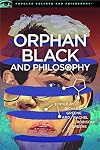
I was 2/3 of the way through watching all of Orphan Black when this book started stalking me at the library. It found itself a perch just one shelf down from the Minecraft books in non-fiction, which just happened to be exactly where I stood every few weeks while my kids combed the Minecraft section over, looking for new books, or at least books they hadn't memorized yet. It was inevitable that I checked this book out.
As it turned out, there is an entire pop culture and philosophy series, show more and after reading this one, I may have to put several others on my to-read list. This book was a collection of essays that were part obsessive fan theories (there were several moments where I thought, "Oh, that is what was happening there!") part social theory, part philosophy. Although there was little cohesion or coordination between essays, it did address a variety of interesting topics, from the purpose of life to the legality and ethics of patenting genetic information.
My favorite essay was the first, "Fearfully and Wonderfully Made," which addresses the complicated non-identity problem: Do future individuals have a moral case for injury if the act that caused them harm also resulted in their very existence? It's a tricky problem with a variety of implications and examples in the world of the show. It ends beautifully thus: "Our lives are fearfully and wonderfully made, by our own two hands, one day at a time."
The weakest essay was, for me, "Re: Production," which pretends to be redacted memoranda created by someone within one of the organizations (maybe NeoLution?) discussing projects Leda and Castor. The redactions were annoying and the memo implied interests and values in the clones that I find it hard to believe those in their supervisory organizations would have. Meh. Actually, I found "Dialogue with the Buddha" problematic as well.
Overall though, the collection was both fun and thought provoking. A great read. show less
As it turned out, there is an entire pop culture and philosophy series, show more and after reading this one, I may have to put several others on my to-read list. This book was a collection of essays that were part obsessive fan theories (there were several moments where I thought, "Oh, that is what was happening there!") part social theory, part philosophy. Although there was little cohesion or coordination between essays, it did address a variety of interesting topics, from the purpose of life to the legality and ethics of patenting genetic information.
My favorite essay was the first, "Fearfully and Wonderfully Made," which addresses the complicated non-identity problem: Do future individuals have a moral case for injury if the act that caused them harm also resulted in their very existence? It's a tricky problem with a variety of implications and examples in the world of the show. It ends beautifully thus: "Our lives are fearfully and wonderfully made, by our own two hands, one day at a time."
The weakest essay was, for me, "Re: Production," which pretends to be redacted memoranda created by someone within one of the organizations (maybe NeoLution?) discussing projects Leda and Castor. The redactions were annoying and the memo implied interests and values in the clones that I find it hard to believe those in their supervisory organizations would have. Meh. Actually, I found "Dialogue with the Buddha" problematic as well.
Overall though, the collection was both fun and thought provoking. A great read. show less
The Golden Compass and Philosophy: God Bites the Dust (Popular Culture and Philosophy (43)) by Richard Greene
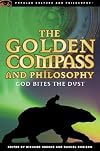
Greene, Richard V., and Rachel Robinson, editors. The Golden Compass and Philosophy: God Bites the Dust. Open Court, 2009.
If you are interested in the theological controversy around Philip Pullman and the His Dark Materials trilogy, this is a tolerably useful collection of essays. Note that the essays do talk about the entire trilogy, not just The Golden Compass, as the title suggests. Max Auxier does a good job of detailing some of Pullman’s uses and misuses of Milton and Nietzsche. I show more would have liked to hear more about Pullman’s specific criticisms of Tolkien and Lewis. That HDM builds a world in which characters discover that the afterlife is not something to which we should aspire and that religious institutions suck at guiding our ethical decisions is without doubt. Other than that, it is hard to see what the fuss was about. Almost every coming-of-age story teaches its heroes and heroines to think for themselves. Do we really need a lot of Milton to do it? show less
If you are interested in the theological controversy around Philip Pullman and the His Dark Materials trilogy, this is a tolerably useful collection of essays. Note that the essays do talk about the entire trilogy, not just The Golden Compass, as the title suggests. Max Auxier does a good job of detailing some of Pullman’s uses and misuses of Milton and Nietzsche. I show more would have liked to hear more about Pullman’s specific criticisms of Tolkien and Lewis. That HDM builds a world in which characters discover that the afterlife is not something to which we should aspire and that religious institutions suck at guiding our ethical decisions is without doubt. Other than that, it is hard to see what the fuss was about. Almost every coming-of-age story teaches its heroes and heroines to think for themselves. Do we really need a lot of Milton to do it? show less
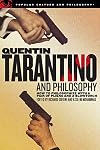
I read these "------ and Philosophy" books both to expand my knowledge of specific philosophers and their theories and ideas as well as to peek at the depths of meaning in some of my favorite works. The decent books in the series will have essays that say "here's a philosopher, here's his idea, this is how it applies to the work in question". which is fine for the first reason i read these books. The really good books in the series have essays that say "here's some things that happen in the show more work, this is how it illustrates the theme of the work, here's how it relates to the big questions of life, here's how it defends/opposes this philosopher's work". That is precisely what all the essays in this volume do. Whether analyzing Kill Bill as a modern retelling of Oedipus by way of female empowerment, discussing the structure of Pulp Fiction as an analysis of the compartmentalization of time, or using the crooks of Reservoir Dogs to compare group morality, all of the essays truly elucidate Tarantino's movies. show less

I have a low view of pop-culture philosophy books. Sure, it's great that philosophers are trying to make known philosophical topics, and make them available to the masses, but in the end, it's just insulting to somebody who's fully capable of understanding such philosophical topics without needing them to be candy-coated in pop culture to help digestion.
That, and I've never really watched the Sopranos. So, I guess you can say I'm not exactly qualified to review this book. I hate books show more written to capture some of the pop-culture dollars, and I have never experienced this particular slice of pop culture. Maybe if you're a fan of the Sopranos, you'd enjoy this book. Maybe if you have a hard time understanding the writings of Immanuel Kant or Rene Descartes, and you need somebody to hold your hand as they lead you through the nine circles of philosophy. Maybe you don't get irritated at all the corny mob jokes stuck between philosophical principles. Maybe.
Granted, I was able to enjoy some aspects of this book, regardless of my standing on pop-culture books and shows I've never watched. There were amusing looks at locution, and a question of character morality, and so forth. And, there were articles written by self-congratulatory philosophers who thought that they had it all together, but only approached some arguments from one straw-manned side. So, yeah, it had its mix of thought-provocation and eye-rollation.
But as I said, you might love it. Especially if you love The Sopranos, or you read "The Teletubbies and Philosophy: The Tao of Po" without wanting to chuck it through a window. show less
That, and I've never really watched the Sopranos. So, I guess you can say I'm not exactly qualified to review this book. I hate books show more written to capture some of the pop-culture dollars, and I have never experienced this particular slice of pop culture. Maybe if you're a fan of the Sopranos, you'd enjoy this book. Maybe if you have a hard time understanding the writings of Immanuel Kant or Rene Descartes, and you need somebody to hold your hand as they lead you through the nine circles of philosophy. Maybe you don't get irritated at all the corny mob jokes stuck between philosophical principles. Maybe.
Granted, I was able to enjoy some aspects of this book, regardless of my standing on pop-culture books and shows I've never watched. There were amusing looks at locution, and a question of character morality, and so forth. And, there were articles written by self-congratulatory philosophers who thought that they had it all together, but only approached some arguments from one straw-manned side. So, yeah, it had its mix of thought-provocation and eye-rollation.
But as I said, you might love it. Especially if you love The Sopranos, or you read "The Teletubbies and Philosophy: The Tao of Po" without wanting to chuck it through a window. show less
Lists
You May Also Like
Associated Authors
Statistics
- Works
- 19
- Also by
- 2
- Members
- 533
- Popularity
- #46,707
- Rating
- 3.7
- Reviews
- 8
- ISBNs
- 100
- Languages
- 4