
Works by Alex Tresniowski
An Invisible Thread: The True Story of an 11-Year-Old Panhandler, a Busy Sales Executive, and an Unlikely Meeting with Destiny (2012) 1,142 copies, 59 reviews
The Foundling: The True Story of a Kidnapping, a Family Secret, and My Search for the Real Me (2017) 169 copies, 11 reviews
When Life Gives You Lemons: Remarkable Stories of People Overcoming Adversity (2000) 6 copies, 1 review
Associated Works
Waking Up in Heaven: A True Story of Brokenness, Heaven, and Life Again (2013) 244 copies, 6 reviews
Tagged
Common Knowledge
- Gender
- male
- Occupations
- journalist
- Organizations
- People
Members
Reviews
An Invisible Thread: The True Story of an 11-Year-Old Panhandler, a Busy Sales Executive, and an Unlikely Meeting with Destiny by Laura Schroff
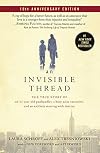
Now thirteen years from publication date, this recounting of an amazing friendship is perhaps even more relevant now than it was years ago. Laura Schroff, a woman with a childhood usurped by a violent, alcoholic father, passes a young Black boy panhandling in midtown Manhattan and then, in a complex twist of fate, turns around and takes him to a McDonald's for a meal. They feel an instant unexplainable bond and continue meeting up weekly. Maurice is living in a dangerous welfare hotel, show more surrounded by the addicts in his family in what passes for a home. He and Laura become fast friends, and each improves the other's life immeasurably. Laura tells their stories brilliantly, having the reader feel the consequence of every one of their interactions. Her painful childhood makes her a complete empath, even though she and Maurice survived different impossible circumstances. Laura's inclusion of Maurice in her vastly improved family life, and their joyous dinners around a large dining room table, and his own intelligence and resourcefulness, save them both. The audio book reader, Pam Ward, is excellent. show less
An Invisible Thread: The True Story of an 11-Year-Old Panhandler, a Busy Sales Executive, and an Unlikely Meeting with Destiny by Laura Schroff

I began this book expecting a conceited tale of Laura Schroff "giving back," or admonishment of the reader for civic ills or even a promulgation that racial oppression still exist. Instead, I found this book to be written so that it was engaging from the first page to the epilogue without any dressing down or politicking. Ms. Schroff alternates between her story of befriending a pre-teen panhandler and her broken home of a stereotypical Catholic family. Ms. Schroff never attempted to equate show more or draw the slightest parallel between Maurice, who grew up in a series of drug dens operated by his mother, and her home wracked by alcoholism.
Being a cynic, I found myself waiting for the altruistic braggadocio for the first two or three chapters, yet the way she shares their narratives (his and hers), I don't believe she is publishing a written account of her life with Maurice for any other reason than inspiration. I would also estimate she is proud of Maurice, like a mother, of his accomplishments.
This book reads rather quickly and was difficult to put down. Not written in a grandiloquent fashion, An Invisible Thread, is easy to understand and would be suitable for a young adult. With Ms. Schroff's honest and undecorated view of abject poverty from an "outsider's" point-of-view, free of blame, the book exemplifies kindness from a heartfelt level where nothing is sought in return. True charity. show less
Being a cynic, I found myself waiting for the altruistic braggadocio for the first two or three chapters, yet the way she shares their narratives (his and hers), I don't believe she is publishing a written account of her life with Maurice for any other reason than inspiration. I would also estimate she is proud of Maurice, like a mother, of his accomplishments.
This book reads rather quickly and was difficult to put down. Not written in a grandiloquent fashion, An Invisible Thread, is easy to understand and would be suitable for a young adult. With Ms. Schroff's honest and undecorated view of abject poverty from an "outsider's" point-of-view, free of blame, the book exemplifies kindness from a heartfelt level where nothing is sought in return. True charity. show less
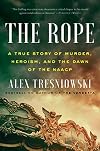
The Rope’s style is vivid and dramatic—it’s rare that a historical nonfiction book can be called page-turner but Tresniowski’s description of events is consistently engaging. My real issue with the book is that it’s composed of two totally disparate halves.
Tresniowski tries to unite a child murder case with the life and work of Ida B. Wells-Barnett—he tries, and ultimately he fails. Because, here’s the thing, Wells had nothing to do with the case. There’s no evidence she even show more knew anything about it. And so all the pages we spend learning about her life feel kind of meaningless when in the end she doesn’t actually tie into the central story. Now, that’s not to say that Wells’ life and the founding of the NAACP aren’t interesting stories—they most certainly are—they just don’t really connect to the Marie Smith case that contains the book’s most thrilling moments, and so they wind up feeling like useless interjections or, worse, padding. Was there supposed to be a thematic connection drawn between these two halves? Probably. But there’s just no attempt at making one.
Additionally, Tresniowski has a tendency to overload with names. It can be difficult to keep all of the bit characters straight, simply because he feels compelled to name every person in every situation, no matter how tenuous a part they played in it.
I don’t want to seem like I’m dumping on this book, because I did enjoy it. I just think its structure is fundamentally flawed.
________________________
PRE-REVIEW:
Hey, I won this in a Goodreads giveaway! It just came today. I’m in the middle of two books at the moment but when I finish them I’ll crack this one open—I hope to have a review up before it hits shelves on February 9th. show less
Tresniowski tries to unite a child murder case with the life and work of Ida B. Wells-Barnett—he tries, and ultimately he fails. Because, here’s the thing, Wells had nothing to do with the case. There’s no evidence she even show more knew anything about it. And so all the pages we spend learning about her life feel kind of meaningless when in the end she doesn’t actually tie into the central story. Now, that’s not to say that Wells’ life and the founding of the NAACP aren’t interesting stories—they most certainly are—they just don’t really connect to the Marie Smith case that contains the book’s most thrilling moments, and so they wind up feeling like useless interjections or, worse, padding. Was there supposed to be a thematic connection drawn between these two halves? Probably. But there’s just no attempt at making one.
Additionally, Tresniowski has a tendency to overload with names. It can be difficult to keep all of the bit characters straight, simply because he feels compelled to name every person in every situation, no matter how tenuous a part they played in it.
I don’t want to seem like I’m dumping on this book, because I did enjoy it. I just think its structure is fundamentally flawed.
________________________
PRE-REVIEW:
Hey, I won this in a Goodreads giveaway! It just came today. I’m in the middle of two books at the moment but when I finish them I’ll crack this one open—I hope to have a review up before it hits shelves on February 9th. show less
The foundling : the true story of a kidnapping, a family secret, and my search for the real me by Paul Joseph Fronczak

When he was a boy, Paul Fronczak discovered hidden newspaper clippings that told the story of his kidnapping from a Chicago hospital shortly after his birth and his reunion with his family a couple of years later. His doubts about his true identity never really left his mind from that point on. After his daughter's birth, her doctors naturally wanted information about his medical history, and he realized that he wasn't sure that he really was Paul Fronczak. A DNA test eventually proved his show more suspicion was accurate and he set out on a quest to discover his both his true identity and what had happened to the real Paul Fronczak. He had support from genetic genealogists in his search, but unfortunately not the support of his family. I find it hard to blame him for pursuing the truth. I think I would have felt the same way if I were in his shoes. It seemed that each discovery only served to raise more questions and led him to painful secrets. I listened to most of this book in a single day. It was just that hard to put down. show less
Lists
Awards


You May Also Like


Associated Authors
Statistics
- Works
- 7
- Also by
- 1
- Members
- 1,430
- Popularity
- #17,986
- Rating
- 3.8
- Reviews
- 76
- ISBNs
- 49
- Languages
- 4