
Tony Reinke
Author of 12 Ways Your Phone Is Changing You
About the Author
Tony Reinke is a journalist and serves as senior teacher and host of the Ask Pastor John podcast for desiringGod.org. He is the author of Lit!: A Christian Guide to Reading Books; Competing Spectacles; and 12 Ways Your Phone Is Changing You.
Works by Tony Reinke
Associated Works
Your Sorrow Will Turn to Joy: Morning & Evening Meditations for Holy Week (2016) — Contributor — 30 copies
Tagged
Common Knowledge
Members
Reviews
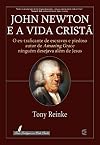
Aqui há maestria! Da mesma forma que o Senhor Jesus Cristo, crucificado e reinante, foi o foco doador de vida do Avivamento Evangélico, e da mesma forma que George Whitefield foi seu avivador supremo, e John Wesley seu brilhante discipulador, também o ex-traficante de escravos John Newton foi o seu incomparável conselheiro pastoral e talvez o maior escritor de cartas cristão de todos os tempos. Em sua resenha de 768 notas de rodapé da sabedoria espiritual nas mais de 1.000 cartas show more publicadas de Newton, juntamente com os sermões e hinos dele publicados, Reinke destila um fluir vasto de mel puro para o coração cristão. Este é um livro para ler de novo e de novo.
Recomendações
Através das palavras de Newton e de Tony – uma só voz – Deus faz uma cirurgia nos olhos do coração, para que vejamos a Cristo mais inteiramente. E mais inteiramente significa vê-lo como mais precioso. E mais precioso significa mais poderoso para nos curar e nos mudar. Focado implacavelmente na doçura e na grandiosidade de Cristo como nosso Salvador e como aquele que satisfaz nossas almas, sobre este livro tremula a bandeira de John Newton: ‘Ninguém além de Jesus’.
—John Piper, fundador do Desiring God e Chanceler do Bethlehem College and Seminary show less
Recomendações
Através das palavras de Newton e de Tony – uma só voz – Deus faz uma cirurgia nos olhos do coração, para que vejamos a Cristo mais inteiramente. E mais inteiramente significa vê-lo como mais precioso. E mais precioso significa mais poderoso para nos curar e nos mudar. Focado implacavelmente na doçura e na grandiosidade de Cristo como nosso Salvador e como aquele que satisfaz nossas almas, sobre este livro tremula a bandeira de John Newton: ‘Ninguém além de Jesus’.
—John Piper, fundador do Desiring God e Chanceler do Bethlehem College and Seminary show less
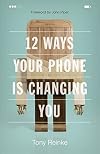
Sober and underrated. All "smartphone addiction" literature I've read deals with mental effects. It was refreshing to dive into the spiritual aspects (and without being legalistic at that).
And at the end of the day, if you really disagree with what Tony says, he peppers the book with relevant scripture references that you can interact with to make your own conclusions.
And at the end of the day, if you really disagree with what Tony says, he peppers the book with relevant scripture references that you can interact with to make your own conclusions.
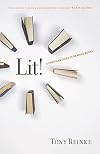
A helpful into to book-reading. I'd find this most useful to give to high schoolers just embarking on a mature reading life. Where Veith (Reading Between the Lines) focuses more on what gets read, Reinke focuses more on the activity of reading. Both are good; a book that combined their strengths, included a reading list, and avoided the imagophobia and internet-bashing would quickly displace both of them as my go to book. But for now, Reinke's book is quite serviceable.
Reading Notes:
Chapter show more 2: Not at all happy with the cliched "word vs. image" battle. God gives us both, and they shed light on each other. Word became flesh. But Reinke is far from alone in his characterization.
Page 73: point 6 - non-christian literature does not "beg" questions; it raises them, or asks them, or prompts them. I'll take anything other than beg. Pet peeve.
Random specification: Specific tangents that eat up several paragraphs abound - women should read theology, pastors shouldn't abuse business books, etc. While often helpful, these applications are very random - who is the book written for? Why was this specific group chosen to receive pointed application at this time, while dozens of other groups are left to make their own applications? I have no idea.
Page 122: "Don't read fiction with the hope that it will shape your worldview." What? How can it not? Reinke rightly points out you shouldn't look for a thesis or propositions in fiction, but a thesis and propositions are hardly the only shapers of worldview. I'm tempted to argue that good fiction has a stronger shaping influence on the heart and emotions than non-fiction. I think what Reinke means to argue is that you shouldn't allow the emotive elements of fiction to cause you overthrow the cognitive truths more propositionally presented in non-fiction. But fiction cannot be reduced to a giant fallacious appeal to emotion. Fiction has the ability to highlight and poke holes in bad propositional beliefs, and following Reinke on this point would handcuff us for no good reason. Arguing as Reinke does that "Scripture alone should inform our worldview" is an abuse of sola scriptura, not a well-informed use of it. Scripture is the supreme written norm for our worldview, but hardly the only source that influences or shapes it. This pgh. meant well, but was very poorly articulated.
Chapter 12: Marginalia - I'm one of those people who doesn't write in books, and I don't plan to start. I do keep commonplaces, and I do engage with books in other places, I just don't mark up my books. I find marginalia to be a hindrance in re-reading and in borrowing; maybe I treat my own library like a library. Underline or highlight me unconvinced.
Chapter 13: Reading Together - Really, really liked this chapter. What Reinke describes is more than a book club, because it is more about the people than about the books. People growing together around good books. I want that to describe most of my life. show less
Reading Notes:
Chapter show more 2: Not at all happy with the cliched "word vs. image" battle. God gives us both, and they shed light on each other. Word became flesh. But Reinke is far from alone in his characterization.
Page 73: point 6 - non-christian literature does not "beg" questions; it raises them, or asks them, or prompts them. I'll take anything other than beg. Pet peeve.
Random specification: Specific tangents that eat up several paragraphs abound - women should read theology, pastors shouldn't abuse business books, etc. While often helpful, these applications are very random - who is the book written for? Why was this specific group chosen to receive pointed application at this time, while dozens of other groups are left to make their own applications? I have no idea.
Page 122: "Don't read fiction with the hope that it will shape your worldview." What? How can it not? Reinke rightly points out you shouldn't look for a thesis or propositions in fiction, but a thesis and propositions are hardly the only shapers of worldview. I'm tempted to argue that good fiction has a stronger shaping influence on the heart and emotions than non-fiction. I think what Reinke means to argue is that you shouldn't allow the emotive elements of fiction to cause you overthrow the cognitive truths more propositionally presented in non-fiction. But fiction cannot be reduced to a giant fallacious appeal to emotion. Fiction has the ability to highlight and poke holes in bad propositional beliefs, and following Reinke on this point would handcuff us for no good reason. Arguing as Reinke does that "Scripture alone should inform our worldview" is an abuse of sola scriptura, not a well-informed use of it. Scripture is the supreme written norm for our worldview, but hardly the only source that influences or shapes it. This pgh. meant well, but was very poorly articulated.
Chapter 12: Marginalia - I'm one of those people who doesn't write in books, and I don't plan to start. I do keep commonplaces, and I do engage with books in other places, I just don't mark up my books. I find marginalia to be a hindrance in re-reading and in borrowing; maybe I treat my own library like a library. Underline or highlight me unconvinced.
Chapter 13: Reading Together - Really, really liked this chapter. What Reinke describes is more than a book club, because it is more about the people than about the books. People growing together around good books. I want that to describe most of my life. show less
Lit! by Tony Reinke is a book about books, actually, it is a book about reading. And it is a good one. Reinke takes the opportunity with this book to encourage Christians to read, and then give practical advice on how to adhere to his admonition.
The first part of the book (A Theology of Books and Reading) is a defense of reading: why we should read, why we should desire to read and what deters us from reading. Some of this section for me was superfluous simply because I already agreed that show more reading was essential and already had a true desire to read more and to read better. While it is a great series of chapters, for me, I was more interested in the "how-to" aspects of the book than I was the "why".
So, I was extremely interested in the second section (Some Practical Advice on Book Reading). Reinke cites extensively from Adler's classic, How to Read a Book, especially in chapter 8 (How to Read a Book). The difference however, and it is a significant difference, is that Reinke writes from an explicitly Christian perspective and encourages the reader throughout to engage whatever text they are reading with the lens of Biblical Christianity coloring all that they intake. This is why the first section of Lit! is necessary in the text, and also why the material he covers is necessary if we are reading Calvin, Tolkien, Clancy or Seuss.
One chapter in particular resonated with me more than all the rest. Chapter 14, Raising Readers, deals with how to raise up children who love to read. This chapter is quite practical and immediately applicable. Things like reading to your children, reading with your children, guarding overexposure to visual media like TV and Wii all seems like simple tasks, but their is a new urgency placed upon them when you consider the Bible rich arguments Reinke presents for the worshipful act of reading.
This book covers great material. At times, I felt it dragged and got a bit wordy. I felt the arguments presented in the first half could have been more succinct, but I am glad that they were there. Without them, this would have been all "how-to" and not nearly as effective. It is well worth the effort of mining to enjoy the flakes of gold that litter these pages. show less
The first part of the book (A Theology of Books and Reading) is a defense of reading: why we should read, why we should desire to read and what deters us from reading. Some of this section for me was superfluous simply because I already agreed that show more reading was essential and already had a true desire to read more and to read better. While it is a great series of chapters, for me, I was more interested in the "how-to" aspects of the book than I was the "why".
So, I was extremely interested in the second section (Some Practical Advice on Book Reading). Reinke cites extensively from Adler's classic, How to Read a Book, especially in chapter 8 (How to Read a Book). The difference however, and it is a significant difference, is that Reinke writes from an explicitly Christian perspective and encourages the reader throughout to engage whatever text they are reading with the lens of Biblical Christianity coloring all that they intake. This is why the first section of Lit! is necessary in the text, and also why the material he covers is necessary if we are reading Calvin, Tolkien, Clancy or Seuss.
One chapter in particular resonated with me more than all the rest. Chapter 14, Raising Readers, deals with how to raise up children who love to read. This chapter is quite practical and immediately applicable. Things like reading to your children, reading with your children, guarding overexposure to visual media like TV and Wii all seems like simple tasks, but their is a new urgency placed upon them when you consider the Bible rich arguments Reinke presents for the worshipful act of reading.
This book covers great material. At times, I felt it dragged and got a bit wordy. I felt the arguments presented in the first half could have been more succinct, but I am glad that they were there. Without them, this would have been all "how-to" and not nearly as effective. It is well worth the effort of mining to enjoy the flakes of gold that litter these pages. show less
Lists
You May Also Like


Associated Authors
Statistics
- Works
- 15
- Also by
- 1
- Members
- 3,138
- Popularity
- #8,135
- Rating
- 4.1
- Reviews
- 37
- ISBNs
- 45
- Languages
- 6