
Ralph Maud
Author of The colour of saying : an anthology of verse spoken by Dylan Thomas
About the Author
Works by Ralph Maud
A guide to B.C. Indian myth and legend : a short history of myth-collecting and a survey of published texts (1982) 22 copies, 1 review
The porcupine hunter and other stories : the original Tsimshian texts of Henry W. Tate (1994) 11 copies
Guide to Welsh Wales: A Week of Day Tours to the Sites in Wales Most Evocative of the National Spirit of the Welsh Peopl (1994) — Author — 9 copies
What Does Not Change: The Significance of Charles Olson's "the Kingfishers" (1998) 3 copies, 1 review
Tagged
Common Knowledge
- Gender
- male
Members
Reviews
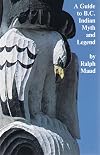
The description of this is plenty straightforward, but I still bought it with the hopes of more actual mythology. Instead, the heavy emphasis is on the ethnologists (mostly white men) who ventured into British Columbia and the larger Pacific Northwest to collect tales from native tribes. I won't say this book was useless for my purposes, though, because it was very thought-provoking and includes a huge bibliography of texts, and perhaps more importantly, which ones are most authentic.
This is show more judged by a series of questions (page 191). "What is the process of transmission? How did the story get on the printed page? Are there field notes that might reveal how scrupulous the ethnologist was in his procedures? How well did he know the language?" Etc.
I know that in my reading, I have encountered many tales that seem... dry or child-like in simplicity. Now I understand why, and it makes me sad that these poorer renditions are the ones that are often re-published. I had no idea what the conditions were like for these original researchers. They traveled the wilderness on very tight deadlines. They might visit a village and talk to whoever was there, whether or not they were a storyteller. Some tales were recorded as if they represented an entire tribe while there might be significant differences between families. Others ignore the provenance of the story, such as "this tribe's story is just like this tribe's, which shows common roots and socialization" while the truth might be that the grandfather was briefly enslaved by the other tribe as a child and the story has been passed through the family ever since. Context means a great deal.
I'll be keeping this book on my shelf as a reference as I seek out more mythologies, and the enlightened perspective will stay with me as I read across cultures. show less
This is show more judged by a series of questions (page 191). "What is the process of transmission? How did the story get on the printed page? Are there field notes that might reveal how scrupulous the ethnologist was in his procedures? How well did he know the language?" Etc.
I know that in my reading, I have encountered many tales that seem... dry or child-like in simplicity. Now I understand why, and it makes me sad that these poorer renditions are the ones that are often re-published. I had no idea what the conditions were like for these original researchers. They traveled the wilderness on very tight deadlines. They might visit a village and talk to whoever was there, whether or not they were a storyteller. Some tales were recorded as if they represented an entire tribe while there might be significant differences between families. Others ignore the provenance of the story, such as "this tribe's story is just like this tribe's, which shows common roots and socialization" while the truth might be that the grandfather was briefly enslaved by the other tribe as a child and the story has been passed through the family ever since. Context means a great deal.
I'll be keeping this book on my shelf as a reference as I seek out more mythologies, and the enlightened perspective will stay with me as I read across cultures. show less
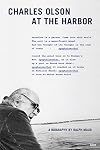
As an apology for Clark's vastly flawed biography of this great man and poet, this volume stands up with scholarly details. If you wish to know the REAL Olson, Ralph Maud provides him, without sentiment, a man engaged. One of our best. There among his things.
This is a response to the 'standard' biography of Charles Olson, the influential post-war American poet. It's certainly of interest to readers of Olson, even if you haven't read Clark's biography; it's shorter and much better written than that book. Maud probably goes too easy on him - it veers into hagiography at times - but much better that than whatever the opposite is. Good readings of some of the poems, too.
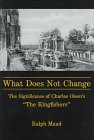
Do you want to read Olson's poem 'The Kingfishers'? It's really good. And this is probably the best thing to read along with it, despite Maud's tendency to hagiography and his inability to provide a general answer to the question "So what?" Lots of specific information though, and it's nicely written as all his stuff is.
Statistics
- Works
- 19
- Members
- 175
- Popularity
- #122,546
- Rating
- 3.9
- Reviews
- 6
- ISBNs
- 26